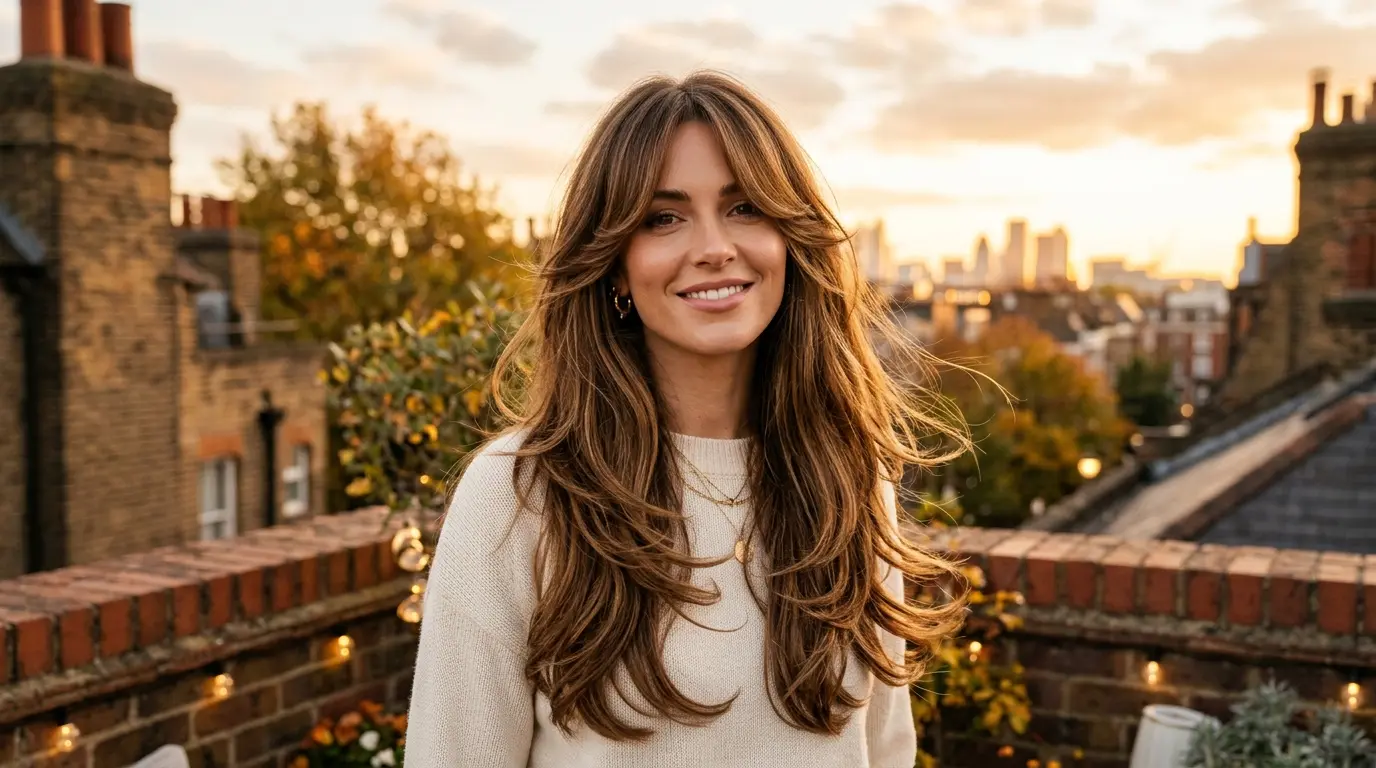
The best 70s shag hairstyles for thick hair use heavy face-framing layers and feathered curtain fringe to remove bulk and add movement — think retro flips, wispy bangs, and long feathered layers that thin out density without sacrificing length.
Thick hair holds onto length beautifully, but without the right cut it can feel heavy, blunt, and hard to style. Enter the 70s shag — the ultimate solution for turning density into shape. Built on heavy layering, face-framing pieces, and a feathered finish, this decades-old cut is having a major 2026 comeback because it does exactly what thick hair needs: removes bulk while keeping movement and volume.
What makes the 70s shag so versatile is how many ways it can be customized. Curtain bangs soften a square jaw, choppy ends add edge to straight hair, and a curly or wavy texture leans into the retro flip that made the original so iconic. Ahead, 20 modern takes on the classic shag — from bold color pairings to face-shape-specific cuts — all built for hair with real thickness to work with.
1. Classic Feathered Face-Framing Shag

Hover on images and discover how pinning can transform your collection of favorites!
This is the most true-to-original 70s silhouette: long layers that start high near the crown and feather out around the face, with ends that flip slightly outward. It flatters oval and heart face shapes especially well by softening a narrower chin. On thick hair, ask your stylist to point-cut the ends rather than blunt-cutting them, which keeps the feathered texture from looking too heavy.
2. Curtain-Fringe Long Shag

Hover on images and discover how pinning can transform your collection of favorites!
Deep, parted curtain bangs blend seamlessly into long layers, creating a soft frame around the eyes without the commitment of a full fringe. This variation works especially well on square and rectangular faces because the curtain pieces break up a strong jawline. Thick hair holds the curtain shape without flattening, so it needs only a quick blow-dry with a round brush to set.
3. Voluminous Feathered Layers with Wispy Ends

Hover on images and discover how pinning can transform your collection of favorites!
Instead of one dominant fringe, this take spreads feathering evenly through the mid-lengths and ends for a soft, wispy silhouette reminiscent of the era’s biggest icons. It suits oval and long face shapes and adds noticeable volume at the crown, which helps balance out dense, heavy hair lower down. A texturizing spray at the roots keeps the volume from collapsing by midday.
4. Blunt Curtain Bangs Shag

Hover on images and discover how pinning can transform your collection of favorites!
Pairing a straighter, blunt curtain fringe with softly layered lengths gives this shag a slightly more polished, editorial edge than the loose feathered original. It’s a strong choice for round faces since the blunt line adds definition without extra width. Because thick hair can make a blunt fringe look heavy, keep the ends point-cut even as the bangs stay crisp.
5. Choppy Face-Framing Shag

Hover on images and discover how pinning can transform your collection of favorites!
Razor-cut, choppy layers replace the smoother feathering of the classic shag with a more textured, undone finish that photographs beautifully in motion. This version suits straight or slightly wavy thick hair and softens angular face shapes like square or diamond. Ask for a razor rather than scissors on the face-framing pieces to get the characteristic choppy tips.
6. Money-Piece Balayage Shag

Hover on images and discover how pinning can transform your collection of favorites!
Long face-framing layers get a subtle lift with a money-piece balayage — two or three lightened panels around the face that brighten the complexion without a full-head color commitment. It’s especially flattering on olive and warm skin tones and works on any face shape since the color, not the cut, does the framing. Balayage also grows out softly, meaning fewer color appointments than foils.
7. Root-Lift Shag for Extra-Thick Hair

Hover on images and discover how pinning can transform your collection of favorites!
For hair so thick it resists movement, this variation focuses layering at the crown and temples to build immediate lift before the length even begins. It’s a go-to for square and round face shapes needing height rather than width. A volumizing mousse blow-dried with a round brush at the roots keeps the lift from being weighed down by the hair beneath it.
8. Retro Flip Shag

Hover on images and discover how pinning can transform your collection of favorites!
This is the look most associated with 70s glamour: long layers that flip outward at the ends rather than curling under, giving a bold, retro silhouette. It flatters oval and heart face shapes and reads as more dramatic than the softer feathered versions. Achieve the flip with a large round brush and a blast of cool air to lock the shape in place.
9. Center-Part Long Shag

Hover on images and discover how pinning can transform your collection of favorites!
Swapping the usual side part for a clean center part gives this shag a more grounded, modern feel while keeping all the original feathered layering intact. It’s most flattering on oval and long face shapes, since a center part can add width to narrower faces. Thick hair holds a crisp center part especially well, needing little more than a light serum to smooth flyaways.
10. Curly Natural-Texture Shag

Hover on images and discover how pinning can transform your collection of favorites!
Cut specifically for curly and coily hair, this version uses the shag’s layering principle to let natural spirals shrink into shape without the bulk of a single length. It’s ideal for anyone with thick, curly hair who wants definition without heat styling. A curl-cream applied to soaking-wet hair and air-dried brings out the coil pattern this cut is designed to show off.
11. Beachy Wavy Shag

Hover on images and discover how pinning can transform your collection of favorites!
Loose, tousled waves paired with feathered layers give this shag an effortless, salt-air texture that reads casual rather than retro-formal. It works particularly well on wavy or straight thick hair and suits nearly every face shape thanks to its soft, irregular movement. A texturizing salt spray on damp hair, scrunched and air-dried, is all this style needs.
12. Bottleneck Bangs Shag

Hover on images and discover how pinning can transform your collection of favorites!
Short, narrow bangs that widen out gradually into the longer face-framing layers give this shag a distinctly modern, fashion-forward silhouette. It’s best suited to oval and heart face shapes that can carry a shorter fringe without looking top-heavy. Because the bangs are narrow, thick hair won’t overwhelm them the way it can with a full-width fringe.
13. Sun-Kissed Balayage Shag

Hover on images and discover how pinning can transform your collection of favorites!
Warm, dimensional balayage running through the ends of a feathered shag adds brightness and depth that photographs especially well outdoors. This pairing suits any face shape and looks best on hair with at least some wave to catch the light between color tones. Because balayage is hand-painted, it can be customized to be as subtle or as bold as your natural base color allows.
14. Soft Layers Shag for Round Faces

Hover on images and discover how pinning can transform your collection of favorites!
Layers that start below the cheekbone rather than at the crown keep this shag from adding extra width to a round face, instead elongating it with vertical movement. Wispy, longer curtain pieces at the front enhance the slimming effect further. This is an especially good option for thick, round-face types who’ve been told layering will make their face look bigger — it won’t, if the layers start low enough.
15. Side-Swept Fringe Shag for Square Faces

Hover on images and discover how pinning can transform your collection of favorites!
A deep side-swept fringe blended into long layers softens the corners of a square jawline without hiding the face entirely. This variation is one of the more low-maintenance shag options since a side sweep grows out more gracefully than a center-parted fringe. Thick hair gives the swept fringe enough weight to stay in place without pins or heavy product.
16. Silver Shag for Gray-Transitioning Hair

Hover on images and discover how pinning can transform your collection of favorites!
Cut with slightly heavier layering than the standard shag, this version is designed to give gray and silver hair the movement it can lose as it transitions from color-treated to natural. The feathered ends catch light differently on silver strands, adding dimension that a single length wouldn’t. It pairs well with a gloss treatment to keep the gray looking bright rather than dull.
17. Full Fringe Shag

Hover on images and discover how pinning can transform your collection of favorites!
A full, blunt-ish fringe across the entire forehead paired with long feathered layers gives this shag a bolder, more graphic look than the softer curtain versions. It suits oval and long face shapes best, since a full fringe can shorten the appearance of the face. Thick hair supports a full fringe well, though it needs trimming every 3-4 weeks to keep it out of the eyes.
18. Sleek Straight Shag

Hover on images and discover how pinning can transform your collection of favorites!
Blow-dried pin-straight and flat-ironed smooth, this take proves the 70s shag works just as well polished as it does undone. The feathered layers still show through in the silhouette, especially around the face, even without the tousled texture. It’s the most versatile option for professional settings while still reading as distinctly shag rather than a plain one-length cut.
19. Half-Up Shag Updo

Hover on images and discover how pinning can transform your collection of favorites!
Pulling the crown layers into a small half-up knot showcases the feathered face-framing pieces while keeping length out of the way, proving this cut isn’t limited to down styles. It works well for special occasions on any face shape since the style can be adjusted looser or tighter depending on the level of formality needed. Thick hair holds the half-up section securely without needing excess product.
20. Modern Undercut Shag

Hover on images and discover how pinning can transform your collection of favorites!
Hidden undercut layers beneath the top length add an edgier, more contemporary spin to the classic 70s silhouette without sacrificing overall length up top. This variation suits thick hair especially well since removing weight underneath makes the visible feathered layers move more freely. It’s a bolder choice best suited to those already comfortable with a shorter, textured maintenance routine underneath longer hair.
You Might Also Like
- gypsy shag hairstyles for short hair
- gypsy shag styles for long faces
- gypsy shag cuts for round faces
- style curtain bangs without heat
- more summer haircut ideas for 2026
However you wear it, the 70s shag proves that thick hair doesn’t need to be thinned out to feel lighter — it just needs the right layering. Face-framing pieces, feathered ends, and a deliberate part can reshape density into movement, whether you keep it natural and wavy or blow it out for a full, retro flip.
If you’re trying this cut for the first time, ask your stylist for layers that start at the cheekbone rather than the chin — that’s what gives thick hair the feathered shape instead of just removing weight. Bring a few of these photos in for reference, since ‘shag’ can mean vastly different lengths depending on the salon.
Frequently Asked Questions
Is a 70s shag good for thick hair?
Yes — the heavy layering in a 70s shag is specifically suited to thick hair because it removes bulk and weight without shortening the overall length. The face-framing pieces and feathered ends create movement that a single blunt length can't achieve on dense hair.
What face shapes suit a 70s shag?
Round, oval, and square face shapes all work well with a 70s shag, since curtain bangs and face-framing layers can be adjusted to soften or add angles. Longer, wispier fringe elongates round faces, while a deeper side part balances a square jawline.
How often do I need trims to maintain a 70s shag?
Plan on a trim every 8 to 10 weeks to keep the feathered layers and fringe from growing out into a shapeless length. Thick hair holds the layered shape longer than fine hair, but the face-framing pieces still need regular shaping to stay sharp.
Can I style a 70s shag without heat?
Yes — air-drying with a diffuser or twisting damp hair into loose buns overnight brings out the shag's natural wave and feathered movement without a curling iron. A light mousse applied to damp roots helps hold the volume as it dries.
Is the 70s shag trend here to stay in 2026?
The shag has cycled in and out of style since the 1970s, but its 2026 revival is tied to the broader 'undone texture' trend, making it likely to stay popular for several more seasons. Its adaptability across lengths and face shapes gives it more staying power than shorter-lived micro-trends.