
Ever bought a product that promised to transform your hair, only to find it made things worse? You’re not alone. Understanding your hair type is the foundation of every great hair care routine—and most of us get it wrong.
Here’s the thing: your hair is as unique as your fingerprint. It has a specific curl pattern (from pin-straight 1A to tightly coiled 4C), porosity level, density, and thickness. When you know these characteristics, you can finally stop wasting money on products that don’t work and start building a routine that actually delivers results.
Our free Hair Type Quiz takes just 2 minutes and will tell you exactly what type of hair you have—plus personalized product recommendations to match.
Take the Hair Type Quiz
Understanding the Hair Type Classification System
The hair typing system was popularized by celebrity hairstylist Andre Walker. It classifies hair into four main types, each with subcategories:
Type 1: Straight Hair
Type 1A is completely straight with no hint of wave or curl. It tends to be very fine and can appear flat or limp. Type 1B has a slight bend and more body, while Type 1C is straight but coarse with some natural wave.
Type 2: Wavy Hair
Type 2A has a loose, beachy wave pattern. Type 2B features more defined S-waves that start at the mid-length. Type 2C has well-defined waves that can border on loose curls, often with more frizz.
Type 3: Curly Hair
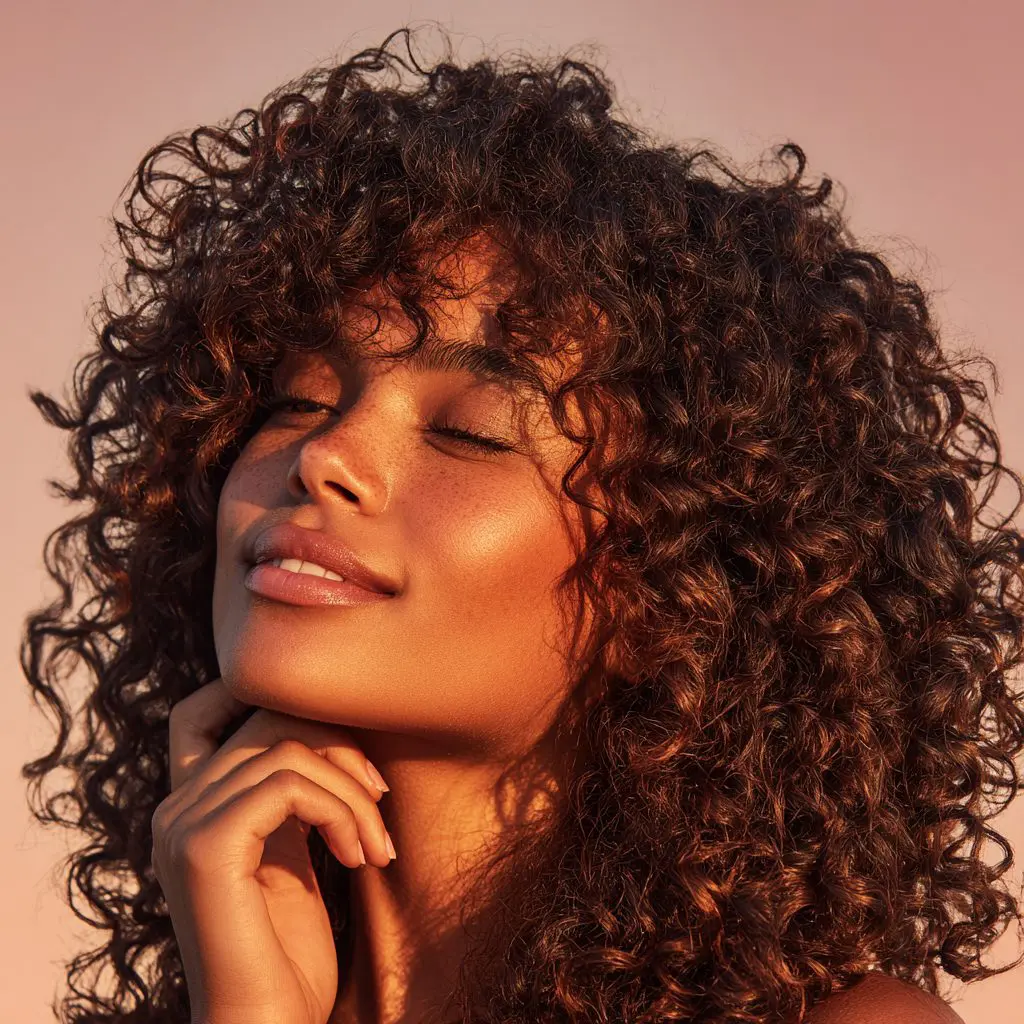
Type 3A has large, loose curls about the size of sidewalk chalk. Type 3B features springy ringlets roughly the size of a Sharpie marker. Type 3C has tight corkscrews about the width of a pencil.
Type 4: Coily Hair
Type 4A has defined S-pattern coils. Type 4B features a Z-pattern bend rather than a curl. Type 4C has very tight coils that may not have a visible curl pattern, with significant shrinkage when dry.
Why Porosity Matters Just as Much as Curl Pattern
Your curl pattern tells you how your hair looks, but porosity determines how your hair behaves. Porosity refers to your hair’s ability to absorb and retain moisture.
Low porosity hair has a tightly closed cuticle layer. Products tend to sit on top of the hair rather than absorbing. You’ll need lightweight products and may benefit from heat to help products penetrate.
High porosity hair has gaps in the cuticle, absorbing moisture quickly but losing it just as fast. This hair type needs heavier products and sealants to lock moisture in.
Medium porosity hair absorbs and retains moisture well, making it the most versatile and easiest to care for.
Density vs. Thickness: What’s the Difference?
These terms are often confused, but they measure different things:
Hair density refers to how many individual strands you have on your head. Someone can have fine individual strands but high density (lots of hair), or thick strands with low density (less hair overall).
Hair thickness (also called width or texture) describes the diameter of each individual strand—fine, medium, or coarse.
Understanding both helps you choose products that won’t weigh your hair down or leave it feeling dry and underconditioned.
How to Use Your Quiz Results
Once you know your hair type, you can:
- Choose the right shampoo and conditioner formulated for your specific needs
- Select styling products that enhance rather than fight your natural texture
- Adjust your wash frequency based on your hair’s oil production and porosity
- Master techniques designed for your curl pattern
- Stop comparing your hair to influencers with completely different hair types
Frequently Asked Questions
Can your hair type change over time?
Yes! Hormonal changes (pregnancy, menopause), medications, heat damage, and chemical treatments can all alter your curl pattern and porosity. It’s worth retaking the quiz if you’ve experienced major changes.
Can I have multiple hair types on my head?
Absolutely. Many people have looser curls at the crown and tighter curls underneath, or different textures around the hairline. Identify your dominant pattern and any variations so you can treat different areas appropriately.
Is one hair type better than another?
No hair type is superior to another. Every texture is beautiful when healthy and properly cared for. The goal is to work with your natural hair, not against it.
Ready to discover your hair type? Scroll back up and take our free 2-minute quiz. Your personalized results include specific product recommendations selected for your unique hair characteristics.