
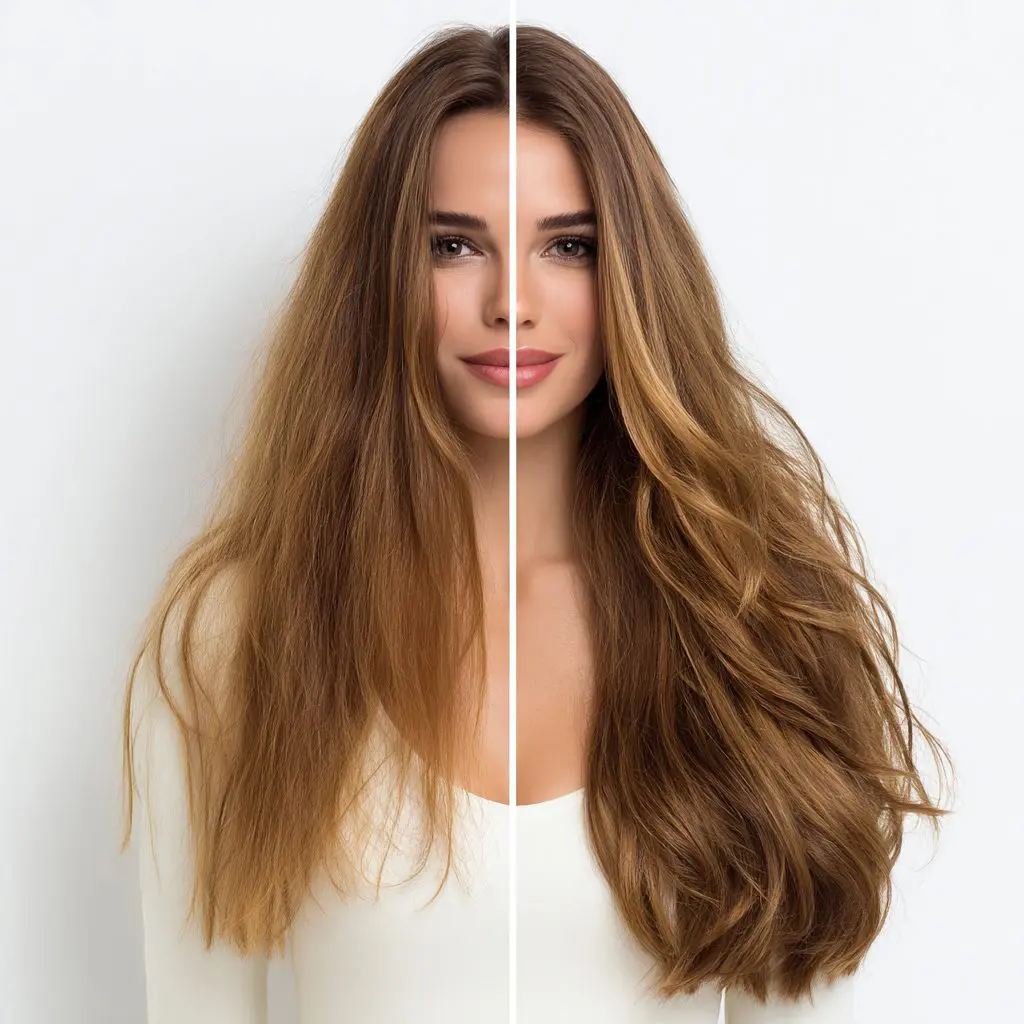
Is your hair breaking, feeling like straw, or just not cooperating no matter what you do? Damaged hair is incredibly common, but here’s what most people don’t realize: there are different types of damage, and they each require different solutions.
Using a protein treatment when you actually need moisture (or vice versa) can make things worse. Our Hair Damage Quiz diagnoses exactly what type of damage you’re dealing with and gives you a personalized repair plan to bring your hair back to life.
Take the 2-minute assessment below and get your customized recovery roadmap.
Take the Hair Damage Quiz
Understanding Hair Damage Types
Not all damage is created equal. Here are the main categories our quiz identifies:
Heat Damage
Caused by flat irons, curling wands, and blow dryers—especially without heat protection or at temperatures above 350°F. Signs include: dry, rough texture; hair that won’t hold a curl or style; split ends that travel up the shaft; and brittleness.
Heat damage breaks down the protein bonds inside your hair, which is why bond-repair treatments like Olaplex are so effective for this type.
Chemical Damage
Results from coloring, bleaching, perming, or relaxing. The more frequently you process your hair, the more compromised it becomes. Symptoms: high porosity (absorbs water quickly but dries fast), color that fades rapidly, excessive breakage, and gummy texture when wet.
Chemical damage requires both protein to rebuild structure and moisture to restore suppleness.
Protein Deficiency
Hair is made of keratin protein. When protein levels are depleted, hair becomes overly stretchy, limp, and weak. Key sign: when you stretch a wet strand, it extends significantly before breaking (or doesn’t bounce back).
This requires protein treatments—but be careful not to overdo it.
Protein Overload
Yes, you can have too much protein! This happens when you use too many protein-containing products without balancing with moisture. Signs: stiff, straw-like texture; hair that breaks with little to no stretch; rough, tangly feel.
The fix is stopping all protein products and flooding your hair with moisture.
Moisture Imbalance
Dry, frizzy hair that can’t seem to retain hydration. Often related to high porosity or environmental factors. Symptoms: excessive frizz (especially in humidity), dull appearance, tangles easily, rough texture.
The LOC (Liquid, Oil, Cream) method and sealing oils help lock moisture in.
The Elasticity Test: Do It Yourself
One question in our quiz involves the elasticity test—here’s how to do it:
- Take a single strand of wet hair
- Hold it between your fingers and gently stretch
- Observe what happens:
- Stretches and bounces back: Healthy elasticity
- Stretches but doesn’t return: Needs protein
- Barely stretches, snaps quickly: Protein overload or severe damage
- Stretches like gum: Severely protein-deficient
Can Damaged Hair Be Fully Repaired?
Let’s be honest: once hair is damaged, it cannot be returned to its virgin state. Hair is dead tissue—it doesn’t heal like skin. However, you can significantly improve its appearance, strength, and manageability with the right treatments.
Bond-repair treatments actually reconnect broken disulfide bonds within the hair, which is the closest we can get to true repair. For severely damaged hair, strategic trimming combined with treatments is often the best approach.
Frequently Asked Questions
How long does it take to repair damaged hair?
With consistent treatment, you should see improvement within 2-4 weeks. Full recovery depends on the severity—expect 2-6 months for significant damage, or longer if you’re growing out badly damaged sections.
Should I cut off all my damaged hair?
Not necessarily. If the damage is manageable, treatments can help while you grow out healthier hair. However, if ends are severely split or gummy, trimming prevents damage from traveling up the shaft.
Can I still heat style while repairing damage?
Ideally, take a heat holiday during the initial repair phase (2-4 weeks). When you resume, use the lowest effective temperature and always apply heat protectant.
Ready for your diagnosis? Take the quiz above to discover your specific damage type and get a step-by-step repair plan tailored to your hair’s needs.