You’re standing in the drugstore aisle, holding two conditioners. Both claim to moisturize. Both have pretty packaging. One costs twice as much. Which one actually has the better formula? If you can’t answer that from reading the labels, you’re not alone — and that’s exactly the skill our game teaches.
Learning to compare ingredient lists is the single most valuable skill for anyone who buys hair products. It saves money, prevents bad purchases, and cuts through marketing noise in seconds.
Why Compare Labels Before Buying
The hair care industry spends billions on packaging, influencer deals, and marketing copy — all designed to distract you from the one thing that actually matters: what’s inside the bottle. Two products with identical ingredient lists can have wildly different price tags based on branding alone.
Conversely, products that look similar on the shelf can have completely different formulations. A $6 conditioner might outperform a $35 one if it contains better-quality humectants and fewer filler ingredients. The label tells the truth that the marketing won’t.
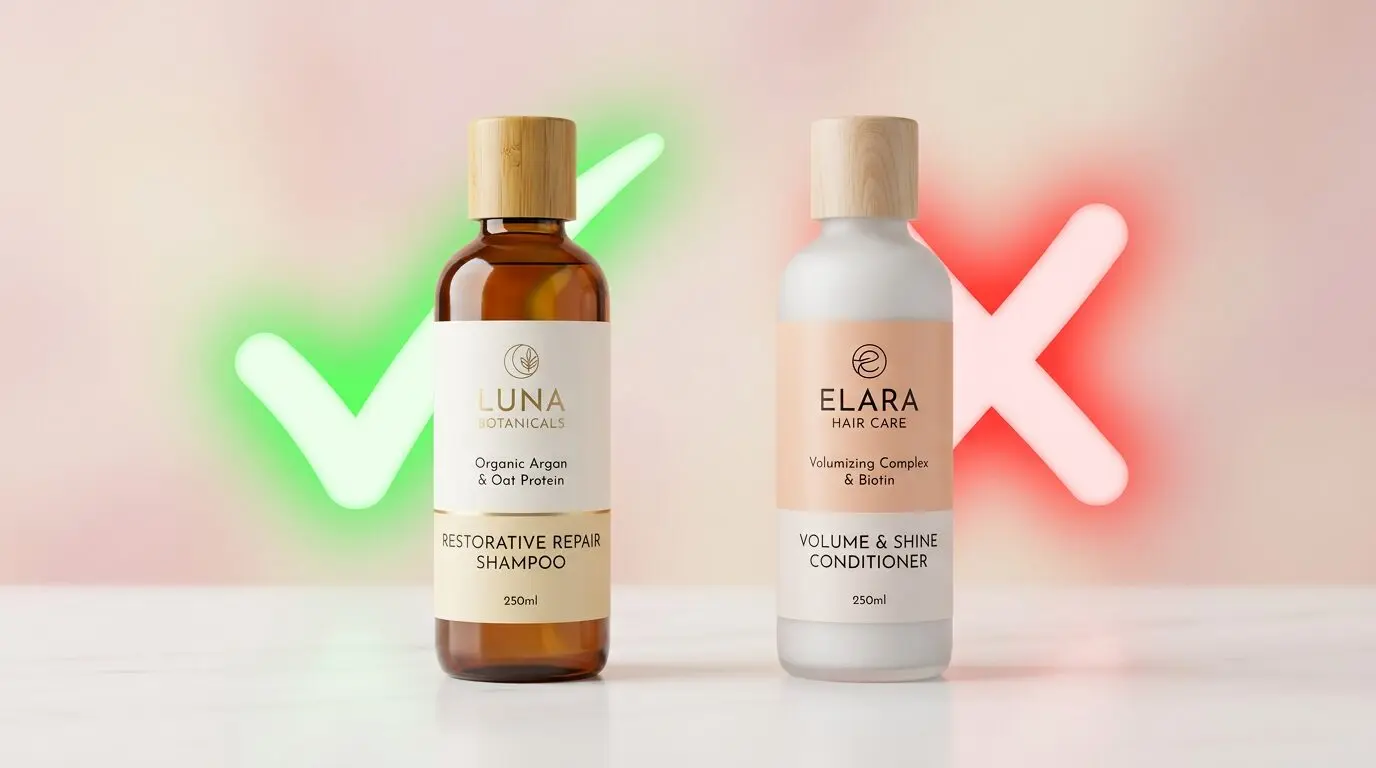
Red Flags vs. Green Lights on Ingredient Lists
Before you play, here’s a quick cheat sheet for scanning any ingredient list:
Green lights (seek these out):
- Fatty alcohols (cetyl alcohol, cetearyl alcohol) — moisturizing, not drying
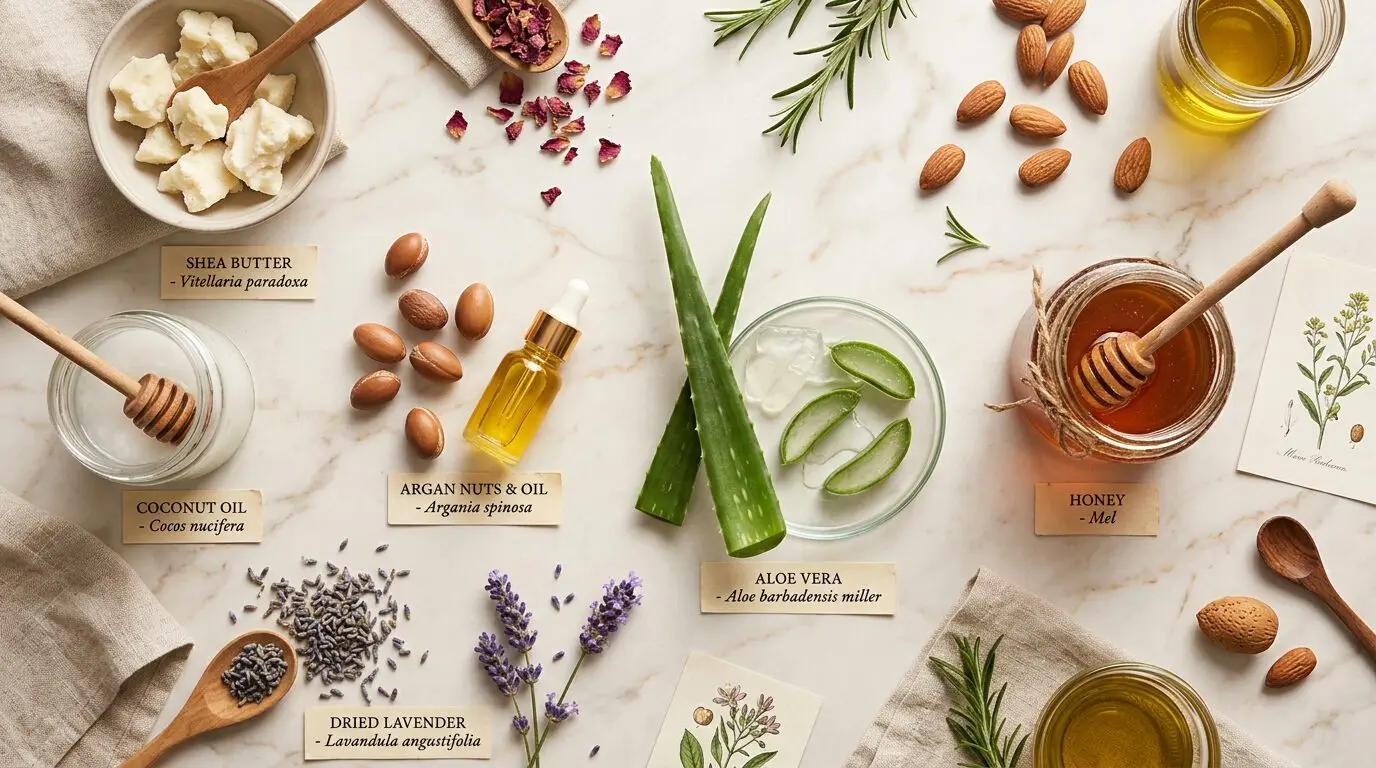
- Natural oils in the first 5 ingredients — shea butter, argan oil, jojoba oil
- Hydrolyzed proteins — keratin, silk, wheat protein for strengthening
- Humectants — glycerin, aloe vera, honey for moisture attraction
Red flags (proceed with caution):
- Drying alcohols (alcohol denat, isopropyl alcohol) — strip moisture from hair
- “Fragrance” or “parfum” high in the list — can mean dozens of undisclosed chemicals
- Formaldehyde releasers (DMDM hydantoin, imidazolidinyl urea) — preservatives linked to scalp irritation
- Heavy silicones (dimethicone, amodimethicone) as first ingredients — can cause buildup over time
Play Label Showdown
Ready to test your label-reading skills? Label Showdown shows you two real product ingredient lists side by side. Pick the one with the better formulation. 30 rounds across 3 difficulty levels — it gets tricky.
Why Ingredient Order Matters
Ingredients are listed in descending order of concentration. The first 5 ingredients typically make up 70-80% of the product. Everything after the preservatives (usually around ingredient 10-15) is present at less than 1%. This means:
- If “argan oil” is the 15th ingredient, there’s barely any in there — despite what the front says.
- Water is almost always first. That’s normal and expected.
- The surfactant (cleansing agent) in a shampoo should be in the first 3 ingredients.
- Active ingredients below the 1% line are there for marketing, not performance.
Knowing this one rule transforms how you read every product in your bathroom. For the full story on any ingredient you spot, check our Ingredients Encyclopedia.
Marketing Claims vs. Label Reality
Here’s what popular marketing claims actually mean (and don’t mean):
- “Sulfate-free” — No SLS/SLES, but may contain other harsh surfactants. Check for olefin sulfonate.
- “Paraben-free” — No parabens, but other preservatives may be equally controversial. DMDM hydantoin, for example.
- “Clean beauty” — Not a regulated term. Brands define it however they want.
- “Dermatologist tested” — A dermatologist looked at it. Doesn’t mean they approved it or that it passed any specific safety standard.
- “Natural” — Also unregulated. A product can be 95% synthetic and still call itself natural.
How to Read a Label in 30 Seconds
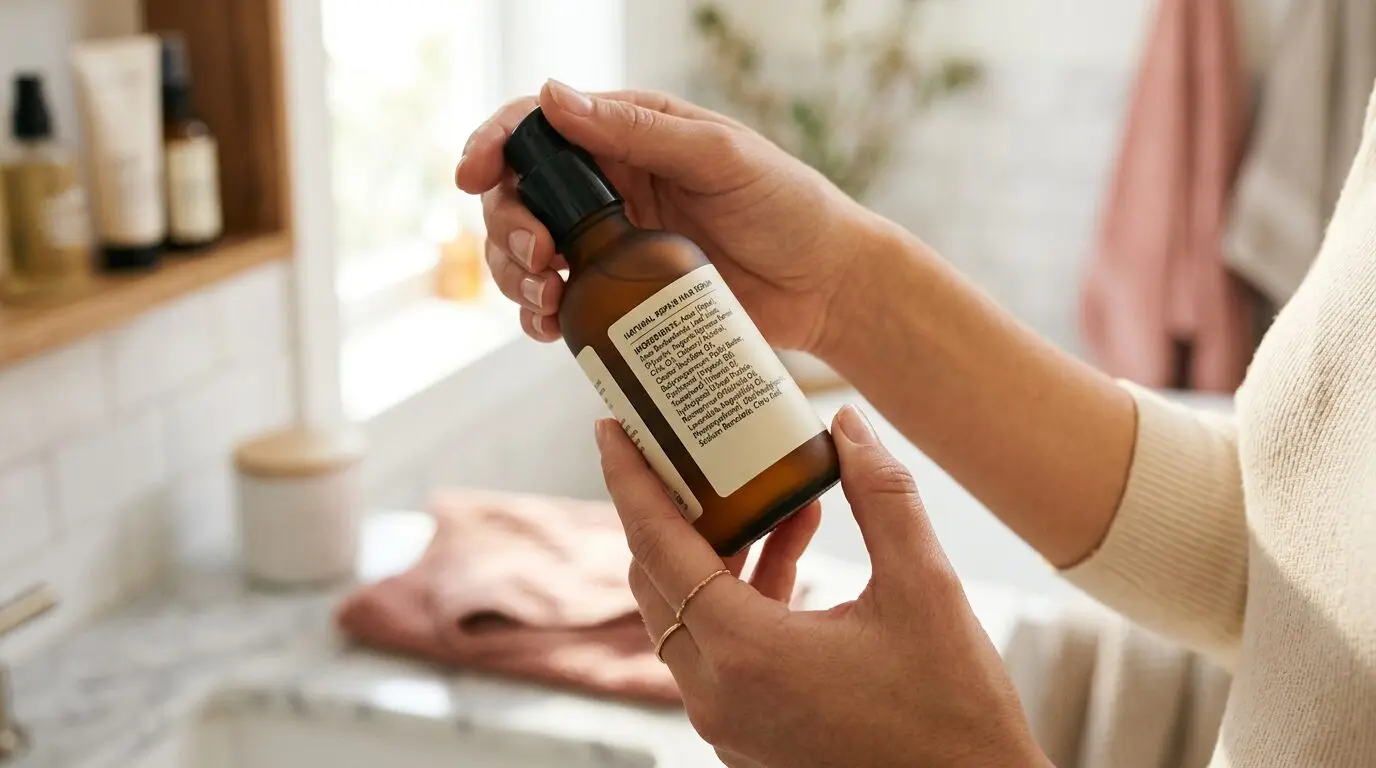
You don’t need to analyze every ingredient. Here’s the speed-reading method:
- Check the first 5 ingredients — These are the product. Everything else is supporting cast.
- Scan for your deal-breakers — Whatever you avoid (sulfates, silicones, drying alcohols), look for those specifically.
- Check where the “star ingredient” falls — If the marketed ingredient is past position 10, it’s mostly marketing.
- Look at the preservative system — Phenoxyethanol is widely accepted. Formaldehyde releasers are not by many consumers.
Practice this on the products in your shower right now, then take them to our Label Analyzer for the full breakdown.
Frequently Asked Questions
Are expensive products always better?
No. Price reflects brand positioning, packaging, and marketing — not necessarily formulation quality. Some drugstore brands use the same or better active ingredients as luxury lines.
What’s the most important ingredient to look for?
It depends on your hair need. For moisture: glycerin or aloe vera in the first 5. For strength: hydrolyzed keratin. For damage repair: bond-building ingredients. Our Hair Type Quiz helps identify what your hair needs most.
Can I trust “clean beauty” brands?
Trust the label, not the claim. Some clean brands have excellent formulations. Others just avoid certain ingredients while using equally questionable alternatives. Always read the back.
How do I compare a shampoo and conditioner together?
Use our Label Analyzer on both products. A great shampoo paired with a bad conditioner (or vice versa) can cancel out the benefits of either one.
The more labels you read, the faster you get at spotting the winners. Try our Pronunciation Bee next — once you can say the ingredients, you’ll never feel intimidated by a label again.