
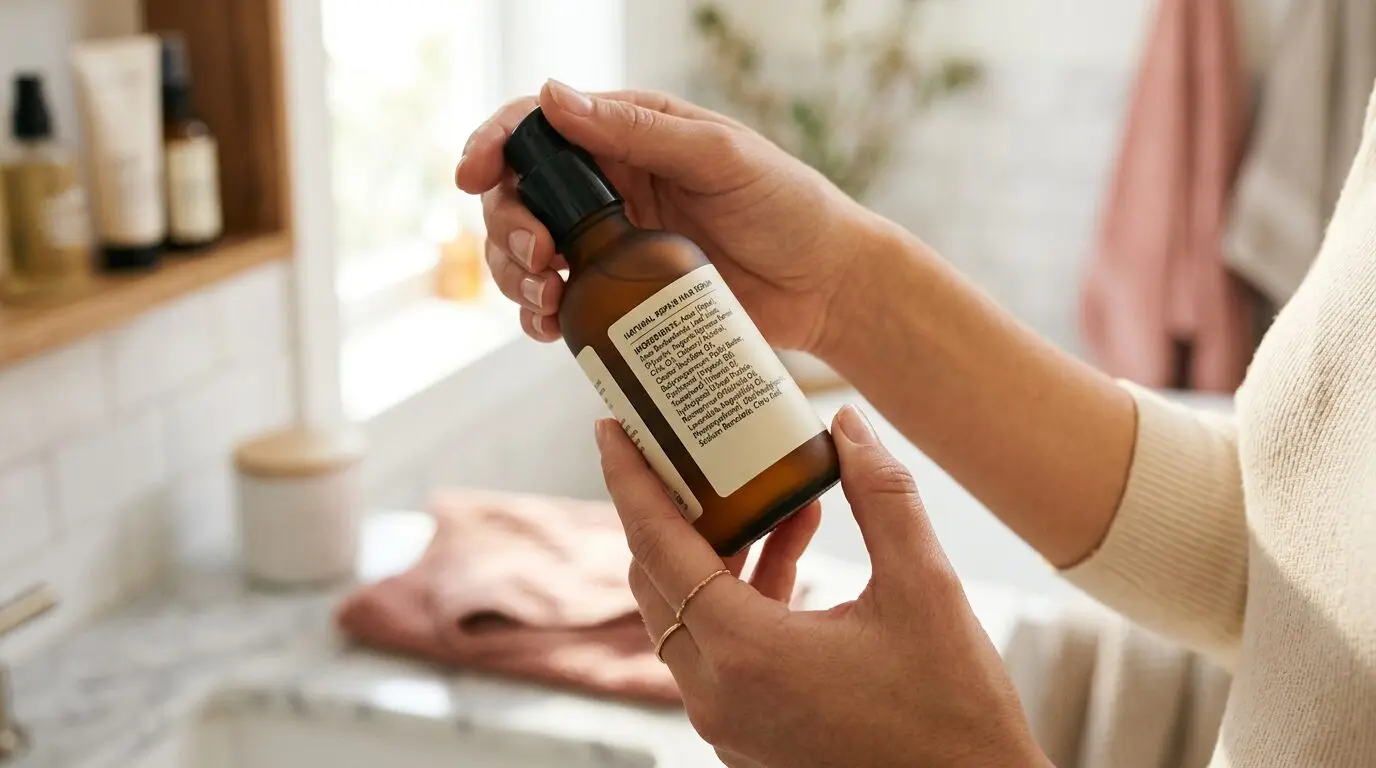
You just bought a shampoo that promises “clean, natural, salon-quality results.” But flip it over and the ingredient list reads like a chemistry exam. Are those ingredients actually safe? Do they match what the front label claims?
Most people never read the back of the bottle — and brands know that. Marketing terms like “sulfate-free,” “natural,” and “clean beauty” aren’t regulated, so they can mean almost anything. The only reliable way to know what you’re putting on your hair is to read the actual ingredients.
Why Most People Never Read the Back
Ingredient lists are designed to be confusing. They use INCI (International Nomenclature of Cosmetic Ingredients) names — scientific terms that most people can’t pronounce, let alone understand. So we default to trusting the marketing. But the front of the bottle and the back of the bottle often tell very different stories.
A product labeled “natural” might still contain synthetic fragrances, silicones, or harsh sulfates. A “moisturizing” shampoo could be loaded with drying alcohols. And “Curly Girl approved” isn’t an official certification — anyone can use it.
What Our Label Analyzer Checks For
Our free Label Analyzer scans every ingredient in your product against a database of 500+ hair care ingredients. Here’s what it evaluates:
- Safety score — Each ingredient gets a tier rating from A (excellent) to D (avoid). Your product gets an overall safety grade.
- CG compatibility — Checks whether your product meets Curly Girl Method standards (no sulfates, silicones, or drying alcohols).
- Red-flag ingredients — Identifies known irritants, allergens, and controversial chemicals with explanations of why they’re flagged.
- Function breakdown — Shows what each ingredient actually does: cleansing, conditioning, preserving, or just making the bottle smell nice.
Analyze Your Product Now
Grab any hair product from your bathroom, copy the ingredient list from the back (or search for it online), and paste it into the analyzer. You’ll get an instant report.
Understanding Your Safety Score
Your product gets an overall grade based on its ingredient mix:
- A (Excellent) — All ingredients are well-studied and considered safe. No known irritants or controversial chemicals.
- B (Good) — Mostly safe with a few ingredients that some people prefer to avoid. Fine for most hair types.
- C (Caution) — Contains ingredients that may cause irritation, buildup, or long-term concerns for sensitive scalps.
- D (Avoid) — Contains multiple flagged ingredients. Consider switching to a cleaner alternative.
Keep in mind: a C-rated product isn’t poison. Many widely-used ingredients fall into the caution zone simply because they don’t work well for all hair types or can cause buildup over time.
CG Compatibility Explained
The Curly Girl Method avoids three categories of ingredients: harsh sulfates (sodium lauryl sulfate, sodium laureth sulfate), water-insoluble silicones (dimethicone, cyclomethicone), and drying alcohols (alcohol denat, isopropyl alcohol). Our analyzer flags all of these instantly.
Even if you don’t follow the full CG method, knowing whether your products contain these ingredients helps you understand why your hair might feel dry, weighed down, or difficult to style. The Ingredients Encyclopedia goes deeper on each one.
5 Products That Market “Clean” but Aren’t
We’ve analyzed hundreds of popular products, and these patterns keep showing up:
- “Sulfate-free” shampoos with harsh alternatives — Some brands swap SLS for equally stripping surfactants like olefin sulfonate.
- “Natural” conditioners with synthetic silicones — Dimethicone buried in the middle of a botanical-sounding list.
- “Fragrance-free” products with masking fragrances — They add chemicals to neutralize scent rather than removing fragrance compounds.
- “Organic” products with minimal organic content — Only one or two ingredients need to be organic to use the word on the label.
- “CG-approved” products with water-soluble silicones — Some CG purists accept these, others don’t. The analyzer shows you exactly which type is present.
This is exactly why checking the label matters more than trusting the front of the bottle.
Frequently Asked Questions
Can I analyze any hair product?
Yes — shampoos, conditioners, masks, serums, oils, gels, mousses, and sprays. Any product with an ingredient list can be analyzed. Just paste the full list exactly as it appears on the packaging.
Are the safety ratings based on science?
Our ratings draw from cosmetic safety databases, published research, and CG Method guidelines. Each ingredient has been individually reviewed and categorized. For the full breakdown, check each ingredient in our Encyclopedia.
What should I do if my product scores poorly?
Don’t panic — a poor score doesn’t mean immediate harm. It means there are better alternatives available. Use our Routine Builder to find products matched to your hair type that score higher on safety.
How is this different from other ingredient checkers?
Most checkers focus on skin care. Ours is built specifically for hair care, with CG compatibility, hair-type relevance, and a database curated from real hair science — not just general cosmetic safety data.
Knowledge is power when it comes to what you put on your hair. Learn to pronounce those intimidating ingredient names while you’re at it, or challenge yourself in our Label Showdown game to test your label-reading skills against tricky product matchups.