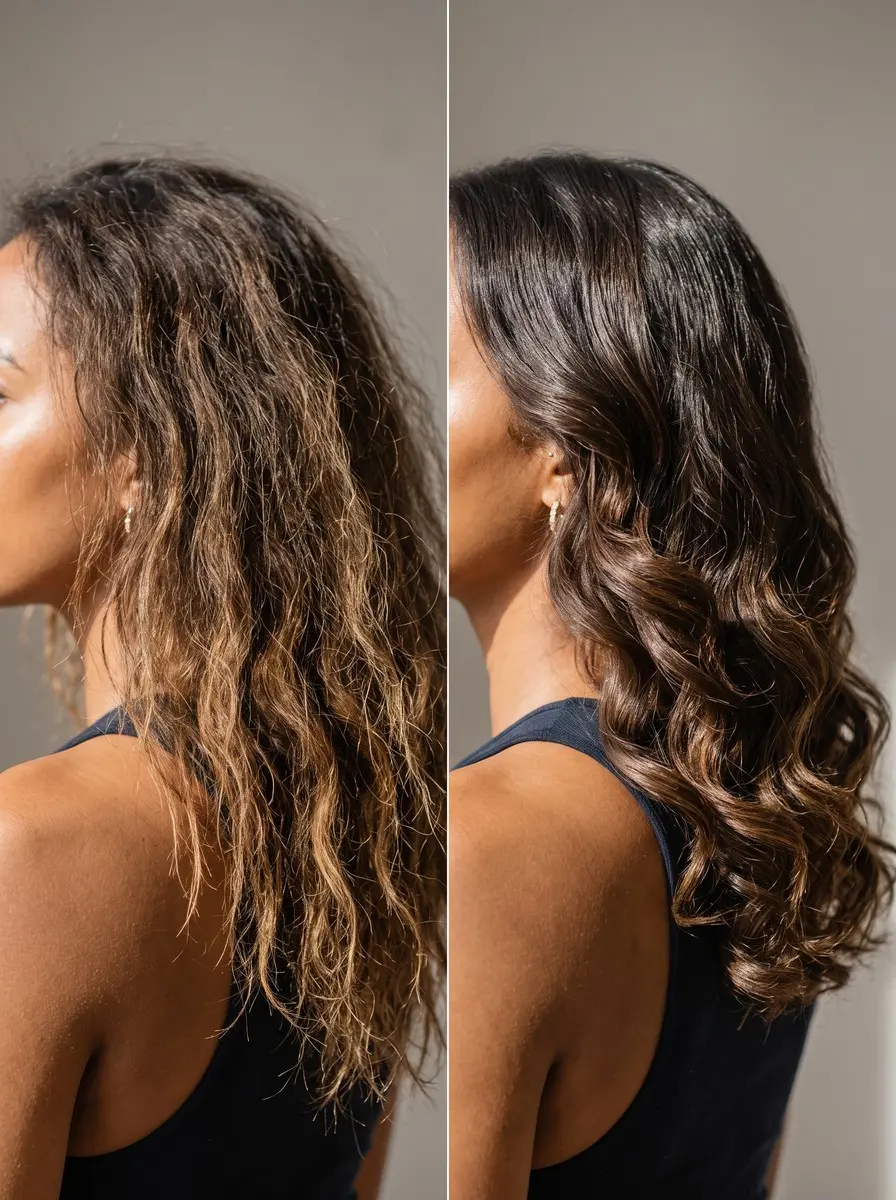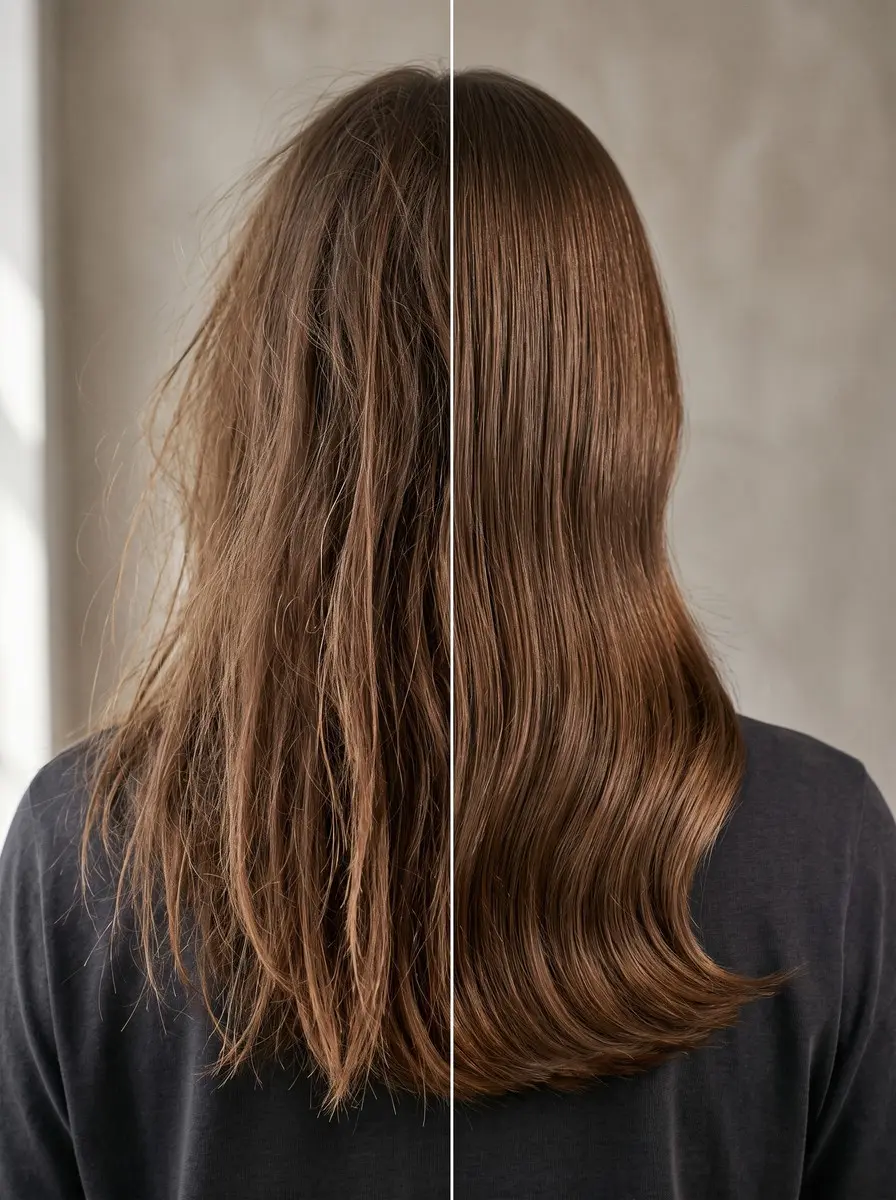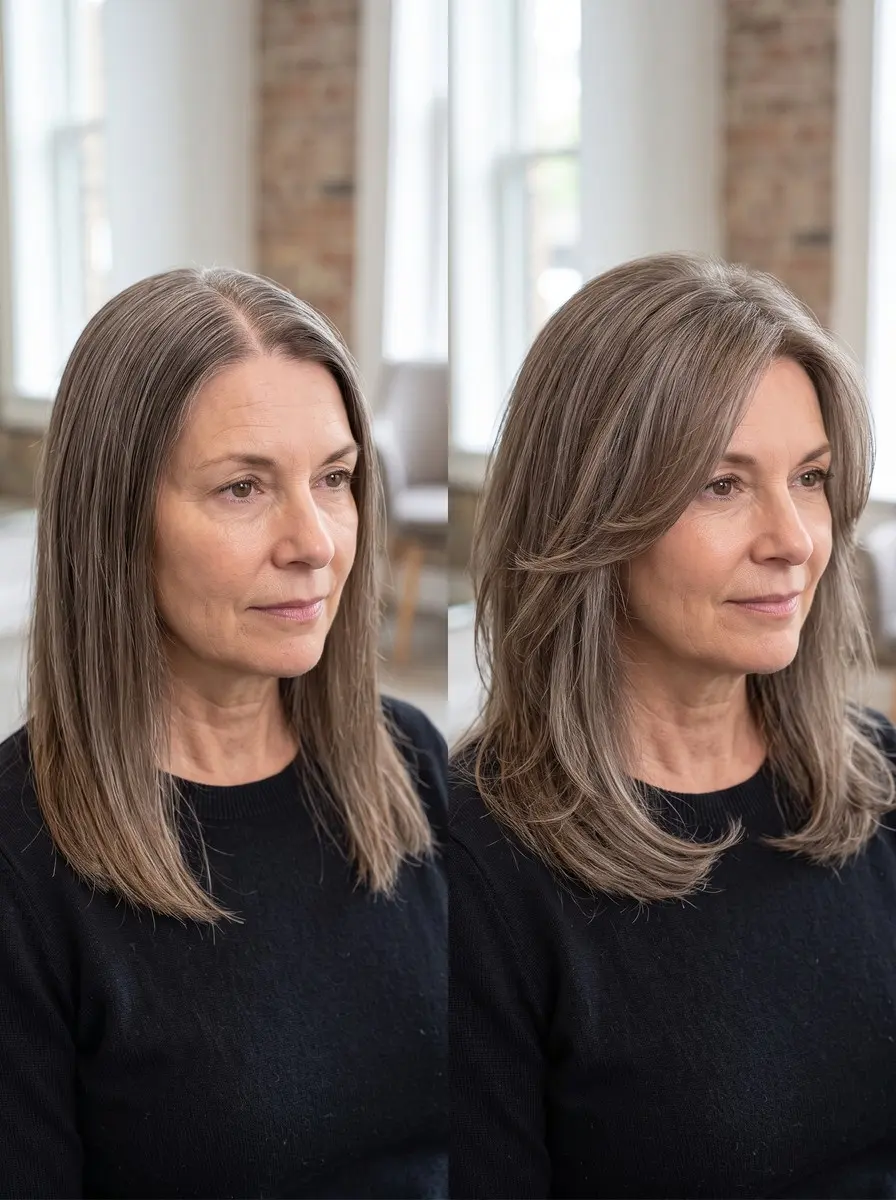
To wear a clip-in hair topper over 50, measure your thinning area and add about half an inch per side. Match the color to your roots and clip it onto the denser hair around that spot. Shift the clips slightly each day and take it off every night.
When your part has widened or your crown won’t hold volume, every style can look flat, even with a good cut. A clip-in hair topper fixes that in about the time it takes to put in earrings. It is a small section of hair on a base that clips onto your own hair, adding fullness only where you want it while the rest of your hair carries on as it is.
Whether anyone notices a topper comes down to four decisions: base size, color, clip placement and blending. You can get all four right at home. This guide goes through each one for hair over 50, where gray, highlights and finer strands change the rules. It is a styling guide, not a medical one. It assumes the hair you clip onto is healthy enough to hold the clips.
What You’ll Need
- Human-hair clip-in topper (monofilament or silk base) — A monofilament or silk base gives a realistic-looking part, and human hair can be cut, washed and styled with the rest of your hair.
- Soft fabric tape measure — Measuring the thin area and adding half an inch per side is how you pick the right base size.
- Root touch-up powder in your root shade — It fills any scalp that shows along the part next to the topper so the base edge disappears.
- Teasing comb with a tail — Use it to lightly backcomb each clip point so the clips grip without clamping, and to set a clean side part.
- Padded wig stand — It holds the base’s shape for overnight storage and lets the topper air dry evenly after washing.
As an Amazon Associate, HairAide earns from qualifying purchases. Some links above are affiliate links — they cost you nothing extra and help support free tutorials.
Step-by-Step
-
First decide whether a topper is the right tool, because a topper, a volumizer and a wig solve different problems. A topper covers one defined zone, such as a widening part or a flat, see-through crown, and clips onto the fuller hair around it. It suits you when most of your hair is still dense. A clip-in volumizer is a lighter piece with little or no base that sits under your own hair for lift and body, and it suits mild fineness all over the head. A wig covers the whole head and makes more sense when there isn’t enough hair around the thin area to hold clips securely.
-
Part your hair where you normally wear it and stand in good daylight. Use a soft tape measure to measure the length and width of the area where more scalp shows than you’d like. Add about half an inch to every side so the clips land on fuller hair rather than on the edge of the thin zone. Then match your numbers to a base size: small (2×3 to 3×4 inches) for the part or crown, medium (4×4 to 5×5 inches) from crown to mid-scalp, and large (6×6 to 7×7 inches) from the front toward the back. Don’t buy a bigger base than your measurement needs, because extra base adds weight and leaves more edge to hide.
-
Human-hair toppers cost more. With daily wear they last about one to three years, and you can wash, curl and straighten them like your own hair. Synthetic toppers are cheaper and keep their factory style through washes, but with daily wear they last about three to six months, and standard synthetic fiber can’t take hot tools. If you’ll wear it every day and style with heat, human hair is usually worth the price because one piece outlasts several synthetic replacements, while synthetic is a cheap way to test the look. Either way, pick a length close to your own and a density that matches yours, because an over-dense topper is the most common giveaway and its extra weight pulls harder on the clips.
-
Hold the topper against your part in daylight and compare it with the first inch of hair at your scalp, because that’s the hair it will sit beside. If you match your ends instead, which are usually lighter, sun-faded or highlighted, you’ll get a visible band of color where the topper meets your roots. For blended gray, look for a multi-tonal topper that mixes your base shade with silver or white strands in roughly the ratio you see at your part. If you wear highlights, choose a rooted topper with a darker shade at the base and lighter pieces through the lengths, so it looks like grown-in color rather than a solid block. The match is right when, at arm’s length, you can’t tell where your part ends and the topper begins.
-
Center the base over the thin area. Slide each open clip into the denser hair around the edge, not the fragile strands in the middle, which can’t carry the weight. If your hair is fine or silky, lightly backcomb a small section at each clip point first, so the clip has texture to grip and holds without clamping down on just a few strands. Close each clip flat against the scalp. If it pinches or pulls, it has caught too little hair, so take it out and reseat it. Move the clips slightly each day, even a quarter inch, so the same strands don’t carry the load every day, and choose a lighter base with soft, padded clips, because heavy or poorly designed clips can strain delicate hair.
-
Most toppers arrive long and one length at the front, which is why an uncut topper looks like a separate piece. Clip it in and take it to a stylist who works with toppers so they can cut the topper and your own hair together, adding soft face-framing layers that fall where your own layers do. Cutting both at once puts the lengths in the same place, so there’s no visible step between the topper hair and yours. Ask for the layers a little longer than you think you want. Your own hair keeps growing, but topper hair can’t grow back if too much comes off.
-
A slight side part usually hides the base edge better than a dead-center part, because the hair falling across it covers the line. Brush the topper and your own hair in the same direction, then pull a few strands of your own hair from around the edges over the base so the two textures overlap. If scalp still shows along your part beside the topper, dust root touch-up powder in your root shade along that line to soften the contrast. Then style as usual. You can blow-dry or curl a human-hair topper with the rest of your hair so the texture matches all over. Check the sides and back in a hand mirror; it’s blended when they look like one head of hair.
-
Take the topper off every night. Unclip it one clip at a time and lift it away rather than tugging, because sleeping in it keeps your anchor hair under constant pull and tangles the piece. Brush it out and store it on a wig stand or in its box so the base keeps its shape and the hair stays smooth. Wash it every 10-15 wears, or sooner if you use a lot of styling product, with a gentle sulfate-free shampoo, and keep conditioner on the lengths and off the base. Pat it dry with a towel instead of wringing it, then let it air dry on the stand so it sits flat and blends well the next morning.
Common Mistakes to Avoid
- Buying the biggest base to be safe. An oversized base clips onto hair outside the thin zone, adds weight and leaves more edge to hide. Measure and add only about half an inch per side.
- Matching the topper to your ends or your lightest highlight instead of your roots, which leaves a visible band of color at the part.
- Clipping into the thinnest hair in the middle of the area, or into exactly the same spot every day, which strains those strands.
- Choosing a topper much denser than your own hair. The extra fullness looks like a hairpiece and the weight pulls on the clips.
- Sleeping in the topper, or going so long between washes that it mats with product.
Pro Tip
If you’re growing out your gray, match the topper to the gray at your roots, not the color you’re leaving behind. Your own hair matches the topper more closely as the old color is trimmed away, while a topper matched to your dyed shade looks more out of place every month.
Frequently Asked Questions
Will a clip-in hair topper damage my own hair?
Not if you keep the tension low. Clip onto the denser hair around the thin area, never the most fragile strands. Shift the clips slightly each day and take the topper off every night. Heavy toppers or tight, poorly designed clips can strain delicate hair, so a lighter base matters. If you feel pulling or soreness, take it off and have a stylist check the fit.
How long does a hair topper last?
With daily wear, a human-hair topper lasts about one to three years and a synthetic topper about three to six months. Gentle care helps either kind last longer. Wash it every 10-15 wears, brush it out before and after washing, and store it on a stand or in its box rather than loose in a drawer.
Can you use heat on a hair topper?
Human-hair toppers take heat like your own hair. Most standard synthetic fiber melts, so only use heat on synthetic if it's labelled heat-friendly. Mist on a heat protectant first and blow-dry on damp hair. Use flat irons or curling irons only on completely dry hair: about 150C/300F maximum for fine or bleached hair, 180-200C/355-390F for coarse. Start low, because damaged topper hair never grows out.
Can I wear a topper if my hair is gray or highlighted?
Yes. Match the topper to your roots and to the mix of shades you see at your part. For blended gray, choose a multi-tonal topper with silver or white strands woven through your base shade. For highlighted hair, a rooted topper with a darker base and lighter pieces through the lengths blends better than one solid color.
What if my own hair is too thin to hold the clips?
Clips need healthy anchor hair around the thin area to grip. If that hair feels sparse, the clips slide or pinch, or the topper moves during the day, a clip-in topper isn't the right fit yet. A wig specialist can tell you whether a larger base, a different attachment or a wig would suit you better.
You Might Also Like
- 20 low-effort lob ideas to pair with your topper
- how to clip in and style a hair topper day to day
- how to add volume at the crown
- a silver hair care routine for soft, bright gray
- how to use heat protectant so it actually works
- the right flat iron temperature for your hair type
Get four decisions right and a topper just looks like fuller hair: a base slightly bigger than the thin area, color matched to your roots, clips seated on strong hair and moved daily, and a cut that blends the topper into your layers. After the first fitting, putting it on takes a few minutes. As your own layers grow out, the line where they meet the topper loses its shape, so book a blending trim every couple of months.
See a stylist or wig specialist who works with toppers if the clips won’t hold or you want a custom color match. And keep the topper a styling choice: if your shedding is new or sudden, see a doctor before you shop.
Sources
- Base sizes: small 2×3 to 3×4 in for the crown or part, medium 4×4 to 5×5 in for crown to mid-scalp, large 6×6 to 7×7 in for front to back. Measure the thinning area and add about ½ inch per side. perfectlocks.com
- Clip on to the stronger, denser hair around the thin area rather than the most fragile hair, and shift the position a little each day. Heavy or poorly designed clips can strain delicate hair. kmxtend.com