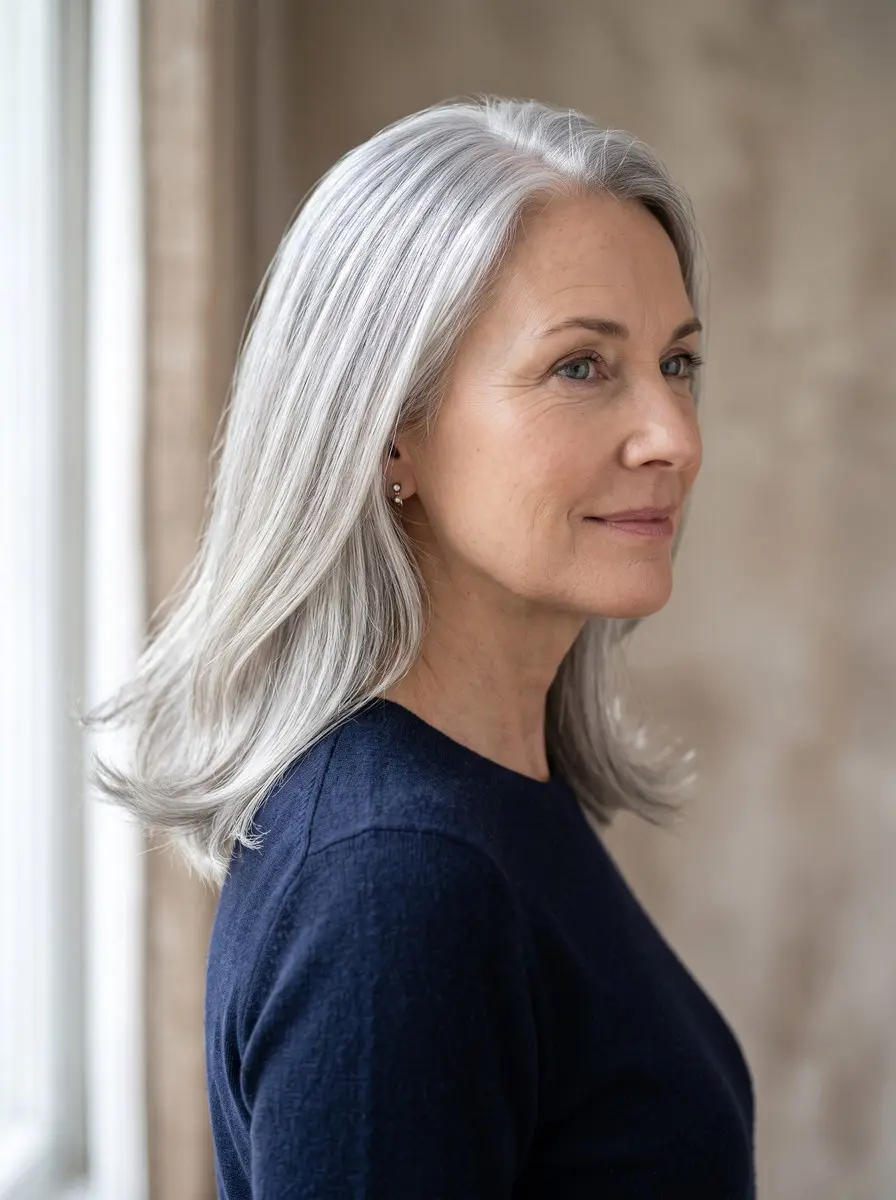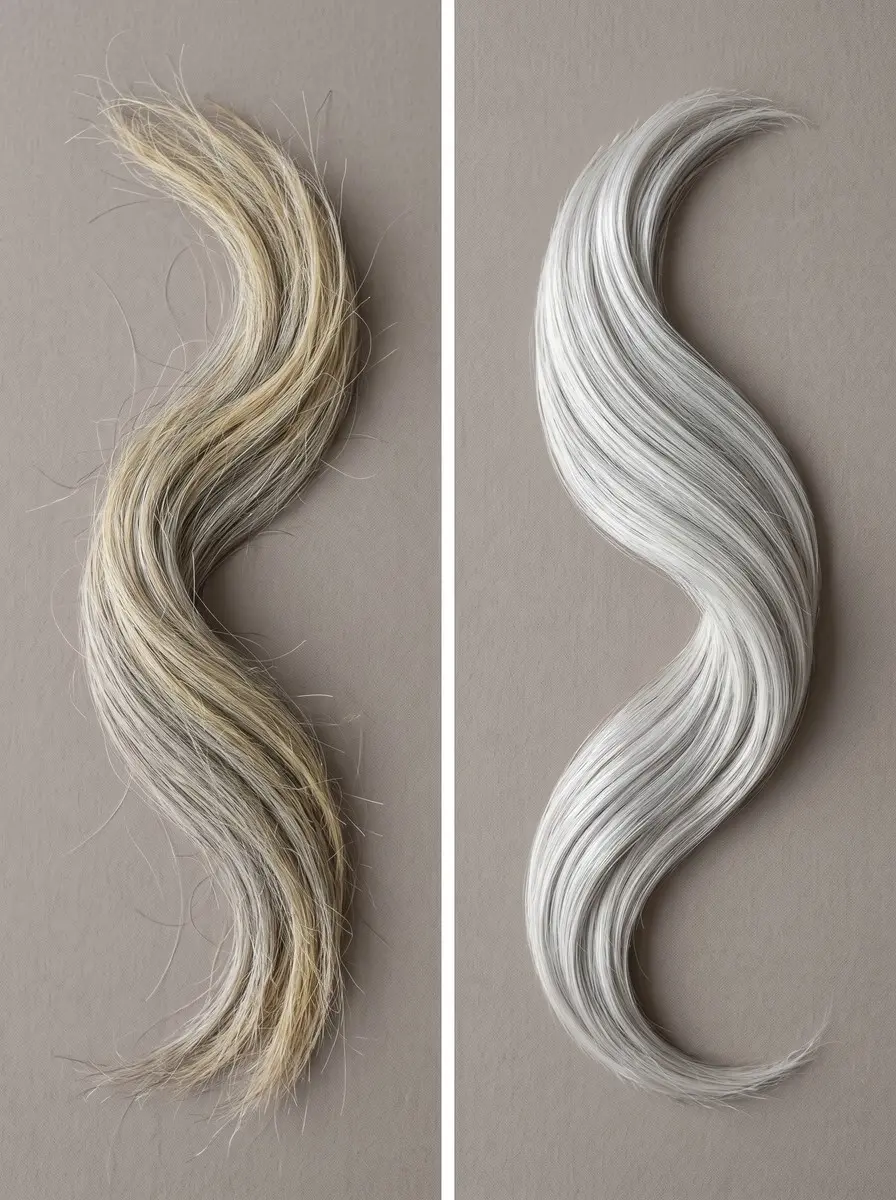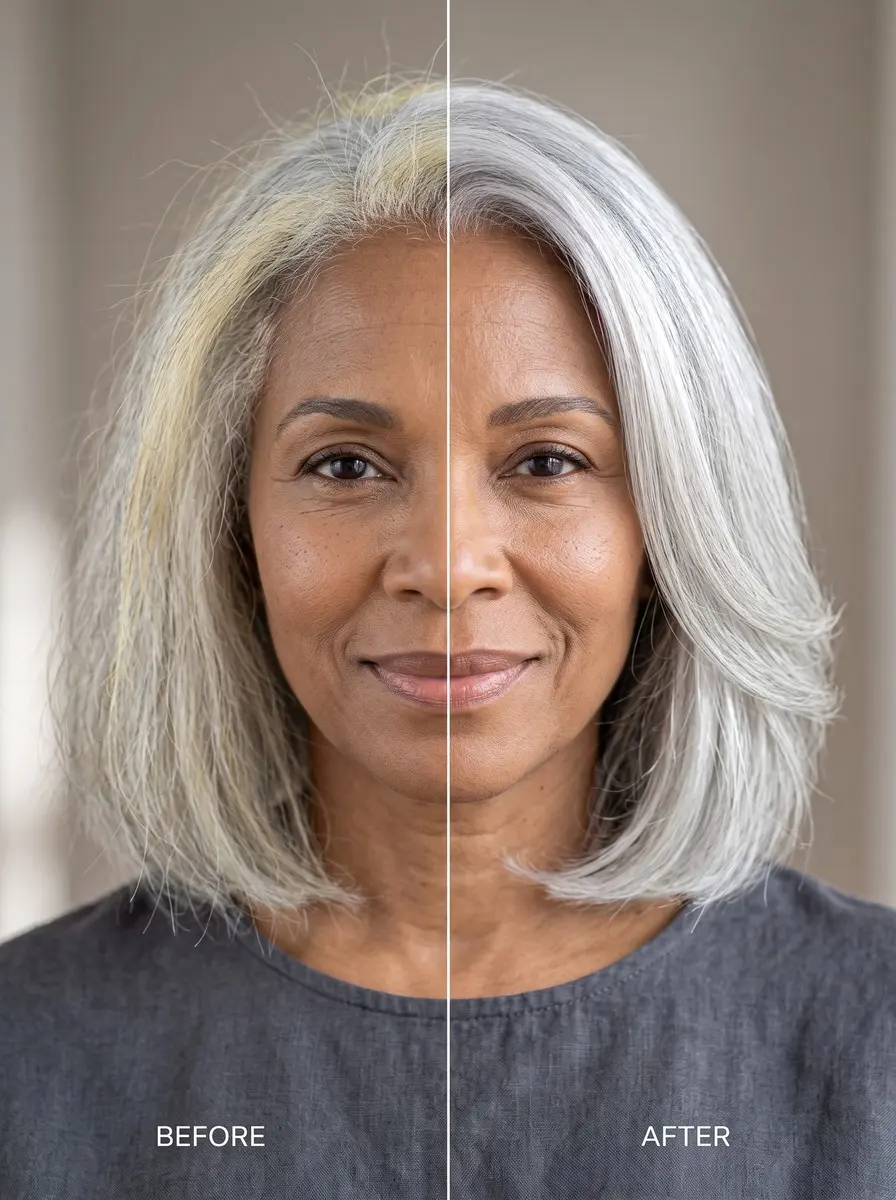
To care for silver hair, wash with a sulfate-free shampoo and conditioner, clarifying first if you have hard water, then swap in purple shampoo one to three times a week at the shortest label time. Add a weekly mask, UV spray outdoors and a gloss when shine fades.
Silver hair can look luminous or tired, and the difference is rarely the shade itself. Without pigment to hide behind, white and gray strands show everything: the yellow tinge from scalp oil and sun, the dullness from hard-water minerals, and the wiry, dry texture many people notice as more of their hair goes gray. The good news is that each of those is a care problem, not a permanent verdict.
This routine is built for natural silver, gray and salt-and-pepper hair rather than dyed blonde. It covers why gray hair yellows, how to use purple shampoo without turning lilac, and how to fit moisture, sun protection and shine into a simple weekly schedule. You need nothing more than your shower, a handful of targeted products and about 20 minutes on wash day.
What You’ll Need
- Purple toning shampoo for gray and silver hair — Its violet pigment cancels the yellow cast on natural silver when used one to three times a week.
- Sulfate-free hydrating shampoo and conditioner — Cleans oil off the scalp without stripping the moisture that dry gray lengths need.
- Hydrating hair mask — A weekly mask softens coarse, wiry gray strands so they lie smoother and shine.
- UV protectant hair mist — Shields the top layer from the sun exposure that yellows silver hair outdoors.
- Clear or silver ammonia-free hair gloss (at-home) — Adds mirror-like shine and a soft, even tone every four to eight weeks.
As an Amazon Associate, HairAide earns from qualifying purchases. Some links above are affiliate links — they cost you nothing extra and help support free tutorials.
Step-by-Step
-
Start by working out what is turning your silver yellow, because each cause needs a different fix. Check fully dry hair in daylight: a cast concentrated at the roots usually points to scalp oil and product buildup, a yellow top layer over brighter hair underneath points to sun exposure, and an all-over dull, yellow or faintly orange tinge often means minerals from hard water. Strands that look scorched only where you heat-style most often suggest the heat is set too high. You’re done when you can name your one or two main culprits.
-
Switch to a sulfate-free, color-safe shampoo and wash two to three times a week, focusing the lather on your scalp. Sulfates strip the natural oils that gray lengths, which many people find drier and coarser than their pigmented hair, can’t spare, yet oil left sitting at the roots can tint pale hair yellow. The goal is a clean scalp with the lengths left alone, so massage with your fingertips for a full minute and let the rinse suds run through the ends rather than scrubbing them. The scalp should feel fresh and the lengths should never squeak.
-
If your water is hard or you use a lot of styling product, clarify first, before you reach for purple shampoo. Calcium and magnesium in hard water, plus iron in some well water, leave a film that makes pale hair look dull, yellow or faintly orange, and that film also stops violet toner from depositing evenly, so toning over it gives patchy color and yellow that returns within days. Swap a clarifying or chelating shampoo in for your regular wash every two to four weeks, and finish with a mask, after toning if you tone the same day, because clarifiers are drying. Once dry, hair should feel lighter and less coated, with noticeably more shine; tone afterward only if yellow remains.
-
Once hair is free of buildup, swap a purple toning shampoo in for your regular shampoo one to three times a week, starting at the shortest time on the label. Violet sits opposite yellow on the color wheel, so a sheer violet deposit cancels the yellow cast and leaves silver looking cool and bright. Before the first full use, test it on a hidden section underneath at the nape, especially if your hair is very white or porous, because those strands grab pigment fast and turn lavender if it’s left on too long. Follow with a hydrating or purple conditioner, and judge the result only once hair is dry: bright, neutral silver with no lilac tint means the timing is right.
-
Condition after every wash and add a hydrating mask once a week. Work conditioner through the mid-lengths and ends for two or three minutes before rinsing; on mask day, swap it for a rich mask and leave it on for the full label time, usually five to ten minutes. Moisture and slip smooth the surface of coarse, wiry gray strands so they lie flatter, frizz less and reflect more light, which is what makes silver read as shiny rather than straw-like. You’re done when hair feels supple and a wide-tooth comb glides through without snagging.
-
While hair is still damp, comb a pea-size amount of lightweight leave-in conditioner or a few drops of serum through the ends and any wiry strands around the hairline. A leave-in keeps holding moisture after the rinse-out products are gone, which matters for gray hair because the scalp often makes less oil with age, so less natural conditioning travels down the lengths. Choose clear, light formulas over heavy oils and butters, which build up and catch dirt that dulls pale hair. If you blow-dry, mist a heat protectant over the leave-in and keep the dryer on medium rather than high, because very high heat can scorch pale strands yellow. Ends should feel soft and look separated, never greasy or stringy.
-
Protect silver from the sun on any day you’ll be outdoors for more than a quick errand. Sun exposure is one of the common reasons the top layer of gray hair turns yellow while the hair underneath stays bright, so mist a UV-protectant hair spray over dry hair before you head out, and wear a hat or scarf for long stretches in strong sun. Reapply after swimming or heavy sweating, since water rinses the protective film away. The sign it’s working is a top layer that stays the same cool shade as the hair beneath it.
-
Add a clear or silver-toned gloss every four to eight weeks for mirror-like shine. An ammonia-free gloss coats each strand in a sheer, conditioning layer that smooths the surface so it reflects more light, and a silver-tinted version evens out tone at the same time. Apply it to clean, towel-dried hair or as the label directs, process for the stated time, and rinse thoroughly. It fades gradually with washing, so the cue to repeat is shine slipping back toward the matte look you started with.
-
Put it all on a simple weekly schedule that follows the same order as the steps above, so the routine runs on autopilot: clarify first when it’s due, then tone, then moisture, with gloss layered on last. A typical week looks like this: wash day one with sulfate-free shampoo and conditioner, wash day two with purple shampoo followed by your weekly mask, a leave-in after every wash, and UV spray on outdoor days. Every two to four weeks, if your water is hard or you use a lot of product, make one wash day a clarifying day and tone afterward only if yellow remains; every four to eight weeks, gloss freshly washed hair as the label directs once shine fades. Change only one thing at a time, so if yellow creeps back you know whether to clarify sooner, tone more often or step up sun protection.
Common Mistakes to Avoid
- Leaving purple shampoo on longer to make it ‘work harder’ — the result is a lavender or gray-violet cast, not whiter hair.
- Using purple shampoo at every wash, which dulls silver and dries it out; one to three times a week is enough.
- Toning over hard-water or product buildup instead of clarifying first, so the violet deposits unevenly and the yellow returns within days.
- Skipping conditioner on toning days, when coarse gray strands need moisture the most.
- Spending summer outdoors with no hat or UV spray, then wondering why only the top layer has turned yellow.
Pro Tip
Judge your silver in daylight with hair completely dry before reaching for more toner. Warm bathroom bulbs make clean white hair look yellower than it is and damp hair always reads darker, which is how most people over-tone their way into lavender.
Frequently Asked Questions
How often should I use purple shampoo on gray hair?
Use purple shampoo one to three times a week, in place of your regular shampoo on those days, and start with the shortest time on the label. Very white or porous hair takes pigment quickly, so strand-test a hidden section first. If hair turns lavender, a wash or two with a clarifying or regular shampoo usually lifts the tint.
Why does gray hair turn yellow?
Gray and white hair has no pigment to mask discoloration, so yellowing shows easily. The usual causes are scalp oil and product buildup, sun exposure, minerals in hard water, and very high styling heat. Purple shampoo cancels the yellow cast, while regular clarifying and UV protection stop it building back.
Why does my gray hair feel coarse and dry?
Many people notice their gray strands feel wirier and drier than their pigmented hair did, and the scalp often produces less oil with age, so less natural conditioning reaches the lengths. A moisture-first routine helps: a sulfate-free shampoo, conditioner after every wash, a weekly mask and a light leave-in. Most hair feels softer within a few washes.
Can heat styling turn silver hair yellow?
Very high heat can scorch pale strands and leave a yellow tinge, so mist a heat protectant through damp hair before every blow-dry. Keep the dryer on a medium rather than the hottest setting, aim the airflow down the lengths, and stop as soon as hair is dry. Turning the heat down on any styling tool is the simplest way to keep silver bright.
How long does a hair gloss last on silver hair?
A gloss fades gradually with shampooing, so it looks its best for several weeks and usually needs refreshing every four to eight weeks. Washing less often and using a sulfate-free shampoo help it last. Choose a clear gloss for pure shine or a silver-tinted one if you also want to soften yellow; ammonia-free formulas are gentle enough to repeat regularly.
You Might Also Like
- 20 low-effort lob ideas, many in natural silver
- 20 short silver styles that frame glasses
- 20 curly styles for women over 50, from silver ringlet pixies up
- how to tone brassy color-treated hair at home
- a cold-weather routine for dry hair
- how to stop static and flyaways
- how to air dry hair without frizz
Give this routine a few weeks and most silver hair looks brighter, feels softer and holds its shine longer between washes. After that, the work is maintenance: a clarifying wash when hair starts to feel coated, purple shampoo only as often as yellow actually shows up, a mask every week, and a fresh gloss when the shine fades.
Book a stylist if yellow or orange tones survive both clarifying and toning, if you want a salon-strength gloss, or if you are mid-transition and want gray blending to soften the line between old color and new silver. A good stylist can also shape a cut that shows off salt-and-pepper dimension instead of fighting it.
Sources
- Silver hair can turn yellow or orange from scalp oils, sun exposure and water quality. L'Oréal suggests purple toning shampoo and conditioner 2-3 times a week in place of regular products. lorealparisusa.com
- Leaving purple shampoo on too long can leave a lavender cast. Start at the shortest label time and test a hidden section, especially on porous or very white hair. sephora.com