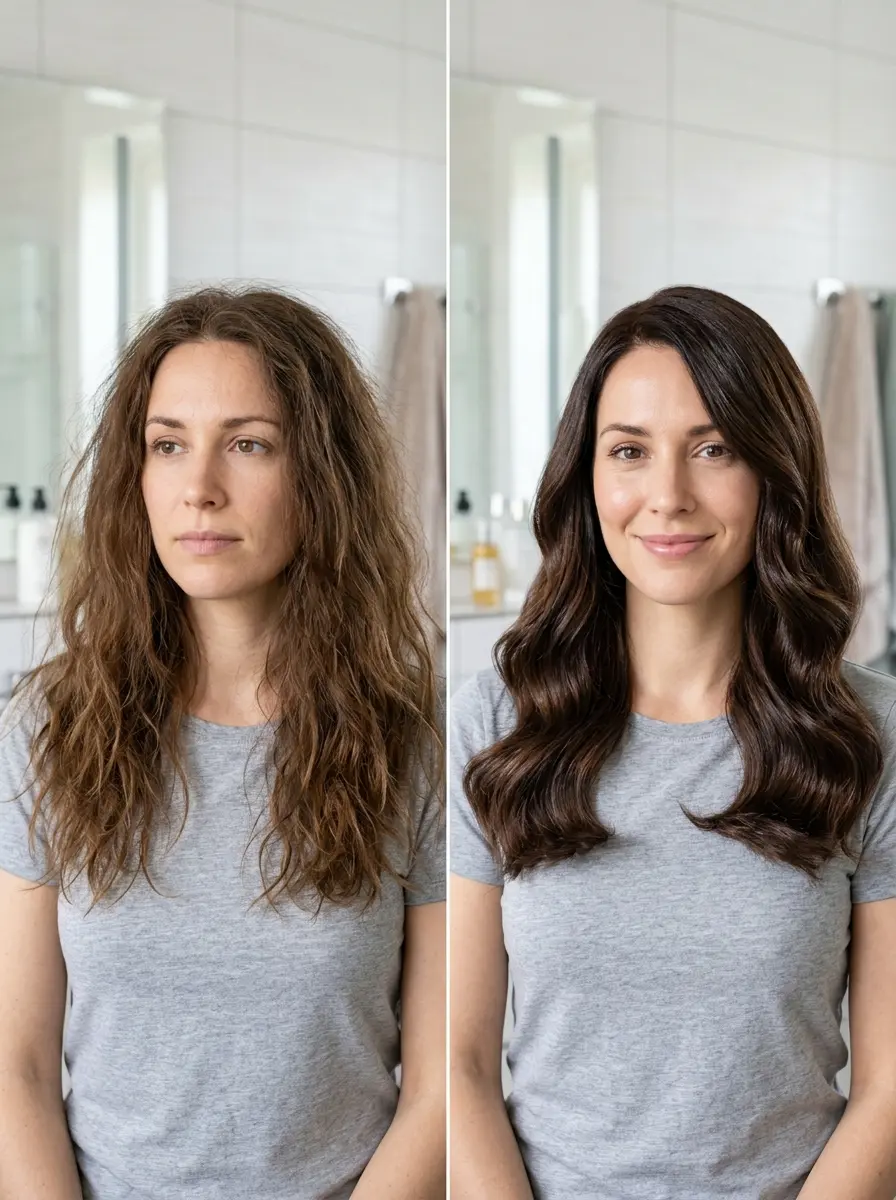
If your hair looks dull, brassy, or just tired between color appointments, a hair gloss is the fastest fix in your arsenal. Unlike permanent color, a gloss is a semi-permanent treatment that seals the cuticle, floods strands with mirror-like shine, and can neutralize unwanted warmth — all without commitment, damage, or a $90 salon visit.
The great news is that doing a hair gloss at home takes about 30 minutes and produces results that genuinely rival a professional service. Whether you want to deepen a brunette, calm brassiness on blonde, or add a glossy finish to natural hair, this step-by-step guide covers every detail. No prior color experience needed — just clean hair and a timer.
What You’ll Need
- At-home hair gloss kit — tinted, semi-permanent (e.g., Madison Reed Radiant Hair Color Gloss) — The core treatment — deposits tone and seals the cuticle in one step; tinted formulas correct brassiness while clear formulas add pure shine without color shift.
- eSalon custom gloss treatment — A salon-matched alternative for anyone who already uses eSalon for color — their gloss is formulated to pair with your existing formula for precise tone maintenance.
- Clarifying shampoo — Removes silicone and product buildup before application so the gloss formula bonds directly to the hair shaft — the single biggest factor in even, lasting results.
- Wide-tooth comb — Distributes gloss evenly through each section without snagging wet strands, preventing the concentrated streaks that come from applying formula with fingers alone.
- Microfiber hair towel — Absorbs post-rinse moisture gently without the friction of terrycloth, protecting the freshly sealed cuticle so shine sets rather than scattering before the hair dries.
As an Amazon Associate, HairAide earns from qualifying purchases. Some links above are affiliate links — they cost you nothing extra and help support free tutorials.
Step-by-Step
-
Shampoo once with a clarifying or sulfate-free shampoo to strip any dry shampoo, silicone buildup, or styling product residue from your strands. Gloss formula needs a clean surface to bond to — buildup creates a physical barrier that causes uneven deposit and patchy shine. Rinse thoroughly, then gently squeeze (do not rub) excess water from your hair until it’s damp but not dripping.
-
If you’re using a tinted gloss rather than a clear gloss, apply a quarter-size amount to a single 1-inch section near the nape of your neck and process for the full recommended time before rinsing and blow-drying just that piece. Gloss tone results vary dramatically depending on your base color — a strand test takes 30 extra minutes and prevents a full-head result you didn’t expect. Skip this step only with a clear (tone-free) gloss.
-
Divide your damp hair into four sections using clips — two in the front, two in the back. This is the most commonly skipped step and the most common cause of uneven shine and blotchy tone. Sectioning guarantees you fully saturate the underlayers, which are the first place missed coverage shows once your hair dries.
-
Mix or prep your gloss formula per the package directions — most at-home kits require shaking the included bottle for 30 seconds or combining two components. Put on your gloves now. The formula should pour like a thick conditioner; if it looks watery, re-shake. Never alter developer ratios or substitute a different volume — changing the formula changes both the deposit depth and the processing window.
-
Working section by section from back to front, apply gloss generously from mid-shaft to ends first, then return to coat the roots. Roots process faster than lengths because body heat accelerates deposit — applying them last prevents a darker, over-saturated root line. After each section, run a wide-tooth comb through from root to tip to distribute the formula evenly before moving to the next section.
-
Cover your hair with a plastic processing cap, press it snug to eliminate air pockets, and set a timer for the time specified on your formula — typically 10 to 20 minutes. If your formula supports heat, sit under a hooded dryer or hover a blow dryer on low over the cap for the first 10 minutes, then let it finish at room temperature. Heat speeds up and deepens deposit; skipping it produces a lighter, sheerer result, which is fine for a subtle refresh.
-
Rinse with cool or lukewarm water only — never hot. Hot water re-opens the cuticle you just sealed and strips tone within the first few minutes of rinsing. Rinse until the water runs completely clear, which usually takes 60 to 90 seconds longer than you’d expect. Skip shampooing entirely; a small amount of conditioner on the ends is fine if your hair feels dry, but keep it off your roots.
-
Wrap hair in a microfiber towel for 5 minutes, then air-dry or blow-dry on medium heat. The full depth, tone, and shine of a gloss doesn’t reveal itself until hair is completely dry — don’t judge the result while damp. Once dry, evaluate in natural light. If the tone is exactly right, note the formula name and processing time you used so you can replicate it every 4 to 6 weeks.
Common Mistakes to Avoid
- Applying gloss to dry hair — the formula needs slight moisture to spread and penetrate the cuticle; dry application leads to patchy coverage and uneven tone.
- Rinsing with hot water after processing — heat re-opens the cuticle you just sealed, stripping both tone and shine in the first rinse; always use cool to lukewarm water.
- Extending the processing time past the manufacturer’s instructions hoping for more color depth — over-processing a semi-permanent gloss produces muddy, flat color and accelerates buildup rather than deeper deposit.
- Skipping the strand test on tinted formulas — your base color (especially if previously highlighted or colored) dramatically changes the final tone, and 30 minutes of testing prevents a full-head result you have to live with for weeks.
Pro Tip
After blow-drying, apply one pump of lightweight hair oil to your palms, smooth it over your ends, and step into natural light — the gloss has sealed the cuticle flat, and the oil sits on top of that smooth surface like a topcoat on nail polish, reflecting light and amplifying shine well beyond what the gloss alone produces.
You Might Also Like
- 15 balayage hair color ideas to inspire your next look
- 15 blonde haircut ideas to pair with your fresh gloss
- best haircuts for thin hair
- virtual hair try-on tool
- pixie cut hair ideas
A well-applied at-home hair gloss lasts 4 to 6 weeks with color-safe shampoo, weekly cool rinses, and minimal heat styling. Repeating every 4 to 6 weeks keeps tone even and maintains that freshly sealed shine — treat it like a monthly reset rather than an occasional rescue.
If you’re still seeing stubborn brassiness or uneven tone after two rounds of at-home gloss, your hair may need a professional toner or color correction to reset the base. One salon visit can recalibrate things so that future at-home maintenance actually sticks.
A heat protectant before you switch on the blow dryer goes a long way toward keeping strands healthy. Damp hair—not soaking wet—is what a dryer or diffuser is actually built for.