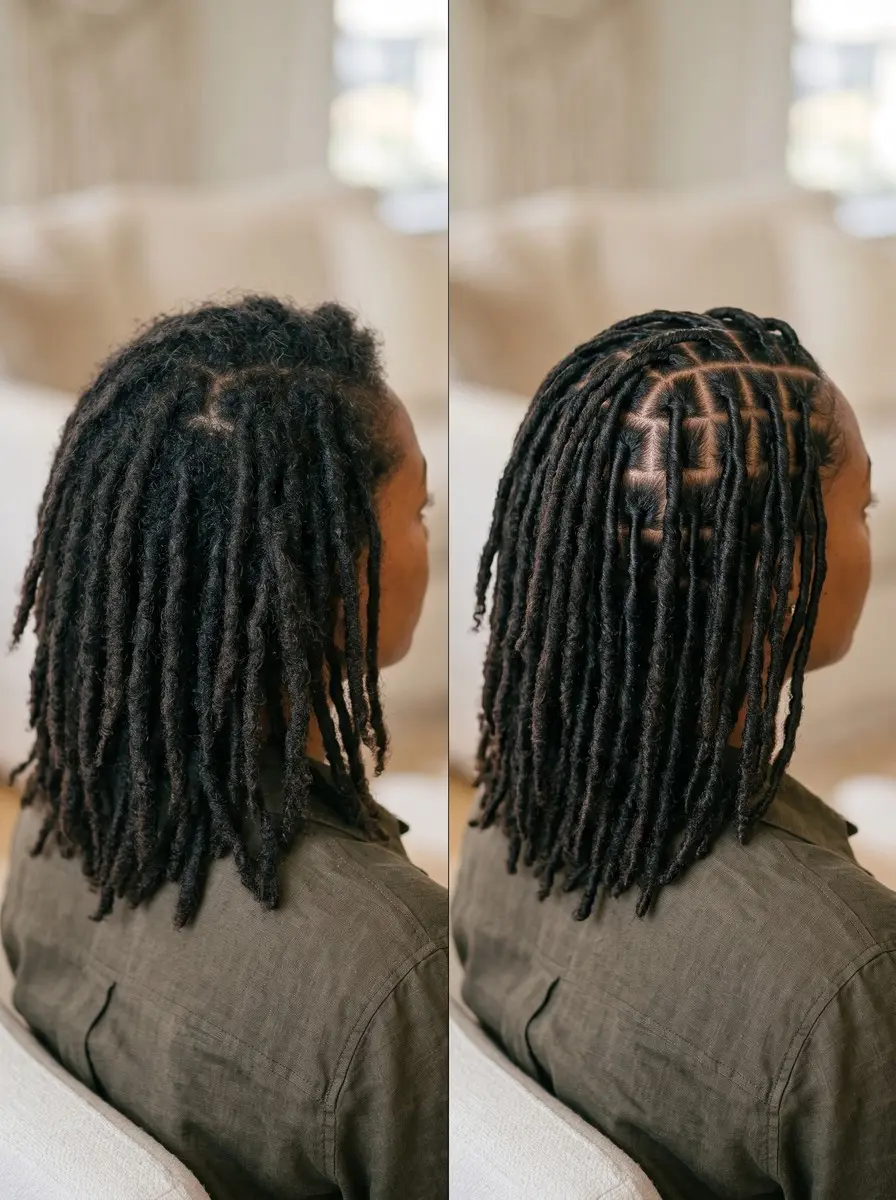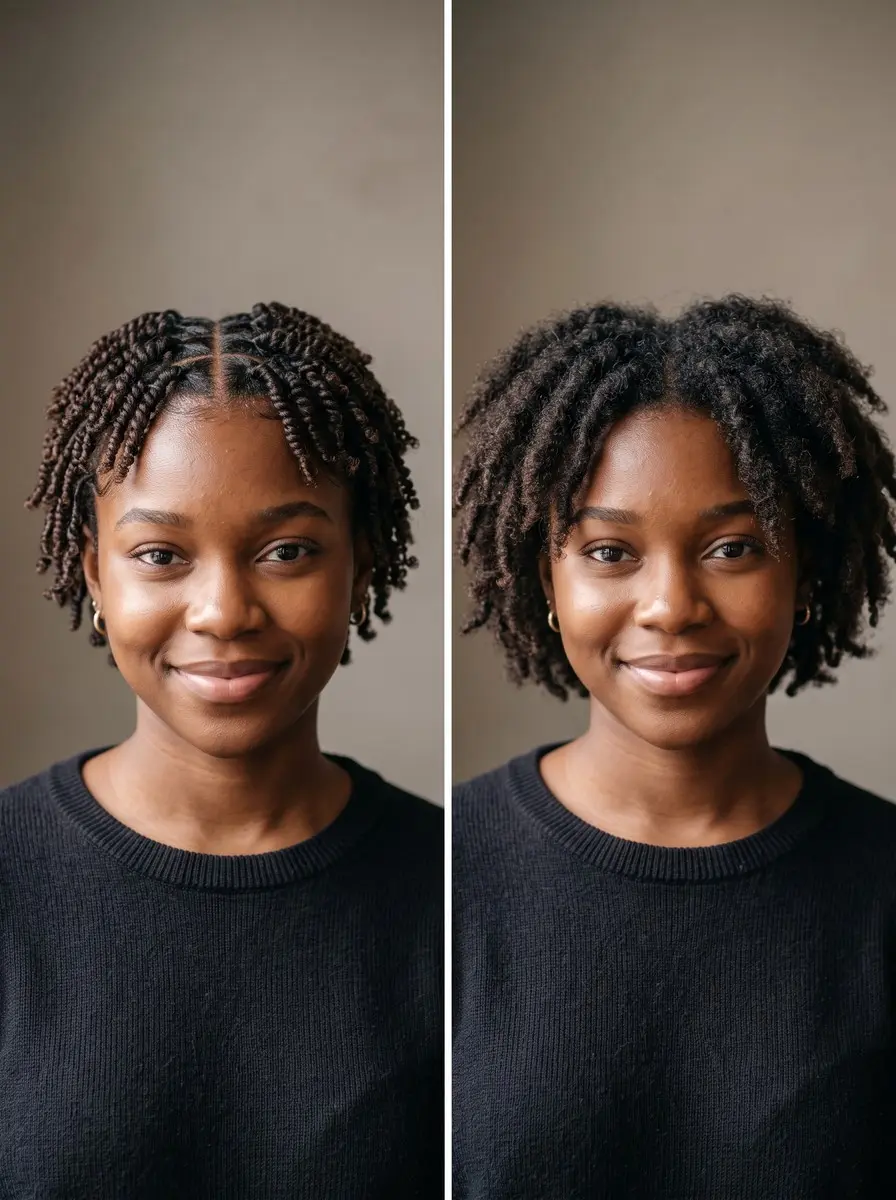
Quick answer To maintain starter locs, mostly leave them alone: wash every couple of weeks through a stocking cap with a residue-free shampoo, skip conditioner and heavy oils, dry them to the core, sleep in a satin bonnet and retwist only the new growth on schedule.
Fresh starter locs look crisp for about a week. Then the first wash loosens a few coils, a halo of frizz appears and the locs seem to shrink. That is usually when new loc-wearers reach for conditioner, extra gel or a weekly retwist, and those fixes are exactly what slow locking down. If you want to maintain starter locs well, the first months are mostly about restraint.
The starter stage typically lasts about three to six months, and the hair is at its most fragile during it, so the work comes down to occasional, careful washing, light moisture, protection at night and a short list of things to leave alone.
This guide walks through it in order, from the first wash to the first buds, and explains what is normal along the way, so you can tell a loc that is locking from one that needs help.
Time 45-60 minutes per wash day, plus drying timeDifficulty BeginnerSteps 8
Starter Loc Care Schedule
| Task | How often |
|---|---|
| First wash | After about 2-4 weeks |
| Regular wash, through a cap | Every couple of weeks |
| Clarifying wash | Every 4-6 weeks |
| Water or leave-in mist | Every few days |
| Retwist new growth, first 4-6 weeks | Every 2-3 weeks |
| Retwist new growth, after that | About every 4 weeks |
| Satin bonnet or pillowcase | Every night |
What You’ll Need
As an Amazon Associate, HairAide earns from qualifying purchases. Product links in this guide are affiliate links: they cost you nothing extra and help keep these tutorials free.
- Mesh or nylon stocking wash cap Holds fresh coils and twists in place so you can shampoo the scalp without unraveling them.
- Residue-free shampoo for locs Rinses out completely, so nothing stays trapped in the core of a forming loc.
- Satin-lined sleep bonnet with a wide band Cuts the friction and lint that cotton pillowcases leave in starter locs overnight.
- Microfiber hair towel Presses water out of locs without the snagging and lint of a terry towel.
- Water-based loc moisture spray Adds light moisture between washes without the slip and residue of conditioner.
Step-by-Step
Step 1 Know how your starter method behaves
Start by noting which method your locs were started with, because each one behaves differently in the first weeks. Comb coils suit short, tightly coiled hair and look the neatest at first, but they are the most likely to unravel when water and friction reach them.
Two-strand twists and braids need a few inches of length and hold up better to washing, though the twist or braid pattern can stay visible at the ends for months.
Interlocked starters are pulled through at the root, so they survive washing from day one and suit looser textures that won’t hold a coil, but they depend on even, moderate tension. Knowing your method tells you how gentle your first washes need to be and which changes are simply normal.
Step 2 Wait, then wash through a cap
Hold off on the first wash for roughly two to four weeks so new coils or twists can settle; braided and interlocked starters usually tolerate water sooner, and an itchy scalp in the meantime can be dabbed between the parts with a cotton pad dampened with witch hazel.
When you do wash, pull a stocking cap or mesh wash cap over your locs, dilute a residue-free shampoo with water in an applicator bottle and work it into your scalp through the cap with your fingertips.
The cap holds every coil in place while letting water and lather through, so you clean the scalp without the friction that unravels new locs. Squeeze the lather down the lengths rather than rubbing, rinse until the water runs clear, and repeat every couple of weeks from then on.
Step 3 Squeeze dry, then dry to the core
Press the water out of each section with a microfiber towel or a cotton T-shirt instead of rubbing with a terry towel, whose loops snag new coils and leave lint behind. Then let your locs dry completely, which can take several hours even for small starters, or sit under a hooded dryer on low or medium to speed it up.
The center of a loc holds water long after the surface feels dry, and locs left damp, especially once they are tied up or slept on, can develop a musty, mildew smell. They are done when a squeezed loc feels dry, with no coolness, from root to tip.
Step 4 Moisturize with water, not conditioner
Skip rinse-out conditioner, heavy butters, beeswax and thick creams for the first few months. Conditioners are designed to soften strands and add slip so they separate easily, which is the opposite of what a new loc needs to knot together, and heavy products tend to stay trapped in the loc’s dense core, where they attract lint and dull the hair.
Instead, mist your locs every few days with plain water or a light, water-based leave-in spray, and if your scalp feels tight, massage a few drops of a light oil such as jojoba onto the scalp only. Your locs should feel soft and slightly springy, never greasy or tacky.
Step 5 Protect your locs every night
Cover your locs with a satin or silk bonnet or a satin-lined sleep cap every night, or switch to a satin pillowcase if caps slip off while you sleep. Cotton pillowcases create friction that frizzes and loosens fresh coils, and their fibres leave lint that gets wound into the loc as it matures, where it can’t be picked out later.
Choose a cap with a soft, wide band rather than tight elastic, so it doesn’t press on your hairline all night. A good night shows up in the morning as coils still sitting in their parts, with no fuzz or lint on the surface.
Step 6 Keep your hands off between retwists
Resist re-coiling, twisting or palm-rolling your locs every time they look fuzzy, because the hair needs to sit undisturbed to knot inside the loc, and constant handling restarts that process.
Retwisting the root too often also causes scalp soreness, traction damage and thinning, so follow the schedule in our retwist guide: every 2-3 weeks during the first 4-6 weeks, then about every 4 weeks, working only the new growth at the root.
Keep a do-nothing list between sessions: no daily re-coiling, no tight ponytails or heavy accessories, no extra gel to flatten frizz and no picking at the small bumps that form inside locs. That halo of frizz is part of locking, not a sign to redo anything.
Step 7 Clarify every four to six weeks
Every four to six weeks, or sooner if your locs look dull, feel waxy or show white flecks, swap one regular wash for a clarifying shampoo, still applied through a cap while your locs are young.
Even with residue-free products, sweat, sebum, hard-water minerals and leave-in sprays leave traces, and in a loc that residue works into the core instead of sitting on the surface. Clarifying on a schedule removes it while it is still near the surface and easy to rinse out. Follow with a light water mist, because a clarifying wash can leave hair feeling dry.
Step 8 Track the stages and what’s normal
Expect the starter stage to last roughly three to six months, with budding often running from around month six to month twelve, though timing varies widely with texture and starter method. During the starter months, unraveling at the tips, frizz and a loose, airy feel are all normal.
Budding shows up as small bulbs or knots forming inside each loc, along with shrinkage that can make locs look shorter even though your hair keeps growing at its usual rate. After budding comes the teen stage, when locs often look puffy and may stick up or out before they gain weight, settle and start to drop.
Common Mistakes to Avoid
- Re-coiling or retwisting every few days to tame frizz, which slows locking and strains the roots toward soreness and thinning.
- Using rinse-out conditioner or heavy butters in the first months, which soften the hair enough to loosen new coils and leave residue trapped inside the loc.
- Scrubbing the lengths on wash day instead of cleaning the scalp through a cap, which can unravel comb coils in a single session.
- Going to bed or tying locs up while their centers are still damp, which invites a musty, mildew smell.
- Sleeping on cotton without a bonnet, which frizzes starters and winds lint into the loc where it can’t be removed.
Pro tip After each wash, while your locs are still damp, gently pull apart any hairs bridging two neighboring locs at the root. It takes a couple of minutes and stops starters from fusing into one oversized loc, which is far harder to split once it has locked.
The Bottom Line
Starter locs reward patience more than products. Wash every couple of weeks through a cap, dry every loc to the core, mist with water, sleep in satin and retwist only on schedule, and the frizz and shrinkage of the first months turn into firm, budding locs. Clarify every four to six weeks so nothing builds up inside them while they form.
If your locs keep unraveling, your roots feel sore or look thinner, or neighboring locs keep merging however often you separate them, book a loctician rather than redoing them yourself. A pro can correct sizing and tension early, while the locs are still easy to adjust, and set you up for a smoother teen stage.
Frequently Asked Questions
How long should you wait to wash starter locs?
Most locticians suggest waiting about two to four weeks before the first wash so new coils or twists can settle, though braided and interlocked starters usually tolerate water sooner. After that, wash every couple of weeks through a stocking or mesh cap, using a residue-free shampoo focused on the scalp. Give a fresh retwist about a week before shampooing.
Is it normal for starter locs to unravel?
Yes. Some unraveling is normal in the first months, especially with comb coils and at the tips of twists, because the hair hasn't knotted inside the loc yet. Leave loose ends alone until your next scheduled retwist instead of re-coiling them daily. If many locs come apart after every wash, see a loctician, since your starter method may not suit your texture.
Can you use a dryer on starter locs?
Yes. A hooded dryer on low or medium is a reliable way to dry starter locs all the way to the center, which helps prevent mildew smells. Use it on damp locs after squeezing out the water, and mist a heat protectant over them first; a light, water-based formula is less likely to build up inside the loc.
Why do my starter locs look shorter than when I started?
That is shrinkage, and it is a normal sign of locking. As the hair coils and knots inside each loc, the loc contracts, so starters often look noticeably shorter during budding even though your hair keeps growing at its usual pace of about half an inch a month. The length shows again gradually as locs gain weight, settle and drop.
When should you see a loctician for starter locs?
See a loctician if many locs unravel after every wash, if neighboring locs keep fusing together, or if your scalp is sore, bumpy or thinning around the roots, which can signal traction from tight or frequent retwisting. A check-in during the first few months is also worthwhile to confirm your parts and sizing while the locs are still easy to adjust.
Keep Reading
Sources
- Stages of locs curlcentric.com
- How to care for locs olaplex.com