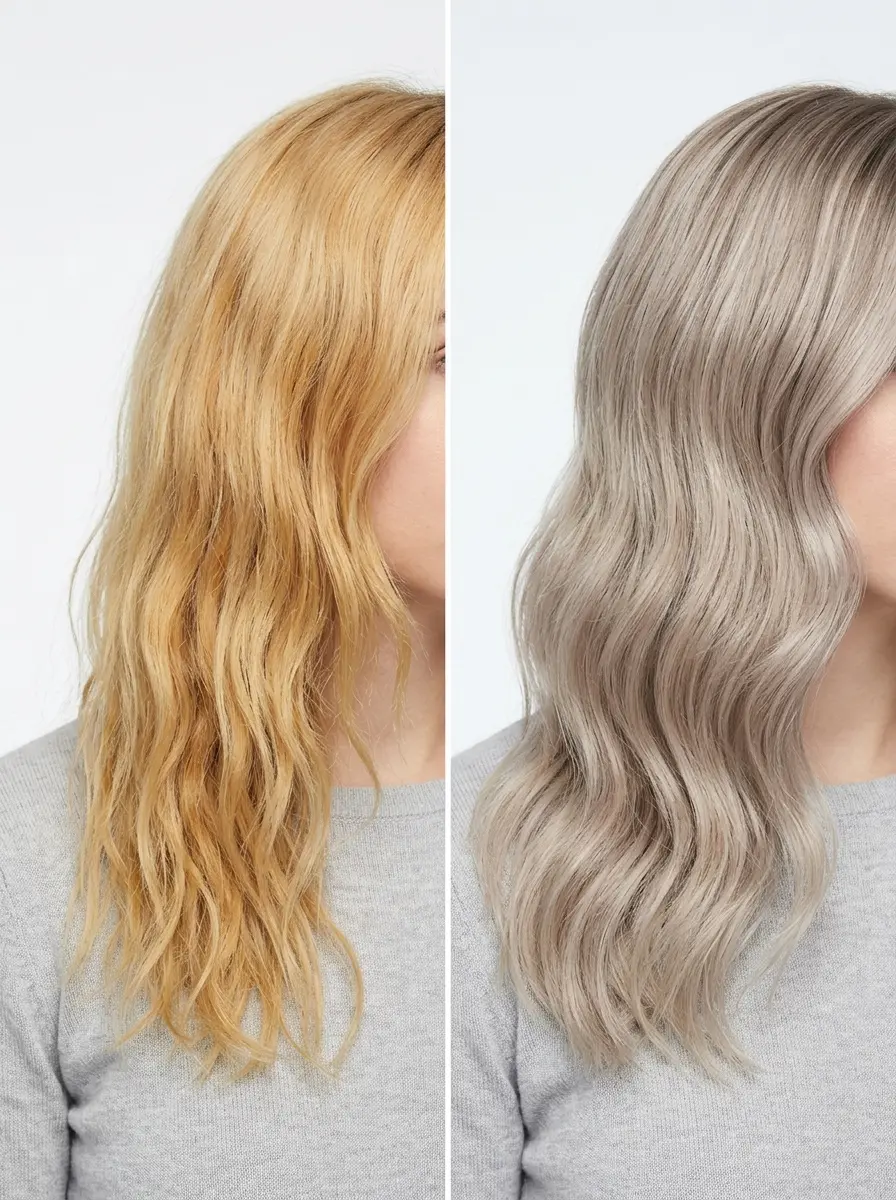
Brassy hair happens to almost everyone who lightens their color — the moment that golden warmth crosses the line into orange or muddy yellow, it can make even a fresh color look dull and grown-out. The good news: you do not need a salon visit to neutralize it. A purple or blue toner, a color-depositing gloss, or a targeted mask can pull those warm tones back into cool, polished territory in under an hour.
This guide walks you through exactly how to tone brassy hair at home, whether you are a blonde fighting yellow or a brunette dealing with orange. You will learn how to choose the right product for your specific shade, how to apply it without over-toning (the dreaded grey cast), and how to lock in results that last weeks, not days.
What You’ll Need
- Purple toning shampoo (for yellow-blonde tones) — Violet pigment directly neutralizes pale yellow on light blonde and highlighted hair — the most widely available at-home toning tool.
- Blue toning shampoo (for orange/copper tones) — Blue pigment cancels warm orange and copper in medium-blonde and light-brunette hair where purple alone is too weak.
- At-home color-depositing gloss — Delivers a stronger, longer-lasting tonal shift than shampoo alone — ideal for persistent brassiness that returns within a week.
- Clarifying shampoo — Removes the mineral and product buildup that blocks toner pigment from depositing evenly, making every other step work better.
- Deep conditioning hair mask — Restores moisture and seals the cuticle after toning so the cool result lasts longer and hair stays shiny rather than dull.
As an Amazon Associate, HairAide earns from qualifying purchases. Some links above are affiliate links — they cost you nothing extra and help support free tutorials.
Step-by-Step
-
Identify your brass level before buying anything. Hold a section of hair near a window in natural light and compare it to a toning chart or color wheel: pale yellow needs a purple-pigment product, orange or copper tones need blue pigment, and deep red-orange in brunettes needs a blue-violet formula. Matching the pigment to your specific warmth is the single factor that makes toning work or fail.
-
Clarify your hair the day before toning to remove product buildup, hard-water minerals, and excess oil. Apply a clarifying shampoo, work it fully through every section, and rinse thoroughly. Buildup creates an invisible barrier that blocks toner pigment from depositing evenly — skipping this step is the most common reason toning looks patchy.
-
Do a 5-minute strand test before full application. Apply your chosen toning product to a small hidden section, process it for five minutes, rinse, and dry that section with a blow-dryer. Check whether the result reads too cool (grey or lavender cast), too warm, or just right — and use that timing as your anchor for the full application.
-
Shampoo hair normally, rinse, and towel-dry until it is damp but not dripping — toner deposits best on damp hair, and excess water dilutes pigment. Divide hair into four sections (two in the front, two in the back) and clip each one. Work in sections rather than dumping product on all at once so every strand gets even saturation.
-
Apply your toning product starting at the mid-shaft and working toward the ends, then go back and apply to the roots. This prevents roots from over-toning (they process faster because of scalp heat). Use a wide-tooth comb or tinting brush to distribute product through each section from root to tip, making sure no strand is left dry.
-
Cover hair with a shower cap and process for the time indicated by your strand test — typically 5 to 20 minutes depending on product strength and your starting level. Check every 5 minutes by rinsing a small section and drying it quickly with a blow-dryer. Pull the toner immediately when you reach your target tone; leaving it longer can produce an ashy grey cast that reads dull rather than cool.
-
Rinse with cool water until water runs clear, then apply a deep conditioning mask from mid-shaft to ends and leave it on for at least 3 minutes before rinsing. Toning processes can be drying, and a mask seals the cuticle to lock in the tonal result and restore shine. Skip this step and your color may fade to brass again within days.
-
Dry your hair completely and assess in natural light before deciding if you need another round. If a warm patch remains, repeat toning only on that section (not all over) in your next wash. If the result is too cool or lavender, a single wash with a non-purple shampoo will fade it slightly. Most people land in the ideal zone after one full application.
Common Mistakes to Avoid
- Applying toner to dry or dirty hair — buildup and oil prevent even pigment absorption, causing patchy, streaky results.
- Processing too long without checking — toner turns hair grey or lavender when left past the optimal window, which varies by brand and starting level.
- Using purple shampoo on orange or copper brass — purple only cancels yellow; you need blue or blue-violet pigment for warmer tones, otherwise the product does nothing visible.
- Toning every wash — weekly toning strips moisture and weakens hair; twice a month is the upper limit for most people without protein treatments in between.
- Skipping the strand test — processing time listed on product packaging assumes an average starting level that may not match yours, making the test non-optional for first-time use.
Pro Tip
For extra-resistant brass that snaps back orange within a week, mix a small amount of blue or purple toning conditioner into your regular conditioner and use it every wash as a maintenance gloss — it is subtle enough not to over-tone but consistent enough to keep warmth in check between dedicated toning sessions.
You Might Also Like
- 15 balayage hair color ideas to inspire your next look
- 15 blonde haircut ideas to pair with your fresh tone
- try your new ash-blonde tone on yourself first
- short cuts that look stunning with cool-toned color
- pixie cut ideas that shine with toned blonde color
Once you tone, you will know exactly how your hair behaves — how fast warmth comes back, what product strength works for your level, and when to repeat. For most blondes that is every two to four weeks; brunettes managing lightened balayage or highlights typically go three to five weeks between sessions. Build the timing around when your roots start showing warmth under natural light, not the calendar.
If brassiness returns within a few days no matter what you try, it usually signals that the underlying lift is too warm and needs corrective professional toning at the salon — a colorist can pre-tone at the bowl in a way that holds far longer at home. For everything in between, the steps above are your permanent toolkit.
Quick heat-safety note: apply a heat protectant before blow-drying or diffusing, since even a dryer can stress strands over time. Work it through on damp hair rather than dripping wet, and you’ll get a smoother result with less breakage.