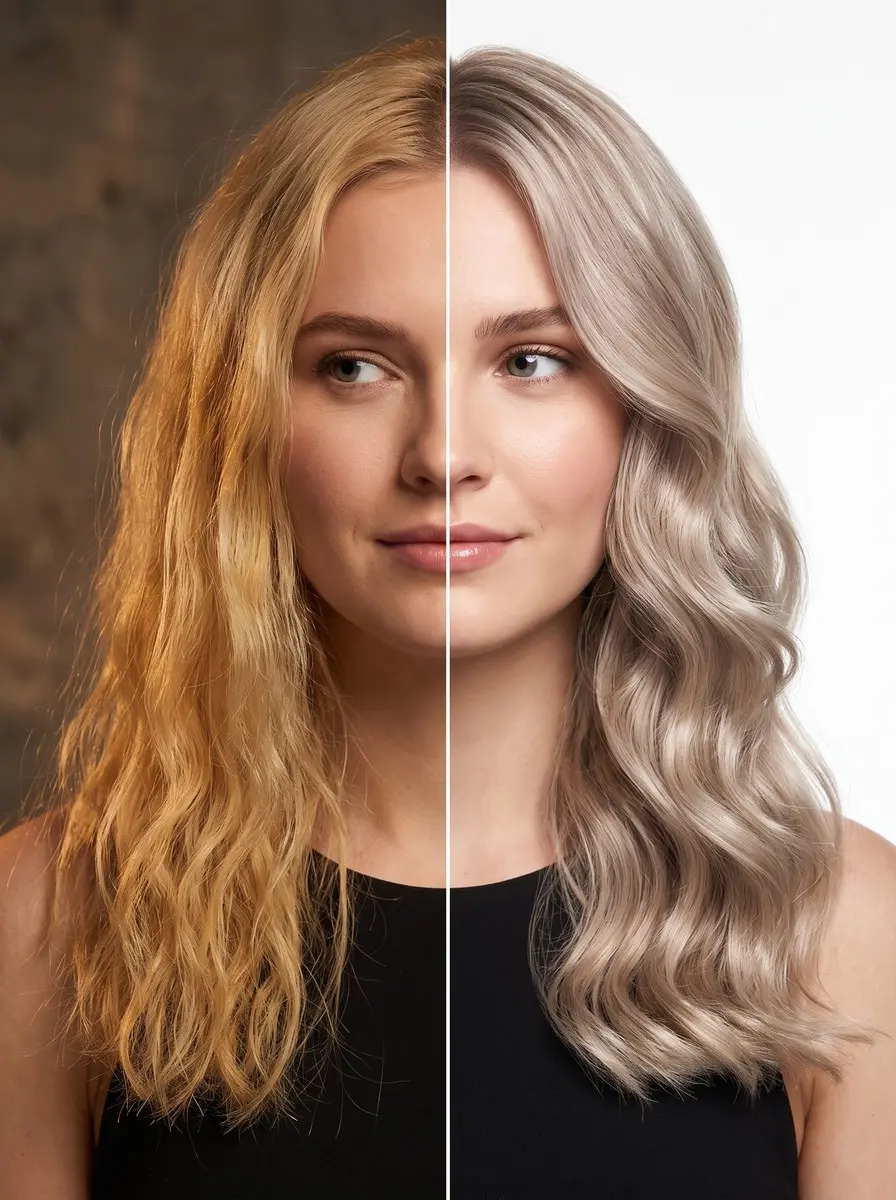
To tone brassy hair at home, match the toner to your brass: violet/purple neutralizes yellow, while a blue-based gloss or shampoo counters orange. Apply to clean, damp hair for 5-20 minutes, rinse until clear, then repeat weekly with a toning shampoo to keep the cast at bay.
That warm, brassy cast creeping into your blonde or lightened hair between salon visits is one of the most common — and most fixable — color complaints out there. Whether it shows up as banana-yellow roots, orange mid-lengths, or a red-orange tint in your regrowth, the fix is a matter of simple color theory, not a trip back to the chair.
Toning brassy hair at home takes one trip to the drugstore or beauty supply store and about 20-45 minutes of your time. With the right purple or blue product, correct timing, and a little patience on the rinse, you can knock the warmth back out and land on a cooler, more polished color that holds until your next touch-up.
What You’ll Need
- Purple toning shampoo — Neutralizes yellow-based brass between full toning sessions and maintains cool tone.
- Blue-based demi-permanent toner or gloss — Cancels orange and red-orange brass that purple alone can’t fully neutralize.
- Bond-building conditioner or mask — Replaces moisture and reduces breakage on hair processed with a toner.
- Tinting brush and mixing bowl — Allows even, section-by-section application so no patch is missed or over-saturated.
- Heat protectant spray — Shields hair from heat styling tools used after toning to set the finished look.
As an Amazon Associate, HairAide earns from qualifying purchases. Some links above are affiliate links — they cost you nothing extra and help support free tutorials.
Step-by-Step
-
Identify exactly which shade of brass you’re dealing with by looking at your hair in natural daylight — yellow reads as banana-blonde, orange shows up most in lifted level 6-8 hair, and red-orange appears in warm brunette or balayage regrowth. This determines which toner will actually cancel it out, since violet only fixes yellow.
-
Match your toning product to the color wheel: choose a violet-based purple shampoo or gloss for yellow brass, a blue-based toner or shampoo for orange brass, and a blue-green (teal) toner for red-orange brass. Using the wrong color family will leave warmth behind no matter how long you leave it on.
-
Do a strand test on a small hidden section before committing to a full application, especially if your hair has been previously bleached or color-treated. Leave the product on for the low end of its recommended time and check the result before going further.
-
Shampoo with a clarifying or regular shampoo first to remove any styling product buildup, then towel-dry hair until it’s just damp. Apply the purple or blue toning product section by section with a tinting brush or your fingers, saturating every strand evenly from root to tip.
-
Set a timer for the product’s recommended processing time — typically 5-10 minutes for a toning shampoo and 15-20 minutes for a demi-permanent gloss. Check color progress at the halfway point on fine or previously bleached hair, since it grabs pigment faster.
-
Rinse with cool to lukewarm water until it runs completely clear with no more color bleeding out, which can take longer than you expect. Follow immediately with a bond-building conditioner or mask to replace moisture and reduce breakage, especially on previously lightened hair.
-
Let hair air-dry or blow-dry on damp hair with a heat protectant, then style as usual to see your corrected tone. Neutralized hair should look cool-toned and even, without the yellow or orange cast you started with.
-
Maintain the result by swapping in a purple or blue toning shampoo once or twice a week between full toning sessions, since brass gradually creeps back as the demi-permanent pigment fades. Plan to redo a full gloss or toner every 4-6 weeks depending on how fast your hair pulls warm.
Common Mistakes to Avoid
- Reaching for only a purple product when your brass leans orange or red-orange — violet neutralizes yellow, not orange, so warm orange tones need a blue-based toner instead.
- Leaving toner or purple shampoo on far longer than directed hoping for a stronger effect — this overshoots into a dull gray or lavender cast, especially on light blonde hair.
- Skipping the strand test before a full application — porosity varies across the head, so previously colored ends can grab pigment differently than the roots.
- Rinsing in a rush without checking that the water runs fully clear — leftover toner residue can create uneven patches once hair dries and styles.
Pro Tip
Professional colorists often dilute a strong blue or violet toner with a clear neutral base on porous, previously bleached hair, since raw pigment grabs unevenly and can overcorrect into an ashy or muddy cast within minutes.
Frequently Asked Questions
How often should I tone my hair to keep brass from coming back?
Use a purple or blue toning shampoo once or twice a week for upkeep, and redo a full demi-permanent gloss or toner every 4-6 weeks. Hair that's frequently swum in chlorine or exposed to hard water pulls warm faster and may need toning closer to every 3-4 weeks.
Can purple shampoo fix orange brassy hair?
Not fully — violet pigment cancels yellow on the color wheel, but it won't neutralize orange or red-orange brass on its own. For orange tones, use a blue-based toner or shampoo; for red-orange, reach for a blue-green (teal) toner instead.
How long does a toner last before brass shows up again?
A demi-permanent gloss typically lasts 4-6 weeks, fading gradually with each shampoo since it doesn't lift or permanently deposit color. Washing less often, using cool water, and adding a weekly toning shampoo all help stretch that window.
Is it safe to tone my hair at home, or should I see a colorist?
Toning already-lightened hair at home with a purple or blue shampoo is low-risk and simple to reverse if it goes wrong. See a colorist instead if your hair is significantly over-processed, breaking, or if you need a full color correction rather than a tone adjustment.
Do I need to worry about heat damage after toning my hair?
Toning itself doesn't involve heat, but if you style afterward, apply a heat protectant first. Blow-dryers and diffusers are fine on damp hair, while a flat iron or curling wand should only touch fully dry hair, kept around 300°F (150°C) for fine or bleached hair or up to 355-390°F (180-200°C) for coarser hair — wet hair under an iron is what actually causes damage.
You Might Also Like
- 20 gray blending ideas to inspire your next color look
- 20 caramel hair color ideas to try next
- lob haircuts that pair well with a fresh blonde tone
- shaggy lob styles for thick, color-treated hair
- pixie cut ideas for short, lightened hair
- try a new hair color virtually before committing
Toning brassy hair at home comes down to matching violet or blue pigment to the exact warmth you’re canceling out, then giving it enough time to work without overdoing it. Once you’ve rinsed and styled, you should see a cooler, more even color with none of the yellow or orange pulling through.
Keep a toning shampoo in weekly rotation to slow brass from creeping back, and plan on a fresh gloss or toner every 4-6 weeks. If your hair keeps grabbing warmth fast, feels overly dry, or the cast turns muddy instead of cool, it’s worth booking a colorist rather than layering on more product.