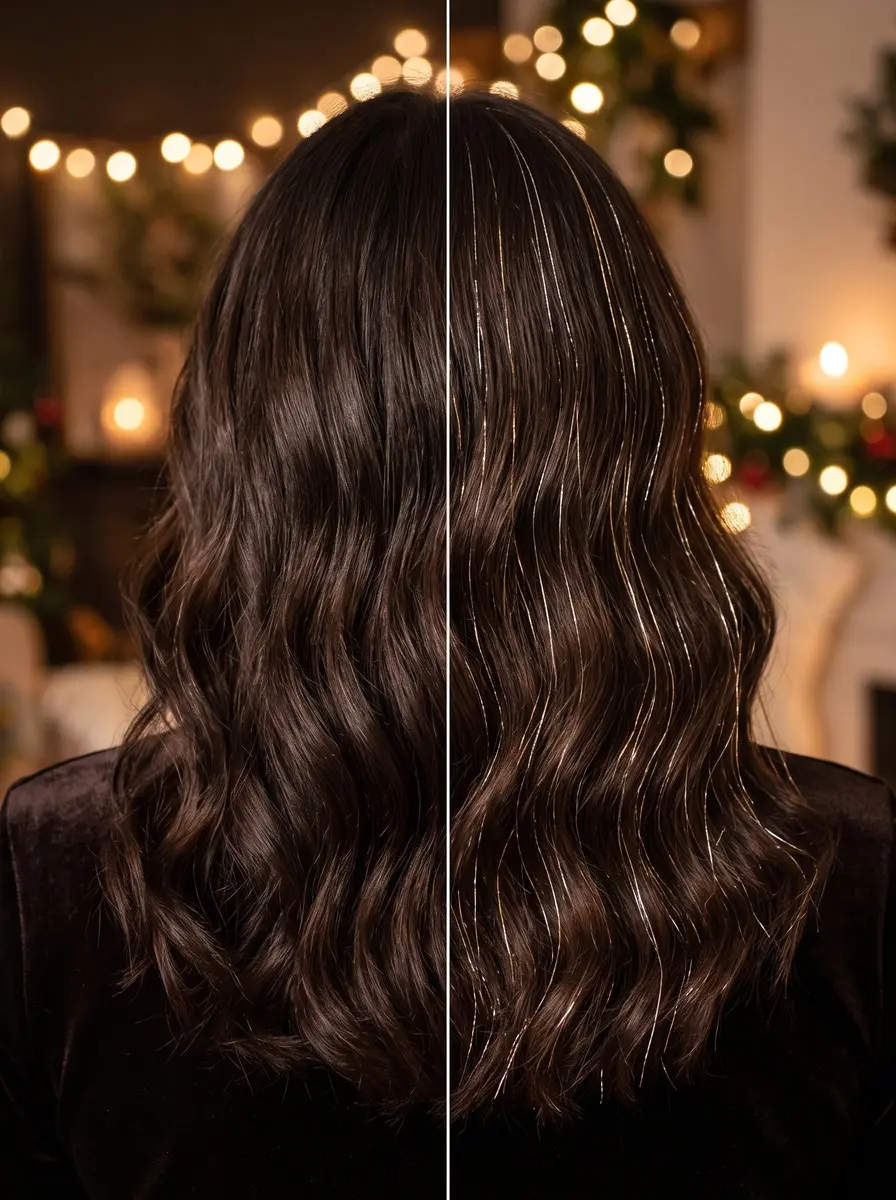
An octopus haircut for thick hair works best with a short, razor-textured crown and a blunt or point-cut perimeter. Internal layers cut at 90-degree elevation take out bulk without shortening the length. Collarbone, shoulder-length and curly versions all suit dense hair especially well.
Thick hair and the octopus haircut should be natural allies. The cut puts a short, choppy crown over long, separated ‘tentacle’ lengths. On dense hair, though, the shape often collapses into a triangle: bulk balloons at the sides and the tentacles fuse into one heavy sheet. Cutting shorter doesn’t fix that. Taking weight out from inside the hair does, so the crown sits close and every tentacle swings on its own.
That is the opposite of our octopus haircut for thin hair, where the stylist keeps weight at the ends and layers to fake fullness. Here the stylist does four things. Internal layering at 90-degree elevation and channel-cutting clear hidden weight pockets. The razor stays on the crown. The perimeter is kept blunt or point-cut so the tentacles hold their weight and definition. Below are 20 variations, from collarbone and curly to fringed and colour-dimensional, each with the words to use with your stylist and the upkeep it needs.
1. Collarbone Octopus with Channel-Cut Crown

Hover on images and discover how pinning can transform your collection of favorites!
This is the standard version: a crown cut to about cheekbone length over tentacles that graze the collarbone. On dense, straight-to-wavy hair it removes the triangle of bulk that thick hair builds at the sides, and it tends to flatter oval and heart-shaped faces. Ask for internal layers at 90-degree elevation, channel-cutting through the crown, razor texture only on top and a point-cut perimeter. Book a crown clean-up every six to eight weeks, when the top loses its separation.
2. Shoulder-Length Blunt-Tentacle Octopus

Hover on images and discover how pinning can transform your collection of favorites!
Here the tentacles end in a crisp, blunt line at the shoulders, so the lengths look full and heavy while the crown stays airy. It suits thick, straight hair that tends to puff rather than frizz, and it can balance longer face shapes by adding width at the jaw. Ask your stylist to keep the perimeter blunt and do all the de-bulking internally, never with thinning shears on the ends. A light smoothing cream keeps the line sharp. Trim the perimeter every ten to twelve weeks.
3. Long Octopus with Internal Layering

Hover on images and discover how pinning can transform your collection of favorites!
If your thick hair reaches past the shoulder blades and you won’t cut it short, internal layering does the work. Shorter sections hidden under the top layer lift out bulk while the visible length stays the same. The cropped crown and long tentacles only read clearly once that hidden weight is gone. Ask for internal layers at 90-degree elevation and channel-cutting through the back, with every tentacle’s end left alone. Because the length stays, perimeter trims can wait twelve weeks. Refresh the crown sooner.
4. Octopus Cut with Curtain Bangs

Hover on images and discover how pinning can transform your collection of favorites!
Curtain bangs part at the centre and blend into the shortest crown layers, which softens the cut’s edgier outline. Thick hair holds the curve of a curtain fringe well, and the swept pieces can open up round or square faces by drawing the eye up and down. Ask for bangs cut to cheekbone length and point-cut so they don’t sit as a solid block, with bulk removed behind them rather than from the bangs. Expect fringe trims every four to five weeks as they fall past the cheekbone.
5. Curly Octopus with Carved Crown

Hover on images and discover how pinning can transform your collection of favorites!
Dense curls can turn a textbook octopus into a pyramid, so the stylist carves the crown curl by curl instead. It suits thick, springy curls from loose 3A to tighter 3C patterns. Ask for a dry cut on the crown that shapes each curl where it naturally sits, with no razor, since razors can fray curl ends. The lengths below are point-cut into defined ringlets. Diffuse on low with a curl cream, and plan a reshaping every eight to ten weeks.
6. Wavy Octopus Lob

Hover on images and discover how pinning can transform your collection of favorites!
This lob-length octopus falls just past the jaw toward the collarbone, where the S-bends in thick wavy hair make each tentacle look deliberately piece-y. It flatters a wide range of face shapes because the length sits in a flexible middle ground. Ask for razor texture on the crown only, point-cutting on the ends so waves don’t turn fuzzy, and channel-cutting at the sides to stop the bell shape wavy hair often falls into. Scrunch sea salt spray into damp hair, and trim every eight weeks.
7. Octopus Cut with Choppy Micro Bangs

Hover on images and discover how pinning can transform your collection of favorites!
Short, choppy bangs that sit well above the brow make this an editorial look. Thick hair gives micro bangs enough density to look intentional rather than sparse, and they draw attention to the eyes and cheekbones, which often works well on oval and heart-shaped faces. Ask for the bangs cut dry and point-cut into uneven pieces, with the crown texture blended into them. Micro bangs lose their shape fastest, so budget for fringe trims every three to four weeks.
8. Hidden Nape Undercut Octopus

Hover on images and discover how pinning can transform your collection of favorites!
For the thickest hair, an undercut at the nape removes a band of weight you won’t see when your hair is down. With that density gone, the tentacles lie flat against the neck instead of kicking out. It suits very dense hair of any texture and is especially practical in heat and humidity. Ask for a clipper undercut from the occipital bone down, hidden under the top layers, with the octopus shape cut over it. Re-clip the undercut every four to six weeks.
9. Mid-Back Octopus with Face-Framing Tentacles

Hover on images and discover how pinning can transform your collection of favorites!
The longest tentacles sit at the front and sweep past the collarbones to frame the face, while the back falls to mid-back. It works on thick, straight-to-wavy hair, and the vertical line of the front pieces can make round faces look longer. Ask for face-framing layers starting at the chin, a cropped crown with razor texture, and channel-cutting through the back to lighten the long lengths. Refresh the face-framing pieces every eight weeks. The back can wait twelve.
10. Coily Octopus Silhouette

Hover on images and discover how pinning can transform your collection of favorites!
On dense coily hair, the octopus becomes a rounded, sculpted crown over longer coiled tentacles that fall around the neck and shoulders. It suits dense 4A to 4C textures. Ask a stylist experienced with coils for a dry cut on stretched hair that shapes the crown shorter and leaves the lengths longer, with bulk taken from the interior rather than the edges. Define the tentacles with twist-outs or finger coils and a curl cream, and reshape every ten to twelve weeks.
11. Octopus Cut with Money-Piece Highlights

Hover on images and discover how pinning can transform your collection of favorites!
Two bright ribbons of colour on the front tentacles make the cut’s face-framing structure the focal point. The contrast works well on thick dark hair because the density keeps the lightened strands from looking sparse. Ask for the cut first, then money-piece highlights on the two front tentacles only, so the colour follows the shape. A violet toning shampoo once a week cancels yellow in the lightened pieces. Plan root touch-ups every eight to ten weeks, alongside a crown trim.
12. Sleek Straight Octopus with Point-Cut Ends

Hover on images and discover how pinning can transform your collection of favorites!
This polished take keeps the hair glassy and straight, so the separation between tentacles comes entirely from the cut. It suits thick, straight hair that already lies flat, and the clean lines look sharp with angular faces. Ask for point-cutting into the ends of each tentacle, snipping vertically into the tips so they separate without losing weight, and razor texture through the crown only. A drop of lightweight serum on dry ends keeps them glossy. Book a trim every eight weeks.
13. Chin-Length Octopus Bob

Hover on images and discover how pinning can transform your collection of favorites!
The shortest version puts a cropped crown over tentacles that stop at the chin. Thick hair is an advantage here, because the short lengths still look full after de-bulking. It tends to suit oval, heart and long faces, while round faces may prefer tentacles an inch longer. Ask for a blunt bob-length perimeter, generous internal layering to stop the sides puffing out, and razor texture on the crown. Short cuts lose their shape quickly, so trim every five to six weeks.
14. Side-Parted Octopus with Swept Fringe

Hover on images and discover how pinning can transform your collection of favorites!
A deep side part sends the crown layers across the forehead in one long, diagonal fringe. The asymmetry breaks up width on thick hair, and the diagonal line can soften square or round faces. Ask for the part set before cutting, a long side fringe blended into the crown, and extra channel-cutting on the heavy side of the part. Rough-dry damp hair with a round brush to set the sweep, and trim every seven to eight weeks.
15. Copper Octopus with Dimensional Colour

Hover on images and discover how pinning can transform your collection of favorites!
A copper base with slightly lighter copper ribbons through the tentacles makes the layers visible even in photos. The dimension suits thick hair because contrast between pieces is what reads as movement. Ask your colourist to put the lighter strands through the tentacles and keep the crown a touch deeper, so the shape looks lifted. Copper fades quickly, so use a sulfate-free, colour-safe shampoo, wash less often, and book a gloss every six weeks.
16. Tousled Octopus-Shag Hybrid

Hover on images and discover how pinning can transform your collection of favorites!
This version borrows a shag’s feathered layers and blurs the line between crown and tentacles for a softer, lived-in shape. It suits thick wavy hair that fights sleek styles, and anyone who wants more movement than a strict octopus gives. Ask for layers blended between the crown and the lengths, razor texture on top only, and a point-cut perimeter so the ends stay substantial. Scrunch texture spray into dry hair for grip, and trim every eight weeks, when the layers start to merge.
17. Octopus Cut with Brow-Skimming Blunt Bangs

Hover on images and discover how pinning can transform your collection of favorites!
A heavy, blunt fringe grazing the brows anchors the choppy crown and gives the cut a graphic, retro edge. Thick hair makes blunt bangs look solid and deliberate. They can shorten long faces and pair well with oval and heart shapes. Ask for bangs cut blunt at brow length with a little internal thinning so they don’t sit stiffly, while the crown behind stays textured. Blunt bangs need a trim every three to four weeks to stay out of your eyes.
18. Air-Dry Beachy Octopus

Hover on images and discover how pinning can transform your collection of favorites!
Built for minimal styling, this one relies on the cut and a single product. It suits thick, naturally wavy hair that dries with a bend. Ask for razor texture on the crown, internal layering through the mid-lengths, and tentacles point-cut so they separate as they air-dry. Rake sea salt spray or a light-hold mousse through damp hair, twist a few tentacles, and leave it alone. Trim every eight to ten weeks, when the air-dried shape starts to dry as one mass.
19. Half-Up-Ready Octopus

Hover on images and discover how pinning can transform your collection of favorites!
The crown layers are left long enough, around jaw length, to twist into a half-up knot while the tentacles hang loose beneath. It’s a practical choice for thick hair that needs to be off the face for work or workouts. Ask for crown layers no shorter than the jaw, internal layering to lighten the lengths, and a blunt perimeter. A light-hold paste stops the knot slipping. Trim every eight weeks so the crown keeps its shape.
20. Grow-Out-Friendly Octopus

Hover on images and discover how pinning can transform your collection of favorites!
This version is for people who rarely see a stylist. Softer, longer crown layers and more internal weight removal let it drift gracefully toward a layered cut as it grows. It suits thick hair of any texture and anyone on a tight salon budget. Ask for crown layers at chin length rather than cheekbone, internal layering at 90-degree elevation, and a point-cut perimeter. Hair grows about half an inch a month, so this shape stays wearable for three to four months.
You Might Also Like
- octopus haircut for thin hair
- how to ask your stylist for the haircut you want
- layered haircuts for round faces
- lob haircut ideas for round faces
- round brush blowout at home
All 20 cuts follow the same rules: remove bulk from the inside, texturize only the crown, and protect the perimeter. Ask for internal layering at 90-degree elevation, channel-cutting through the densest sections, razor work only on the crown and a blunt or point-cut perimeter. Then book a crown clean-up every six to eight weeks, when the shape starts to lose definition.
Styling tip: work a pea-sized amount of lightweight smoothing cream through damp mid-lengths, then twist individual tentacles around a finger as they dry so they set as separate pieces. Use a heat protectant before any heat. Blow-dryers and diffusers go on damp hair. Flat irons and wands go on completely dry hair only, at up to about 150C/300F for fine or bleached hair and 180-200C/355-390F for coarse hair.
Frequently Asked Questions
How is an octopus haircut for thick hair different from one for thin hair?
The two techniques work in opposite directions. On thin hair, the stylist keeps weight at the ends and layers sparingly to fake volume. On thick hair, weight comes out from the inside through internal layering at 90-degree elevation and channel-cutting. The razor is used only at the crown, and the perimeter stays blunt or point-cut so the tentacles keep their weight.
What should I ask my stylist for when getting an octopus haircut on thick hair?
Ask for an octopus cut with a short, texturized crown and longer tentacles, internal layering at 90-degree elevation, and channel-cutting through the densest sections. Say you want razor work on the crown only and a blunt or point-cut perimeter. Explain that you want bulk removed without losing length, and bring a photo of your target length.
How often does an octopus haircut on thick hair need a trim?
Plan a crown clean-up every six to eight weeks, when the short layers lose definition and the dense interior starts to look bulky again. The longer perimeter can usually go ten to twelve weeks. Hair grows about half an inch a month whatever its thickness, so time trims by how quickly the shape softens.
What products help de-bulk thick hair with an octopus cut?
Lightweight smoothing creams and anti-frizz serums stop dense hair puffing without weighing down the crown. Sea salt or texture sprays separate the tentacles, and a light-hold paste defines individual pieces. Keep heavy butters and oils off the crown, where they flatten the texture, and use richer products on the mid-lengths and ends.
Is the octopus haircut a lasting classic or a passing trend?
The name is new, but the structure is not. A shorter, layered crown over longer lengths comes from the shag and the mullet, and both have come back again and again for decades. So the shape is more likely to keep changing than to disappear. A softer, grow-out-friendly version turns easily into an ordinary layered cut.
Sources
- On thick hair, a razor is used only in the crown to remove bulk while the perimeter stays blunt or point-cut to preserve tentacle weight — the opposite technique from the thin-hair version. trendyhairpicks.com
- Internal layering removes weight from thick hair without shortening the visible length. torontomike.com
- A 90-degree elevation angle is standard for even bulk removal on thick hair, with channel-cutting used to remove hidden weight pockets. midamericabeauty.com