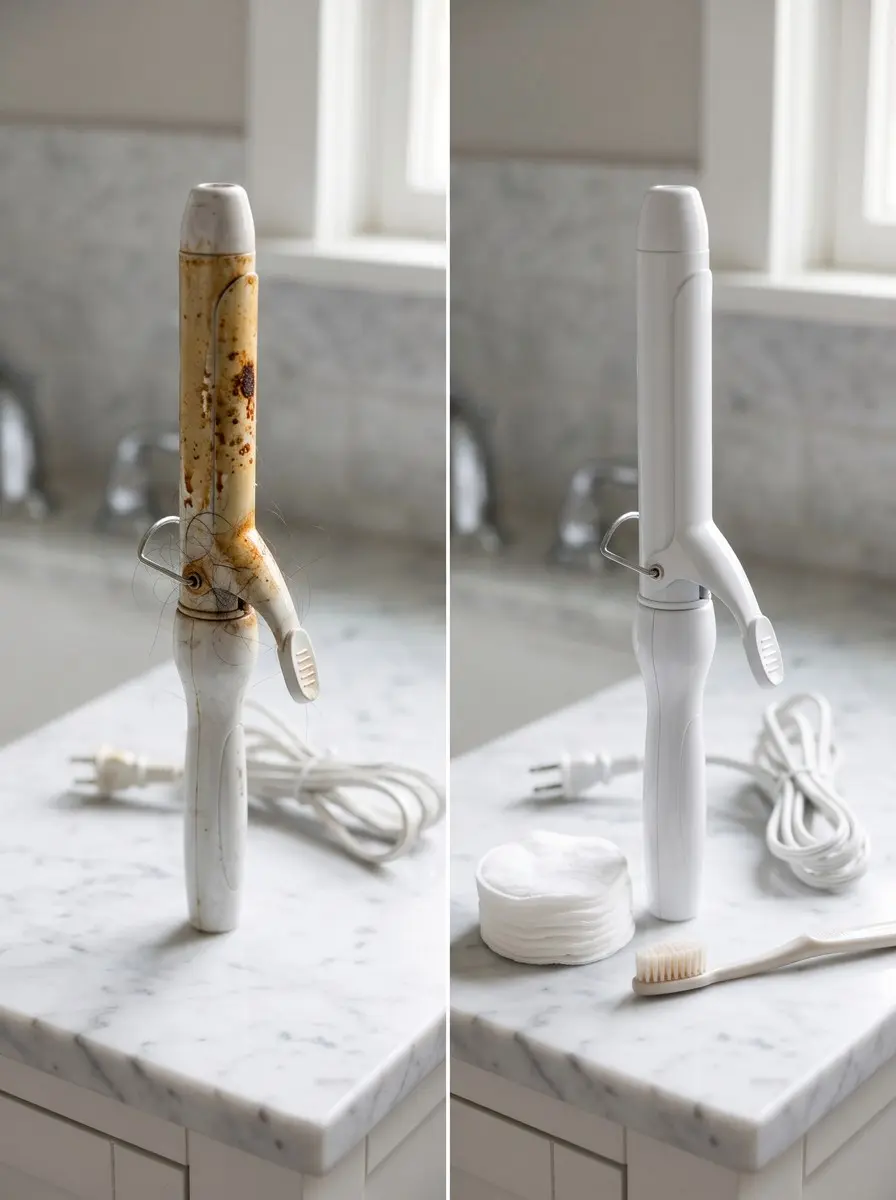
Quick answer To clean a curling iron, unplug it and let it cool completely, then wipe the barrel and clamp with cotton dampened in rubbing alcohol, scrub seams and baked-on hairspray with a soft toothbrush or baking-soda paste, and finish with a damp cloth. Never submerge it, and repeat at least weekly.
If your curling iron has started tugging at hair, smelling burnt or leaving curls dull instead of glossy, the tool itself usually isn’t the problem. The film on it is. Hairspray, heat protectant, leave-ins and natural oils bake onto the barrel a little more every time you style.
Eventually the surface grips hair instead of gliding over it, and the gunk spreads heat unevenly. Hot air brushes collect the same residue on their bristles, plus lint in the filter.
Here’s how to clean a curling iron, wand and hot air brush in about 20 minutes, using rubbing alcohol, cotton rounds, a soft toothbrush and a little baking soda, all things you likely own already.
The guide goes tool by tool: curling irons and wands first, then hot air brushes and the brushes you blow-dry with. It covers which cleaners are safe on ceramic, tourmaline, titanium and plated barrels, and the signs that a tool needs replacing, not cleaning.
Time 15-25 minutes, plus 30 minutes to coolDifficulty BeginnerSteps 9
Safe Cleaners by Barrel Surface
| Surface | Safe to use | Skip |
|---|---|---|
| Ceramic or tourmaline | Alcohol, soft toothbrush, iron cleaner, gentle baking soda | Magic eraser, steel wool, acetone |
| Solid titanium | Alcohol, baking-soda paste, light magic eraser | Steel wool, scouring pads |
| Gold- or chrome-plated | Alcohol, damp cloth, soft toothbrush, iron cleaner | Baking soda, magic eraser |
| Hot air brush | Alcohol on bristles, dry toothbrush on filter | Water in vents, a damp filter |
What You’ll Need
As an Amazon Associate, HairAide earns from qualifying purchases. Product links in this guide are affiliate links: they cost you nothing extra and help keep these tutorials free.
- 70% isopropyl rubbing alcohol and cotton rounds Re-dissolves hairspray and product film on the barrel and evaporates quickly, so little moisture lingers near the electronics.
- Soft-bristle cleaning toothbrush Gets into the seam where the barrel meets the handle and the clamp hinge without scratching the coating.
- Styling-iron cleaner A gentler fix than abrasives for baked-on residue on coated or plated barrels; choose one labelled safe for your surface.
- Melamine sponge Lifts scorched film from solid titanium barrels when used barely damp with light pressure.
- Heat-resistant storage pouch Keeps a freshly cleaned barrel free of dust, lint and scratches between uses.
Step-by-Step
Step 1 Unplug it and let it cool completely
Switch the tool off, unplug it and leave it on a heat-safe surface for at least 30 minutes, until the barrel, clamp and any attachments are cool to the touch. This matters more than whichever cleaner you choose: rubbing alcohol is flammable, and a warm barrel can burn you through a damp cloth.
Never submerge a curling iron, wand or hot air brush in water or hold it under the tap, because water inside the handle, vents or cord joint is a shock risk the next time you plug it in. You’re ready when every surface feels like room temperature.
Step 2 Check what your barrel is made of
Look on the barrel, box or manual for the surface type: ceramic, tourmaline (usually a coating over ceramic or metal), solid titanium, or a gold- or chrome-plated finish. Coatings and plating are thin layers that grit and harsh solvents can wear through, while solid titanium stands up to firmer scrubbing.
The surface decides which tools from the next steps are safe. Rubbing alcohol, a damp cloth, a soft toothbrush and a styling-iron cleaner suit every surface, but abrasives like baking soda and a magic eraser need more care. If the manual gives cleaning instructions, follow them over any general rule, including the ones here.
Step 3 Swab the barrel and clamp with alcohol
Dampen a cotton round with 70% or 91% isopropyl rubbing alcohol until it’s damp but not dripping. Wipe the barrel from the handle end to the tip, turning it as you go, then open the clamp and swab the underside, where product collects (a wand has no clamp, so you only need to do the barrel).
Alcohol works because most hairsprays use alcohol as their solvent, so it re-dissolves the tacky film, and it evaporates quickly, so little liquid lingers near the electronics. Switch to a fresh round once one turns brown. The same swab works on flat iron plates, and you’re done when a new round comes away clean.
Step 4 Work the seams with a soft toothbrush
Residue hides where the barrel meets the plastic handle, along the clamp hinge and in the ridge under the clamp lip. Dip a soft, dry toothbrush in a little alcohol, work along these seams in short strokes, then wipe away the loosened gunk with a cotton swab.
A soft brush gets into grooves that a cotton round slides over, and it won’t scratch the coating. Use the tip of a plastic tail comb to pull out any hairs wound around the hinge. You’re done when the seam matches the rest of the handle and feels smooth, not gritty.
Step 5 Lift baked-on hairspray gently
For brown, sticky spots that alcohol won’t shift, mix one part baking soda with two parts water into a loose paste (add more baking soda if you want it thicker). Rub it over the spot with a soft cloth in small circles, then wipe it off completely.
Baking soda is a mild abrasive, so use light pressure on ceramic and tourmaline and skip it on gold- or chrome-plated barrels, where a styling-iron cleaner labelled for your surface is the gentler choice.
On solid titanium only, a barely damp magic eraser used lightly will lift the toughest scorched film. Never use steel wool, scouring pads, acetone or oven cleaner on any barrel; you’re done when the spot is gone and the barrel feels smooth.
Step 6 Wipe down and dry the whole tool
Wring out a soft cloth in warm water until it’s barely damp, then wipe the barrel, clamp, handle and the full length of the cord to remove leftover paste, cleaner and dust. Keep water out of the vents, the seams and the swivel joint where the cord meets the handle.
Dry everything with a towel, then leave the tool unplugged for at least 15 minutes so the last of the alcohol and water evaporates. Plugging it in early turns a careful clean into a hazard. As you wipe the cord, check it for kinks, fraying or scorch marks; you’re done when the barrel looks glossy and feels slick, not tacky.
Step 7 Clear the hot air brush bristles and filter
Unplug the hot air brush and take the head off if it twists off. Lift out hair wrapped around the base of the bristles with the tail of a plastic comb, then wipe the bristles and barrel with an alcohol-dampened cotton round.
Next, find the air-intake filter, usually a mesh cap at the base of the handle, remove it the way the manual shows and brush the lint away with a dry toothbrush.
Rinse the filter only if the manual says it’s washable, and let it dry completely before you put it back on. A clogged intake starves the heater of airflow, so the tool runs hotter and many models cut out to protect themselves; you’re done when the mesh is visibly clear.
Step 8 Wash your styling brushes
Round and paddle brushes collect the same oils and product film as hot tools, and they press it back into clean hair every time you blow-dry. Pull out loose hair with a comb, swish the bristles in warm water with a drop of shampoo, and scrub the base with a soft toothbrush.
Keep wooden handles and cushioned brush pads out of the water, because soaking can warp wood and trap moisture under the rubber cushion. Rinse, shake off the water and lay the brush bristles-down on a towel so it drains out instead of pooling in the base. You’re done when the bristles look clean, with no grey film.
Step 9 Know when to replace the tool
Cleaning fixes stickiness, not damage. Replace a curling iron or wand when the coating is chipped, peeling or worn down to bare metal, when it still snags hair after a full clean, or when some parts of the barrel curl well and others barely curl at all, which points to uneven heat.
Stop using any tool straight away if the cord is frayed or kinked, the plug gets hot, it sparks, or the temperature changes without you touching the dial, because those are electrical faults, not buildup.
A hot air brush that keeps cutting out with a clean filter, or a motor that rattles or smells of burning, has reached the end too. If none of these apply, store the cooled, clean tool in its pouch and it’s ready for next time.
Common Mistakes to Avoid
- Cleaning the barrel while it’s still warm or plugged in: rubbing alcohol is flammable, and a hot barrel burns through a damp cloth
- Rinsing the tool under the tap or submerging it, which lets water into the handle, vents and cord joint
- Scrubbing a ceramic, tourmaline or plated barrel with steel wool, scouring pads, acetone or oven cleaner, which strips the coating for good
- Plugging the tool back in before the alcohol and water have fully evaporated
- Putting a hot air brush filter back on while it’s still damp
Pro tip Once the barrel has cooled after each use, give it a 10-second wipe with a dry microfiber cloth. Fresh product lifts off easily, but every reheat bakes it on harder, so a tool you wipe daily needs only a quick alcohol swab at the weekly clean.
The Bottom Line
A clean barrel glides through hair, heats evenly and doesn’t smoke every time you curl. To keep it that way, give it a quick dry wipe after each use once it has cooled, do a full alcohol clean at least weekly if you style regularly, and check the hot air brush filter whenever you clean the bristles. The same alcohol swab works on flat iron plates.
Some problems aren’t buildup. A chipped coating means the tool needs replacing, not harder cleaning. A frayed cord, sparks, a plug that runs hot or a temperature that drifts on its own are electrical faults: stop using the tool, then contact the manufacturer if it’s under warranty, have a qualified appliance repair technician look at it, or replace it.
Frequently Asked Questions
How often should you clean a curling iron?
If you use it several times a week, clean it at least once a week, and give it a quick dry-cloth wipe after each use once it has cooled. If you style only now and then, clean it whenever the barrel looks dull or feels tacky. A deeper baking-soda clean about once a month stops stubborn hairspray building up between the weekly wipes.
Is rubbing alcohol safe on a ceramic curling iron?
Yes. Isopropyl rubbing alcohol on a cotton round is safe on ceramic, tourmaline, titanium and plated barrels, because it dissolves hairspray film without abrasion and evaporates quickly. Use it only on an unplugged, fully cooled tool, because alcohol is flammable. Keep the cotton damp rather than dripping, and let the barrel air-dry for about 15 minutes before you plug it back in.
How do I stop product from burning onto my curling iron?
Apply leave-ins and a heat protectant in light layers and let them dry before styling, and use irons on completely dry hair only, because wet hair under an iron is genuinely damaging. Stay at or below about 150°C/300°F for fine or bleached hair and 180-200°C/355-390°F for coarse hair. Hot air brushes and blow-dryers are fine on damp hair.
Can you wash a hot air brush filter with water?
Only if the manual says the filter is washable. Many filters just need the lint brushed off with a dry toothbrush whenever you clean the bristles. Washable filters can be rinsed once they're off the tool, but they must be completely dry before going back on, ideally after drying overnight. The body of the brush should never go near water.
Why does my curling iron still snag after cleaning?
If a tool still snags after a full clean, the coating is usually scratched, chipped or worn, so the surface grips hair instead of gliding. First comb out any hair caught in the clamp hinge, then check the barrel under good light. If the finish feels rough or you can see bare metal, replace the tool; scrubbing harder only makes the damage worse.
Keep Reading
Sources
- How to clean flat irons and curling irons purewow.com
- How to clean your professional curling iron in 5 quick easy steps marlobeauty.com
- How to clean a curling iron womanandhome.com