Quick answer To use dry shampoo, spray or dust it onto your roots only on day one or two, holding the can about 6 to 8 inches away. Wait one to two minutes, massage it in with your fingertips, then brush through with a clean brush.
Knowing how to use dry shampoo properly is what buys you an extra day between washes, because applied carelessly it does the opposite: a chalky gray film on dark roots, hair that feels gritty by lunchtime, and an itchy scalp after a week of skipping the shower. The formula usually isn’t the problem. When you apply it, how far away you hold the can and how much goes on make the difference.
This guide walks through the technique stylists use, with the reason behind each step: when to apply it, where to aim, why you should wait before rubbing it in, and how to brush it out without dragging oil through your lengths.
You’ll also find which format suits fine, thick and curly hair, how to avoid a white cast on dark or red hair, and how many days in a row is too many before a proper wash. It takes five minutes at the bathroom mirror.
Time 5-10 minutesDifficulty BeginnerSteps 8
Dry Shampoo Format by Hair Type and Color
| Your hair | Best format | How to finish |
|---|---|---|
| Fine or flat | Aerosol spray | Massage, then brush |
| Thick or dense | Loose powder | Massage, then brush |
| Curly or coily | Smoothing or hydrating formula | Fingertips only, no brush |
| Dark brown or black | Tinted or clear formula | Massage until no cast shows |
| Red | Tinted formula for red | Massage until no cast shows |
| Blonde, silver or gray | Standard white formula | Brush out any excess |
What You’ll Need
As an Amazon Associate, HairAide earns from qualifying purchases. Product links in this guide are affiliate links: they cost you nothing extra and help keep these tutorials free.
- Aerosol dry shampoo A fine mist spreads thinly over the roots and adds grip and body without weighing fine strands down.
- Loose dry shampoo powder Lets you tap a concentrated amount exactly onto the oiliest spots of thick, dense hair.
- Tinted dry shampoo for brunette or red hair Pigment blends into dark or warm shades so the roots don’t show a gray or white cast.
- Boar-bristle brush Sweeps excess powder out and blends the roots into your lengths after you’ve massaged the product in.
- Clarifying shampoo Clears the oil and powder that dry shampoo leaves on the scalp after a few days of use.
Step-by-Step
Step 1 Apply it early or the night before
Use dry shampoo on day one or day two after washing, while your roots still feel fairly clean, rather than waiting until day three or four when they’re visibly flat and shiny.
Stylists recommend this early timing because the absorbent powders work best when they soak up oil as your scalp produces it; once sebum has already coated the strands, the powder sits on top of it and clumps, and you end up spraying more and more to get any effect.
An even lower-effort option is to apply it before bed with the same root-only technique below: the powder absorbs oil overnight as it’s produced, so by morning it has blended in and there’s nothing left to brush out, which is the trick Nigella Lawson recommends.
If you use a tinted formula at night, let it settle fully before you lie down, because pigment can transfer onto a light pillowcase. You’ve got the timing right if your roots feel slightly soft or less bouncy but nothing looks separated or wet at the part yet.
Step 2 Choose the format for your texture
Pick a format that suits how thick your hair is and its texture, because each one delivers its absorbent differently. Loose powder works well on thick, dense hair: you can tap a concentrated amount exactly where the oil sits, and it won’t weigh heavy strands down.
Aerosol sprays suit fine hair, because the mist spreads thinly and the powder adds grip and body at the root.
Curly and coily hair does better with a formula that contains a smoothing or hydrating ingredient, often a foam or a creamy spray, so the roots get refreshed without the curls turning dry, dull or frizzy. You’ve chosen well if a small amount absorbs the oil without leaving your hair stiff or chalky.
Step 3 Match the formula to your color
If your hair is dark brown, black or red, choose a tinted dry shampoo made for your shade, or a formula labelled clear or invisible.
Most standard dry shampoos rely on white starches or clays, and those show up as a gray or white cast against a dark or warm base, especially along the part and hairline. Tinted versions add a little pigment that blends into your color, so any powder you miss stays invisible.
Blonde, silver and gray hair can usually wear a standard white formula, because leftover powder disappears into the light base. Try a new product on the underside of your hair first: if it massages and brushes out without a visible film, it’s a match.
Step 4 Section and spray the roots only
Shake the can well and hold it about 6 to 8 inches (15 to 20 cm) from your head, or whatever distance your can’s label gives.
Lift your hair in sections roughly 1 to 2 inches apart and aim short bursts at the roots along each part, starting with the spots that get oily first: the crown, the hairline, along your part and behind your ears (with a loose powder, tap a little along each part instead).
Oil comes from the scalp, so the roots are the only place the product needs to go, and spraying the lengths just makes them dull and gritty. Holding the can at a distance spreads a fine, even mist instead of a concentrated white patch. You’re done when the roots look lightly dusted, not white.
Step 5 Wait before you rub it in
Leave the product alone for one to two minutes before you touch it. That pause lets an aerosol’s propellant evaporate and gives the starches or clays time to draw oil away from the scalp. If you rub straight away, you smear damp product across the roots, where it can turn pasty instead of absorbing.
If your formula’s label gives a different wait time, follow that instead, and use the minute to get dressed or start your makeup. Move on when the roots look matte and the powder looks dry rather than damp.
Step 6 Massage it into the scalp
Work the product in with your fingertips, using small circles over every spot you sprayed, the way you’d lather shampoo. Massaging spreads the absorbent evenly over the oily areas, breaks up any white patches and lifts the roots off the scalp for extra volume.
Use the pads of your fingers rather than your nails so you don’t scratch or irritate the skin. Keep going until you can’t see powder at the part or hairline. If a cast won’t budge, you used too much or sprayed too close, so massage a little longer and go lighter next time.
Step 7 Brush through with a clean brush
Once the product has disappeared into your roots, brush from scalp to ends with a clean boar-bristle or paddle brush to sweep out excess powder and blend the roots into your lengths.
Never spray dry shampoo onto the brush itself: the bristles then spread oil and powder through the rest of your hair instead of absorbing the oil where it started. A brush clogged with old oil and product does the same thing, so wash yours regularly.
If you have curly or coily hair, skip the brush and finger-fluff the roots instead, because brushing dry curls breaks up the curl pattern and causes frizz. You’re finished when your roots feel soft and look fresh, with no grit.
Step 8 Stop after a few days and clarify
Use dry shampoo two, at most three, days in a row, then wash your hair properly. Dry shampoo doesn’t clean anything: it absorbs oil and leaves it sitting on your scalp along with the powder, so each extra day adds to the layer of residue.
Signs you’ve gone too long are an itchy or flaky scalp, roots that feel gritty or waxy, and dry shampoo that suddenly seems to stop working. When that happens, wash with a clarifying shampoo, massaging it into the scalp for a full minute before you rinse, and condition your lengths as usual.
If you use dry shampoo most weeks, clarify about once a week, but on color-treated hair choose a gentle, color-safe clarifier every couple of weeks, because stronger clarifying shampoos can fade color.
Common Mistakes to Avoid
- Waiting until day three or four, when the roots are already slick, then spraying heavily to compensate, so the powder clumps on top of the oil and leaves a gritty, gray film.
- Holding the can right against the scalp, which concentrates the product into white patches instead of a fine mist.
- Spraying the lengths and ends, which have little oil to absorb, so they turn dull, dry and gritty.
- Spraying dry shampoo onto the brush instead of the roots, which spreads oil and powder through the rest of your hair.
- Using it day after day without washing, so oil and powder build up on the scalp until it itches and flakes.
Pro tip Bangs pick up oil from your forehead and skincare faster than the rest of your hair, so spray a tiny amount on the underside of the fringe only, wait a minute, then rub it between your fingertips. The bangs stay separated and swingy without a visible cast on top.
The Bottom Line
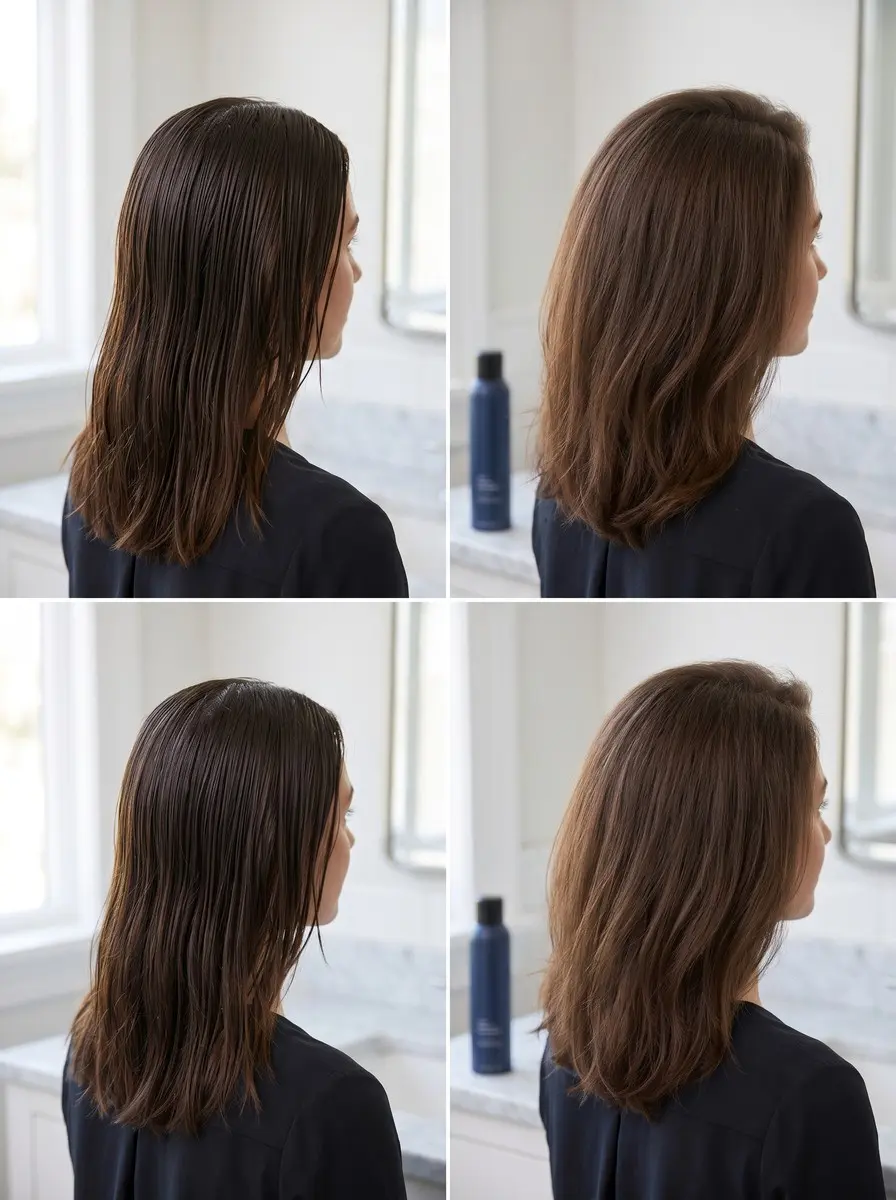
Used early, aimed at the roots, given a minute to work and brushed out with a clean brush, dry shampoo should leave your hair looking freshly washed rather than dusty. Match the format to your texture and the tint to your color, and the white cast and gritty feel that put most people off largely go away.
Treat it as a bridge between washes, not a replacement for them: two or three days in a row, then a proper wash, with a clarifying shampoo whenever you notice itching, flakes or a product that’s stopped working. If your scalp stays itchy, sore or flaky even after you wash and take a break from dry shampoo, see a dermatologist rather than reaching for another can.
Frequently Asked Questions
How do I get rid of white residue from dry shampoo?
Massage the roots with your fingertips for another 30 seconds, then brush from scalp to ends with a clean boar-bristle brush to lift the excess powder out. Next time, hold the can farther away, use shorter bursts and wait a minute or two before massaging. If you have dark or red hair and still see a cast, switch to a tinted or clear formula.
How many days in a row can you use dry shampoo?
Two, at most three, days in a row is a sensible limit before a proper wash. Dry shampoo absorbs oil rather than removing it, so oil, powder and skin cells pile up on the scalp with each extra day. If your scalp itches, flakes or feels gritty, wash with a clarifying shampoo and give it a break.
Can you use dry shampoo on curly hair?
Yes. Choose a formula with a smoothing or hydrating ingredient, which stylists suggest for curls, and apply it to the roots only. Work it in with your fingertips and skip the brush, since brushing dry curls breaks up the pattern and causes frizz. Dry shampoo refreshes curly roots, but it won't bring back the shape of the curls themselves.
Does dry shampoo help a blowout last longer?
Yes. A light layer at the roots on the first evening after a blowout absorbs oil before it can flatten the roots, which often buys you an extra day of volume without re-styling. If you do touch up with a dryer, use a heat protectant first, just as you did on wash day.
Can you put dry shampoo on wet hair?
No. Dry shampoo needs dry roots to absorb oil; on wet or damp hair the powder turns into a paste that clumps and is hard to brush out. If your roots are damp with sweat after a workout, let them dry completely before you apply it.
Keep Reading
Sources
- How to use dry shampoo marieclaire.co.uk
- How to use dry shampoo cvs.com
- Nigella lawson says weve been using dry shampoo wrong for years heres her advice thestar.co.uk