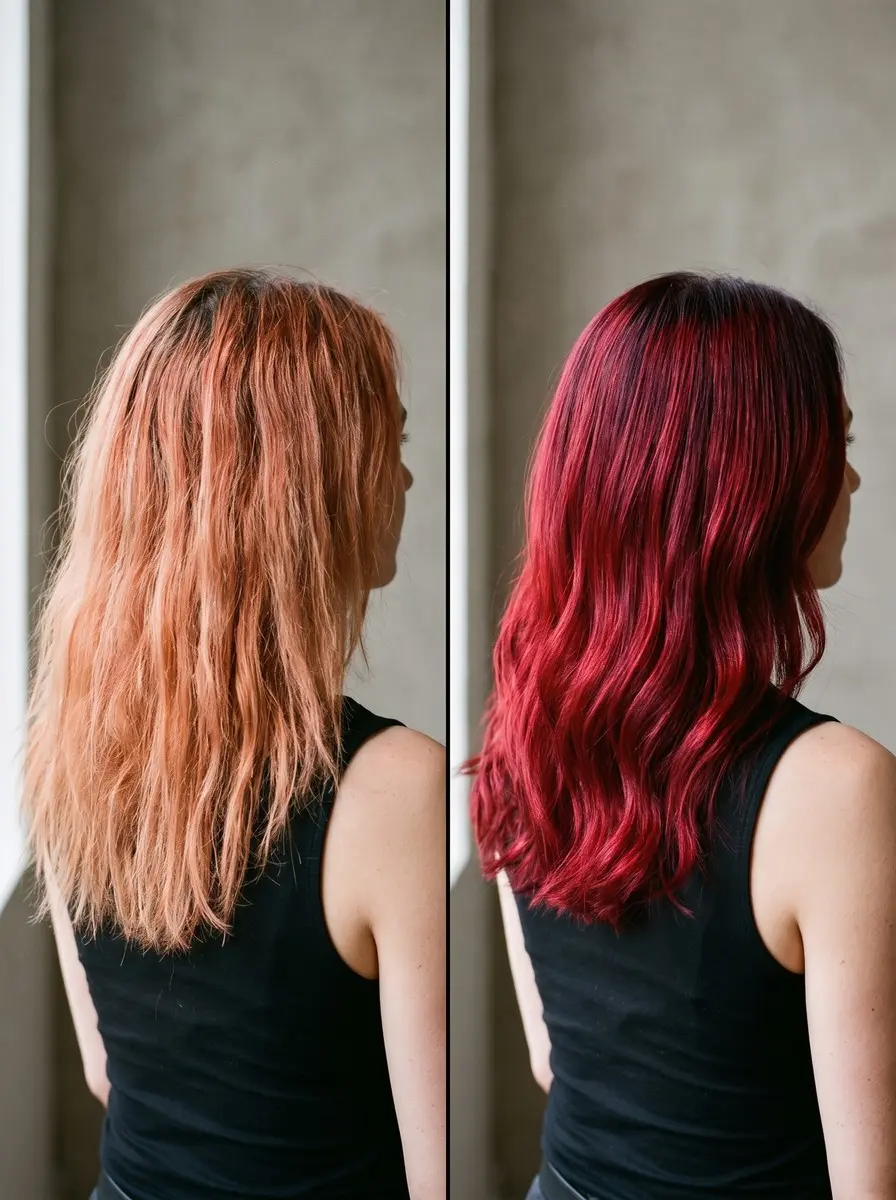
Quick answer To keep red hair from fading, wait 48 hours before the first wash, then wash no more than three times a week with a sulfate-free, color-safe shampoo in cool water. Top up with a red color-depositing mask between visits, and book a gloss every four to six weeks.
Red is the most rewarding shade to wear and the hardest to keep. A fresh copper, cherry or auburn can look noticeably lighter and duller within a few weeks, and the pink tint in your shower water shows you why.
Red dye molecules are larger than those used for browns, so fewer of them reach deep into the hair and more sit close to the surface, where every shampoo, hot shower and afternoon in the sun can strip them.
The good news is that most of that fading is in your hands. This guide gives you a red-specific plan with a timeline: what to do in the first 48 hours, how to keep red hair from fading through weeks one to six, and when to top up at home with a depositing mask versus booking a salon gloss.
You will also learn to tell plain fading from brassiness, because the two need different fixes. None of it takes more than a few extra minutes on wash day.
Time 48-hour wait, then 10-15 minutes per wash dayDifficulty BeginnerSteps 8
Red Hair Fade-Prevention Timeline
| When | What to do | Why |
|---|---|---|
| First 48 hours | No wash, no hot tools, no swimming | Lets the color settle in |
| Every wash day | Three washes a week at most, sulfate-free, cool water | Fewer, gentler washes strip less pigment |
| Weekly or every other week | Red color-depositing mask | Replaces pigment lost to washing |
| Every four to six weeks | Salon gloss | Restores depth and shine on mids and ends |
| After six to eight weeks | Root retouch or full recolor | Regrowth becomes visible |
What You’ll Need
As an Amazon Associate, HairAide earns from qualifying purchases. Product links in this guide are affiliate links: they cost you nothing extra and help keep these tutorials free.
- Sulfate-free color-safe shampoo for red hair Cleans without the sulfates Wella warns strip surface pigment faster.
- Red color-depositing conditioner or mask Puts red pigment back between salon visits without lifting your base color.
- At-home color-reviving gloss in a red shade A semi-permanent shine-and-tone refresh for when a mask isn’t enough and you can’t get to the salon.
- Dry shampoo Stretches the time between washes so you can stay under three shampoos a week.
- UV-protectant hair spray Shields the lengths from the sun exposure that breaks down red color.
Step-by-Step
Step 1 Start a touch deeper than your goal
Before you color, ask your colorist about going slightly deeper or richer than the red you actually want. Davines recommends this approach because red fades toward a lighter, softer version of itself, so a starting shade a little deeper spends its first weeks fading into your target instead of past it.
Bring a photo of the shade you want to live with and ask, ‘Can we go a little deeper so it fades into this?’ You’ve got it right when the color looks intense on day one but not dark or muddy.
Step 2 Leave it unwashed for 48 hours
Wella Professional advises waiting at least 48 hours before the first wash so the cuticle can settle and lock in the red color molecules. Freshly colored hair is still recovering from the alkaline dye process, so an early shampoo pulls out pigment that would otherwise stay put.
For these two days, also skip hot tools, swimming and sweaty workouts that soak the hair. If your roots feel greasy, a light mist of dry shampoo is fine. You’re done when two full days have passed and your first rinse runs only faintly pink.
Step 3 Cap washing at three times a week
Davines names over-shampooing as the biggest cause of red fading and suggests washing three times a week at most. Every wash lifts surface pigment, so fewer washes means fewer chances to lose color.
On the days in between, use dry shampoo at the roots or co-wash with a cleansing conditioner, which cleans more gently than shampoo. Hair that tolerates even fewer washes can go longer. You’re on track when your wash days are spaced out and your shampoo suds stay pale rather than turning pink.
Step 4 Switch to sulfate-free shampoo and cool water
Use a sulfate-free, color-safe shampoo and conditioner, ideally made for red or color-treated hair. Wella warns that sulfate shampoos strip surface pigment faster, and Garnier lists harsh products among the main causes of fading. Wash and rinse in lukewarm to cool water, not hot.
Dye leaches out of the hair faster as the water temperature rises, so cooler water simply washes out less color. That is the real reason to turn the tap down, not the old salon myth that cold water ‘seals’ the cuticle. Shampoo the scalp only and let the rinse run through the lengths.
Step 5 Top up with a color-depositing mask
Between salon visits, use a red color-depositing mask or conditioner every week or two to replace the pigment each wash removes. It adds color without lifting any, so it refreshes the shade rather than changing your base.
Patch-test it on your skin 48 hours first, and strand-test it on a hidden section, because light, bleached or porous ends grab more pigment and can turn brighter or patchy. These products stain, so use a dark towel, wear gloves, and wait until hair is fully dry before resting on light pillowcases.
Step 6 Shield it from sun and chlorine
Garnier lists sun exposure among the common causes of fading, because UV light breaks down color molecules near the surface of the hair. On bright days, mist a UV-protectant hair spray through the lengths or wear a hat.
Before swimming, wet your hair with clean tap water and comb in a leave-in conditioner so it soaks up less pool water, then rinse straight after. Heat styling is the third avoidable cause, and the FAQ below covers safe temperatures. You’ll know it’s working when summer leaves your ends as red as your mid-lengths.
Step 7 Tell fading from turning brassy
Fading and brassiness look similar, but they need different fixes. Faded red keeps the same hue and just gets lighter and duller, usually most on the mids and ends. Brassy hair shifts toward orange or yellow, often because the red has washed off pre-lightened hair and exposed the warm base underneath.
Either way, the fix is to put red back with a depositing mask or gloss, not to neutralize it. Purple shampoo cancels yellow and blue products cancel orange, so on red hair both just mute the color you want.
Step 8 Refresh on a schedule
Plan your top-ups instead of waiting until the color looks tired. Use the depositing mask weekly or every other week at home, and book a salon gloss every four to six weeks to bring back depth and shine on the mids and ends.
When your roots show, plan a root retouch or full recolor. Hair grows about half an inch a month, so regrowth usually becomes visible after six to eight weeks. Also recolor if your ends stop taking deposit evenly. That is a sign the hair needs a proper color service, not another mask.
Common Mistakes to Avoid
- Shampooing within the first 48 hours, when an early wash pulls out pigment that hasn’t settled yet.
- Using purple or blue toning shampoo on red hair. These cancel yellow and orange, so they dull the red you are trying to keep.
- Using a depositing mask on bleached or porous ends without a strand test, which can leave the ends brighter or patchier than the rest of the hair.
- Washing daily in hot water with a sulfate shampoo. That combination strips the most surface pigment.
- Relying on masks after the roots have grown out instead of booking a retouch or full recolor.
Pro tip Ask your colorist to recommend or custom-mix a depositing conditioner in your shade before you leave the salon. A top-up matched to your exact red keeps the mids and ends on tone between glosses instead of drifting toward a different red.
The Bottom Line
Keeping red hair vivid comes down to a few habits: give the color 48 hours to settle, wash no more than three times a week with a sulfate-free shampoo and cool water, and put pigment back with a depositing mask before the fade shows.
Add sun and chlorine protection, and book a gloss every four to six weeks, and your red should still look rich by the time your roots need attention.
See a colorist instead of reaching for another mask if your ends stop taking color evenly, your red has turned patchy or brassy over pre-lightened hair, or you want to change shade rather than refresh it. A professional gloss or recolor will correct those far more reliably than at-home deposit.
Frequently Asked Questions
Why does red hair dye fade faster than other colors?
Red dye molecules are larger than those in brown shades, so fewer penetrate deep into the hair and more sit near the surface. Washing, sulfate shampoos, sun and heat all reach that surface pigment first. That is why red can look noticeably lighter within a few weeks while brown from the same visit barely changes.
How long should I wait to wash my hair after dyeing it red?
Wait at least 48 hours, the window Wella Professional recommends, so the cuticle can settle and lock in the red color molecules. Skip hot tools and swimming for those two days too. If your roots get oily, use a little dry shampoo instead of washing.
Does heat styling fade red hair, and how hot is too hot?
Yes, heat speeds up fading, so always apply a heat protectant first. Blow-dry damp hair on a medium setting. Use flat irons and curling irons on completely dry hair only, never wet, and keep them to about 150C/300F for fine or bleached hair and no higher than 180-200C/355-390F for coarse hair.
How often should I refresh red hair color?
Use a red color-depositing mask every one to two weeks at home and book a salon gloss every four to six weeks. Plan a root retouch or full recolor at six to eight weeks, when regrowth shows. Hair grows about half an inch a month, so the new length becomes visible on that timeline.
Will a color-depositing conditioner stain my towels and pillowcases?
It can. Red depositing products leave pigment on porous fabrics and on skin. Use a dark towel, wear gloves when applying, rinse until the water runs nearly clear, and let your hair dry fully before lying on light-colored pillowcases. Light, bleached or porous hair also absorbs more, so strand-test first.
Keep Reading
Sources
- How to maintain red hair wella.com
- How to keep red hair fading uk.davines.com
- Why does red hair color fade quickly how to maintain colored hair garnierusa.com