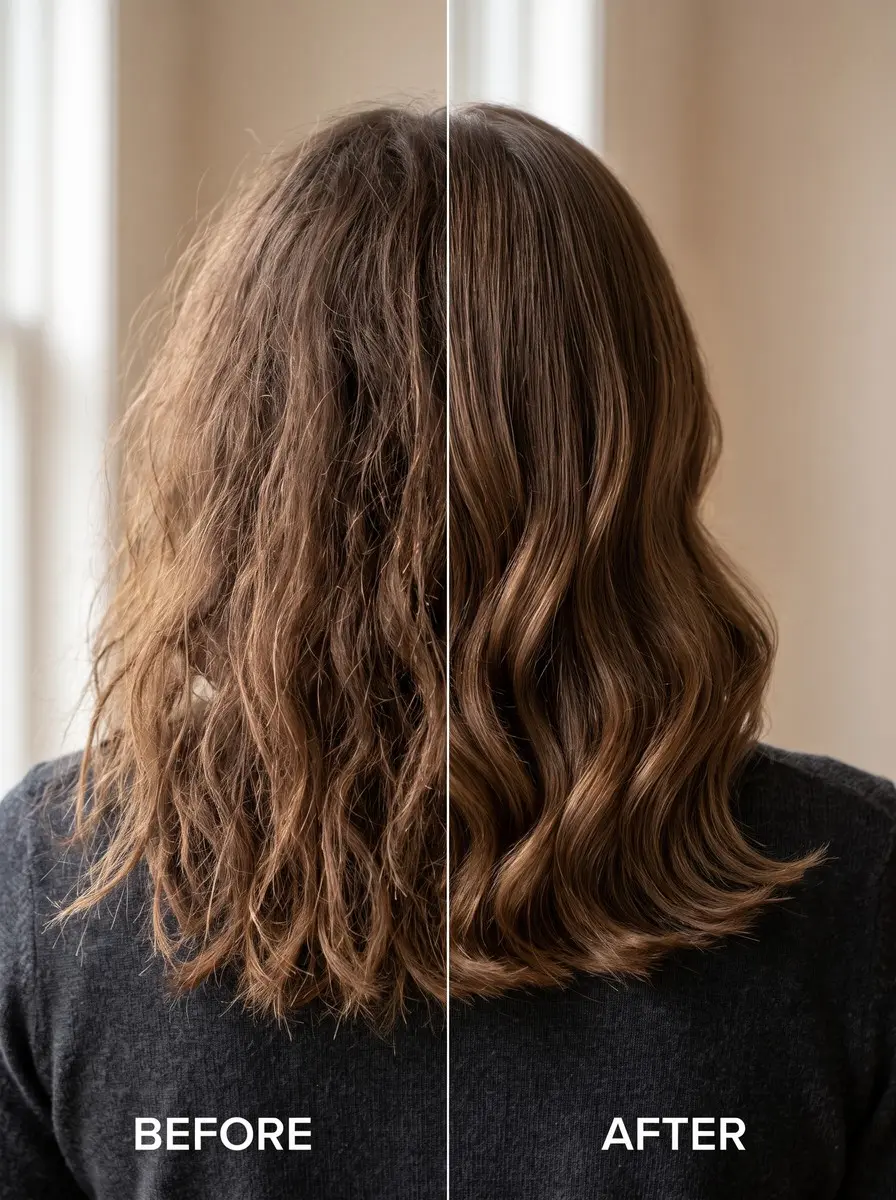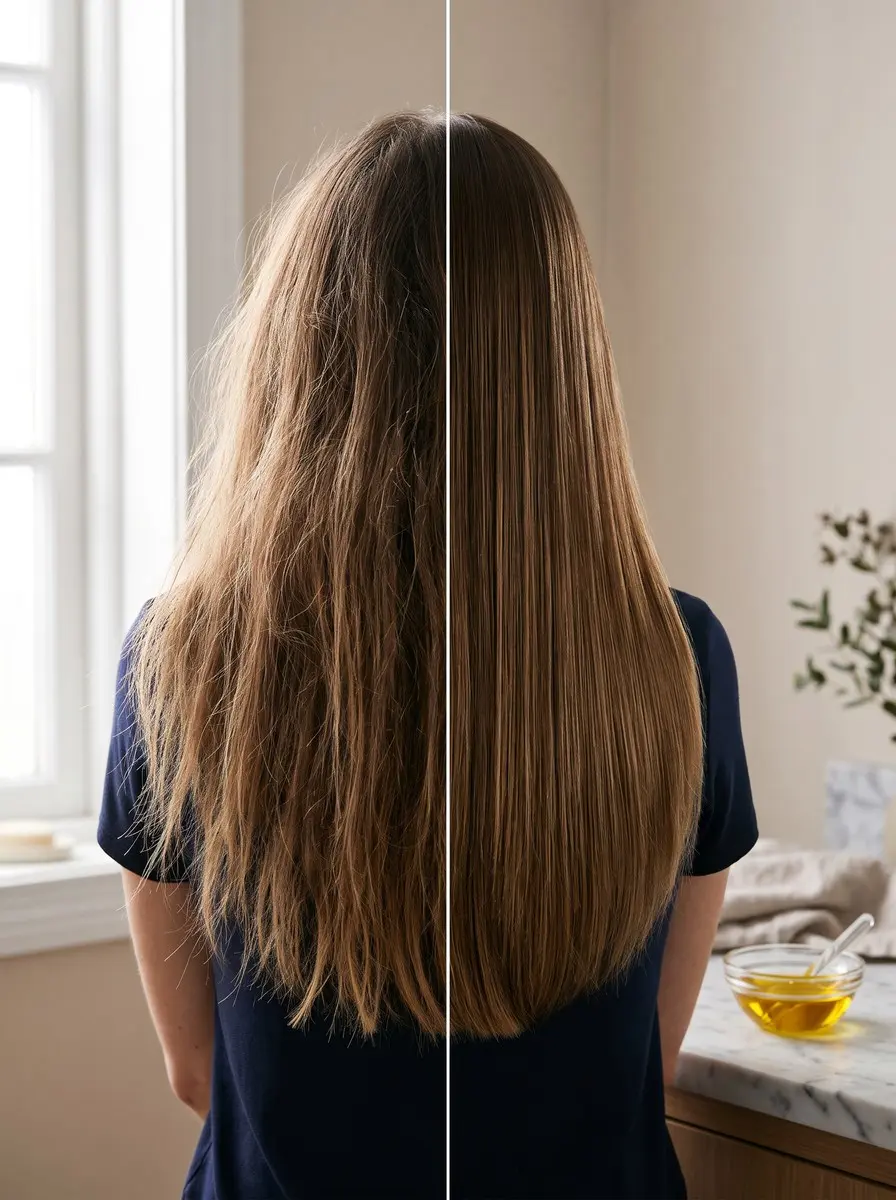
Quick answer To do a hot oil treatment, gently warm a few tablespoons of an oil matched to your hair (jojoba for fine, coconut or avocado for dry) and test it on your wrist. Massage it into damp, freshly washed hair, cap it for 20 minutes, then shampoo and condition.
If your ends feel like straw by midweek or your lengths have lost their shine, a hot oil treatment is one of the simplest fixes you can do at home. Warm oil spreads easily through the hair and coats rough lengths, so they feel softer, look glossier and comb out more easily after one session. You don’t need a salon appointment.
The method matters more than the bottle. The right oil depends on whether your hair is fine or thick and how quickly it soaks up water. The oil should be warm, never hot. And the rinse decides whether you end up with silky lengths or greasy roots.
Below is the full routine, from a patch test the day before to a rinse that leaves no grease behind, plus an honest look at what oil can and can’t do for your hair.
Time 45-60 minutes, including washingDifficulty BeginnerSteps 8
Hot Oil Treatment by Hair Type
| Hair type | Oil to try | How often |
|---|---|---|
| Fine hair or oily roots | Jojoba or sweet almond | Every two weeks |
| Normal, medium thickness | Argan | Weekly |
| Low porosity | Jojoba or almond, sparingly | Weekly |
| Dry, thick or coarse | Coconut, olive or avocado | Weekly |
| Very dry, rough ends | Coconut or avocado | Every few days |
What You’ll Need
As an Amazon Associate, HairAide earns from qualifying purchases. Product links in this guide are affiliate links: they cost you nothing extra and help keep these tutorials free.
- Cold-pressed jojoba oil The light, easy-rinsing choice for fine hair, oily roots and low-porosity hair.
- Virgin coconut oil or cold-pressed avocado oil Richer oils that coat dry, thick or coarse lengths and very dry ends.
- Reusable shower cap Holds in warmth during the 20-minute wait and keeps oil off your neck and clothes.
- Wide-tooth detangling comb Detangles damp hair before oiling and spreads the oil evenly from root to tip without snagging.
- Clarifying shampoo Clears the last traces of oil from fine hair or oily roots on the second wash.
Step-by-Step
Step 1 Choose your oil by hair type
Match the weight of the oil to your hair, because a heavy oil on fine strands is what causes limp, greasy results. Light oils such as jojoba and sweet almond suit fine hair or roots that get oily fast, because they spread thinly and rinse out easily.
Richer oils such as coconut, olive and avocado suit dry, thick or coarse hair, which can carry the weight without going flat, and coconut is a good place to start for very dry ends. Argan sits in between and suits normal, medium-thickness hair.
Check porosity too: if water beads on your hair and it takes ages to dry, it’s probably low porosity, so use jojoba or almond sparingly, since heavier oils tend to sit on the surface (and if coconut ever leaves your hair feeling stiff, switch to olive or avocado).
Step 2 Patch-test the oil a day ahead
Dab a little unheated oil on the inside of your elbow 24 hours before your first treatment and leave it there. The skin there is thin and sensitive, so a reaction shows up clearly, and no rash, redness or itching by the next day suggests the oil is fine to use on your scalp.
If you do react, don’t use that oil. Take extra care with any blend that contains essential oils: they are potent and must always be diluted in a carrier oil such as jojoba or olive, never applied neat.
If you have a tree-nut allergy, pick jojoba, olive or avocado over sweet almond or argan, and repeat the patch test whenever you try a new oil or blend.
Step 3 Shampoo and detangle first
Hot oil works best on clean hair, so start with your usual shampoo to lift sweat, scalp oil and styling product that would otherwise sit between the treatment and your strands. Skip conditioner for now.
Squeeze the water out with a microfiber towel until your hair is damp but not dripping, because dripping-wet hair waters down the oil and makes it run. Comb through with a wide-tooth comb, starting at the ends and working up, so the oil can travel evenly later without catching on knots. You’re ready when the comb glides from root to tip.
Step 4 Warm the oil gently and test it
Pour 3 to 6 tablespoons into a microwave-safe bowl (the low end for short or fine hair, the high end for long, thick hair), heat it for just 10 seconds, stir, and let it stand for a moment.
If you’d rather skip the microwave, stand a small jar of oil in a bowl of hot tap water for a few minutes, which also melts coconut oil (it turns solid when the room is cool). Microwaves heat unevenly, so never heat the oil until it’s hot, and never put it on straight out of the microwave.
Test a few drops on the inside of your wrist: it should feel comfortably warm, like bath water, not hot. Warm oil is thinner than cold oil, so it spreads further and you need less of it.
Step 5 Massage the scalp, then coat the ends
Clip your damp hair into four sections so you can reach every part evenly. Work a small amount of oil into the scalp with your fingertips in slow circles for a few minutes; it feels good and spreads the oil at the root. Then smooth the rest down the mid-lengths and ends, the oldest and driest part of every strand, which need it most.
If you have fine hair or an oily scalp, use only a few drops on the scalp, or skip it and start at ear level. Comb through once more with the wide-tooth comb. You’re done when every section looks evenly glossy but isn’t dripping.
Step 6 Cap, wrap and wait twenty minutes
Twist your hair loosely on top of your head, cover it with a shower cap, and wrap a towel warmed in the clothes dryer or on a radiator over the cap.
The cap holds in warmth and keeps oil off your neck and clothes, and the towel keeps the oil warm and runny, so it stays spread through the lengths and coconut oil doesn’t firm up again. Leave it for about 20 minutes, the standard time for a hot oil treatment; the towel will have cooled by then anyway.
Overnight oiling is a separate method that uses a smaller amount of unheated oil on the lengths, so treat it as its own routine rather than sleeping in a hot oil treatment.
Step 7 Shampoo the oil out completely
Before you wet your hair much, work a generous palmful of shampoo through the oiled roots and lengths, because undiluted shampoo breaks up oil far better than shampoo that’s already been thinned by water. Then add a splash of water to lather, rinse thoroughly, and shampoo a second time, focusing on the scalp.
Fine hair or oily roots may need a third round at the root, or a clarifying shampoo for the second wash. To check you’re done, rub a section near the root between two fingers after rinsing: it should feel clean, not slick or waxy.
Step 8 Condition the ends and set your schedule
Finish with your normal conditioner on the mid-lengths and ends only, leave it for a minute or two, and rinse. This gives back the slip you need for detangling without putting weight back at the root.
Fine hair can often skip conditioner entirely after a hot oil treatment, since the lengths are already soft. Then plan the next session around how your hair responded. Weekly suits normal, low-porosity, dry, thick and coarse hair. Every few days suits very dry, rough ends.
Fine hair and oily roots do better with a treatment every two weeks. If your hair feels heavy or limp, leave longer between sessions; if your ends feel rough again within a few days, shorten the gap.
Common Mistakes to Avoid
- Heating the oil until it’s hot, or using it straight from the microwave. Microwaves heat unevenly, so heat for 10 seconds, stir, and always test it on your wrist before it touches your scalp.
- Pouring oil onto the roots of fine or oily hair, which leaves them flat and greasy even after shampooing. Keep the scalp to a few drops and focus on the ends.
- Soaking your hair before shampooing the oil out, which waters the shampoo down so it slides off. Work shampoo into the oiled hair first.
- Skipping the 24-hour patch test, or putting undiluted essential oils on the scalp.
- Expecting oil to fix split ends or bleach damage. It coats and softens, but only a trim removes split ends.
Pro tip If your scalp gets oily but your ends are dry, use two oils in one treatment: a few drops of jojoba on the scalp and a richer oil such as avocado on the ends. You get softness where you need it without weighing down the roots.
The Bottom Line
Done right, a hot oil treatment leaves your lengths softer, glossier and easier to comb, while your roots still look freshly washed. Keep in mind what it is: a cosmetic coating that smooths and softens, not a repair. Repeat it weekly for most hair, every few days for very dry ends, and every two weeks if your hair is fine or your roots get oily.
See a stylist instead if your ends are splitting or snapping, since only a trim removes split ends, or if bleach has left your hair gummy or stretchy when wet. And if your scalp is itchy, flaky or sore, check with a dermatologist before reaching for more oil.
Frequently Asked Questions
How often should you do a hot oil treatment?
Once a week suits most hair, including normal, dry, thick and coarse types. Very dry or rough ends can take a treatment every few days, while fine hair and oily roots usually do better with one every two weeks. If your hair starts to feel heavy or limp between washes, leave more time between treatments.
Can you leave a hot oil treatment in overnight?
A hot oil treatment is meant to stay on for about 20 minutes under a shower cap and then be rinsed out completely. Overnight oiling is a different method: a small amount of unheated oil on the lengths, slept in with your hair tied up and a towel over the pillow. If you try it, use less oil than you would for a hot treatment, especially on fine hair.
Does a hot oil treatment repair damaged hair?
No. Oil coats the surface of the hair, so rough, dry lengths feel softer, look shinier and comb more easily, with less snagging. It cannot mend split ends or undo damage from bleach or heat; only a trim removes split ends. If your hair stretches and snaps when wet, see a stylist rather than relying on oil.
Can a hot oil treatment help a dry, itchy scalp?
A warm oil massage can make your scalp feel more comfortable and less tight, but it is not a treatment for dandruff, flaking or any scalp condition, and oil may make some of them worse. If itching, flaking or redness lasts more than a couple of weeks, see a dermatologist or your doctor instead of adding more oil.
Can you use olive oil or coconut oil from the kitchen?
Yes. Plain extra virgin olive oil and virgin coconut oil from the grocery store work for a hot oil treatment as long as the only ingredient is the oil, with nothing added for flavor. Patch-test it on your inner elbow first, and keep a separate jar just for hair so you don't contaminate your cooking oil.
Keep Reading
Sources
- Hot oil treatment for hair healthline.com
- Hot oil treatment ca.davines.com