Quick answer To get rid of fine hair frizz, first work out whether it's static or humidity, then smooth a pea-sized amount of lightweight silicone leave-in over the mid-lengths and ends and dry with the nozzle pointing down. Tame later flyaways with a dryer sheet or damp fingertips, and skip heavy oils.
Fine hair gets frizzy in its own way. Each strand is so light that the smallest charge lifts it: a sweater pulled over your head, a plastic brush, dry winter air. The result is a halo of flyaways that floats around your head while your roots lie flat.
The usual advice to smooth frizz with a rich oil or a heavy mask was written for thick or curly hair. On fine strands it swaps the frizz for greasy, stringy lengths by lunchtime.
The fix is a different routine, not a stronger one. This guide shows you how to tell static frizz from humidity frizz, which lightweight products actually work, and how to put them on without losing root volume. You’ll also get two quick fixes, the dryer-sheet swipe and the damp-fingertip trick, for flyaways that come back mid-afternoon. You don’t need salon tools for any of it, and most of it takes a few minutes.
Time 20-30 minutesDifficulty BeginnerSteps 8
Static Frizz vs Humidity Frizz
| Frizz type | When it shows | What it looks like | What it needs |
|---|---|---|---|
| Static | Dry, cold days | Single strands lift and cling | Light coating, less friction |
| Humidity | Damp, muggy days | Outline puffs and roughens | Barrier against moisture |
What You’ll Need
As an Amazon Associate, HairAide earns from qualifying purchases. Product links in this guide are affiliate links: they cost you nothing extra and help keep these tutorials free.
- Lightweight silicone leave-in spray or serum It coats each strand against static and friction without the weight that flattens fine roots.
- Carbon or boar-bristle brush It builds up less static than a basic plastic brush while you smooth the lengths during drying.
- Microfiber hair towel It soaks up water with less friction than terry cloth, so strands dry smoother.
- Lightweight anti-humidity finishing spray It adds a thin moisture barrier on muggy days without the stiffness of a strong-hold spray.
- Silk or satin pillowcase It cuts overnight friction, one of the main sources of morning static and flyaways.
Step-by-Step
Step 1 Identify your type of frizz
Work out which kind of frizz you have before you buy anything. Static frizz shows up on dry, cold days: single strands lift away from your head, cling to your face or scarf, and crackle when you brush.
Humidity frizz shows up on damp, muggy days: the hair’s outline puffs and roughens, and the strands swell as they take in water from the air. Fine hair can get both, but static is usually the main problem.
That matters because static needs a light coating and less friction, while humidity frizz needs a barrier against moisture. If you know which one you’re fighting, you won’t pile on products for a problem you don’t have.
Step 2 Wash with lightweight products
Wash with a lightweight, volumizing shampoo and put conditioner on the mid-lengths and ends only, never the scalp. Pick a light conditioner rather than a butter-rich mask, leave it on for a minute or two, and rinse until the lengths feel slippery but not coated.
Conditioner makes the hair surface smoother, so strands rub against each other less and build up less charge. Keeping it off the roots stops fine hair from going flat at the crown. You’ve got it right when your ends comb through easily and your roots feel clean.
Step 3 Blot hair instead of rubbing
Blot, don’t rub. Squeeze water out with a microfiber towel or an old cotton T-shirt, pressing down the lengths instead of scrubbing the scalp with a terry towel.
Rough towels rub against wet hair, and that friction lifts the surface and roughens the strands, which leads straight to frizz once they dry. Microfiber holds more water with less drag, so you also spend less time under the dryer. Stop when the hair is damp and no longer dripping.
Step 4 Apply a lightweight leave-in
Smooth a pea-sized amount of lightweight silicone leave-in or serum over the mid-lengths and ends, staying about two inches away from the roots. Look for a thin, fast-absorbing formula, such as a leave-in spray or light serum with dimethicone or a similar lightweight silicone, not a heavy oil like coconut or castor.
A thin silicone film coats each strand so it slips past its neighbours and holds less static, and it’s too light to drag fine hair down.
Heavy oils sit on the surface and weigh strands together into clumps. Start with less than you think you need. You can add more when the hair is dry, but you can’t take it out without washing again.
Step 5 Dry roots first, then lengths
Dry the roots first, then the lengths, with the nozzle always pointing down the hair. Flip your part to the opposite side, or tip your head forward, and dry the roots against the direction they’ll fall.
That lifts them off the scalp before any product can flatten them. Then flip the part back and dry the mid-lengths and ends while pulling a boar-bristle or carbon brush gently down the hair. Pointing the airflow downward stops the hair from being blown in every direction.
Carbon and natural-bristle brushes also build up less static than cheap plastic ones. Finish each section with the cool-shot button so the smooth shape sets as the hair cools, and stop when the hair feels completely dry at the roots.
Step 6 Finish to suit the weather
Finish according to the weather. On a humid day, hold a lightweight anti-humidity spray about ten inches away and mist it lightly over the outer surface of the hair. It adds a thin barrier that slows how quickly the strands absorb moisture from the air.
On a dry, staticky day, skip the spray. Rub a tiny extra drop of serum between your palms and smooth it only over the top layer and the ends, where flyaways show most. Either way, keep your hands off the roots so the lift you just created stays put.
Step 7 Tame static during the day
Tame static that comes back during the day with a dryer sheet or damp fingertips. Pull an unscented dryer sheet lightly over the hair from root to end, or run it over your brush before brushing. The sheet leaves a very light coating on the hair that neutralizes the charge, so the flyaways settle.
With no dryer sheet to hand, run water over your fingertips, shake off the drops, and smooth them down the flyaways. A thin film of moisture lets the built-up charge escape, so the strands stop pushing away from each other. The fix works when the flyaways lie flat instead of lifting toward your hand.
Step 8 Cut down friction between washes
Cut down on friction between washes. Sleep on a silk or satin pillowcase, choose cotton or silk scarves over wool and synthetic knits, and run a humidifier in the bedroom during heated winter months. Rough fabrics and very dry indoor air are what build up static in the first place.
Smooth fabrics let hair glide instead of catching, and slightly moister air lets the charge escape before it builds. These habits cost almost no time, and they mean you need less product to keep flyaways down.
Common Mistakes to Avoid
- Using a heavy oil such as coconut, castor or a thick argan blend on fine hair. It swaps flyaways for greasy, stringy lengths and flat roots.
- Applying leave-in or serum at the scalp. Anything within two inches of the roots flattens fine hair and makes it look greasy faster.
- Rubbing hair dry with a rough terry towel, which roughens wet strands and sets up frizz before you’ve even picked up the dryer.
- Brushing dry hair over and over with a cheap plastic brush in winter, which builds up static with every stroke.
- Treating static frizz with humidity products (or the reverse), which adds weight without solving the actual problem.
Pro tip Mist a little leave-in spray onto the bristles of your brush instead of straight onto the hair, then brush through the top layer. The product spreads thinly and evenly over the strands that show most, and the roots never get touched.
The Bottom Line
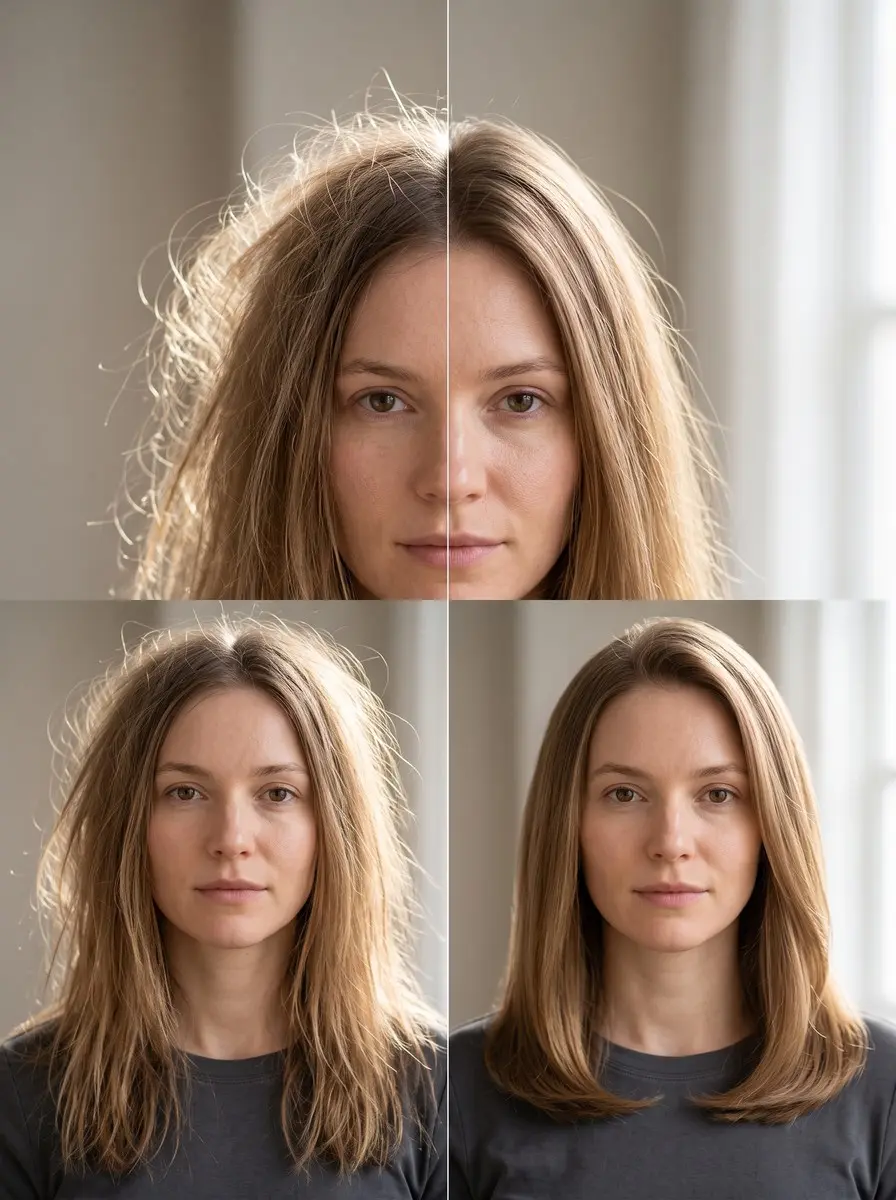
When fine hair is frizz-free, it looks smooth and swingy with the flyaways settled and the lift still at the roots, not slicked flat or greasy by mid-afternoon. Keep the routine light: condition only the lengths, use a pea-sized amount of silicone leave-in, and dry with the nozzle pointing down.
Keep a dryer sheet in your bag for static on the go. Whenever you blow-dry, mist a heat protectant over damp hair first, and keep the dryer moving so no section takes all the heat.
If your hair still frizzes even with a light routine, look at the ends. Split, worn ends frizz no matter what you put on them, so book a trim to reshape the cut once it grows out visually and loses its shape. If you have sudden, widespread frizz along with breakage or shedding, see a stylist or dermatologist rather than piling on more products.
Frequently Asked Questions
Why does my fine hair get so staticky in winter?
Cold outdoor air and heated indoor air are both very dry. Dry hair builds up an electric charge when it rubs against hats, scarves, brushes and pillowcases. Fine strands are light enough that the charge lifts them away from your head. Smooth fabrics, a room humidifier and a light silicone leave-in all reduce the charge or help it escape.
Is argan oil bad for fine, frizzy hair?
It isn't harmful, but it's usually the wrong tool for fine hair. Oils sit on the surface and weigh fine strands down, so you end up with flat roots and stringy ends. A lightweight silicone leave-in or serum smooths static and friction just as well without the heaviness. If you love an oil, use one drop on the very ends of dry hair only.
Is it safe to use a dryer sheet on my hair?
An occasional root-to-end swipe with a dryer sheet is a well-known quick fix for static flyaways. Pick an unscented sheet to avoid fragrance buildup or irritation. Use it lightly, not every day as a substitute for a proper leave-in. Keep it off the scalp, and stop if your skin reacts.
How do I stop flyaways without flattening my fine hair?
Keep every product at least two inches from the roots and dry the roots first against their natural direction. Then use a pea-sized amount of lightweight leave-in on the mid-lengths and ends. Smooth later flyaways with damp fingertips or a dryer sheet instead of adding more product, so the crown keeps its lift all day.
Keep Reading
Sources
- Tricks to keep hair flyaways in place stylecraze.com
- How to tame flyaway hair livingproof.com
- How to deal with static flyaway hair garnierusa.com