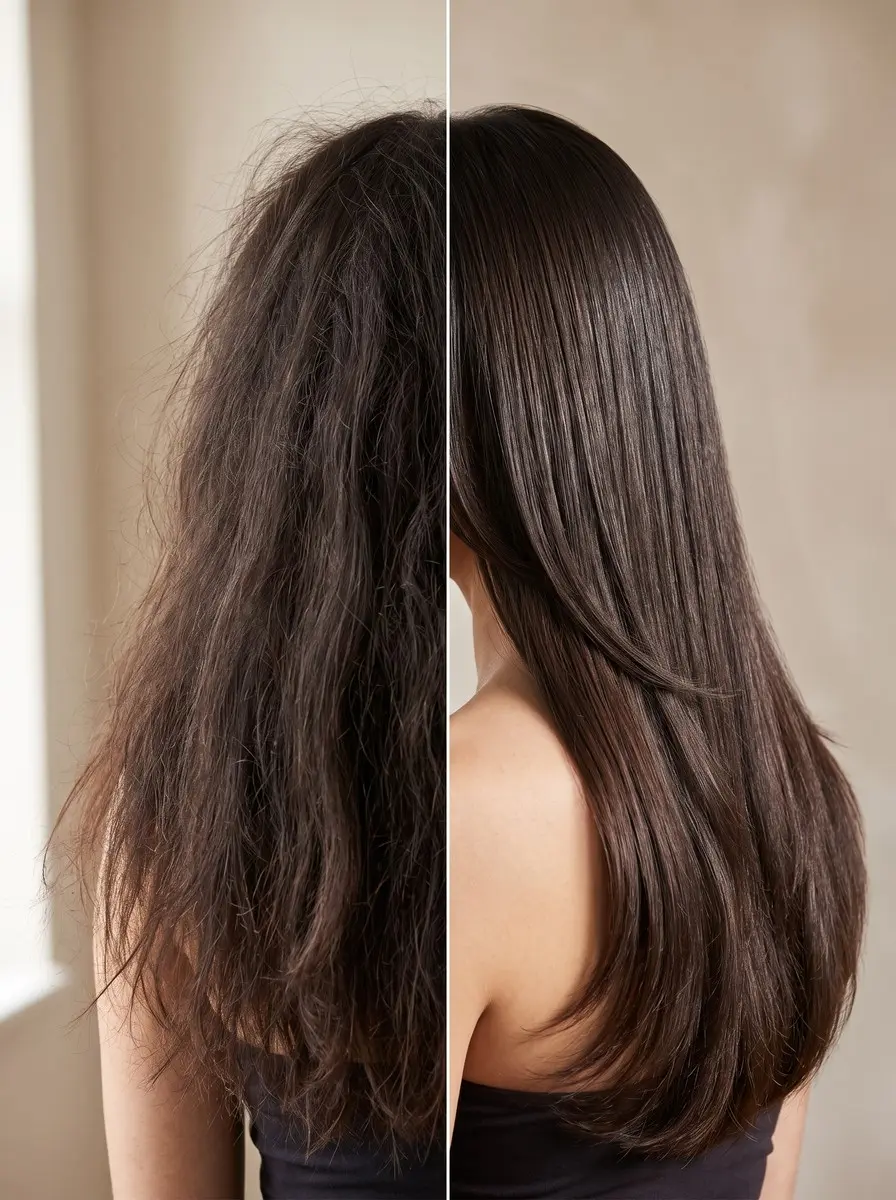
Quick answer To get rid of frizz on thick hair, wash with a sulfate-free moisturizing shampoo, deep condition weekly, blot with a microfiber towel, apply a smoothing cream or oil to damp hair, then blow-dry small sections completely dry with a boar-bristle brush and finish with the cool shot.
Thick hair frizz can turn a smooth blow-dry into a halo of fuzz by lunchtime, and the cause is rarely one thing. When the cuticle, the overlapping outer layer of each strand, is lifted by rough handling or dryness, moisture from humid air gets into the fibre and swells it unevenly.
Strands bend away from each other, and because there is so much hair, a little lift on each one adds up to a lot of puff.
The fix is a routine, not a single miracle product: more conditioning than you think you need, gentler drying, richer finishing products and patient heat styling in small sections. None of it needs salon equipment. Follow the steps below from wash to sleep and you should see a difference on the first wash day, with the hair getting easier to manage as the weekly conditioning adds up.
Time 45-60 minutes on wash day, 5 minutes at nightDifficulty BeginnerSteps 8
What You’ll Need
As an Amazon Associate, HairAide earns from qualifying purchases. Product links in this guide are affiliate links: they cost you nothing extra and help keep these tutorials free.
- Deep conditioning hair mask The weekly mask delivers the extra conditioning thick hair needs to keep the cuticle smooth and the lengths from soaking up humidity.
- Microfiber hair towel It blots water without the friction of terry loops, so the cuticle is not roughed up before you even start styling.
- Boar-bristle round brush The dense bristles grip thick hair and create the tension that pulls each section smooth during the blow-dry.
- Smoothing cream or hair oil Applied to damp hair, it coats the surface and helps the lengths hold moisture so they stay flexible and flat as they dry.
- Silk or satin pillowcase It lets hair slide overnight instead of catching, so the smooth finish survives until morning.
Step-by-Step
Step 1 Wash with sulfate-free shampoo
Wash with a sulfate-free, moisturizing shampoo and concentrate it on the scalp, letting the lather run through the lengths as you rinse. Strong sulfate cleansers can strip more oil than thick, dry lengths can spare, and dry hair is the hair that soaks up humidity and puffs.
Dense hair also hides product, so part it into two or three sections with your fingers to be sure the shampoo reaches the scalp everywhere. You are done when the scalp feels clean but the lengths still feel soft, not squeaky.
Step 2 Condition after every wash
Condition from the ears down after every wash, and once a week swap the conditioner for a deep conditioning mask left on for the time stated on the label. Thick hair often needs more conditioning because there is simply more fibre to coat, and conditioner smooths the cuticle so strands lie flat against each other instead of catching.
Work it through in sections and detangle with a wide-tooth comb while it is in, so the underneath layers get covered too. Rinse until the hair feels slippery but not coated.
Step 3 Blot with microfiber, don’t rub
Swap the bath towel for a microfiber towel or a clean cotton T-shirt, and press or squeeze the water out instead of rubbing. Rough terry loops create friction that lifts the cuticle, and on thick hair that roughed-up surface is repeated across a great many strands.
Blot section by section from roots to ends, which takes a little longer than it would on finer hair. Stop when the hair is damp, no longer dripping, and still lying smooth.
Step 4 Layer leave-in, protectant and cream
While the hair is still damp, apply a leave-in conditioner, then a heat protectant, and then a smoothing cream or oil chosen by how thick each strand is, not by how much hair you have.
If your strands are fine but plentiful, a lightweight cream is enough; if each strand is coarse and wiry, use a richer cream and add a few drops of oil on the ends.
Damp hair spreads product more evenly, the heat protectant needs to be in place before the dryer comes out, and the cream helps the lengths hold on to moisture as they dry. Work in four sections and comb it through until the hair feels slippery, not greasy.
Step 5 Blow-dry in small sections
Rough-dry with your fingers until most of the water is gone, then clip the hair into small sections and work from the nape upward. Dry each section with a boar-bristle round brush, keeping the airflow pointed down the strand from root to tip; the bristles grip thick hair and the tension pulls it smooth as it dries.
Keep going until the section is completely dry, because dampness left inside a thick section will puff back up as it air-dries. Finish each one with the cool shot to set the smooth shape before you unclip the next.
Step 6 Flat iron with one slow pass
For a sleeker finish, flat iron only after the blow-dry, when the hair is completely dry and the heat protectant from step 4 is already through it.
Take sections no wider than the plates and thin enough for the plates to close fully around them, then glide the iron from root to tip in one slow, steady pass instead of several quick ones. A single slow pass heats the whole section evenly, while fast repeated passes leave the middle of a thick section under-smoothed and the outside overworked.
The section is done when it falls flat and reflects light; if it does not, it was too thick, so split it in two instead of adding passes.
Step 7 Sleep on silk or satin
Sleep on a silk or satin pillowcase with the hair gathered into a loose braid or a low, soft bun held by a scrunchie. Cotton grips the hair and creates friction as you move, roughing up the cuticle you spent the day smoothing, while silk and satin let it slide.
Smooth a drop of oil over the ends before bed if they feel dry. In the morning the surface should need only a touch of cream pressed in with your palms, not a full restyle.
Step 8 Ask your stylist for debulking
Ask your stylist to remove weight from the inside of the cut and add long layers, instead of leaving thick hair at one blunt length. A single heavy length stacks all the bulk at the bottom, which pushes the shape outward into a triangle that reads as frizz even when each strand is smooth.
Debulking and layering let the hair collapse inward and sit closer to the head, so there is less puff for your products to fight. Rebook when the shape loses its definition and the ends start to look rough, which for most cuts is every two to three months.
Common Mistakes to Avoid
- Rubbing wet hair with a regular bath towel, which roughs up the cuticle before any product goes on.
- Stopping the blow-dry when the surface feels dry while the inside of the section is still damp, so the hair puffs up as it finishes air-drying.
- Taking flat-iron sections that are too thick and making up for it with several fast passes instead of one slow pass on a smaller section.
- Smoothing cream over the top layer only, leaving the dense underneath layers bare and free to expand.
- Asking for heavy thinning near the crown, which leaves short hairs that stand up and look like frizz.
Pro tip Thick hair takes long enough to blow-dry that the crown and hairline can air-dry frizzy while you are still working at the nape. Mist those top sections with water so they are damp again before you brush them, because hair that has already dried puffy is very hard to smooth with a brush alone.
The Bottom Line
Frizz on thick hair comes down to moisture and friction, and this routine works because it deals with both: conditioning generously, handling the hair gently while it is wet, drying each small section all the way through and protecting the finish overnight. Keep the weekly mask and the bedtime braid going even on weeks when you skip the styling, since those two habits do most of the long-term work.
If the puffiness sits mainly in the shape, with a wide, heavy bottom that no product can settle, that is a job for a stylist. Book a cut with weight removal and long layers. See a professional as well if the hair snaps easily or feels rough straight after conditioning, which points to damage, not everyday frizz.
Frequently Asked Questions
Why is my thick hair frizzy at the crown but smooth everywhere else?
Crown frizz is usually short hairs standing up: new hairs coming in, breakage, or layers that were thinned too close to the top. It is also the area that gets the least product. Press the cream left on your palms over the crown, aim the dryer down the strand, and ask your stylist to keep weight removal away from the crown.
Why are the ends of my thick hair frizzy even after I blow-dry them?
The ends are the oldest and driest part of the hair, so their cuticle is the most worn. Give them extra conditioner at every wash and a few drops of oil on damp hair and again before bed. If they still look rough or split, they need a trim, because no product can mend a split end.
How do I stop thick hair from frizzing on humid days?
Make sure every section is completely dry before you go outside, then finish with a little oil or cream pressed over the surface so there is a coating between the hair and the damp air. Well-conditioned hair absorbs less moisture from the air than dry hair. On very humid days, a sleek braid or low bun is the most reliable option.
What temperature should I use to flat iron thick hair?
Use about 150C/300F for fine or bleached strands and 180-200C/355-390F for coarse thick hair, on completely dry hair that already has a heat protectant on it. Ironing wet or damp hair is especially damaging, so finish the blow-dry first. Make one slow pass on a small section instead of several fast ones, and keep to the lowest setting that smooths your hair.
How often should I deep condition thick hair?
Once a week suits most thick hair, with a regular conditioner at every wash in between. If the hair starts to feel limp or coated, drop to every other week. If it still feels rough, apply the mask in sections and leave it on for the full time on the label before adding anything else.
Keep Reading
Sources
- Get rid of frizzy hair hair.com
- How to manage thick and frizzy hair samvilla.com