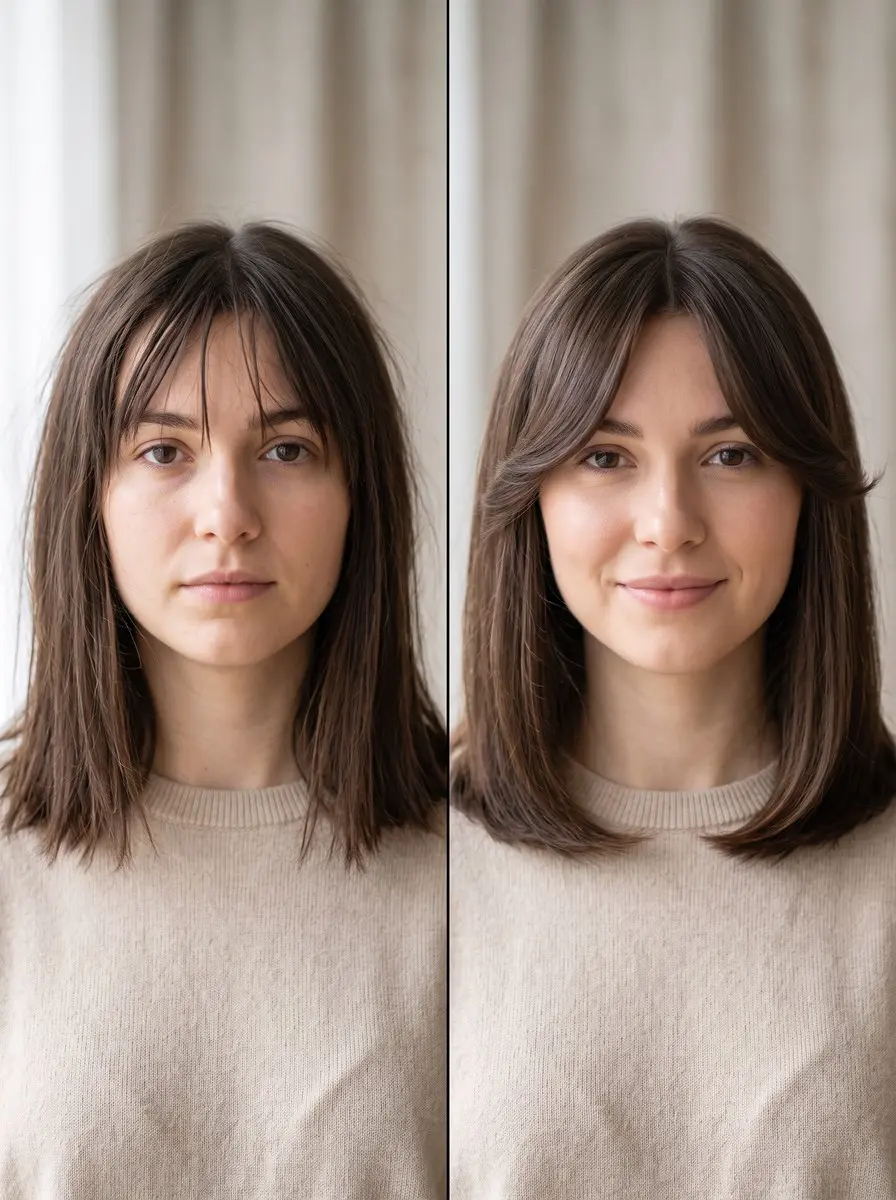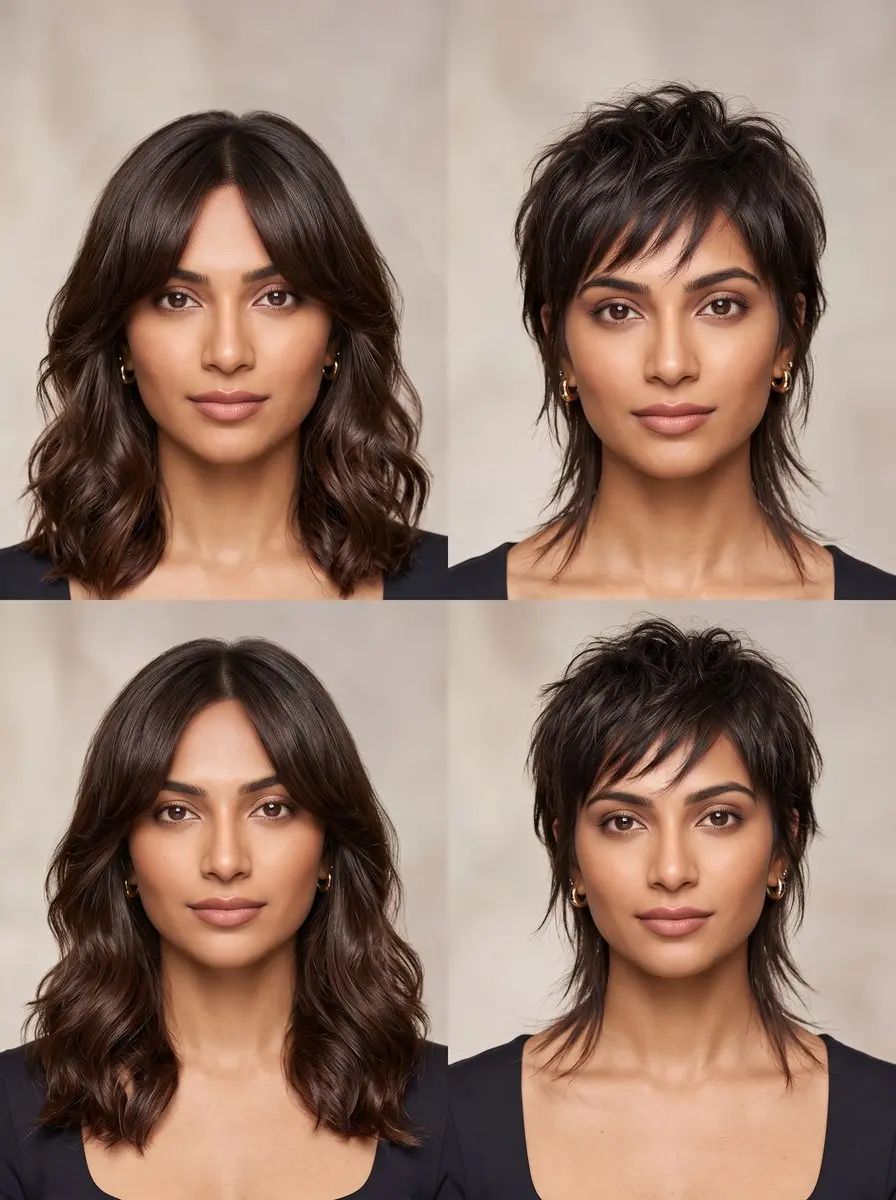
To choose between a wolf cut and a shag, decide how choppy you want the ends, how much hair you want around your face and how long you'll style each day. Pick the wolf cut for short, choppy crown layers; pick the shag for blended, face-hugging softness.
Scroll Pinterest for ten minutes and the wolf cut vs shag question gets harder, not easier. Both cuts are layered, both look piecey and lived-in, and plenty of pins carry the wrong label. That confusion bites at the booking moment: a stylist who hears “wolf” may cut shorter, choppier crown layers than you bargained for, while one who hears “shag” may leave the fringe fuller and closer to your face than you pictured.
You don’t need to know cutting technique to choose well. Three honest answers decide it: how choppy you want your ends, how much hair you want sitting around your face, and how much time you’ll spend styling each morning. Work through the steps below, compare the two cuts feature by feature, and walk into the salon with photos and a script that leaves nothing to interpretation.
What You’ll Need
- Texturizing spray (dry texture spray) — Adds the grit and separation that make wolf-cut crown layers and shag ends look piecey instead of flat.
- Lightweight volumizing mousse — Gives wavy and curly cuts hold and root lift for air-drying or diffusing, without a crunchy cast.
- Heat protectant spray — Shields damp hair before you blow-dry a shag fringe or diffuse curly layers.
- Medium round brush (about 1.5-2 inch barrel) — Bends shag fringe and cheekbone layers forward into soft, face-hugging curves while you blow-dry.
- Diffuser attachment — Dries curly and wavy wolf cuts and shags with less frizz while keeping volume at the crown.
As an Amazon Associate, HairAide earns from qualifying purchases. Some links above are affiliate links — they cost you nothing extra and help support free tutorials.
Step-by-Step
-
Start with the ends: decide how choppy and contrasted you want the shape to look. A wolf cut puts its shortest layers at the crown and leaves a deliberate jump in length down to the ends, so the top looks piecey and lifted while the perimeter stays longer and wispier, which is why it edges toward mullet territory. A shag keeps short layers around the top of the ear but blends them into the lengths, so the hair holds a soft heaviness without ever looking blunt. Stylists often call the wolf cut the shag’s more dramatic cousin. If you love visible steps between layers, you’re leaning wolf; if you want movement without visible seams, you’re leaning shag.
-
Decide how much hair you want near your face, because this is the difference you’ll notice every single day. A shag frames the face closely: its angled, blended fringe and cheekbone-level layers drape forward and hug the face, which reads soft and romantic. A wolf cut keeps less hair against the face, since its bangs and front layers are taken back toward the ears, opening up the cheeks and jaw for a sharper, edgier outline. Test it in the mirror: sweep your front hair back toward your ears, then let a few pieces fall forward across your cheekbones. The version you keep returning to is your answer.
-
Choose your fringe next, because it follows the same split and can tip a cut from one category into the other. Wolf-cut bangs are usually cut to be taken back toward the ear, so they part and flick away from the face and blend into the side layers. Shag fringe is fuller, angled and blended, designed to sit on the forehead and hug the face, often in a curtain shape. If you know you won’t style bangs every morning, say so: either cut can be done with long face-framing pieces instead, which ask less of you daily and grow out more gracefully than a short fringe.
-
Match the cut to your hair type, treating this as stylist consensus rather than a rule. Thick hair tends to handle a wolf cut well, because the short crown layers take out bulk and the contrast stays visible. Fine or thin hair often looks fuller in a shag, since blended layers keep more weight at the perimeter, while an aggressive wolf cut can leave fine ends looking see-through. Wavy and curly hair can wear both: curls make wolf-cut crown layers bounce up into big volume, and a curly shag is cut to follow the curl pattern. Very straight hair shows every layer, so expect to add texture with product to soften the lines.
-
Be honest about your morning routine before you commit. A wolf cut is built to look a little undone, so on wavy or curly hair it can often be scrunched with mousse and left to air-dry, and on straight hair a texturizing spray worked into the crown layers creates the piecey separation that makes the shape read. A shag usually takes a few more minutes, because the face-hugging fringe and cheekbone layers look best blow-dried over a round brush or diffused so they fall forward in soft bends. If you’ll give your hair five minutes or less, choose the cut that works with your natural texture rather than against it.
-
Plan your trim schedule now, so the cut never drifts out of shape. Hair grows at roughly half an inch a month whichever cut you choose, but a wolf cut feels that growth sooner: its whole look depends on the contrast between short crown layers and longer ends, and half an inch on a short crown layer blurs that contrast quickly. Expect a wolf cut to lose its definition in about six to eight weeks. A shag’s blended layers grow out together, so it usually holds its shape for eight to twelve weeks, with a quick fringe trim in between. Book the next appointment before you leave the salon.
-
Consider the in-between cuts if neither one feels quite right. A butterfly cut keeps long length and adds face-framing layers starting around the cheekbones, so it suits anyone who wants swing and movement without short crown layers or a mullet edge. A shullet, the shag-mullet hybrid, has a shorter, choppier top and a longer back, a halfway point if you’re tempted by the wolf cut’s contrast but want the shag’s softer fringe. A curly shag is shaped curl by curl, usually on dry hair, to build a rounded silhouette, which often makes it the better pick for tight curls and coils than either classic version.
-
Bring photos and name the features, not just the cut. Stylists often interpret “wolf cut” and “shag” the same way, so the label alone won’t get you your result. Save three photos of what you want and one of what you don’t, ideally on hair with your texture and density, then describe each feature out loud. For a wolf cut: “shortest layers at the crown, a clear jump in length to wispy ends, bangs swept back toward my ears.” For a shag: “short layers around the top of the ear blended into the lengths, a fuller fringe that sits on my face, keep weight at the ends.” You’re done when your stylist can repeat the plan back to you.
Common Mistakes to Avoid
- Asking for a “wolf cut” or a “shag” by name with no photos, when the two labels overlap so much that every stylist reads them a little differently.
- Choosing a high-contrast wolf cut on fine hair, then finding the ends look see-through once the crown layers are taken short.
- Saying yes to a face-hugging shag fringe when you know you won’t style bangs most mornings; ask for long face-framing pieces instead.
- Stretching a wolf cut to three months between trims, so the crown contrast blurs and it reads as an overgrown layered cut.
- Saving reference photos only on hair with a different texture from yours, since a curly wolf cut won’t predict how the cut sits on straight hair.
Pro Tip
Before the first snip, ask your stylist to point to where the shortest layer will sit. At the crown you’re getting a wolf cut, around the top of the ear you’re getting a shag, and that single landmark predicts the result more reliably than any name.
Frequently Asked Questions
What is the main difference between a wolf cut and a shag?
A wolf cut has shorter, choppier layers, with the shortest at the crown and a deliberate jump in length to the ends, and its bangs are usually swept back toward the ears. A shag blends short layers from around the top of the ear into the lengths and adds a fuller, angled fringe that hugs the face, so it looks softer and keeps more weight.
Which is easier to style every day, a wolf cut or a shag?
A wolf cut is usually a little quicker, because its choppy, undone texture is the point, and wavy or curly hair can often be scrunched with mousse and air-dried. A shag's fringe and face-framing layers tend to look best blow-dried or diffused. Whenever you use a blow-dryer or diffuser on either cut, mist a heat protectant through damp hair first.
How often do you need to trim a wolf cut or a shag?
Plan on every six to eight weeks for a wolf cut and every eight to twelve weeks for a shag. Hair grows at about half an inch a month either way, but the wolf cut's short crown layers lose their contrast sooner, so the shape blurs faster. A fringe on either cut may need a quick trim in between.
Can you get a wolf cut or a shag with fine or thin hair?
Yes, though stylists often steer fine hair toward a shag or a softened wolf cut. Blended layers keep weight at the ends so they look fuller, while very short, high-contrast crown layers can leave fine ends looking sparse. Ask for fewer, longer layers and bring a reference photo of hair with a density similar to yours.
Is the shag a lasting classic or a passing trend compared with the wolf cut?
The shag is a lasting classic that has cycled back again and again since the seventies, and its blended layers adapt easily as fashions shift. The wolf cut is newer and more trend-driven, but it grows out into a shaggy layered shape, so it's easy to soften into a shag at your next appointment if you tire of the contrast.
You Might Also Like
- 27 wolf cut hairstyles to inspire your next look
- 25+ medium wolf cut ideas to save before your appointment
- 20 soft shag haircuts to inspire your next look
- 20 medium-length 70s shag haircut ideas
- 15 curly shag hairstyles to show your stylist
- how to do a butterfly haircut at home
- how to blow-dry curtain bangs
- how to diffuse curly hair
- layered haircuts for thick hair
- low-maintenance haircuts
Once you know how choppy you want the ends, how much hair you want near your face and how much styling you’ll realistically do, the choice usually makes itself. Pick the wolf cut for crown lift and contrast, the shag for blended, face-hugging softness, or one of the in-between cuts if you want a little of both.
Keep the shape crisp with trims every six to twelve weeks depending on the cut, and tidy the fringe between appointments. Both cuts depend on precise layer placement, so leave them to a stylist rather than attempting them at home, and book a consultation first if you have tight curls, very fine hair or an earlier layered cut still growing out.
Sources
- The shag has short layers around the top of the ear plus a voluminous, angled, blended fringe that hugs the face. It has a 'heaviness' without being blunt. maneaddicts.com
- Stylist-focused sources say the wolf cut is the heavier, more dramatic cousin of the shag, and that the exact result depends on how the stylist interprets the request. Reference photos matter. therighthairstyles.com