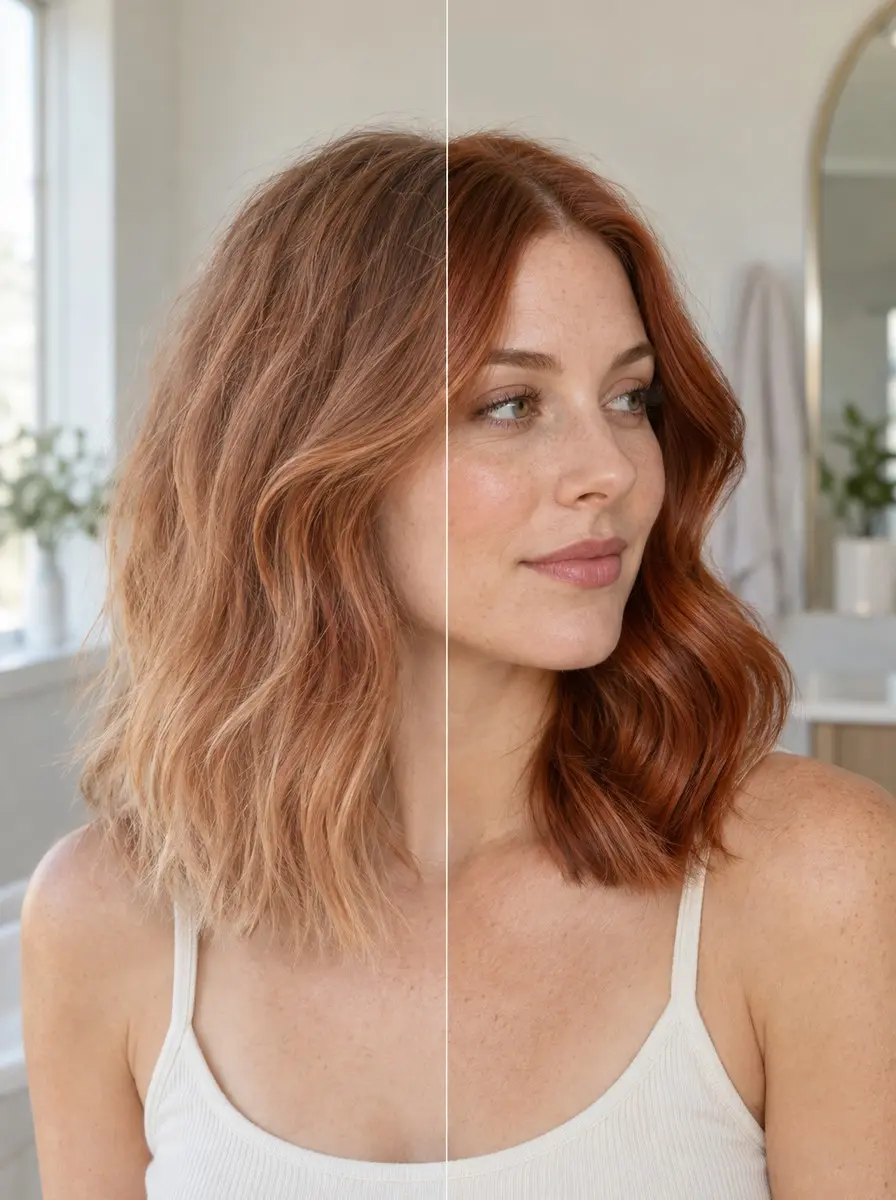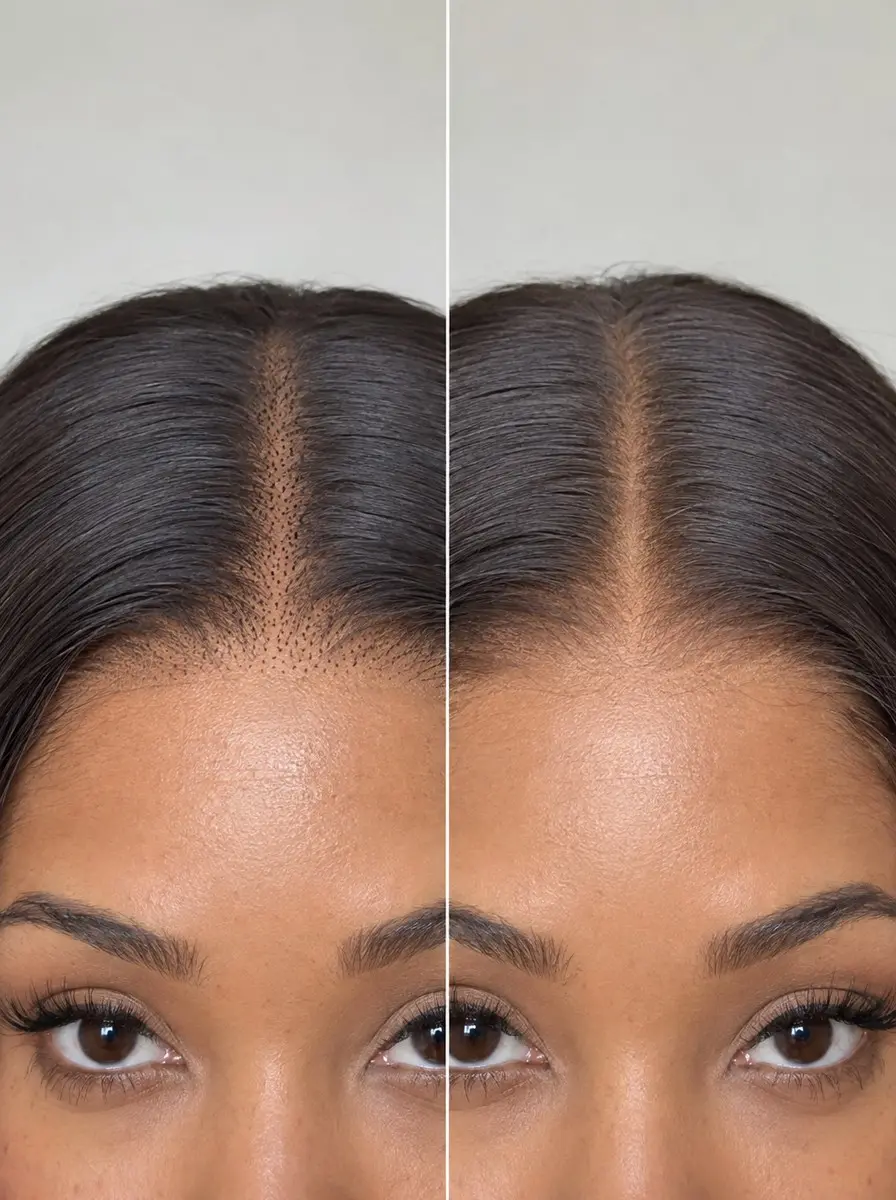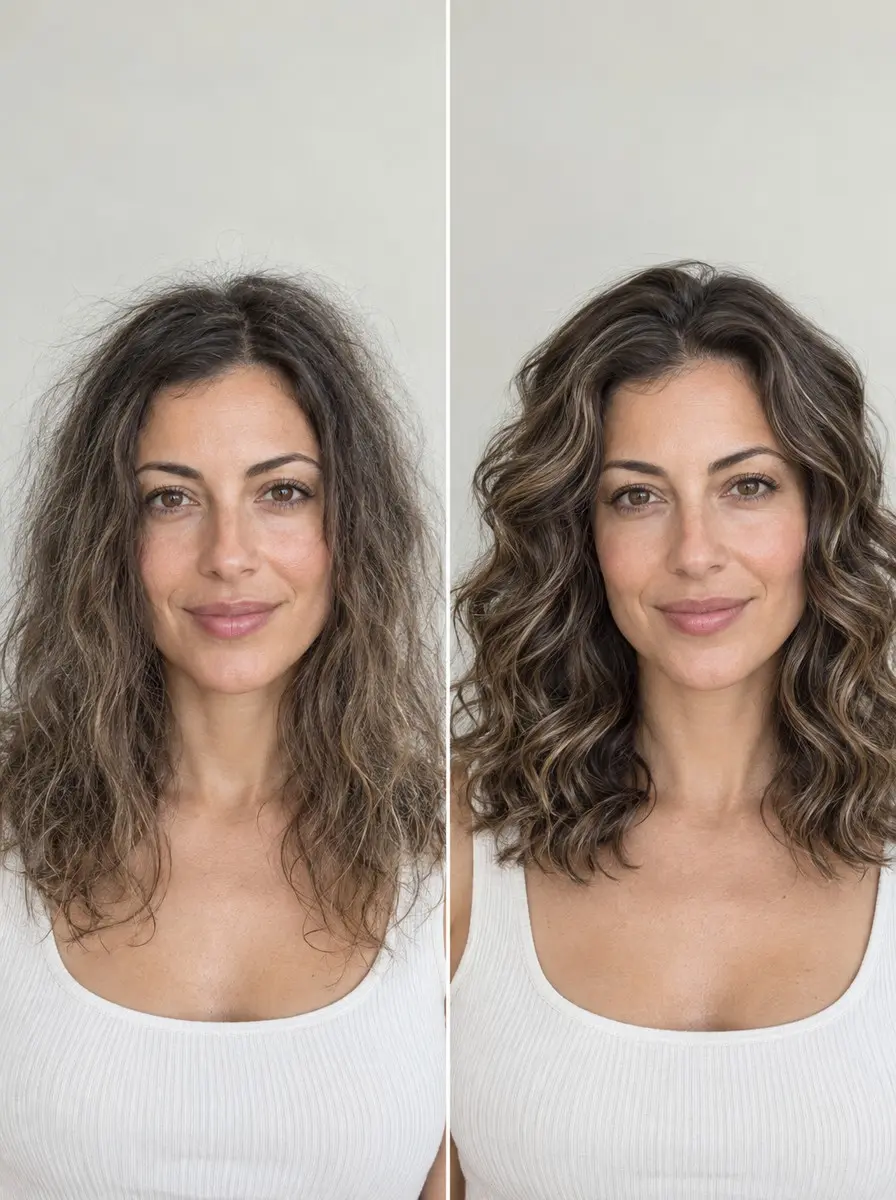
Quick answer To build a wavy hair routine, wash with a gentle sulfate-free shampoo every two to four days, use a lightweight conditioner, scrunch mousse or light gel into soaking-wet hair with your head flipped forward, then diffuse or air-dry without touching, lighter for 2A and with more moisture for 2C.
Wavy hair sits in an awkward middle ground. Treat it like straight hair and the waves never show up; treat it like curly hair, with rich creams and layered butters, and the weight drags those S-shapes flat by lunchtime. That is why so many people with 2A, 2B or 2C waves decide their hair just isn’t wavy, when it is really just overloaded.
The fix is a routine built around product weight. You’ll start by identifying your sub-type, porosity and strand thickness, then wash, condition, style and dry in the order that lets waves form instead of fighting them, with clear branches for fine, flat 2A, mid-length 2B S-waves and coarser, frizz-prone 2C. Everything here works at home with a handful of lightweight products; expect to fine-tune the amounts over two or three wash days.
Time 25-40 minutes, plus drying timeDifficulty BeginnerSteps 8
Wavy Hair Routine by Sub-Type
| Sub-type | Main styler | Conditioning | Focus |
|---|---|---|---|
| 2A: fine, loose bends | Volumizing mousse | Rinse fully; mask on ends only | Root lift |
| 2B: mid-length S-waves | Mousse, plus light gel if needed | Light conditioner; weekly mask | Definition |
| 2C: coarser, deeper waves | Light gel | Leave a little in; weekly richer mask | Frizz control |
What You’ll Need
As an Amazon Associate, HairAide earns from qualifying purchases. Product links in this guide are affiliate links: they cost you nothing extra and help keep these tutorials free.
- Gentle sulfate-free shampoo plus a clarifying shampoo The gentle shampoo handles every regular wash, and the clarifying one strips the buildup that flattens waves every two to four weeks.
- Lightweight conditioner Gives enough slip to finger-detangle without leaving the residue that pulls fine waves straight.
- Lightweight hydrating hair mask The weekly moisture step, richer for 2C and kept to the ends on 2A.
- Volumizing mousse and a light-hold gel Hold without heaviness: mousse for 2A lift, gel for 2C definition, and often both layered on 2B.
- Heat protectant spray Optional: needed only if you diffuse, worked in with your stylers to protect hair from the dryer’s heat.
- Microfiber hair towel Presses out water without the friction of a terry towel, so wave clumps stay intact (an old cotton T-shirt works too).
- Hair dryer with a diffuser attachment Optional: dries waves faster on low heat without blowing the clumps apart; some dryers include a diffuser and others sell it separately, so check the box list.
- Lightweight anti-frizz serum A few drops scrunch out the cast once hair is dry and smooth frizz without the weight of a cream.
Step-by-Step
Step 1 Identify your wave type and porosity
Wash with a gentle shampoo and a lightweight conditioner, skip styling products, and let your hair air-dry untouched so you can see its natural pattern.
Loose, barely-there bends that lie flat at the roots point to 2A; defined S-waves from mid-length down are 2B; deeper S-waves that start near the scalp, with the odd loose ringlet and more frizz, are 2C. Then roll a single strand between your fingers (barely felt means fine, thread-like means medium, wiry means coarse) and notice whether your hair soaks up water fast and dries quickly, a sign of higher porosity, or repels water and lets products sit on top, a sign of lower porosity.
These three answers decide how much weight your hair can carry, which is the whole basis of this routine.
Step 2 Cleanse gently and clarify on schedule
Massage a gentle sulfate-free shampoo into your scalp only and let the suds rinse through the lengths, which removes oil where it builds up without stripping the ends.
Most waves need this every two to four days: fine 2A hair that goes flat as soon as the roots get oily sits at the shorter end, coarser 2C at the longer end.
Every two to four weeks, or whenever waves feel coated and refuse to hold, swap in a clarifying shampoo, because gentle cleansers leave some styler, silicone and hard-water residue behind, and that buildup is one of the most common reasons waves go limp. Your scalp should feel clean and the lengths soft but not slick.
Step 3 Condition lightly from mid-lengths down
Smooth a lightweight conditioner from mid-lengths to ends, keeping it off the top few inches near the scalp, and finger-detangle while it’s in so the slip does the work instead of a brush. Then rinse more thoroughly than feels natural, because leftover conditioner adds just enough weight to pull fine waves straight.
2A should rinse until the hair feels clean but smooth, 2B can keep a faint slip, and 2C, which is usually coarser and frizzier, does well leaving a little conditioner in the ends as built-in moisture. You’re done when the knots are gone and hair feels smooth, not coated.
Step 4 Mask once a week by sub-type
Once a week, swap your conditioner for a lightweight hydrating mask, applied the same way from mid-lengths to ends and left on for the time on the label.
Waves need moisture without heaviness, and a weekly mask is the place to add it rather than a rich daily leave-in. 2C waves, and any hair with high porosity, get the most from this step and can use a richer formula; 2A should keep it to the ends, rinse thoroughly and skip a week whenever waves feel limp.
Low-porosity hair does better with a lighter formula, since product it cannot absorb just sits on the surface. Afterwards, hair should feel softer and bouncier, never greasy.
Step 5 Style on soaking-wet hair
Apply stylers straight out of the shower while your hair is still dripping, before any towel touches it. Water spreads a small amount of product evenly and lets waves group into clumps before frizz has a chance to form.
Choose by weight: 2A gets a palmful of volumizing mousse, 2B gets mousse or mousse followed by a thin layer of light-hold gel, and 2C gets a light gel over the conditioner left in its ends.
Skip butters and heavy creams, whose weight pulls the S-shape straight on wavy hair, and glide the product over the surface with flat palms before working it underneath, so every section is coated without being raked apart.
Step 6 Scrunch with your head flipped forward
Flip your head forward, cup the ends in your palms and squeeze upward toward the scalp, holding for a second before releasing; a soft squelch means the product is reaching the waves. Scrunching compresses the pattern so it sets as it dries, and drying head-down keeps the roots lifted away from the scalp, which is exactly where 2A and 2B lose volume.
Next, press out excess water with a microfiber towel or an old cotton T-shirt, squeezing rather than rubbing, because the friction of a rough towel breaks clumps apart into frizz. Stop when hair is damp rather than dripping and you can see defined wave groups.
Step 7 Diffuse or air-dry hands off
Leave your hair completely alone while it dries: every touch breaks clumps apart and invites frizz, while untouched mousse or gel forms a firm cast that holds the shape.
To speed things up, use a diffuser on low or medium heat with low airflow, cupping sections into the bowl and holding it near the roots for extra lift on 2A. Air-drying works just as well if you have the time, and it is the gentler choice.
Once hair is fully dry, rub a few drops of lightweight serum between your palms and scrunch upward to break the cast, using a little more on 2C and a single drop kept off the roots on 2A. The finish you want is soft, separated waves with no crunch.
Step 8 Troubleshoot flat waves, frizz and day two
If waves fall flat, cut the weight first: clarify, rinse conditioner more thoroughly, use less product, or move from a cream to mousse. If they frizz, add hold or moisture instead, with a little more gel, the weekly mask and stricter hands-off drying.
Weighed-down roots usually mean conditioner, mask or serum has crept onto the top few inches, so keep those to the mid-lengths and ends.
On day two, wet your hands, scrunch the flat or frizzy sections until they are damp, work in a small amount of mousse and let them air-dry or give them a quick diffuse. Change only one thing per wash day so you know which fix actually worked.
Common Mistakes to Avoid
- Following a curly routine of butters, heavy creams and layered leave-ins, whose weight pulls S-waves straight.
- Rubbing hair with a terry towel, which breaks wave clumps into frizz.
- Applying stylers to towel-dried hair instead of soaking-wet hair, so the product spreads unevenly and waves never clump.
- Touching, raking or brushing waves while they dry.
- Letting conditioner, mask or serum reach the roots of fine 2A hair.
- Going months without a clarifying wash, so buildup leaves waves limp.
Pro tip Run a split-head test: put your usual amount of mousse or gel on one side and half as much on the other, then compare once dry. Fine 2A hair often looks better on the lighter side, and one wash day tells you what weeks of guessing would not.
The Bottom Line
A wave-friendly routine comes down to weight and patience: gentle cleansing, light conditioning, mousse or gel on soaking-wet hair, a head-down scrunch and hands-off drying. Repeat it every wash day, add the mask weekly, and clarify every two to four weeks or as soon as your waves start going limp. Within each step, adjust the amount to your sub-type, porosity and strand thickness rather than following a fixed recipe.
If your waves stay flat even on a clean, lightweight routine, the cut may be the problem: a stylist experienced with wavy hair can add layers that remove bulk so the pattern can spring up. If you notice sudden breakage, or your scalp turns flaky, itchy or sore, see a dermatologist rather than changing products again.
Frequently Asked Questions
How often should you wash wavy hair?
Most wavy hair does well with a wash every two to four days, set by how quickly your scalp gets oily rather than a fixed rule. Fine 2A hair often needs washing more often because oil flattens it fast, while coarser 2C waves usually stretch longer. Add a clarifying wash every two to four weeks, or whenever your waves turn limp and products stop working.
Is mousse or gel better for wavy hair?
Mousse is the better starting point for fine 2A waves because it adds lift with very little weight. Gel gives more hold and definition, which suits frizz-prone 2C waves. Many 2B waves do best with both: mousse first for body, then a thin layer of light gel for hold. Either way, apply it to soaking-wet hair and scrunch out the crunch once dry.
Is it OK to diffuse wavy hair on every wash day?
Yes. A diffuser is designed for damp hair, so start right after scrunching, with a heat protectant worked in alongside your stylers, and keep the dryer on low or medium heat with low airflow so the waves are not blown apart. Hover near the roots for lift, then let the last of the moisture air-dry if you like. Air-drying alone is gentler, just slower.
Why do my waves look flat or frizzy even after following a routine?
Flat waves usually mean too much weight: heavy creams, conditioner left near the roots, or buildup that a clarifying wash would remove. Frizz usually means too little hold or moisture, or hair that was touched or towel-rubbed while drying. Change one thing per wash day, such as less product, more gel or a weekly mask, so you can see which change worked.
Keep Reading
Sources
- Hair routine for wavy hair sheamoisture.com
- Wavy hair care lorealparisusa.com
- Wavy hair routine whowhatwear.com