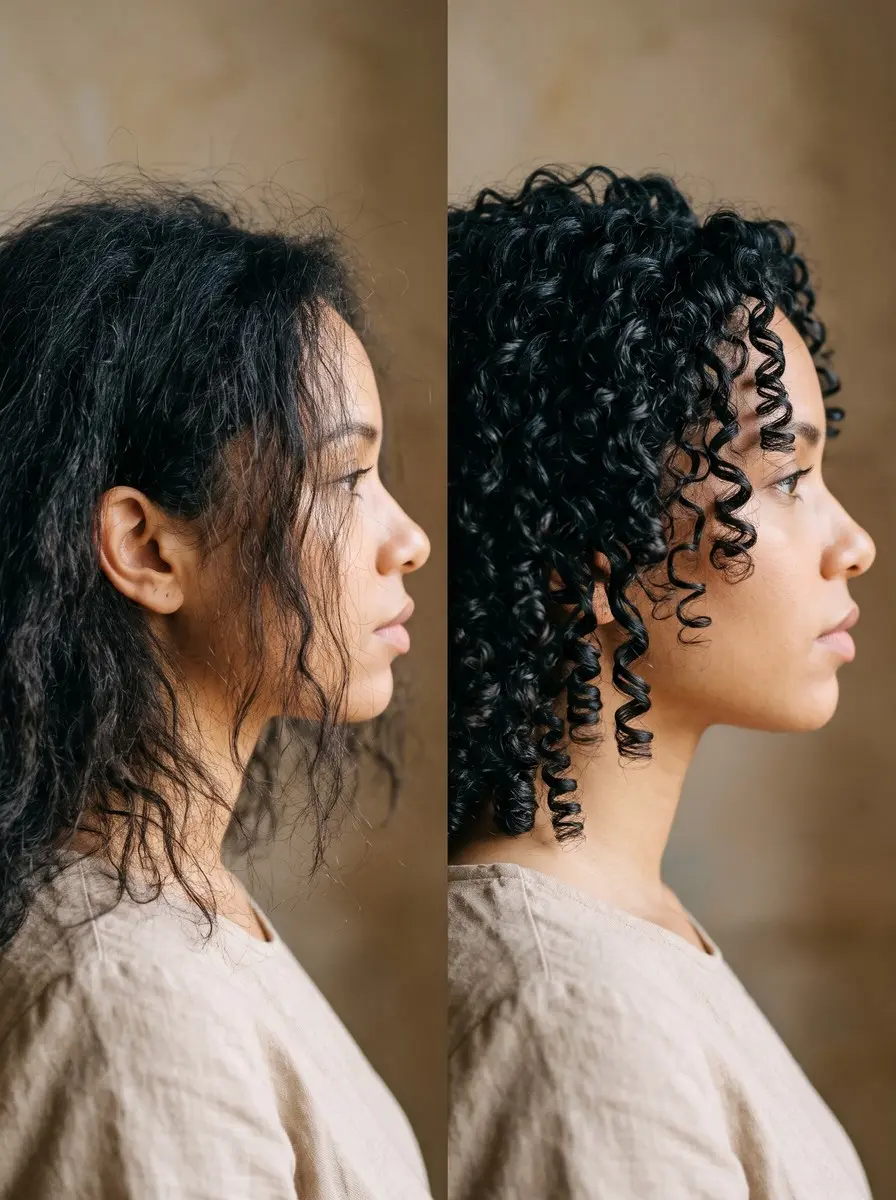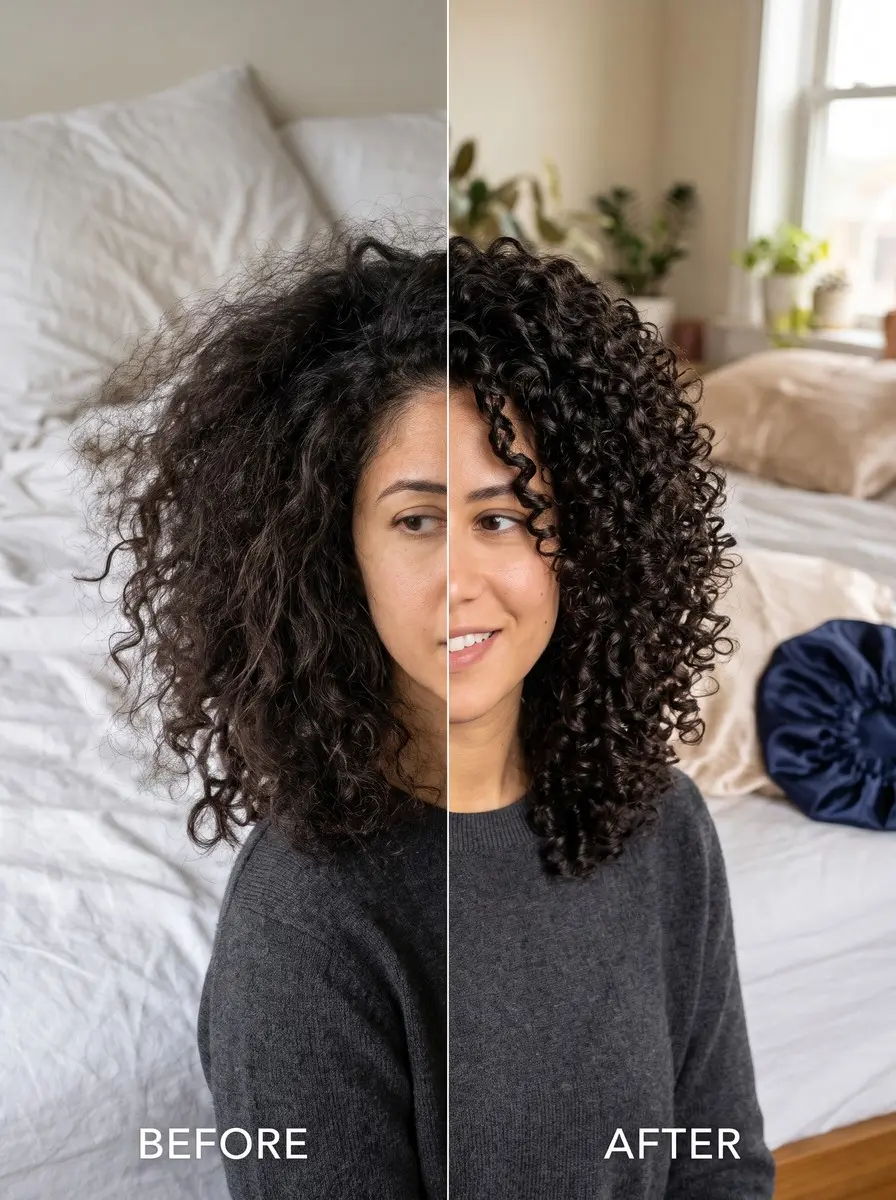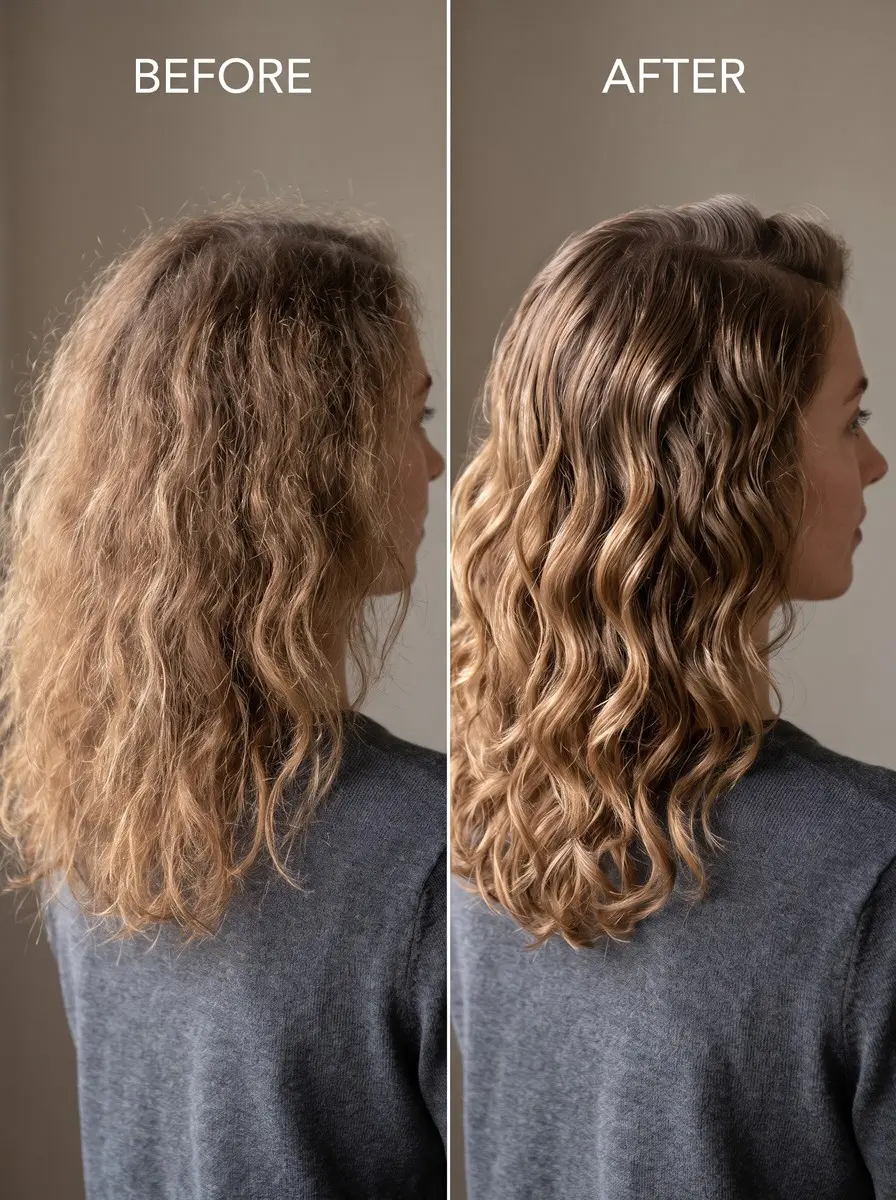
Quick answer To scrunch wavy hair, rake a light mousse or gel through soaking-wet hair, flip your head upside down and squeeze the waves up toward your scalp. Plop for 10–15 minutes, diffuse on low or air-dry without touching, then scrunch out the crunch once it's fully dry.
If your waves dry into a frizzy halo, or drop into limp, barely-there bends by lunchtime, a different routine will usually fix it. Wavy hair sits between straight and curly. It has a real pattern, but the S-bend is loose, so heavy products pull it straight and rough handling breaks it into frizz. Scrunching gives waves what they need: a little hold, set while the hair is still wet, without the weight.
This guide walks through a routine built for wavy hair. You’ll pick the right lightweight styler, apply it to soaking-wet hair and scrunch it in, plop briefly and dry hands-off. Then comes the step most people skip: scrunching out the crunch. It takes about 20 minutes of hands-on time, needs no special skill, and works whether you diffuse or air-dry.
Time 20-30 minutes hands-on, plus drying timeDifficulty BeginnerSteps 7
Scrunched Wavy Hair Troubleshooting
| Problem | Likely cause | Fix |
|---|---|---|
| Flat roots | Product at scalp, long plop | Keep product off roots, plop 10–15 min, dry crown upside down |
| Frizz | Damp hair styled, touched while drying | Style soaking wet, hands off until dry |
| Limp, stretched waves | Heavy cream or too little hold | Switch to mousse or light gel, scrunch and pump |
| Stiff, crunchy hair | Cast not broken | Scrunch out the crunch once fully dry |
| Dull, coated waves | Product build-up | Wash with a clarifying shampoo |
What You’ll Need
As an Amazon Associate, HairAide earns from qualifying purchases. Product links in this guide are affiliate links: they cost you nothing extra and help keep these tutorials free.
- Lightweight curl mousse Gives fine, loose waves hold and volume without the weight of a cream.
- Light, flexible-hold curl gel Adds definition and frizz control for thicker waves and makes the scrunch-and-pump method work.
- Microfiber hair towel Soaks up water during the plop without the friction of a terrycloth towel that causes frizz.
- Bowl-shaped diffuser attachment Spreads the dryer’s airflow so waves dry with lift and definition instead of being blown apart.
- Lightweight leave-in conditioner A few drops softens the cast after drying and smooths dry ends without weighing waves down.
Step-by-Step
Step 1 Start on clean, soaking-wet hair
Shampoo, then put in a lightweight conditioner and detangle with your fingers or a wide-tooth comb while it’s still in, so you never need to brush once styling starts. Rinse, but skip the towel: your hair should still be dripping when the first product goes on.
Water groups strands into clumps, and product spread over soaking-wet hair coats those clumps evenly and sets the wave pattern before frizz can form, whereas on towel-dried hair the strands have already separated. If your waves have felt coated, dull or limp lately, use a clarifying shampoo instead of your usual one to clear product build-up first.
Step 2 Choose a lightweight hold product
Wavy hair needs lighter products than curly hair. A loose S-bend has less spring than a tight curl, so rich creams, butters and heavy oils weigh it down and pull it nearly straight.
Reach for a curl mousse if your waves are fine and lose volume easily, or a light, flexible-hold gel if they’re thicker and frizz more than they fall flat; some people layer a little of each.
Start with a golf-ball-sized amount of mousse or a heaped tablespoon of light gel for shoulder-length hair, and use more for longer or thicker hair. If your ends feel dry, smooth on a thin layer of curl-enhancing milk or lightweight leave-in first, keeping it light so the styler still has something to grip.
Step 3 Rake through, then scrunch upward
Flip your head upside down (or tilt it to one side if that’s easier) and smooth the product over the surface with flat palms. Then rake your fingers through from mid-lengths to ends until every section is coated, keeping heavy product away from the first inch at the scalp, where it weighs roots down.
Next, gather the ends into your palms and squeeze upward toward the scalp, hold for a second, release, and work your way around your whole head.
Scrunching upward pushes each wave back into its natural bend and presses water and product into the clumps, and working upside down lets gravity lift the roots as they begin to set. You’re done when the hair has grouped into defined, glossy wave ribbons and you hear a faint squish as you squeeze.
Step 4 Scrunch and pump stubborn sections
If some sections stay straight or stringy after scrunching, try scrunch-and-pump. It’s a method shared widely in wavy-hair communities rather than an established salon standard.
Coat your palms with gel, divide your hair into medium sections, and scrunch each one by the handful, pressing it toward the scalp several times; some people pump about eight times and hold for a couple of seconds before releasing. The repeated pressing helps neighboring strands group into thicker clumps, which hold their shape better and look more defined once dry.
Stop as soon as a section springs back into a wave on its own, because working it past that point can rough up the surface and add frizz.
Step 5 Plop in a microfiber towel
Lay a microfiber towel or a soft cotton T-shirt flat, lower your hair onto it head-down, and wrap it so the waves are gathered and supported on top of your head. Leave it for about 10 to 15 minutes.
Plopping soaks up excess water without the friction of rubbing with a regular terrycloth towel, which roughs up the surface of the hair and creates frizz, and keeping the waves bunched up stops their own wet weight from stretching them out.
Keep the plop short for wavy hair, because a much longer one can leave loose waves dried flat or dented. You’re done when the hair has stopped dripping but is still clearly wet.
Step 6 Diffuse on low or air-dry, hands off
To diffuse, set your dryer to low heat and low speed and cup a section of hair in the diffuser bowl. Bring it up toward your scalp, hold it there for 30 to 60 seconds, then lower the diffuser away without shaking it, and dry the crown with your head upside down if your roots tend to fall flat.
To air-dry, simply leave your hair alone. Either way, don’t touch, scrunch or run your fingers through it until it’s completely dry, because the mousse or gel is setting around each clump and disturbing it while wet splits the clumps into frizz.
You’re done when every part of your hair, including the roots and underneath layers, feels stiff and slightly crunchy with no cool, damp spots left.
Step 7 Scrunch out the crunch once dry
Once your hair is completely dry, that stiff, crunchy feel is the cast: the shell the mousse or gel formed while holding your waves in place. If your hair feels dry, rub a few drops of a lightweight leave-in between your palms; if not, bare hands are fine.
Then flip your head over and scrunch upward in small handfuls, the same motion you used at the start.
Because the hold has already set, breaking the cast softens the hair without losing the wave pattern. Stop when your waves feel soft and touchable but still hold their shape, and leave any section that’s even slightly damp, since scrunching it now will make it frizz.
Common Mistakes to Avoid
- Applying mousse or gel to towel-dried hair: by then the strands have separated, so the product sets frizz in place instead of clumped waves.
- Using a rich curl cream, butter or heavy oil as your main styler, which pulls a loose wave pattern nearly straight.
- Touching, flipping or scrunching your hair while it dries, which breaks the clumps apart before the hold has set.
- Scrunching out the crunch while the roots or underneath layers are still damp, which turns soft waves into frizz.
- Brushing or combing after the styler goes in, which splits wave clumps into separate, fuzzy strands.
Pro tip For lift at the crown, slide a few duckbill clips in at the roots right after plopping and leave them in until the roots are completely dry. They hold the hair up off the scalp so it sets with volume instead of drying flat against your head.
The Bottom Line
Get the order right and your waves dry soft and defined instead of frizzy or flat: styler on soaking-wet hair, a short plop, hands-off drying, then scrunching out the crunch. Repeat the routine every wash day. If you diffuse, work a heat protectant through before your styler and keep the dryer on low; air-drying skips heat altogether.
If your hair dries straight at the root and wavy only at the ends, or one section never holds a wave, the cut may be working against you. A stylist experienced with wavy hair can add layers that let the pattern spring up. See a pro too if your hair feels gummy or snaps easily, since no styling routine fixes that kind of damage.
Frequently Asked Questions
Should I scrunch wavy hair wet or dry?
Apply your styler and scrunch while your hair is soaking wet, because that's when waves clump together and the product can set them in place. Scrunching dry hair with no product mostly roughs up the strands and creates frizz. The only dry scrunch in the routine comes at the end, to break the cast once your hair is completely dry.
Is mousse or gel better for wavy hair?
Neither wins every time. Mousse tends to suit fine, loose waves that need volume and lose their shape under weight, while a light gel gives more definition and frizz control for thicker waves. Many people with wavy hair use both: a light gel for hold, then a little mousse on top for body. Avoid heavy creams and butters as your main styler.
Why do my scrunched waves go flat by the afternoon?
The usual causes are a product that's too heavy, too little hold, or build-up weighing the hair down. Switch to mousse or a light gel, use a little more of it, and try scrunch-and-pump on the sections that drop. If waves still collapse, wash with a clarifying shampoo, and keep your plop to 10–15 minutes so roots don't dry flat.
How long do scrunched waves last?
With a mousse or gel cast and a gentle night routine, scrunched waves usually hold for one to three days. Sleep on a satin or silk pillowcase, or put your hair in a loose, high ponytail, to limit flattening and friction. The next morning, mist with water, scrunch in a small amount of mousse and let it dry before you touch it.
Keep Reading
Sources
- How to scrunch hair us.davines.com
- Scrunch out the crunch onlycurls.com
- naturallycurly.com naturallycurly.com