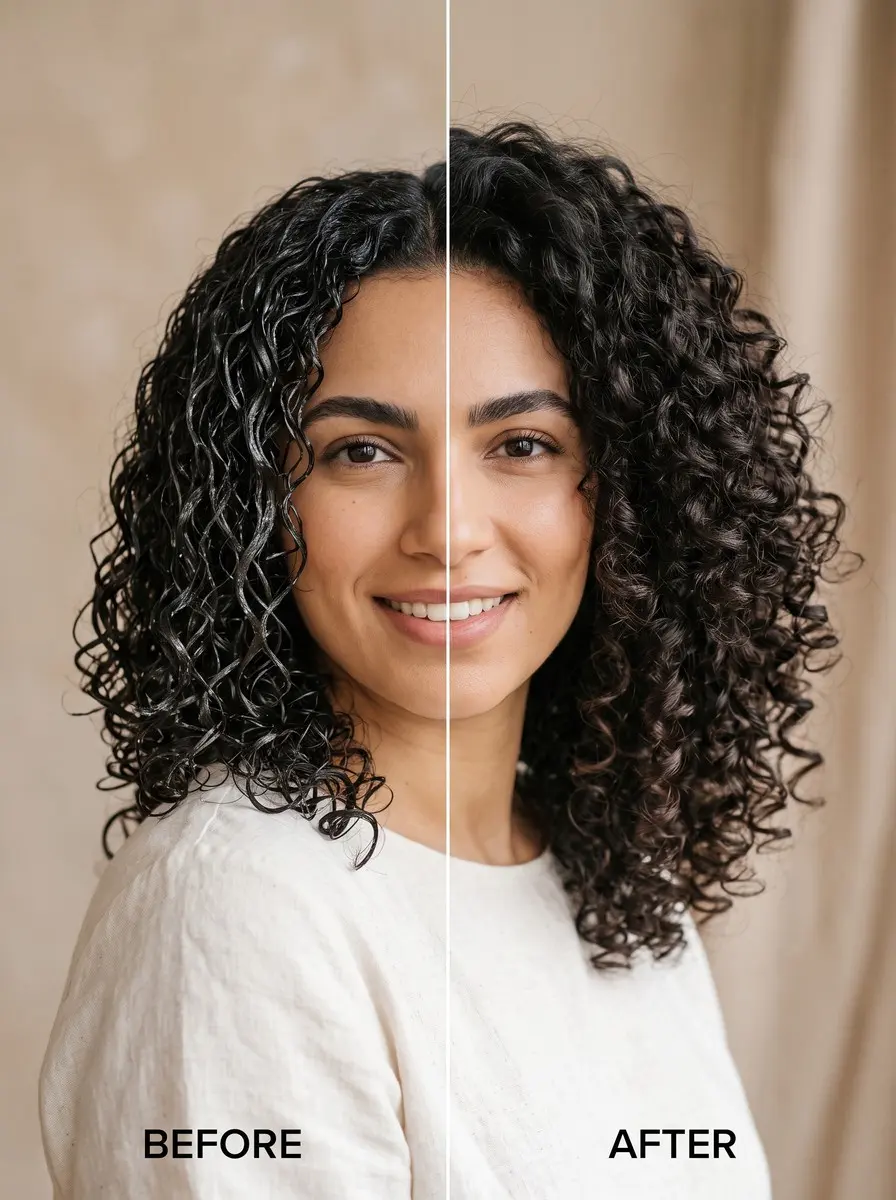
Quick answer To break the cast on curly hair, wait until it is completely dry. Then flip your head and scrunch upward from ends to roots with open hands, with no pulling or raking. If the cast is stubborn, warm a pea-sized drop of oil between your palms first.
Gel is what lets your curls dry defined instead of frizzy, but it leaves them stiff, shiny and crunchy. That shell is called the gel cast, and it is supposed to be there.
As your hair dries, the gel sets around each curl clump and holds it in shape until the curl is safe to touch. Breaking the cast is the last step of wash day: you crack that film so the curls feel soft and keep their definition.
Done well, it takes five minutes and no special tools. Done badly (too early, too hard or with too much product), it is where most wash days turn into frizz. Below you’ll find a quick dryness test, the open-hand scrunch, how much oil to use and fabric alternatives. You’ll also learn what a cast that won’t break, or keeps coming back, says about the rest of your routine.
Time 5-10 minutes (after hair is fully dry)Difficulty BeginnerSteps 7
Gel Cast Troubleshooting: Problem, Cause and Fix
| Problem | Likely cause | Fix |
|---|---|---|
| Frizz right after scrunching | Damp hair, raking or squeezing too hard | Wait until fully dry; scrunch lightly with open hands |
| Cast won’t break | Too much gel | A warmed drop of oil now; less gel on wetter hair next wash |
| Crunch returns hours later | Damp clump centres or rewet gel | Scrunch again once fully dry, with oil, not water |
| Curls look greasy or flat | Too much oil | A pea-sized drop, mid-lengths to ends only |
| Frizz halo from your hands | Friction from bare palms | Satin scarf, cotton t-shirt or two-finger smooth |
What You’ll Need
As an Amazon Associate, HairAide earns from qualifying purchases. Product links in this guide are affiliate links: they cost you nothing extra and help keep these tutorials free.
- Strong-hold curl gel Forms the cast that keeps curl clumps defined while hair dries; start with less than you think you need.
- Lightweight hair oil or serum A pea-sized drop warmed between the palms softens stubborn patches of cast without weighing curls down.
- Satin hair scarf Scrunching through satin spreads the pressure and cuts friction for a softer finish with fewer flyaways.
- Continuous fine-mist spray bottle Puts a fine mist of water on your hands to soften a cast, or on your hair to refresh day-two curls.
Step-by-Step
Step 1 Apply less gel to soaking-wet hair
A cast that breaks cleanly starts when you apply the gel, not at the end of the routine. Smooth or rake the gel through your hair section by section while it is still dripping wet. Start with about a quarter-size amount per section, and add more only if curls frizz as they dry.
Water thins the gel so it spreads evenly over each clump, giving you hold from a thin film instead of a thick one. OnlyCurls notes that heavy gel application creates a thicker cast that is harder to break. You’re done when the curls look glossy and clumped, with no white or tacky patches.
Step 2 Let the cast set untouched
Once the gel is in, leave your hair alone until it is dry: air-dry, plop, or diffuse with as little movement as possible. The gel forms the cast as the water evaporates. It holds each clump in shape so the curl can’t swell or separate while it is still damp, so the stiffness means the cast is doing its job.
Touching, scrunching or flipping your hair while it dries cracks the film early and lets damp strands break apart into frizz. Your cue is a firm, slightly shiny, crunchy shell over every curl, from roots to ends.
Step 3 Confirm your hair is completely dry
Scrunching damp hair is the most common reason curls frizz after breaking the cast. Before you start, check the spots that dry last: the nape, the crown and the inside of the thickest clumps. Gently pinch a clump near the nape.
If it feels cool, bendy or tacky rather than crisp and room-temperature, it needs more time. Damp hair still holds water inside the clump, and breaking the film at that point separates strands that haven’t set. When in doubt, wait another 20-30 minutes. Half an hour of waiting costs less than a frizzy day.
Step 4 Flip your head and scrunch upward
Flip your head upside down, cup a section of ends in an open, relaxed hand and press gently upward toward the roots, then let go. This is the motion Ouidad recommends for breaking a gel cast. Squeezing the clump cracks the dried film while the strands stay grouped, so the curl softens without coming apart.
Flipping also lets the roots fall away from your scalp for extra lift. Work around the whole head in small sections, and never pull, rake or rub the lengths, because friction splits clumps into frizz. Stop when the crunch is gone and each curl springs back into shape after you squeeze it.
Step 5 Soften stubborn spots with oil or water
If some areas still feel crisp after the first pass, warm a pea-sized drop of lightweight oil or serum between your palms until your hands are just slick.
Repeat the upward scrunch on those areas only, from mid-lengths to ends, and keep the oil away from your roots. The oil lets your hands glide over the cast and softens the film without the friction that causes frizz.
If oil weighs your curls down, Curlkeeper suggests a small amount of water misted onto your hands instead. The water slightly rewets the gel so it gives. You’re done when the crisp spots feel soft and the curls look shiny, not greasy or wet.
Step 6 Try fabric or the two-finger smooth
If your hands always leave a halo of frizz, use fabric instead. Scrunch upward through a satin scarf or a soft cotton t-shirt. Both spread the pressure across the whole clump, and their smooth surface causes less friction than dry palms or a terry towel.
For single clumps around your face and part, use the smoothing motion: slide a clump between two fingers from mid-length to the end. This cracks the cast along the curl without pulling it apart. Pick whichever method leaves the fewest flyaways and stick with it every wash day.
Step 7 Fix a cast that frizzes or returns
Treat the result as a clue about your routine. Frizz right after scrunching means the hair was still damp, your hands were raking instead of pressing, or you squeezed too hard; Curlkeeper warns that heavy-handed scrunching causes frizz.
Next time, wait longer and keep your hands open and light. A cast that won’t break, even with oil, means you used too much gel, so apply less to wetter hair on your next wash day.
Crunch that comes back a few hours later usually means the inside of the clumps was still damp, or water from your hands rewet the gel and it dried hard again. Once your hair is fully dry, scrunch again using a drop of oil instead of water.
Common Mistakes to Avoid
- Scrunching while the inside of the clumps is still damp. This breaks curls into frizz that no product can undo until the next wash.
- Raking your fingers through, or pulling curls down to check their length. Both split clumps into single strands and create a halo of frizz.
- Using a full palm of oil to soften a stubborn cast instead of a pea-sized drop. Too much oil leaves curls greasy, flat and separated.
- Touching, flipping or scrunching your hair while it dries, which cracks the cast before the curls have set.
- Adding more gel to fight frizz. It only makes a heavier cast; apply less gel to wetter hair instead.
Pro tip Break the cast in two passes. Do the first with dry, open hands to crack most of it, then go back only to the spots that still feel crisp, using a pea-sized drop of oil. You’ll use far less oil and keep more definition.
The Bottom Line
Breaking the cast well comes down to three things: hair that is completely dry, open hands that press upward instead of pulling, and as little extra product as possible. Do it once after each wash day, plus a light scrunch after any day-two refresh. If you keep fighting a stubborn cast, the fix usually comes earlier in the routine: use less gel on wetter hair next time.
If your curls frizz no matter how gently you scrunch, or never clump even with gel, book a stylist who specialises in curly hair. They can check whether your cut, your hair’s porosity or your products are working against you, which no scrunching technique can fix.
Frequently Asked Questions
How do I know my curly hair is dry enough to break the cast?
Check the nape, the crown and the inside of your thickest clumps, because they dry last. A clump that feels crisp and room-temperature is ready. One that feels cool, bendy or tacky still has water inside. If in doubt, wait another 20-30 minutes, because scrunching damp hair splits strands apart before they set and is the most common cause of frizz.
Should I use oil or water to break a gel cast?
Start with neither, because dry, open-handed scrunching breaks most casts. For stubborn spots, a pea-sized drop of lightweight oil warmed between your palms adds slip and softness, which suits thicker or drier curls. If oil weighs your curls down, mist a little water onto your hands instead. It slightly rewets the gel, but too much water can let the cast form again as it dries.
Can I diffuse my hair to dry the cast faster?
Yes. Diffuse damp hair on low or medium heat with low airflow, keep the curls cupped in the diffuser bowl and move it as little as possible so you don't disturb the cast. Work a heat protectant in before your gel. Let your hair cool completely and do the dryness test before you scrunch, because warm hair can feel dry while the clumps are still damp inside.
Do I need to break the cast every day?
No. You break the cast once, after wash day. On day two or three, you can refresh flat or frizzy curls by misting them with water or a refresher spray, which softens the old gel. Once that dries it may feel slightly crisp again. A quick, light scrunch with open hands breaks it the same way.
Is a hard gel cast bad for curly hair?
No. A cast is just gel that has dried into a film around each curl clump, and it washes out at your next wash. It is what lets curls dry defined instead of frizzy. The only risk comes from breaking it roughly: pulling or raking stiff curls causes frizz and extra friction on the ends, so always scrunch upward gently.
Keep Reading
Sources
- How to break a gel cast ouidad.com
- How to scrunch out the crunch soft defined curls onlycurls.com
- Curly hair hack scrunch out the crunch curlkeeper.com
- naturallycurly.com naturallycurly.com