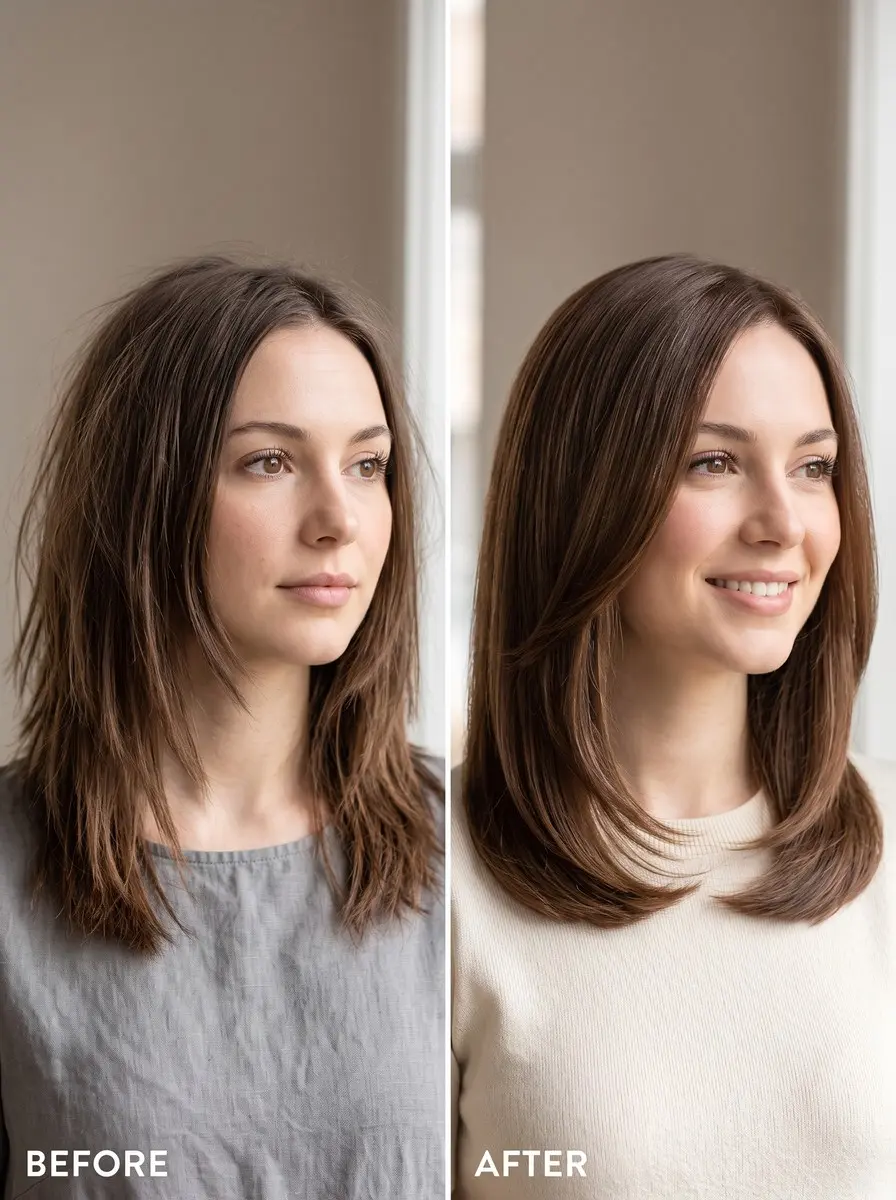
Quick answer To fix a bad haircut, give it a few days and restyle it yourself. Then pin down the exact problem and go back to the salon with a photo and specific 'I' statements. The correction is usually blended layers or going slightly shorter. Hide the grow-out with parting, texture and accessories.
Few things feel worse than walking out of a salon, catching your reflection and realising the cut isn’t what you asked for. Maybe the layers look choppy, the bangs sit a centimetre too high, or the whole shape feels wrong for you. The urge to grab the kitchen scissors and fix it tonight is strong. Don’t. That instinct turns a fixable cut into a real problem.
The good news is that most bad haircuts can be saved, and many turn out to be less bad than they looked in the salon chair. This guide walks you through the repair in order: wait and restyle, work out exactly what’s wrong, then choose the right fix.
That could be a correction, camouflage or a planned grow-out. You’ll also get the exact words to use with your stylist, so the second appointment goes better than the first.
Time 3-5 days to assess, plus a 1-2 hour correction appointmentDifficulty BeginnerSteps 9
What to Ask For by Problem
| Problem | What to ask for |
|---|---|
| Choppy or uneven layers | Go slightly shorter overall |
| Disconnected layers | Re-blend to soften harsh edges |
| Too-short or uneven bangs | Curtain or side-swept fringe |
| Too short overall | Reshape ends for a clean grow-out |
What You’ll Need
As an Amazon Associate, HairAide earns from qualifying purchases. Product links in this guide are affiliate links: they cost you nothing extra and help keep these tutorials free.
- Texturising spray Breaks up blunt or choppy lines so uneven layers look intentional while you decide whether a correction is needed.
- Round brush Bends short front pieces and too-short layers into a curve that blends with the rest of the cut.
- Clip-in hair extensions Add volume or length for events while a too-short or uneven cut grows back.
- Claw clips and padded headbands Pin back awkward grow-out lengths and draw attention away from uneven sections.
Step-by-Step
Step 1 Wait before judging the cut
Put the scissors down and give the cut three or four days before you judge it. Wash it, let it dry the way you normally would, and style it with your own tools and products. Salon blowouts use techniques and heavy product that can make a good cut look stiff, or a soft one look severe.
Many ‘bad’ cuts are just different from what you pictured, and the shock fades once the hair settles into your usual routine. Don’t trim at home either. Evening out one side almost always takes off more length and creates a new problem a stylist then has to fix.
Step 2 Name the exact problem
Once you’ve lived with it for a few days, name the exact problem, because every fix depends on it. Stand with your back to a bathroom mirror while holding a hand mirror, or photograph the back and sides in daylight.
Put the issue in one bucket: too short overall, choppy or disconnected layers, uneven or too-short bangs, or the wrong shape. Disconnected layers show visible steps where one section ends and the next begins.
A wrong shape means too much bulk, a flat crown or a line sitting where you dislike it. Write it in one sentence. ‘The left side is an inch longer than the right’ can be fixed. ‘I hate it’ can’t.
Step 3 Try a styling fix first
Before booking anything, try a styling fix. Many problems come from how the cut falls, not where it was cut. Switch your part: moving it to the other side or deepening a side part shifts weight and can hide an uneven section.
A texturising spray or light sea-salt spray breaks up blunt lines and makes choppy layers look deliberate. A round-brush blow-dry can bend short front pieces into a curve that blends with the rest.
For bangs that are too short, sweep them to the side while damp and let them dry in place. If one of these styles makes you like the cut, you may need only a small tweak, or none at all.
Step 4 Contact the salon soon
If the problem survives restyling, contact the salon soon and ask about their adjustment policy. Redo and correction policies vary a lot from salon to salon, so don’t assume there’s a standard window. Ask directly: ‘What’s your policy for adjustments, and how long do I have to come back?’
Calling soon matters because the problem is easiest to see while the cut is fresh. The stylist can also correct it more precisely before regrowth blurs the original lines. Book with the original stylist unless the way they treated you was itself the problem, since they know exactly what they did and why.
Step 5 Match the problem to a fix
Before the appointment, match the problem you named in step two to the fix that suits it, so you walk in asking for something specific instead of ‘just fix it’. Choppy or uneven layers: ask to go slightly shorter overall, which gives the stylist a clean new baseline for every section to connect to.
Disconnected layers: ask to re-blend them, softening the harsh edges so the sections flow together without losing much length. Too-short or uneven bangs: ask to reshape them into a curtain or side-swept fringe that grows out gracefully.
Too short overall: no one can add length back, so ask to reshape the ends so the grow-out looks intentional at every stage. You’re done when you have one line to ask for, such as ‘Keep the length at my collarbone, blend the face layers into the back.’
Step 6 Phrase your request clearly
How you phrase the conversation shapes the result. Use ‘I’ statements that describe the effect on you rather than blame. ‘I’m finding the layers around my face don’t connect to the back, and I can’t get it to lie smoothly’ works far better than ‘You cut this wrong.’
Be specific: use the sentence you wrote in step two, then the one-line request from step five. Bring a photo of the result you want, plus one of what you don’t want if that helps. A stylist can act on a precise description much more easily than on general disappointment, and a calm, specific request keeps them invested in getting it right.
Step 7 Speak up during the appointment
Speak up during the appointment, not after it. Before any cutting starts, ask the stylist to explain their plan in plain words and confirm the length you’ll end up with. Partway through, ask to see the back with a hand mirror, because that’s where uneven lines and disconnected layers hide.
Expect a proper correction to take time: in one fix Coveteur reported, blending the layers so they connected took about two hours. If you can, shampoo and style it yourself before calling it finished, the same way you judged the original cut.
Step 8 Escalate or switch stylists
If the stylist dismisses your concern, or the correction makes things worse, ask to speak with the salon owner or manager. Stay factual: what you asked for, what you got, what you’ve already tried, and your photos. Managers care about repeat clients and reviews, and they can often arrange a correction with a more senior stylist.
Switch stylists for good if you’ve had two misses in a row, if they didn’t listen in the chair, or if the trust is simply gone. A new stylist has no stake in defending the original cut and can often see the fix more clearly.
Step 9 Camouflage while it grows out
While the cut grows out, camouflage buys you confidence. Headbands, claw clips, scarves and pretty barrettes pin back awkward lengths and draw the eye elsewhere. As Current Salon suggests, clip-in pieces add volume or length for events. Hair grows at roughly half an inch a month and nothing speeds that up, so plan small shaping trims every six to eight weeks.
The trims aren’t about growing faster. They keep the outline from losing its shape while the uneven sections catch up. Each trim should take off only the pieces that stick out, not the length you’re trying to keep.
Common Mistakes to Avoid
- Trimming at home to ‘even it out’. One side always ends up shorter, and a stylist then has less length to work with.
- Judging the cut on day one from the salon blowout instead of after washing and styling it your own way.
- Staying silent in the chair and leaving without asking to see the back, where most uneven lines hide.
- Telling the stylist to ‘just fix it’ without naming the specific problem or bringing a goal photo.
- Waiting weeks to call the salon, then finding the adjustment window has closed or regrowth has blurred the original lines.
- Cutting everything off in frustration when a blend or a slightly shorter baseline would have saved most of the length.
Pro tip When you ask for a correction, say what you want to keep before what you want changed. ‘Keep the length at my collarbone, just blend the face layers into the back’ protects your non-negotiable, because a stylist fixing a cut tends to take more off by default.
The Bottom Line
Fixing a bad haircut is mostly patience and precision. Restyle it first, name the exact problem, then go back with a photo and clear ‘I’ statements. More often than not, a blend or a slightly shorter baseline turns a cut you regret into one you actually like.
After that, maintenance is simple: shaping trims every six to eight weeks, and accessories or clip-ins for the in-between days. See a professional instead of your own scissors every time. If the salon won’t help, ask for the manager or book a new stylist, since a fresh pair of eyes often spots the fix right away.
Frequently Asked Questions
How long should I wait before deciding a haircut is bad?
Give it three to four days. Wash it, let it dry the way you normally do, and style it with your own products before you judge it. Salon blowouts can make a cut look stiffer or more dramatic than it is day to day. If it still bothers you after a few washes, contact the salon.
Will a salon fix a bad haircut for free?
Many salons will adjust a cut they did, but policies vary widely and there's no universal time limit. Call soon and ask directly: 'What's your policy for adjustments, and how long do I have to come back?' Being specific and polite about the problem makes a free correction much more likely.
Can I straighten or curl a bad haircut to hide it?
Yes. Heat styling is one of the best disguises. Blow-dry damp hair after misting in a heat protectant. If you use a flat iron to bend uneven ends, use it on completely dry hair only, because wet hair under an iron is genuinely damaging. Keep it to about 150C/300F for fine or bleached hair and 180-200C/355-390F for coarse hair.
How long does it take for a bad haircut to grow out?
Hair grows about half an inch a month, and no product or cut speeds that up. A slightly uneven layer may blend within two or three months. A cut that's several inches too short can take a year or more. Shaping trims every six to eight weeks keep it looking deliberate along the way.
Should I go back to the same stylist after a bad haircut?
Usually yes, for the first correction. They know exactly what they cut and why, and most want the chance to make it right. Switch if they dismiss your concern, if a second attempt misses, or if you no longer trust them. In that case, ask the salon manager to book you with someone else.
Keep Reading
Sources
- How to fix a bad haircut currentbynese.com
- How to fix bad haircut tips coveteur.com