Quick answer To go from box dye to blonde at home, wait several weeks after your last color, strand test, use a color remover on dark or stacked dye, then lighten with bleach and 20 volume developer in sessions two weeks apart, stopping by level 8-9 and toning the warmth.
Box dye is the hardest starting point for going blonde, and that isn’t because you did anything wrong. Every box application deposits artificial pigment over the last one, so your lengths carry stacked layers of color that lift unevenly. As bleach works through them they flash red or orange, or come out in bands. That’s why the same bleach that lifts natural hair cleanly can leave box-dyed ends patchy and brassy.
The good news is that a soft, wearable blonde is realistic at home if you treat it as a sequence of steps rather than one dramatic afternoon. This guide matches your starting shade to a method, a safe number of sessions and a target level. It also tells you up front when the job belongs to a colorist. Expect a level 8-9 blonde at most, not platinum.
Time About 2 hours per session; 1-3 lightening sessions at least two weeks apartDifficulty AdvancedSteps 8
Box Dye to Blonde: Method and Sessions by Starting Shade
| Starting box dye | First move | Realistic home result | Lightening sessions |
|---|---|---|---|
| Light to medium brown, one layer | Bleach + 20 volume | Level 8-9 | 1-2 |
| Dark brown, one or two layers | Color remover, then bleach | Toned level 7-8 | 2-3 |
| Red or auburn | Color remover, then bleach | Warm, toned level 7-8 | 2-3, or salon |
| Lightened, then dyed darker | Color remover, then reassess | Near your old blonde | 1-2 after removal |
| Black, or several dark or red layers | Book a colorist | Salon correction | Salon |
What You’ll Need
As an Amazon Associate, HairAide earns from qualifying purchases. Product links in this guide are affiliate links: they cost you nothing extra and help keep these tutorials free.
- Sulfur-based color remover kit It shrinks stacked box dye molecules so they rinse out before you bleach, without lightening your natural pigment.
- Powder lightener with 20 volume cream developer It gives slower, more controllable lift on fragile box-dyed lengths than 30 or 40 volume.
- Bond-building additive and treatment Mixed into bleach and used between sessions, it reduces breakage by forming new crosslinks in the hair.
- Demi-permanent toning gloss It neutralizes the warmth you lift to: blue cancels orange and violet cancels yellow.
- Purple shampoo Used weekly once you reach level 8-9, it keeps yellow from creeping back between toner refreshes.
Step-by-Step
Step 1 Decide whether it’s a salon job
Before you buy anything, check for the red flags that make a home attempt riskier than a color-correction appointment.
Book a colorist if your hair has black box dye or several stacked layers of dark brown or red, if you have used henna or a gradual ‘progressive’ dye (some contain metallic salts that react with bleach), if you want icy platinum, or if your hair already breaks easily.
Test that last one by stretching a wet strand: healthy hair stretches slightly and springs back, while hair that stretches like gum or snaps instantly can’t take bleach. A colorist can lift section by section and correct banding as they go, which usually costs less than fixing a home attempt that went wrong.
Step 2 Wait several weeks and trim first
Wait at least four to six weeks after your last box dye before lightening. Colorists advise letting hair recover from the previous process and treating any damage before you lift.
Use that gap for a weekly bond-building treatment and a moisturizing mask, and cut back on heat styling. Then trim off split, crunchy or see-through ends, because they hold the most stacked pigment, lift the least evenly and are the first to snap under bleach.
Step 3 Match your starting shade to a path
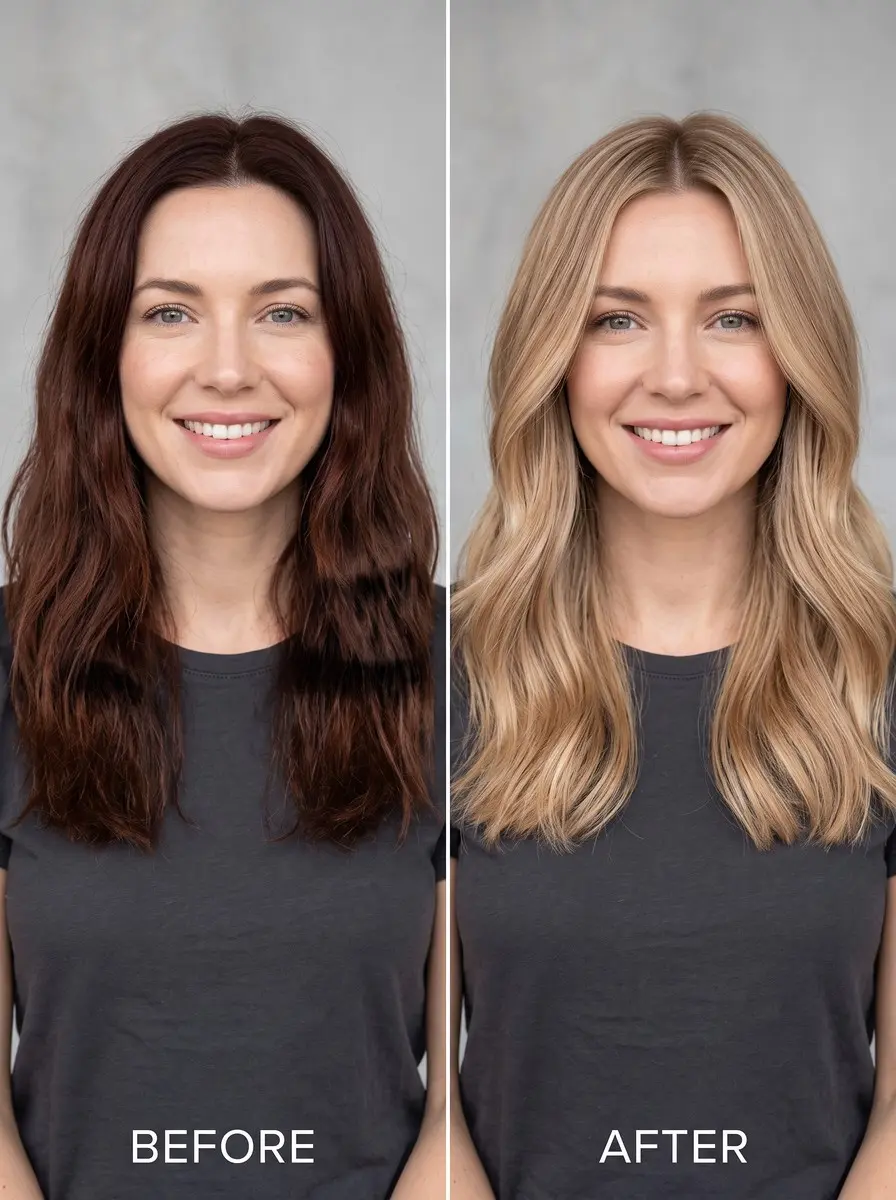
Your starting shade decides the method, the number of lightening sessions and the blonde you can realistically keep. A single layer of light to medium brown box dye can usually go straight to bleach with 20 volume developer and reach level 8-9 in 1-2 sessions.
Dark brown (one or two layers) and red or auburn box dye need a color remover first and typically land at a warm, toned level 7-8 over 2-3 sessions; book a colorist if red is still there after the remover.
If you lightened before and then box-dyed darker, use the remover alone and reassess, since clearing the dye often brings you back near your old blonde with only 1-2 sessions to go. High-lift blonde dye only suits very dark hair that has never been dyed, and regular blonde box dye only lifts light brown, so neither will lift old box dye: tint cannot lift tint.
Step 4 Patch test and strand test everything
Do an allergy patch test 48 hours before using each product, as the packet directs, since box dye, color remover and bleach each carry their own risk of a reaction. Then snip a small strand from under the nape. On that cut strand, run your exact plan (remover, then your bleach mix) and time how long it takes to reach yellow.
Stop if the strand heats up, fizzes, smokes or turns gummy, which signals metallic salts or hair that can’t take the lift. The strand also shows you the warm tone you’ll lift to, so you can buy the right toner before you start.
Step 5 Remove stacked dye before bleaching
For dark, red or multi-layered box dye, start with a sulfur-based, bleach-free color remover. It shrinks artificial dye molecules so they rinse out, without lightening your natural pigment. Apply it to dry hair wherever box dye sits and process for the packet time.
Then rinse for the full time the kit specifies, often 20 minutes, because shrunken dye left behind can re-oxidize and darken again; if your kit includes a developer strand check and that strand darkens, keep rinsing. Expect a warm, uneven brown or orange afterward, and give your hair a few days and a deep conditioner before bleaching rather than stacking both processes on the same day.
Step 6 Lighten with 20 volume, lengths first
Mix powder lightener with 20 volume developer and a bond-building additive. 30 or 40 volume lifts faster but raises the risk of breakage and patchy, banded results on fragile box-dyed hair.
Work on dry, unwashed hair in quarter-inch sections: saturate the box-dyed mid-lengths and ends first, starting with the darkest bands, and leave the roots until last, because scalp heat and undyed regrowth make them lift fastest.
Check a strand every 10 minutes and rinse when it reaches yellow, starts to feel gummy, or hits the packet’s maximum time, usually around 45-50 minutes. Never re-bleach the same day, even if you’re still orange; the next lift belongs in the next session.
Step 7 Tone the warmth you lifted to
Bleach exposes warmth rather than removing it, so look at the shade you landed on and neutralize it with its opposite on the color wheel. Orange at level 6-7 needs a blue-based toner, and yellow at level 8-9 needs a violet-based one; a violet toner alone will not cancel orange.
Apply a demi-permanent toner or gloss to towel-dried hair, check every five minutes, and rinse as soon as the brass looks neutral so the toner doesn’t leave a gray or lilac cast. Toner deposits color and cannot lift, so if you’re still orange, plan another lightening session rather than adding more toner.
Step 8 Recover, recheck and repeat safely
Leave at least two weeks between lightening sessions, with a bond-building treatment and a moisturizing mask in between. Bond builders reduce breakage by forming new crosslinks inside the hair fiber, but they don’t undo what bleach destroyed, so treat them as a cushion, not permission to push further.
Before every session, repeat the wet stretch test, and stop for good if your hair feels mushy, stays stretched or breaks as you comb it.
Treat level 8-9 as your ceiling, or level 7-8 if you started from dark brown or red: a golden, honey or beige blonde in that range looks intentional, while chasing level 10 is where home attempts usually end in breakage.
Common Mistakes to Avoid
- Putting blonde box dye over box-dyed hair: tint can’t lift tint, so you get hot, brassy roots and the same dark lengths.
- Using 30 or 40 volume developer to save time, which raises the risk of breakage and banding on hair that’s already been processed.
- Rinsing a color remover too briefly, so leftover shrunken dye re-oxidizes and the hair darkens again.
- Re-bleaching the same day, or bleaching right after a remover, instead of letting hair recover between processes.
- Toning orange with purple shampoo: violet cancels yellow, so orange needs a blue-based toner.
- Applying bleach root to tip in one pass, so the undyed regrowth lifts far faster than the box-dyed lengths.
Pro tip Keep your test strands taped to an index card, labeled with the product, developer volume and minutes. Comparing each new session against that card in daylight shows exactly how much lift you’re getting, which stops you over-processing to chase a level your hair has already shown it won’t reach.
The Bottom Line
Going from box dye to blonde is a staged project. Wait out your last color, strand test, clear dark or stacked dye with a remover, lighten with 20 volume in sessions at least two weeks apart, then tone the warmth you land on. A soft, toned golden or beige blonde is a strong result from box-dyed hair, and a toner refresh every four to six weeks keeps it bright.
Go easy on heat in between. Use a heat protectant before blow-drying, and only use a flat iron or curling wand on completely dry hair, at about 150C/300F. That is the limit for bleached hair even if your coarse hair once took 180-200C/355-390F. If your hair turns gummy, red or black is still there after the remover, or you want platinum, stop and book a color correction.
Frequently Asked Questions
Can you bleach straight over box dye?
Yes, if it's a single layer of light to medium brown box dye: bleach with 20 volume developer can usually reach level 8-9 in one or two sessions. Darker, red or stacked box dye lifts unevenly and tends to stall at orange, so using a color remover first, or seeing a colorist, gives a cleaner result. Strand test before either route.
Will blonde box dye lighten hair that's already box-dyed?
Not the dyed lengths. Permanent dye can lighten natural pigment but not old artificial pigment, so blonde box dye over box-dyed hair usually gives brassy, lighter roots and unchanged lengths. High-lift blonde dye is meant only for very dark natural hair, and regular blonde box dye only lifts light brown, so a color remover or bleach is the realistic route.
How long does it take to go from dark box dye to blonde?
Plan on roughly two to three months: four to six weeks of recovery after your last box dye, then a color remover, then two to three lightening sessions at least two weeks apart. Dark brown usually lands at a toned level 7-8 at home. Squeezing it into one session is what causes breakage, patchiness and uneven bands.
Why did my box-dyed hair turn orange when I bleached it?
As bleach breaks down pigment, dark hair passes through red and orange before it reaches yellow. Stacked box dye also releases its own warm pigment slowly, so the lengths often stall at orange. A blue-based toner neutralizes orange at level 6-7. If you want a lighter blonde, you need another lightening session first, because toner can't lift.
Is it safe to use a color remover and bleach on the same day?
At home, it's safer not to. A remover is gentler than bleach but still leaves hair drier and more porous, so give your hair a few days and a deep conditioning treatment, then repeat the wet stretch test before bleaching. Salons sometimes do both in one visit because a colorist can watch every section; at home, spacing them out is your margin of safety.
Keep Reading
Sources
- Box dye hair color removal martinrodriguez.com
- Dyeing brown hair blonde without bleach curlcentric.com
- 188 how to lift box dyed hair uglyducklingcolor.com