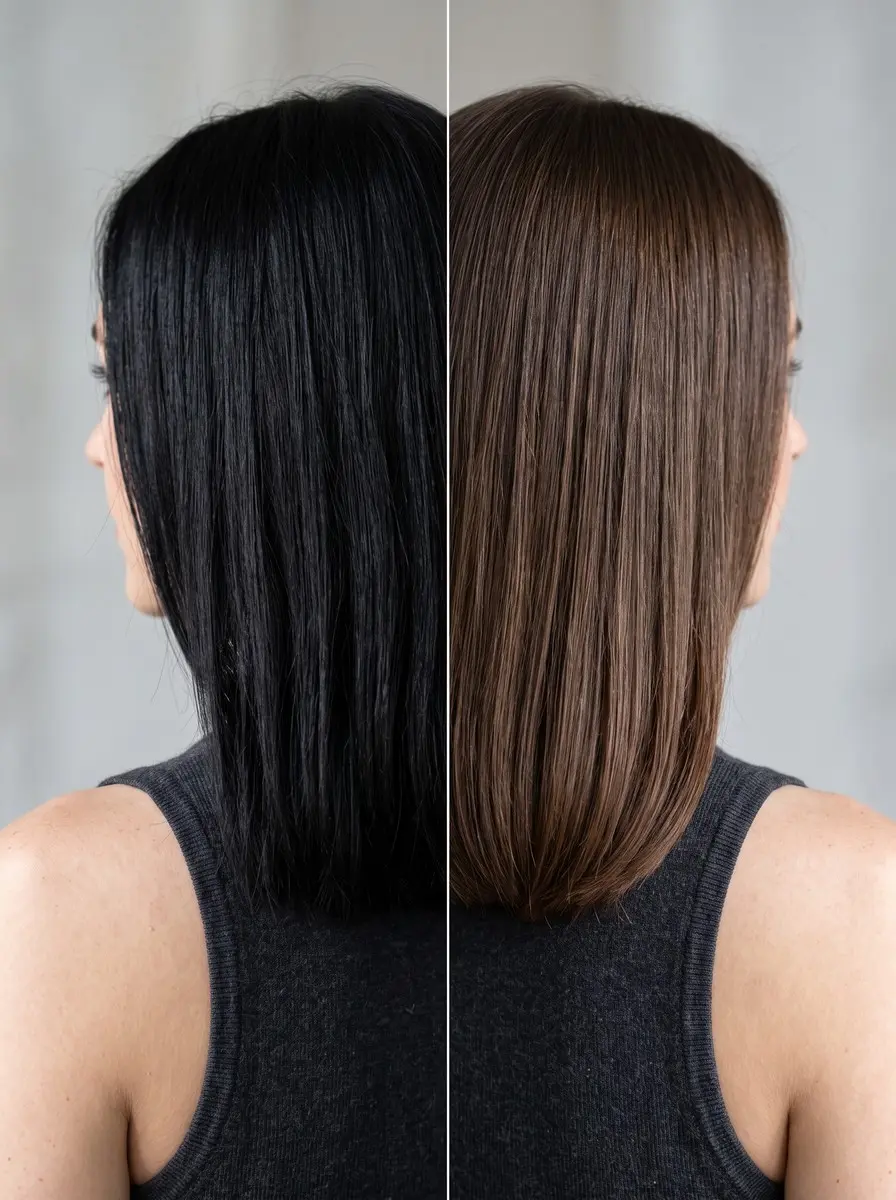
Quick answer To fix hair dye that's too dark, wash normally for a week or two, then use a dye-free clarifying shampoo. If it's still dark, vitamin C mixed into that shampoo can lift a shade or two of semi- or demi-permanent color; permanent dye needs a color remover or a colorist.
You wanted a soft chestnut, and the mirror shows something closer to ink. Hair dye that comes out too dark is one of the most common at-home color mishaps, and the instinct is to fix it tonight with whatever is under the sink.
Slow down. The first fix is often just time, because fresh color looks its deepest in the first few days, and many dyes soften noticeably over the first couple of weeks of washing.
This guide ranks the fixes from gentlest to strongest, so you use only as much force as your hair needs.
You’ll learn how to tell which kind of dye you used, what clarifying and vitamin C can and can’t do, when a color remover is the right move, and how to handle dark roots or muddy ends. One honest note before you start: no home method takes you back to your natural color in one step.
Time 30-60 minutes per treatment, spread over 1-2 weeksDifficulty IntermediateSteps 8
Which Fix Works for Your Dye Type
| Dye type | Try at home | If that stalls |
|---|---|---|
| Semi-permanent | Washing, clarifying, vitamin C | More washes or a colorist; removers won’t work |
| Demi-permanent | Washing, clarifying, vitamin C | Color remover or a colorist |
| Permanent | Barely moves with washing | Color remover or a colorist |
| Henna or plant dye | Skip home fixes | A colorist; removers won’t work |
What You’ll Need
As an Amazon Associate, HairAide earns from qualifying purchases. Product links in this guide are affiliate links: they cost you nothing extra and help keep these tutorials free.
- Dye-free clarifying shampoo Its stronger cleansers lift loosely held pigment in the washing and vitamin C steps.
- Vitamin C (ascorbic acid) powder Mixed into clarifying shampoo, it can lift a shade or two of semi- or demi-permanent color.
- Hair color remover kit Breaks down permanent oxidative dye so it can be rinsed out, which washing and vitamin C can’t do.
- Demi-permanent toning gloss Cancels the orange or yellow warmth that lightening uncovers, without lifting any further.
- Deep-conditioning hair mask Puts back the moisture that clarifying, vitamin C and removers strip out.
Step-by-Step
Step 1 Give fresh color a week or two
Before you treat anything, wash your hair as you normally would for the first one to two weeks and judge the shade on dry hair in daylight. Fresh dye often looks deepest in the first few days, and some loosely held pigment rinses away with each wash, especially with semi- and demi-permanent formulas.
Wet hair and warm bathroom bulbs both make color look darker than it really is, so a photo of dry hair in daylight is your honest baseline. If the shade has softened to something you can live with, you’re done. If it hasn’t moved, go to the next step.
Step 2 Identify the dye you used
Check the box, the receipt or your salon notes, because the dye type decides which fixes can work at all. Semi-permanent color has no developer. Demi-permanent color mixes with a low-strength developer and often says ‘no ammonia’ or ‘gloss’ on the box. Both respond to washing, clarifying and vitamin C.
Permanent color comes with a developer, usually promises full gray coverage and barely moves with home washes, so a color remover or a colorist is the realistic fix. Removers don’t work on semi-permanent dye or henna, and henna or other plant dye is a job for a colorist. Once you know your type, skip any fix the table rules out.
Step 3 Clarify over several washes
Switch to a dye-free clarifying shampoo for your next few washes. Lather once to lift oil, then lather again and leave the second lather on for a few minutes before rinsing.
Clarifying shampoos use stronger cleansers than everyday or color-safe formulas, so they pull out loosely held pigment along with product buildup. Spread the washes over several days instead of doing five in one evening, and condition your mid-lengths and ends every time, because these shampoos are drying.
You’ll know it’s working when the rinse water looks faintly tinted and the shade looks a little softer each time. If the water runs clear and nothing changes after a few washes, the dye has stopped responding to this step.
Step 4 Patch-test and strand-test first
Before you use vitamin C or a remover, test on your skin and on a hidden strand, because both can irritate the scalp, dry the hair and expose a yellow or orange tint.
For the patch test, dab a little of the mixture or product on your inner arm or behind your ear and leave it for the time the instructions give. Don’t go ahead if you get redness, itching or burning. For the strand test, clip off a small section from underneath at the nape and run the full treatment on it.
The strand shows how much lighter the dye actually goes, how much warmth comes up and how the hair feels afterwards, so you can decide whether treating your whole head is worth it.
Step 5 Try the vitamin C method
For semi- and demi-permanent dye, crush plain white, uncoated vitamin C (ascorbic acid) tablets or use the powder, and stir it into a dye-free clarifying shampoo until you have a paste you can spread.
Recipes disagree on how much vitamin C to use, so make just enough to coat the hair you’re treating. Apply it to damp hair, cover with a shower cap and leave it on for 30 to 60 minutes, then rinse thoroughly and condition.
Vitamin C is acidic, and together with the clarifying shampoo it can loosen some semi- and demi-permanent pigment. Expect a shade or two lighter at most, and you may need to repeat it on another day. Rinse right away if your scalp stings, and stop if your hair turns rough or straw-like.
Step 6 Use a remover on permanent dye
If you used permanent color, or the gentler steps stalled on demi-permanent dye, a color remover is the next step up. It breaks down the oxidative dye molecules in permanent and demi-permanent color so they can rinse out, rather than lightening your natural pigment the way bleach does.
Follow the instructions exactly and rinse for the full time they give, because dye left in the hair can darken again. Expect a warm result rather than your old shade.
The developer in permanent dye lightened your natural pigment when it went on, and removing the dye reveals that gold or orange base. Don’t use a remover on hair that’s already breaking or gummy, and never follow it with bleach on the same day. At that point a colorist is the safer choice.
Step 7 Spot-fix dark ends or roots
If only part of your hair is too dark, treat only that part. Porous ends often absorb more pigment than the rest of the hair and turn darker or muddier, while repeated full-head applications can leave a dark band at the roots or mid-lengths.
Apply the clarifying wash, vitamin C paste or remover only to the dark section and coat the rest in conditioner. Treating your whole head lightens hair that was already the right shade and creates a new uneven band.
If the dark part is at the roots and you dyed to cover gray, know that any lightening there will make the grays show again. A colorist can lighten the lengths while recoloring the roots in a softer shade.
Step 8 Tone, condition and hold the shade
Once the depth is where you want it, deal with any warmth the lightening uncovered: violet cancels yellow, blue cancels orange, and a blue-green gloss handles stubborn red-orange.
A demi-permanent toning gloss is the gentlest way to do this, and a purple or blue shampoo can keep the tone in check between glosses. Follow with a deep-conditioning mask, because every step above dries the hair, and give it a rest before any more chemical work.
If you’re dyeing again after a remover, choose a shade lighter than your goal, since freshly stripped hair is porous and absorbs pigment fast. You’re finished when the shade looks even in daylight and your hair feels soft again.
Common Mistakes to Avoid
- Putting a lighter box dye over the dark one. Hair color can’t lift existing artificial color, so you end up the same shade or darker.
- Going straight to bleach on fresh dye. It lightens unevenly and can leave orange bands that are harder to correct than the original darkness.
- Treating your whole head when only the ends or roots are too dark. That lightens the parts that were right and creates a new uneven band.
- Stacking harsh fixes in one day (clarifying, vitamin C, a remover, then bleach) on hair that’s already dry or gummy. That’s how fixable color turns into breakage.
- Cutting the remover’s rinse time short, so leftover dye darkens again over the next day or two.
- Judging the result on wet hair or under warm bathroom light, both of which make color look darker than it is.
Pro tip After a remover, colorists check for leftover dye by dabbing a little developer onto a test strand. If the strand darkens over the next few minutes, dye is still in the hair, and you need to keep rinsing or repeat the remover before you dye again.
The Bottom Line
Most too-dark dye jobs can be fixed if you work through the options in order: wait and wash, clarify, try vitamin C on semi- or demi-permanent color, then use a remover or see a colorist for permanent dye. Each step costs your hair a little more moisture, so stop at the first one that gets you close enough. Then finish with a toning gloss and a deep-conditioning mask.
To hold the new shade, wash with a color-safe shampoo, stop clarifying once you’re happy, and refresh the tone with a gloss when warmth creeps back. If you’re dealing with henna, several layers of box dye or hair that’s already breaking, book a color correction instead. A colorist can lighten just the sections that need it and protect the rest of your hair.
Frequently Asked Questions
How long does it take for hair dye that's too dark to fade?
Semi- and demi-permanent color usually softens most in the first one to two weeks of normal washing, and a dye-free clarifying shampoo speeds that up. Permanent dye is designed to stay, so it barely fades with washing. If it still looks too dark after two weeks, a color remover or a colorist is the realistic route.
Does vitamin C really lighten hair dye?
It can, a little. Mixed into a dye-free clarifying shampoo and left on under a shower cap for 30 to 60 minutes, vitamin C can make semi- or demi-permanent color a shade or two lighter, and you may need to repeat it. It does little to permanent dye and can cause scalp irritation, dryness and a yellow or orange tint, so patch-test first.
Can I put a lighter hair dye over dye that came out too dark?
No. Hair color can't lift existing artificial color, so a lighter box dye over a too-dark shade usually leaves you at the same depth or darker. To go lighter, you first have to remove the dye, either with a color remover for permanent or demi-permanent color or with a colorist's lightener. Then dye again in a shade lighter than your goal.
Will a color remover take my hair back to my natural color?
Not in one step. Permanent dye lightened your natural pigment when it went on, so removing it usually reveals a warmer gold or orange version of your base rather than your original shade. A toning gloss can cancel that warmth. Beyond that, the only way back is growing it out, and hair grows about half an inch a month.
When should I see a colorist instead of fixing it at home?
Book a color correction if you used henna or a plant dye, have several layers of box dye, see uneven bands you can't treat separately, or need to keep gray coverage at the roots. See a pro too if your hair already feels gummy or stretchy or breaks easily, because adding another chemical step to damaged hair risks breakage.
Keep Reading
Sources
- Vitamin c to remove hair dye healthline.com
- Colour remover vs bleach coloredhaircare.com