Quick answer To measure your head for a wig, wrap your hair as you'll wear it, then take three soft-tape measurements twice: circumference around the hairline and nape, ear to ear over the top, and front hairline to nape. If they land in different sizes, choose the largest.
A wig that slides back off your forehead, gaps above the ears or lifts at the nape usually has nothing wrong with the hair. The cap is the wrong size for your head, and no amount of glue, pins or styling hides that for long. A wrong cap size is also a common reason wigs get sent back, so measure before you shop, not after the box arrives.
Finding your wig cap size takes 10 to 15 minutes, a soft tape measure and a mirror. You’ll take three measurements, each with exact start and end points, while your hair is wrapped the way it will sit under the wig.
Below you’ll also find how to measure over braids or a liner, how to place a hairline that isn’t there, what to do when your numbers land in different sizes, and how to tell at the first try-on whether the cap fits.
Time 10-15 minutesDifficulty BeginnerSteps 8
The Three Wig Measurements at a Glance
| Measurement | Start | Route | End |
|---|---|---|---|
| Circumference | Center of front hairline | Above both ears, around the nape | Back at the start |
| Ear to ear | Top of one ear | Over the top point, 7 in back from the hairline | Top of the other ear |
| Front to nape | Center of front hairline | Straight back over the top | Nape or neck crease |
What You’ll Need
As an Amazon Associate, HairAide earns from qualifying purchases. Product links in this guide are affiliate links: they cost you nothing extra and help keep these tutorials free.
- Soft flexible tape measure It bends flat around the curves of your head, which a rigid metal tape measure can’t do, so every reading is accurate.
- Nylon or mesh wig cap It holds your wrapped hair flat at the same bulk you’ll wear under the wig, so the numbers match what the cap will sit over.
- Velvet wig grip band If you’ll wear one, you measure over it, and it’s also the first fix for a wig that is only slightly loose.
- Washable eyeliner pencil It marks your hairline, the top-of-head point and your nape, so all three measurements start and end in the same places.
Step-by-Step
Step 1 Wrap your hair as you’ll wear it
Before the tape comes out, style your hair exactly the way it will sit under the wig: cornrowed, braided down, wrapped flat or pinned close to the head. Then put on any wig cap, liner or grip band you plan to wear with it.
Every layer adds bulk, so if you measure loose hair and then wear braids underneath, a cap ordered to those numbers ends up too tight. You’re ready when your head is as flat and smooth as it will be on wig day, with no bumps from loose ends or pins.
Step 2 Mark your hairline and nape
Two of the three measurements start at the center of your front hairline, so mark that spot with a dot of washable eyeliner. If your hairline is thin, receding or missing, raise your eyebrows and use the point where your forehead lines stop, or measure about four finger-widths up from the center of your brows.
Both are approximations, so pick one and use it for every measurement.
For the nape, find the center of your hairline at the back of the neck, and if you can’t locate it, tilt your head back and use the crease that forms in your neck. Marked start and end points mean every number is taken from the same place, and that is what makes them comparable on a size chart.
Step 3 Measure the circumference
Hold the end of a soft, flexible tape measure on your hairline mark. Run it just above one ear, around the back along your nape, above the other ear and back to where you started. Keep the tape flat and snug against your head without pulling, because a tape that digs in reads small and points you to a cap that presses.
Circumference is the main number on most size charts, so write it down, release the tape and measure again from scratch, and if the two readings don’t match, take a third and go with the pair that agrees.
Step 4 Measure ear to ear over the top
First find the top of your head the way wig size charts define it: run the tape from your hairline mark straight back along the center of your head, stop at 7 inches and mark that point. Eyeballing the top usually lands it too far forward or too far back, and either mistake changes this reading.
Now place the tape at the top of one ear, carry it over the marked point and down to the top of the other ear, keeping it flat across the head. Take it twice and record the number that repeats.
Step 5 Measure front hairline to nape
Start at the same hairline mark and run the tape straight back over the top of your head and down the center of the back to your nape mark, or to the neck crease if you used that instead. Keep the tape centered, because letting it drift toward one ear adds length that isn’t really there.
This number tells you whether the cap is long enough to cover your nape without riding up. It matters most on a lace front, where the lace has to sit on your hairline while the back still reaches your neck. Measure twice, and you now have all three numbers.
Step 6 Match your numbers to the size chart
Compare your three numbers with the chart for the exact brand and cap you’re buying, because sizing varies between brands and one label’s petite can overlap another’s average. Most charts sort caps into petite, average and large, and average is the most common size, with many styles made only in average.
As a rough guide, Jon Renau’s standard chart, which many wig brands follow, puts petite at 21 inches around, average at 21.5 and large at 23, with ear to ear over the top running from 13 to 14 inches and front to nape from about 13.25 to 15.5 inches across those sizes. Many human-hair lace wigs come in a 22.5-inch medium instead, with small at 21.5 and large at 23.5. Use these numbers to see roughly where you land, then check the chart for the wig you’re buying, because that’s the one that counts.
If your three measurements point to different sizes, choose the largest. The same rule settles a number that sits right on a size boundary: go up, because a slightly roomy cap can be tightened, while a cap that is too small has almost no room to give.
Step 7 Adjust for straps, braids and cap type
Most caps have adjustable straps at the nape that usually change the cap’s space by about 1 to 1.5 inches, which is why sizing up is the safer call. If you wear lots of braids or very thick hair underneath, measure over them as you did in the first step and expect a bigger size than your bare head would need.
Glueless wigs are held without adhesive, by the band, combs and straps, so choose the size that reaches a secure fit before the straps hit their tightest setting.
Caps made mostly of lace, such as full-lace units, have little stretch, so trust your tape numbers and don’t count on the cap to give. For kids, measure the same way, use the brand’s child or petite chart and remeasure before every new wig, because a child’s head size changes as they grow.
Step 8 Fit-check the wig when it arrives
Try the wig on over the same wrap, liner and band you measured with, and do it before you cut any lace or apply adhesive so you can still return or exchange it. A good fit sits flat at the ear tabs, stays put at the forehead when you raise your eyebrows, and hugs the nape when you look down.
Gaps by the ears or a cap that shifts when you turn your head means it’s loose: tighten the straps or add a grip band, and if the straps are already at their tightest, exchange it for a smaller size.
A wig that slides back off your forehead, lifts at the nape, leaves red marks or brings on a tightness headache is too small. Loosen the straps fully, and if it still presses, exchange it for the next size up instead of trying to stretch it.
Common Mistakes to Avoid
- Measuring loose or bare hair, then wearing braids, a liner or a grip band under the wig, which leaves the cap too tight.
- Pulling the tape tight so it digs in, which reads small and points you to a cap that presses.
- Guessing the top of the head by eye instead of measuring 7 inches back from the hairline, which throws off the ear-to-ear number.
- Ordering the size that matches one measurement when the other two point bigger. When the numbers disagree, the largest size wins.
- Using one brand’s size chart to buy from another brand, even though sizing varies between labels.
- Reordering a different size before trying the adjustable straps, which usually give about 1 to 1.5 inches.
Pro tip Save your three numbers in your phone along with the date and what you wore underneath (cornrows, a flat wrap, a liner, a grip band). Remeasure whenever that changes: switching from a flat wrap to braids can be enough to change your size, even though your head didn’t change.
The Bottom Line
Three numbers, each taken twice over the hair and liner you’ll actually wear, are what separate a wig that stays put from one you’re re-pinning all day. When they disagree, choose the largest size and let the adjustable straps take up the slack, then confirm the fit at the ear tabs, forehead and nape before you cut any lace.
Remeasure whenever you change what goes under your wig, such as switching from a flat wrap to braids, and before every new wig for a child. If your numbers fall outside a brand’s chart, or you’re buying a wig after hair loss from a medical condition or treatment, a wig specialist can measure you in person and point you to a custom or specialty cap.
Frequently Asked Questions
What if my wig measurements fall between two sizes?
Choose the larger size. When your three numbers point to different sizes, or one sits right on a chart boundary, the largest wins, because the adjustable straps on most caps can take in about 1 to 1.5 inches. A cap that is too small has almost no room to give, so it tends to ride up, slide back or cause headaches.
Should I measure my head with braids in or with my hair down?
Measure with your hair exactly as it will be under the wig. If you'll wear cornrows, a flat wrap, a liner or a grip band, put them on first, because every layer adds bulk. Measuring loose hair and then wearing braids underneath is a common reason a wig ordered in the right size still feels tight.
How do I know if my wig cap is too small?
A cap that's too small slides back off your forehead, lifts at the nape when you look down, leaves red marks around your hairline or gives you a tightness headache. Loosen the adjustable straps fully first. If it still presses at the loosest setting, exchange it for the next size up rather than trying to stretch it.
Do glueless and lace-front wigs need different measurements?
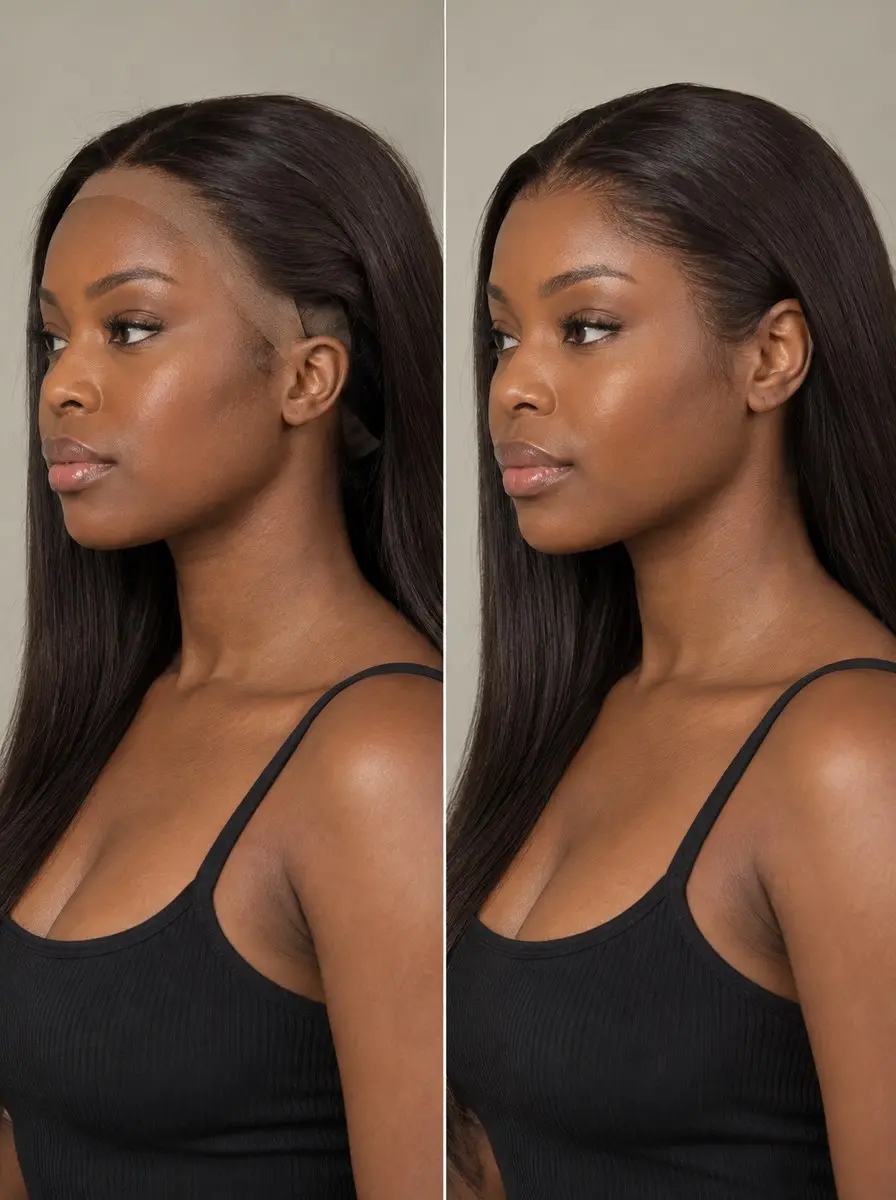
No. You take the same three measurements for any cap, but fit matters more with these. Glueless wigs stay on with only the band, combs and straps, and lace caps have little stretch, so neither can make up for a wrong size. On a lace front, front-to-nape is worth getting right, because a cap that's too short pulls the lace back off your hairline.
How do I measure a child's head for a wig?
Take the same three measurements over the child's hair as it will be worn, twice each, with a soft tape. Compare them with the brand's child or petite chart. A child's head size changes as they grow, so remeasure before every new wig instead of reusing old numbers or the size of the last wig.
Keep Reading
Sources
- How to measure your head for a wig wigs.com