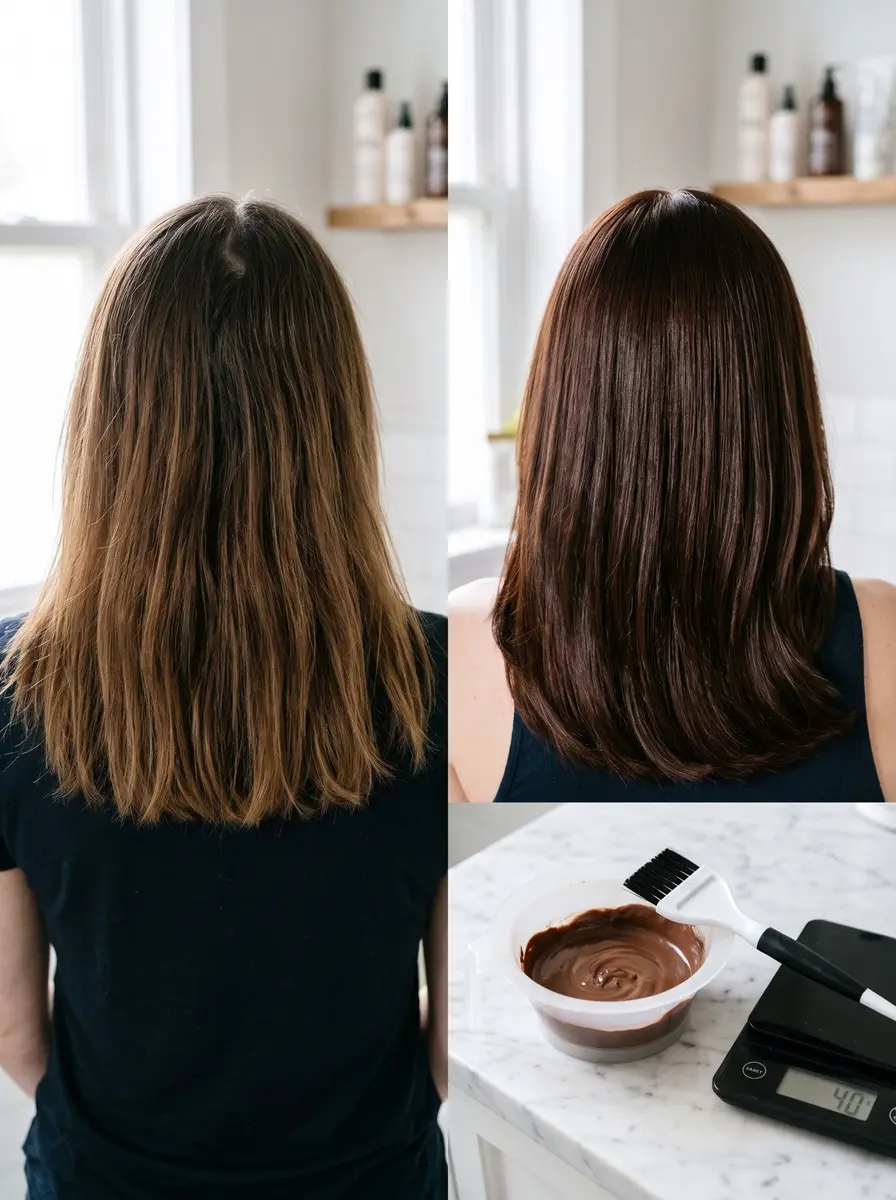
Quick answer To mix hair dye and developer, weigh the color and developer on a digital scale at the ratio printed on the box (often 1:1 or 1:2), whisk them in a plastic or glass bowl until smooth and creamy, then apply right away and throw out any leftover mix.
Learning to mix hair dye and developer correctly decides whether at-home color turns out even, because most color problems start in the bowl, not on your head. Too much developer gives you a runny mix that drips, dilutes the dye and leaves color lighter and patchier than the box promised.
Too little leaves a stiff paste that won’t spread or develop evenly. Eyeballing it, using a metal bowl or letting the mix sit while you hunt for clips all chip away at the result before the brush touches your hair.
The good news is that mixing is the easiest step to get right. It comes down to reading the box, measuring both parts, stirring to the right texture and working quickly. This guide covers measuring, mixing and time limits for any permanent or demi-permanent color. Choosing the developer strength is a separate decision, and our developer volume guide covers it in full.
Time 10-15 minutes to mix (plus a patch test 48 hours ahead)Difficulty BeginnerSteps 8
How Much Developer to Add, by the Ratio on Your Box
| Ratio on the box | Color | Developer |
|---|---|---|
| 1:1 | 50 g | 50 g |
| 1:2 | 50 g | 100 g |
| 1:2, general-rule example | 2 oz | 4 oz |
| 1:2, long or thick hair | 4 oz | 8 oz |
What You’ll Need
As an Amazon Associate, HairAide earns from qualifying purchases. Product links in this guide are affiliate links: they cost you nothing extra and help keep these tutorials free.
- Digital kitchen scale Weighing both parts is the most reliable way to hit the exact ratio printed on the box.
- Plastic tint bowl and brush set A non-metal bowl and brush avoid any reaction with the developer and make it easy to whisk the mix smooth.
- Nitrile gloves They protect your skin from dye and developer from the moment you open the bottles.
- Madison Reed Radiant Color Kit It arrives pre-measured with its own developer, so the ratio is built in and you only need to mix it smooth and apply it on time.
- ESalon custom color kit It comes with color and developer matched to your formula, plus step-by-step mixing instructions.
Step-by-Step
Step 1 Read the box for your ratio
Before you open anything, find the mixing ratio in the instructions: many lines are 1:1 and others are 1:2. That number comes from the manufacturer, who tested it with that exact formula, so it overrides any general rule you’ve read online, including the ones in this guide.
Box kits are pre-measured, so the ratio is built in and you combine the full tube with the full developer bottle, nothing extra. If your line sells color and developer separately, settle which developer strength to use first. Note the processing time and any ‘use within’ limit printed alongside the ratio too, because you’ll need both the moment the mix is made.
Step 2 Patch test and strand test ahead
Do an allergy patch test 48 hours before you color, every time, even with a shade you’ve used for years, because a sensitivity to dye can develop after many uneventful uses.
Follow the method in your box exactly and leave the test spot alone for the full 48 hours. At the same time, mix a pea-sized amount of color and developer at the box ratio, paint it onto a hidden strand from underneath, process it for the full time, and throw the rest of that tiny mix away.
If the skin test itches, burns or reddens, don’t color. If the strand comes out wrong, you’ve lost a teaspoon instead of a whole head.
Step 3 Set up non-metal tools first
Mix in a plastic or glass bowl with a plastic tint brush or spatula, never a metal bowl, spoon or whisk, because metal can react with the developer and throw off the mix. Put on gloves before you open either bottle, since dye and developer both irritate bare skin, and work with a window open or a fan running so the fumes don’t build up.
Then detangle and section your hair as the box directs and drape an old towel over your shoulders. Do all of this before you mix, because your working time starts the moment color meets developer, not when you’re ready.
Step 4 Scale the amount to your hair
Decide how much color you need before you mix. If you run short halfway, you end up rushing an eyeballed second batch, and that’s how uneven bands happen.
Keep the ratio fixed and scale only the quantity: a common general rule is 1:2, such as 2 oz of color to 4 oz of developer, so long, thick hair at that ratio might take 4 oz of color to 8 oz of developer.
One retailer’s guide changes the ratio itself, from 1:1 for short, fine hair up to 1:2.5 for long, thick hair, but even its author says the manufacturer’s ratio comes first. With box dye, buy two full kits for long or thick hair rather than stretching one.
Step 5 Weigh the color, then the developer
Set the empty bowl on a digital scale, zero it, and squeeze in color until you reach your target weight. Zero the scale again and pour in developer: multiply the color weight by the second number in the ratio.
So 50 g of color takes 100 g of developer at 1:2, or 50 g at 1:1. If your line gives its ratio in fluid ounces, or you’d rather not weigh, a graduated applicator bottle with clear markings works as well.
What doesn’t work is pouring by eye. Thick cream and thin liquid are hard to judge side by side, and even a small misjudgment can make the mix runny or stiff.
Step 6 Whisk to a smooth, creamy texture
Stir with the tint brush or a plastic whisk for a minute or two, scraping the sides and bottom of the bowl, where unmixed cream tends to hide. A finished cream color looks like smooth, evenly colored yogurt that sits on the brush without dripping, with no white streaks of developer and no lumps.
A runny mix usually means too much developer: it drips onto skin and slides off the hair. A stiff, clumpy mix means it’s undermixed or short on developer, so keep stirring, then recheck your measurements rather than adding more by guesswork.
Some demi-permanent and liquid formulas are meant to be thinner, so compare yours with the texture the box describes. If your kit mixes in an applicator bottle, shake it as directed until no streaks remain.
Step 7 Apply within the working window
Start applying as soon as the mix is smooth. Color and developer start reacting the moment they meet, and the reaction keeps going in the bowl whether or not the mix is on your hair, so a bowl left sitting keeps getting weaker.
Sources generally give mixed dye about 30 to 45 minutes of use at most, and mixed bleach less, about 20 minutes, though the limit on your box comes first. For long or thick hair, weigh and mix half, apply it, then mix the second half fresh at the same ratio, so the last sections get color as strong as the first.
Step 8 Throw out the leftovers
When you finish, throw out whatever mix is left. Never cap it or save it for next time. Mixed color keeps reacting and losing strength, and a sealed applicator bottle of mixed dye can build pressure and burst.
Wipe the bowl out with a paper towel, dispose of the waste as your box directs, and rinse the bowl and brush straight away before the residue stains them. Unmixed color and developer are a different story. Stored separately and tightly capped in a cool, dark cupboard, they can usually be saved, which is one more reason to weigh out only what you need from pro tubes.
Common Mistakes to Avoid
- Pouring developer by eye or topping up the bowl. It waters the dye down into a runny mix that drips and can develop lighter and patchier.
- Cutting back on developer to make the color ‘stronger’. You get a stiff paste that spreads unevenly and may not develop fully.
- Leaving out the developer with permanent or demi-permanent color. The dye needs it to develop, so the color simply won’t set.
- Mixing in a metal bowl or with a metal spoon, which can react with the developer.
- Mixing before your hair is sectioned, then losing working time while the bowl sits.
- Saving leftover mix in a capped bottle. It loses strength, and a sealed bottle can build pressure and burst.
Pro tip Mix by weight, then write it down. Note the brand, shade, grams of color, grams of developer and processing time on the box flap or in your phone, so next time you repeat the exact formula instead of guessing. Colorists do the same to keep a client’s shade consistent from one appointment to the next.
The Bottom Line
Get the bowl right and the rest of the color job gets easier. The box ratio, weighed rather than guessed, stirred until smooth and creamy and applied while it’s fresh, gives the dye its best chance of developing evenly. Follow the same routine every time you color, including the 48-hour patch test, and keep your written formula so each session matches the last.
See a colorist instead if you want to go more than a couple of shades lighter, are correcting old box dye, or have grays that won’t take color. If a patch test ever reacts, skip coloring and check with a doctor or dermatologist. And if you’re not sure which developer strength your formula needs, read our developer volume guide before you mix.
Frequently Asked Questions
What is the right ratio of hair dye to developer?
Use the ratio your manufacturer prints, because it was tested with that exact formula. Many lines mix 1:1 and others 1:2, and a common general rule is 1 part color to 2 parts developer, such as 2 oz of color to 4 oz of developer. When the box and a general rule disagree, follow the box.
How long can mixed hair dye sit before you use it?
Not long. The reaction starts the moment color meets developer, so start applying straight away. Sources generally give mixed dye about 30 to 45 minutes at most, and mixed bleach about 20 minutes, though the limit on your box comes first. For long hair, mix two fresh batches rather than letting one bowl sit.
What happens if you put too much developer in hair dye?
The mix turns runny and the dye gets diluted. It drips onto skin, slides off the hair, can come out lighter, sheerer or patchier than expected, and is more likely to irritate. Don't try to rescue an unmeasured bowl by guessing; mix a fresh, weighed batch at the box ratio instead.
Can I save leftover mixed hair dye for next time?
No. Once mixed, color and developer keep reacting and losing strength, and a capped bottle of mixed dye can build pressure and burst, so throw out whatever is left. Unmixed color and developer are different: stored separately, tightly capped and somewhere cool and dark, they can usually be used for a later session.
Can you mix hair dye in a metal bowl?
It's best not to. Metal can react with the developer, which can weaken the mix and affect your result, so colorists mix in plastic or glass bowls with a plastic brush or whisk. An inexpensive plastic tint bowl and brush set does the job and rinses clean if you wash it right after use.
Keep Reading
Sources
- How much 20 volume developer to mix with hair color cosmeticworld.ca
- What is the bleach to developer ratio curlcentric.com