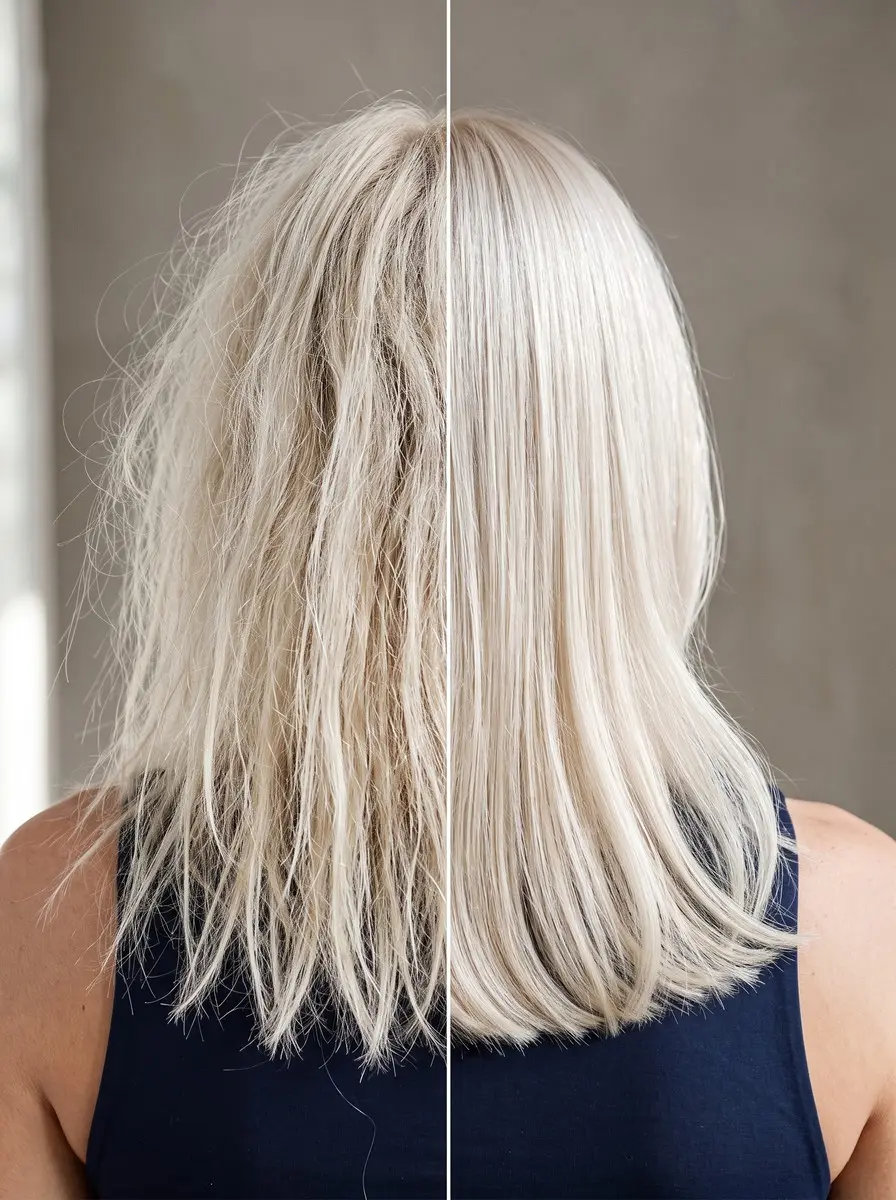
To repair bleach damaged hair, skip shampoo for 48 hours, then switch to a gentle shampoo for bleached hair, deep condition weekly with protein or moisture (a stretch test tells you which), add a bond-building treatment, and trim frayed ends about every three months.
If your lengths feel like straw when dry, stretch like chewing gum when wet or snap every time you brush, it’s time to learn how to repair bleach damaged hair at home, and you’re far from alone. Lightening is the fastest route to icy blonde or bright pastel shades, but it rarely comes free. The good news is that most everyday symptoms — tangles, frizz, dullness and breakage — respond well to a consistent routine.
Here’s the honest part most product blogs skip: the chemical change bleach makes inside the hair can’t be reversed. What you can do is strengthen what’s left, cut the friction that causes breakage, and trim away the worst ends while healthy hair grows in. This guide walks through that routine step by step, from the first 48 hours after your appointment to a weekly protein-versus-moisture plan, bond-building treatments and how to talk to your stylist about trims.
What You’ll Need
- Sulfate-free shampoo for bleached or blonde hair — It cleans with milder surfactants, so porous, lightened lengths lose less moisture every wash.
- Bond-building treatment (at-home pre-shampoo or leave-in) — It forms new crosslinks inside the hair to cut breakage between salon visits.
- Deep-conditioning masks (one protein, one moisture) — Having both lets you match each weekly treatment to what your stretch test says the hair needs.
- Leave-in conditioner — It adds slip for detangling wet hair and reduces friction on fragile ends between washes.
- Heat protectant spray — Bleached hair needs it on any day you blow-dry or use an iron.
As an Amazon Associate, HairAide earns from qualifying purchases. Some links above are affiliate links — they cost you nothing extra and help support free tutorials.
Step-by-Step
-
Skip shampoo completely for the first 48 hours after a bleach service, and use only gentle, moisturizing products. Freshly lightened hair is at its most fragile. Shampoo’s detergents strip away what little natural oil is left, and the lather-and-scrub motion adds friction to strands that now soak up water and tangle easily. If your hair needs a refresh, rinse with water, smooth a moisturizing conditioner through the mid-lengths and ends, and work it through with a wide-tooth comb. Fewer washes also mean less fading of any toner your colorist applied, so wear your hair loose or in a soft scrunchie rather than a tight ponytail until you’re past the two-day mark.
-
Before you buy a single mask, run a wet stretch test to find out whether your hair needs protein or moisture. Take a shed strand from your brush, wet it and gently pull it from both ends. If it stretches a long way, feels gummy or mushy and doesn’t spring back, it has lost structural strength and needs protein. If it barely stretches before snapping and feels rough or straw-like, it’s dry and needs moisture. Hair in decent shape stretches slightly and then returns to its original length. This is a stylist’s rule of thumb rather than a lab test, but it replaces guesswork, so repeat it every couple of weeks because the answer shifts as the routine starts working.
-
Once the 48 hours are up, switch to a gentle, sulfate-free shampoo made for bleached or blonde hair and cut back to two or three washes a week. These formulas clean with milder surfactants and usually contain conditioning agents, so the porous lengths lose less moisture every time you wash. Massage shampoo into your scalp only and let the suds run through the lengths as you rinse. The ends rarely need scrubbing, and they’re the part most likely to snap. Dry shampoo at the roots stretches the time between washes. If brassiness creeps in, swap in a toning shampoo once a week: purple cancels yellow and blue cancels orange.
-
Deep condition once a week, even when your hair seems fine, and choose the mask your stretch test pointed to. Use a protein mask (hydrolyzed keratin, wheat or silk protein high on the ingredient list) when hair is gummy and overstretched. Use a moisture mask (glycerin, shea butter, plant oils, or fatty alcohols like cetearyl alcohol) when it’s brittle and snappy. This works because bleached hair is more porous: it loses water quickly and its surface is rougher. Conditioning ingredients coat and smooth the fiber to cut friction, and small hydrolyzed proteins cling to damaged areas and help the strand cope with stretching. Apply the mask to towel-blotted hair from mid-lengths to ends, leave it on for the time on the label (usually 10 to 20 minutes), and alternate protein and moisture weeks if you need both. If your hair turns stiff or crunchy, you’ve overdone protein, so go moisture-only for a couple of weeks.
-
Add a bond-building treatment once a week, or as often as the label directs, and know exactly what it can and can’t do. Bleach lightens by oxidizing the pigment in hair. In the process it permanently converts some of the cystine (disulfide) bonds that give hair its strength into cysteic acid, which can’t reconnect. Whatever the packaging implies, bond builders don’t rebuild those original bonds. They form new crosslinks inside the hair, which reduces breakage and makes strands feel stronger and smoother. Use yours as a pre-shampoo or leave-in step exactly as directed, alongside your weekly mask rather than instead of it, and expect less snapping and fewer short broken pieces when you comb, not hair that looks brand new.
-
After every wash, seal the lengths with a leave-in conditioner and treat wet hair as gently as silk. Bleached hair tangles and overstretches more easily when wet. Blot it with a microfiber towel or an old cotton T-shirt instead of rubbing, then detangle from the ends upward with a wide-tooth comb while the leave-in adds slip. Finish with a drop of lightweight hair oil on the ends to reduce friction and frizz. At night, sleep on a silk or satin pillowcase or in a loose braid, and swap tight elastics for scrunchies or coil ties that don’t snag, because every bit of friction you remove is breakage that never happens, which is how you keep your length while healthy hair grows in.
-
Book a trim roughly every three months, and tell your stylist exactly how much damage to remove and how much length to keep. Trimming won’t make hair grow faster, because it grows about half an inch a month no matter what. But split, see-through ends keep fraying further up the strand, so the cut looks thin at the bottom and loses its shape. Before the appointment, note where the damage starts: the point where hair turns rough, frizzy or translucent. Then be specific, for example ‘cut back to where the ends look dense, even if that’s two inches’ or ‘just dust the split ends and keep my length; we’ll take the rest off over the next few trims.’ Ask for a blunt hemline with no razor or texturizing, since a solid edge keeps fragile ends looking fuller while the healthy hair grows in.
Common Mistakes to Avoid
- Using a protein mask at every wash. Too much protein leaves bleached hair stiff, crunchy and more likely to snap, so let the stretch test decide.
- Brushing soaking-wet hair from the roots down with a paddle brush, which stretches fragile strands past their breaking point. Detangle from the ends up with a wide-tooth comb while conditioner is still in.
- Reaching for more bleach or a box lightener to fix brassiness. Use a toning shampoo or gloss instead, and leave any further lightening to a colorist.
- Treating a bond-building product as a cure and dropping the rest of the routine. It reduces breakage, but it doesn’t undo bleach damage or replace weekly conditioning and trims.
- Scrubbing shampoo through the ends and rubbing hair dry with a regular towel, which roughs up the surface and adds tangles.
Pro Tip
At your next lightening appointment, ask for a root-only application with a bond builder mixed into the lightener. Overlapping fresh bleach onto already-lightened lengths is the classic cause of a breakage band, and preventing that overlap protects your hair more than any treatment you can do at home.
Frequently Asked Questions
Can bleach damaged hair actually be repaired?
Not completely. Bleach permanently converts some of hair's disulfide bonds into cysteic acid, and no product can turn them back. Deep conditioners, protein masks and bond-building treatments can make damaged hair stronger, smoother and less prone to breakage, but the damaged length is only truly gone once healthy hair grows in and the old ends are trimmed away.
How long does it take for bleach damaged hair to recover?
Most people notice softer, less tangly hair within a few weeks of a consistent routine. Replacing the damaged hair itself takes longer, because hair grows about half an inch a month whatever you do, so six inches of damaged length is roughly a year of growth. Trimming a little every three months swaps damaged ends for healthy hair without one dramatic chop.
Can I still use heat tools on bleach damaged hair?
Yes, sparingly. Keep hot tools to one or two days a week and air-dry when you can. Always apply a heat protectant first. Blow-dry damp hair on medium heat. Set flat irons and curling irons to about 150C/300F for bleached or fine hair and never above 180-200C/355-390F even on coarse hair. Use irons on completely dry hair only, because an iron on wet hair does serious damage.
Do I need a bond builder if I already use a protein mask?
They do different jobs, so many routines include both. A protein mask deposits hydrolyzed proteins that cling to damaged areas and improve how hair stretches, but the effect fades over several washes. A bond-building treatment forms new crosslinks inside the hair to reduce breakage. If you can only buy one, start with the mask your stretch test calls for, then add a bond builder if your hair still snaps.
Can I swim in a pool with bleach damaged hair?
Yes, with some prep. Before swimming, wet your hair with clean tap water and comb in a leave-in conditioner so it soaks up less pool water. Rinse and condition as soon as you get out. Chlorine is drying, and copper in pool water can tint very light hair green, so a swim cap is worth it if you swim often.
You Might Also Like
- 20 fall hair refresh ideas to inspire your next look
- 15 textured fringe ideas to inspire your next look
- how to tone brassy hair at home
- doing a root touch-up at home
- soft shag haircuts for women over 40
Stick with the routine: gentle washing, a weekly mask chosen by your stretch test, a bond-building treatment, careful detangling and a trim about every three months. Most bleached hair feels softer and snaps less within a few weeks. Keep up the weekly mask for as long as you keep lightening, because every new bleach service adds fresh damage.
See a stylist instead of troubleshooting at home if your hair stays gummy even after protein treatments, breaks off in clumps, or has a band of breakage where two bleach applications overlapped. Hold off on more bleach or any box lightener until the lengths feel stable, and let a colorist judge whether your hair can safely take more lightening.
Sources
- For the first 48 hours after bleaching, shampoo should be avoided entirely in favor of gentle, moisturizing products. gisou.com
- Deep conditioning once a week is recommended as precaution even without visible damage, alongside trims roughly every 3 months. hairfinity.com
- A heat protectant before styling and a shampoo formulated specifically for bleached/blonde hair are both part of the standard repair routine. wella.com