Quick answer To tease hair without damage, work on dry, detangled hair in 1–2 inch sections and push a teasing comb or boar-bristle brush toward the scalp in short strokes, 2–3 passes, at the root only. Set with brushable hairspray, smooth the top layer, and brush out from the ends up.
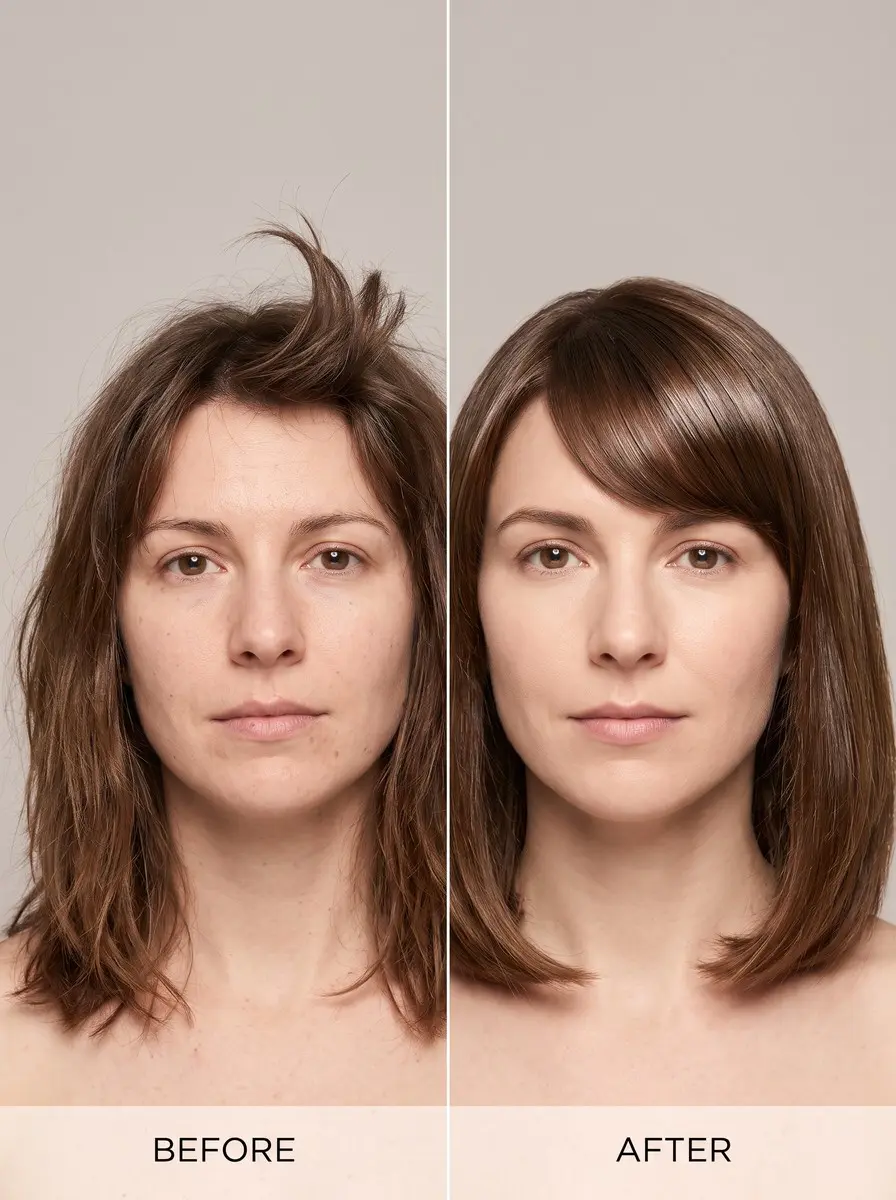
A flat crown can make even a great cut look tired, and teasing is still the fastest way to build real height in minutes. It’s the lift behind every bouffant, beehive and polished half-up.
The trouble is that most people tease the way they brush: long, rough strokes down the length, on hair that isn’t fully dry, then a hard rake-out at night. That is what causes the snapped ends and frizzy halo that give backcombing its bad reputation.
Below is how to tease hair the damage-safe way: keep it at the root, stop at 2–3 short passes per section and brush it out from the ends up, so the length you see is never roughed up.
You’ll also find tweaks for fine, thick and curly hair and see-through crowns, three finished styles and a snap-free brush-out. For lift from cuts, blow-drying and products instead, see our crown volume guide; this one covers the backcombing technique itself.
Time 15-20 minutes, plus 5-10 minutes to brush outDifficulty BeginnerSteps 9
Teasing Adjustments by Hair Type
| Hair type | Slice width | Passes | Key tweak |
|---|---|---|---|
| Fine or flat | 1 inch | 2 gentle | Texture spray first |
| Thick or heavy | 1–2 inches | 3 | Extra pass for support |
| Curly or coily | 1–2 inches | 2–3 | Blow-dry or straighten first |
| See-through crown | 1 inch | 2 gentle | Tease under the crown only |
| Heat-damaged or breaking | — | Skip | Root-lift powder or clips |
What You’ll Need
As an Amazon Associate, HairAide earns from qualifying purchases. Product links in this guide are affiliate links: they cost you nothing extra and help keep these tutorials free.
- Fine-tooth teasing comb with tail Its closely spaced teeth build a firm root cushion and the tail makes clean 1–2 inch sections.
- Boar-bristle backcombing brush It spreads friction over more strands for a softer lift that is easier to brush out.
- Brushable flexible-hold hairspray It sets the cushion at the root without gluing knots into a stiff mat you have to tear apart.
- Root-lift volumizing powder It is the knot-free alternative for heat-damaged, breaking or very fine hair on everyday days.
- Detangling spray A few mists soften the hairspray so the brush-out glides instead of snapping strands.
Step-by-Step
Step 1 Match the method to your hair
Decide how much to tease before you pick up a comb, because the right amount depends on your hair’s texture and condition rather than the look you want.
Fine or flat hair gets 1-inch slices and just 2 gentle passes, after a mist of texture spray for grip, while thick, heavy hair takes a third pass so the cushion can support its weight. For a crown that looks see-through, treat it like fine hair and tease only the hair underneath the crown, leaving a generous top layer to drape over it.
If your hair is heat-damaged, over-bleached or already snapping, skip teasing altogether and use a root-lift powder or volumizing root clips instead, which create lift without knotting strands that can’t take the friction.
Step 2 Start with dry, detangled hair
Tease only hair that is completely dry and free of tangles. Wet hair stretches and snaps far more easily, so backcombing it is one of the fastest ways to cause breakage, and any knot already sitting in the length gets dragged tighter once you build a cushion above it.
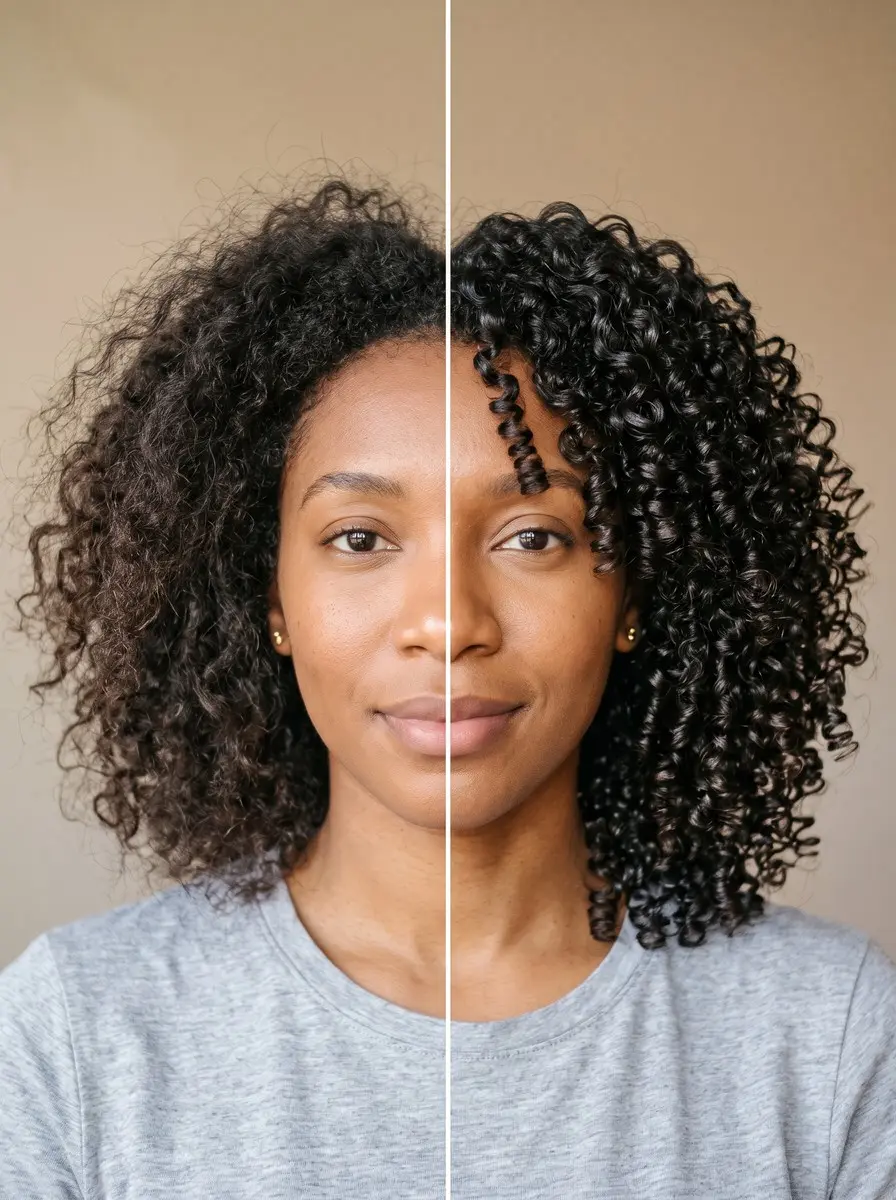
Curly and coily hair should be blow-dried or straightened first, because teasing tight curls in their natural pattern creates matted knots that are very hard to brush out. Run a wide-tooth comb or brush from ends to roots until it glides through the whole head without catching; that is your cue to start.
Step 3 Choose a gentle teasing tool
Pick a teasing comb with fine, closely spaced teeth, a boar-bristle backcombing brush, or a fine-tooth tail comb whose pointed tail doubles as a sectioning tool. A comb packs hair into a dense, firm cushion that suits bouffants and very fine hair needing maximum hold, while a boar-bristle brush spreads the friction across more strands for a softer, airier lift that is easier to brush out later.
Skip any comb with chipped or rough teeth, because rough edges snag and tear strands instead of gliding. Have a sectioning clip and a can of brushable hairspray within reach before you begin.
Step 4 Section in thin horizontal slices
Start at the crown, or wherever you want the most height, and clip a thin top layer over your part and crown forward and out of the way, because this untouched layer will hide your work later.
Take a horizontal slice 1 to 2 inches deep from just behind it: thinner slices give more volume because each one gets its own supporting cushion, while wider slices give a looser, softer look. Work backward slice by slice through only the area you want lifted, which for most styles is the crown and top of the head. Stop where you want the height to taper off.
Step 5 Tease only at the root
Lift one slice straight up from the scalp with light tension, set the comb or brush a couple of inches from the root, and push it down toward the scalp in short, controlled strokes.
Do 2 to 3 passes per section and then stop; each pass pushes some of the shorter hairs down into a cushion that props the rest of the section up.
Keep every stroke at the root and never work down the length, because the length is where teasing damage happens and it is also the part everyone sees. The section is done when it stands up on its own with a soft, springy cushion at the base.
Step 6 Set the base with hairspray
Mist a lightweight or brushable hairspray at the base of each teased section before you lay the next slice on top. A light, flexible spray locks the cushion in place so you need fewer passes to hold the shape, and because it stays brushable it won’t glue the knots into a stiff mass that has to be torn apart later.
Hold the can about 10 to 12 inches away so it lands as a fine mist instead of wet patches that weigh hair down. Once every section is teased and sprayed, the lifted area should feel springy rather than crunchy.
Step 7 Smooth the top without flattening
Unclip the untouched top layer and let it fall back over the teased area so it completely covers the cushion. Skim only the surface with the boar-bristle brush or the tips of your comb’s teeth, moving in one direction from the hairline back, and don’t press down into the base, because pressing compresses the cushion you just built.
If any teased hair peeks through, lift the top layer and drape it again rather than combing harder. Finish with a light mist of hairspray from a distance; you’re done when the top looks smooth and polished and the height is still intact.
Step 8 Finish into a payoff style
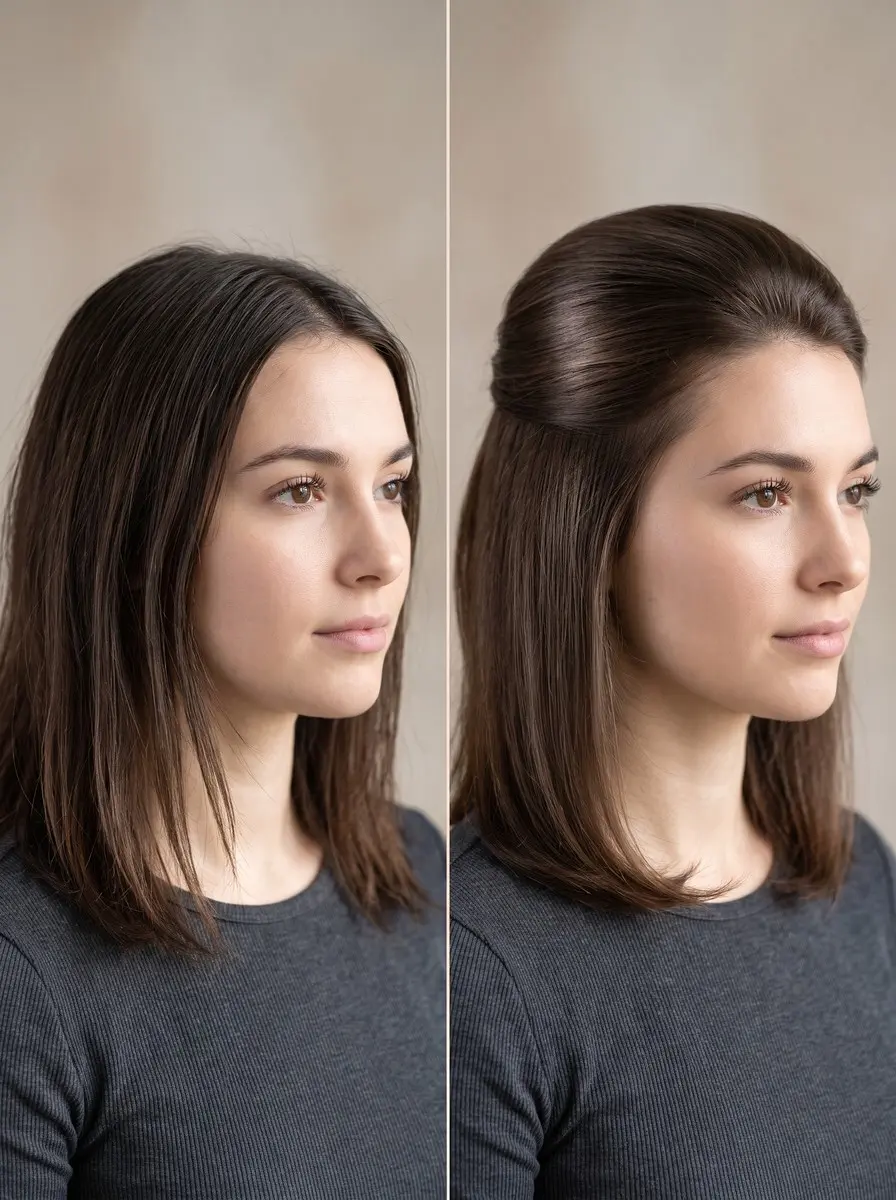
Choose one of three finishes. For a crown lift, pin the smoothed top layer at the back with two crisscrossed bobby pins just below the highest point, so the height sits at the crown and nowhere else.
For a half-up, gather the hair from the temples back over the teased section and secure it at the back of the head with a clear elastic or small claw clip, which anchors the lift and keeps hair off the face.
For a bouffant ponytail, brush the remaining hair gently back into a mid-height ponytail without pulling the smoothed top tight, since tension flattens the bump, then wrap a small strand around the elastic to hide it.
Step 9 Brush it out from the ends up
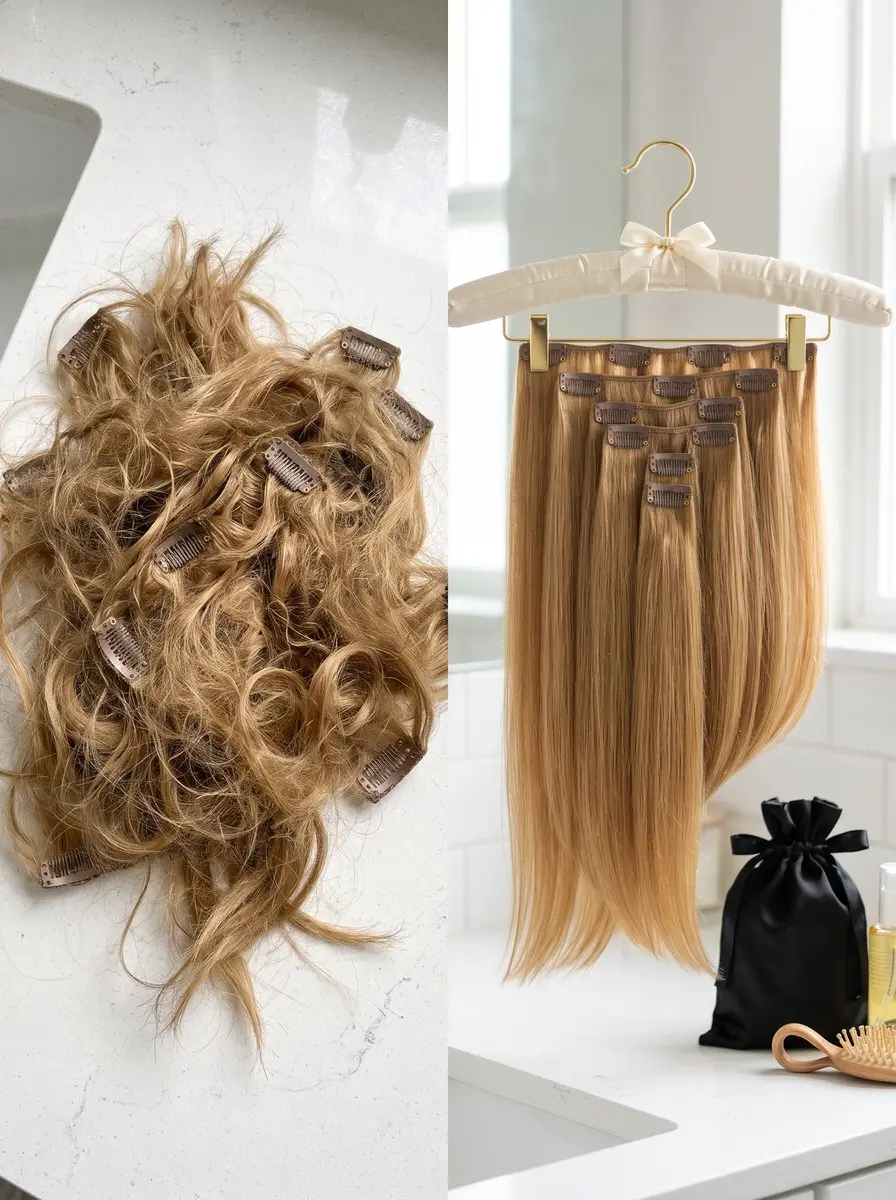
Take teased hair down the same day and never sleep in it, because the knots tighten and rub against the pillow overnight. First soften the hairspray with a few mists of detangling spray or a light leave-in conditioner at the roots, then work in small sections, combing the last few inches of the ends first and moving gradually up toward the scalp with a wide-tooth comb or soft-bristle brush.
Holding each section above the knot while you work keeps the pull off your scalp and stops the tool ripping through the cushion. Follow with a moisturizing shampoo and conditioner to bring back slip and softness.
Common Mistakes to Avoid
- Teasing hair that is still damp, when strands stretch and snap most easily.
- Backcombing down the whole length instead of keeping short strokes at the root, where the cushion actually needs to be.
- Going well past 2–3 passes per section, which packs knots too tight to brush out cleanly.
- Teasing the top layer you meant to smooth over, leaving a fuzzy, matted surface on show.
- Dragging a brush down from the roots to remove it, or sleeping in it, instead of brushing out from the ends up the same day.
- Using a heavy, crunchy-hold hairspray that glues the cushion into a stiff mat.
Pro tip Tease only the underside of each slice, the side facing your scalp, and leave the outer face smooth. The cushion stays hidden under the smooth side, so you get the same height with fewer passes and far less to brush out later.
The Bottom Line
Short strokes at the root, a light brushable spray and a smooth top layer give you lasting height without the frizzy, snapped ends that rough backcombing leaves behind. Treat teasing as an occasion technique, take it out the same evening, and let a root-lift powder or volumizing clips do the work in between.
If you blow-dry or straighten curls first, use a heat protectant: blow-dry on damp hair, but a flat iron goes on completely dry hair only, at no more than about 150°C/300°F for fine or bleached hair or 180–200°C/355–390°F for coarse.
If your hair is already breaking or heat-damaged, skip teasing and focus on repair, and for an updo that must hold for hours, a stylist can build the shape with pins and padding instead.
Frequently Asked Questions
Does teasing damage your hair?
Teasing roughs up the hair's outer cuticle, so it carries some risk, but most damage comes from how it is done and removed. Keep short strokes at the root on dry, detangled hair, limit each section to 2–3 passes, and brush out from the ends up the same day. If your hair is heat-damaged or already breaking, use a root-lift powder or volumizing clips instead.
What is the difference between teasing and backcombing?
The terms are often used interchangeably. Strictly, backcombing uses a fine-tooth comb to push hair firmly toward the scalp for a dense, high-hold cushion suited to bouffants and updos, while teasing or backbrushing uses a boar-bristle brush for a softer, airier lift. Both should stay at the root, and both come out the same way: from the ends upward in small sections.
Can you tease curly hair?
Yes, but blow-dry or straighten it first, because teasing curls in their natural pattern mats them into knots that are hard to brush out. Once it's smooth, tease at the root only in 1–2 inch sections with 2–3 short passes. If you're unsure or want to skip heat, use volumizing root clips instead.
Can teasing hide a thinning crown?
Gentle teasing can disguise a crown that looks see-through. Tease only the hair underneath the crown in 1-inch slices with 2 passes, then drape a generous untouched top layer over it so the cushion stays hidden. If teasing pulls or your scalp feels tender, switch to a root-lift powder, and see a dermatologist about sudden shedding or patchy thinning rather than styling around it.
How do you get teased hair out without breaking it?
Brush it out the same day. Mist a detangling spray to loosen the hairspray, then work in small sections from the ends upward with a wide-tooth comb or soft-bristle brush, holding the hair above each knot so you are not tugging at the scalp. Never drag a brush down from the root. Finish with a moisturizing shampoo and conditioner.
Keep Reading
Sources
- How to tease hair esalon.com
- How to tease hair makeup.com
- How to backcomb and tease hair lorealparisusa.com
- How to backcomb hair marieclaire.co.uk