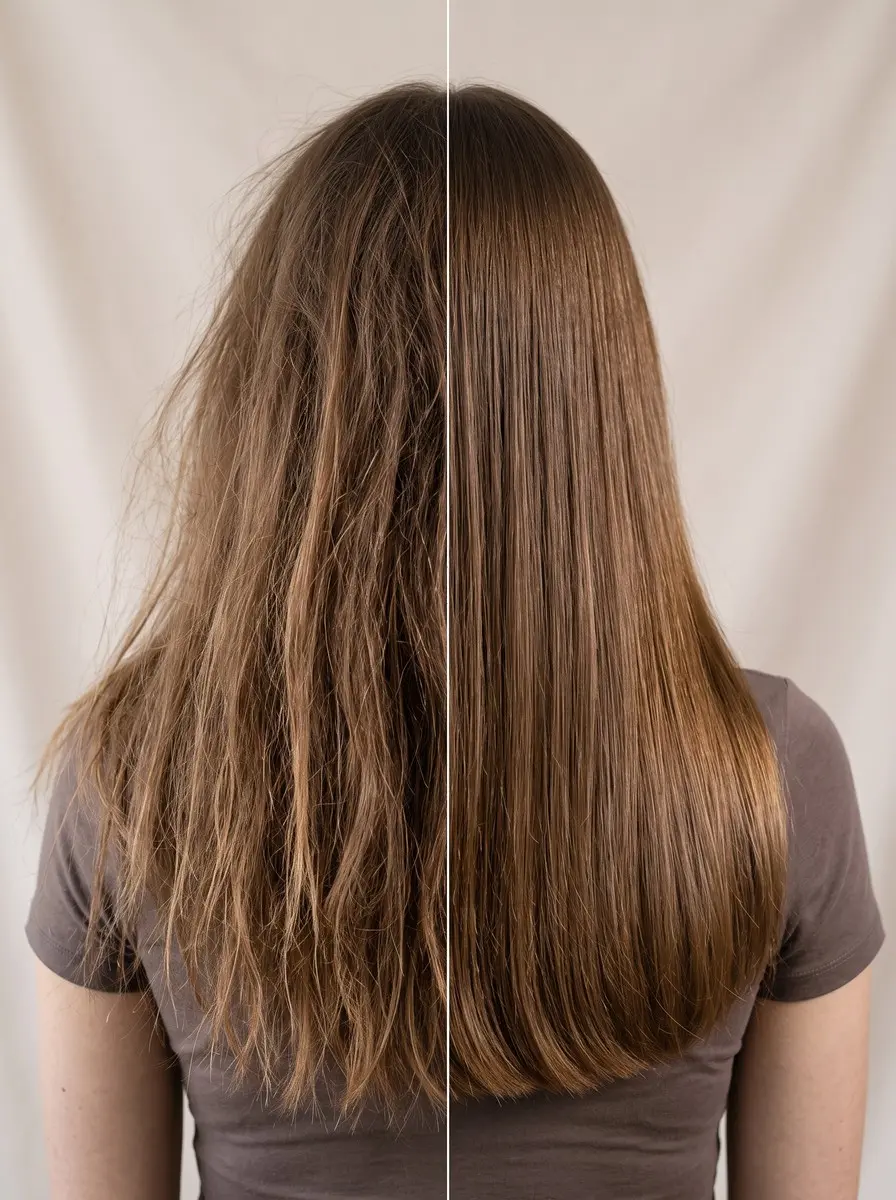
To repair heat-damaged hair, stretch-test a wet strand to gauge the damage, trim off split ends, alternate a bond-building treatment with a moisturizing mask, and switch to air-drying or roller sets while it recovers. Damaged ends can't heal — trims remove them.
If your ends feel like straw, snap when you brush them, or your curls have gone limp and straight in patches, your flat iron or curling wand has been doing more than styling. Heat damage is one of the most common hair complaints, and the honest truth is that no mask can reverse it. Hair is non-living keratin. Once high heat has chipped the cuticle and changed the protein inside, that length of strand stays changed, the same way a cooked egg white can’t be uncooked.
So here’s how to repair heat-damaged hair without pretending you can undo it: stop the damage from spreading, make the damaged lengths look and behave much better, and grow healthy hair in behind them. The plan works in stages: assess, trim, strengthen, rest from heat, protect overnight, then bring heat back carefully. You can do every step at home.
What You’ll Need
- Bond-building treatment (peptide or amino-acid formula) — Strengthens weakened strands from the inside so heat-damaged lengths snap less while you grow them out.
- Hydrating deep-conditioning mask — Brings back softness and slip on alternate washes so strengthened hair doesn’t turn stiff or brittle.
- Lightweight leave-in conditioner — Adds slip for gentle detangling and keeps rough, porous ends from drying out between washes.
- Mulberry silk pillowcase — Cuts the overnight friction that roughens lifted cuticles and snaps fragile ends.
- Satin heatless curling rod set — Gives you waves or curls overnight without hot tools during the heat break.
As an Amazon Associate, HairAide earns from qualifying purchases. Some links above are affiliate links — they cost you nothing extra and help support free tutorials.
Step-by-Step
-
Start by working out how damaged your hair really is, because rough ends and snapping mid-lengths need different plans. Wet a strand from the section you heat-style most and gently stretch it: healthy hair gives a little and springs back, hair that stretches a long way and feels gummy is structurally weak and needs strengthening, and hair that snaps almost instantly is dry and brittle and needs moisture first. Next, pinch a dry strand and slide your fingers from the tip toward the root; a rough, bumpy drag means the cuticle is lifted or chipped. Dullness and rough tips alone mean mild damage; splits, frizz and tiny white dots along the bottom few inches mean moderate damage; gummy stretch, breakage in the mid-lengths or curls that now dry straight in patches mean severe damage, which deserves a stylist’s eye before you start.
-
Cut off what can’t be saved. Damaged ends cannot be healed, only trimmed, and a split left in place keeps traveling up the strand, snagging its neighbors and turning a small problem into a bigger one. For mild damage, a dusting that takes just the frayed tips may be enough; for moderate or severe damage, ask your stylist to remove the most brittle length in one go, and at the very least everything that snapped in the stretch test. Losing length stings, but blunt, healthy ends make your hair look fuller and tangle less, so it breaks less every time you brush.
-
Put the remaining damage on a trim schedule instead of chopping it all at once. Hair grows at a steady half an inch or so a month, and nothing (no serum, supplement or cutting technique) speeds that up, so damaged length only goes away when it’s cut off. Book a trim of about half an inch every six to eight weeks: splits never get the chance to travel far, the shape stays clean instead of turning wispy and see-through at the ends, and you still gain a little healthy length between appointments. If the damage runs several inches, expect the full grow-out to take the better part of a year, and judge progress by how far down the strand the smooth, healthy section now reaches.
-
Rebuild strength with a bond-building treatment. Bond builders made with peptides and amino acids are recommended for heat damage because they work inside the fiber to reinforce it and reduce breakage. A standard deep conditioner mostly coats and smooths the outside, so its benefit is softer, shinier hair until the next wash. Neither one reverses heat damage, because altered keratin stays altered, but a bond builder makes weakened lengths far less likely to snap while you trim them out. Apply it exactly as the label directs, usually to damp, towel-dried hair from mid-lengths to ends, and stick to the brand’s recommended schedule for at least the first month or two.
-
Balance that strength with moisture. Hair that only gets strengthening treatments can turn stiff and straw-like, while hair that only gets rich masks can feel limp and mushy, so alternate: bond builder one wash, a hydrating deep-conditioning mask the next. Leave the mask on for the full time on the label, then finish every wash with a lightweight leave-in conditioner on the mid-lengths and ends so porous, rough hair doesn’t dry out between washes. Repeat the stretch test every few weeks: if strands start to feel gummy, lean on the bond builder; if they snap or feel crunchy, lean on the mask.
-
Wash and detangle as if your hair is fragile, because it is. Concentrate shampoo on your scalp and let the lather rinse through the lengths rather than scrubbing the ends, and switch to a gentler sulfate-free formula if your hair feels squeaky and dry afterward. Detangle with conditioner still in, using a wide-tooth comb and working from the ends up in small sections, so knots slide out instead of snapping the strand above them. Afterward, blot with a microfiber towel or cotton T-shirt rather than rubbing, since friction on a rough, lifted cuticle is exactly what turns damaged ends into frizz and breakage.
-
Take a real break from hot tools. Lowering heat and switching to air-drying, wraps or roller sets reduces the ongoing stress on damaged hair while it recovers, so aim for several weeks with as little heat as you can manage. For smooth, sleek hair, try a wrap: comb damp hair around your head in one direction, pin it flat and tie a satin scarf over it until it’s dry. Or set damp hair on large magnetic rollers and let it air-dry. For waves and curls, sleep in two loose braids, twists, flexi rods or a satin heatless curling rod; our guide to heatless curls walks through each method step by step.
-
Protect your hair while you sleep. A cotton pillowcase grips hair as you turn, and that nightly friction roughens already-lifted cuticles and snaps weak ends, while a silk or satin pillowcase lets hair glide instead. Gather long hair into a loose braid or a high, loose ponytail secured with a silk or satin scrunchie, and skip tight elastics and metal clips, which put all the tension on a single weak spot. A satin bonnet or scarf does the same job if you’d rather not switch pillowcases, and it keeps an overnight heatless set intact until morning.
-
Bring heat back gradually, and on your terms. Once the stretch test shows a healthier bounce and the worst ends are gone, go back to hot tools no more than once or twice a week, using the lowest setting that actually holds your style (the FAQ below gives the maximum temperature for each hair type). Make one slow pass per small section instead of several quick ones, since repeated passes add up to more total heat. Let each section cool completely before brushing or touching it, which lets the shape set so you need fewer touch-ups. If your ends start to feel rough again, go back to the heat break: your hair is telling you the setting or the frequency is too high.
Common Mistakes to Avoid
- Expecting an oil, serum or mask to ‘fix’ split ends. Products can smooth or temporarily seal them, but only a trim removes them, and waiting lets the split travel further up the strand.
- Using strengthening or protein treatments every wash with no moisture in between, which leaves hair stiff, straw-like and more likely to snap.
- Brushing wet hair from the roots down, which drags every knot into the fragile ends and breaks the weakest part of the strand.
- Going straight back to daily hot tools the moment hair feels softer. Treatments improve how damaged lengths feel, but those lengths stay fragile until they’re trimmed away.
Pro Tip
Ask your stylist to cut heat-damaged ends with sharp shears rather than a razor or thinning shears. A razor slices the strand at an angle and thins the tips, so already-fragile ends are more likely to fray and split again soon after the appointment.
Frequently Asked Questions
Can heat-damaged hair be repaired completely?
Not in the sense of making damaged strands healthy again. Hair is non-living keratin, so once heat has chipped the cuticle and changed the protein inside, that length stays changed. Bond-building treatments and deep conditioners make it stronger, softer and less likely to break, but only trimming removes the damage while new, healthy hair grows in.
How long does it take to recover from heat damage?
It depends on how far the damage runs. Hair grows about half an inch a month, so an inch or two of damaged ends can be trimmed away over a few months, while damage that reaches the mid-lengths can take a year or more to grow out fully. Hair usually feels softer and snaps less within a few weeks of treatments.
What temperature should I use on my flat iron or curling wand while my hair recovers?
Keep flat irons and curling wands at or below about 150°C/300°F for fine, bleached or still-recovering hair. Coarse hair tolerates more, but don't go above 180-200°C/355-390°F. Mist on a heat protectant before any hot tool, and use irons only on completely dry hair, because water trapped in the strand turns to steam. Blow-dryers and diffusers are made for damp hair; keep them on low or medium.
Will my heat-damaged curls come back?
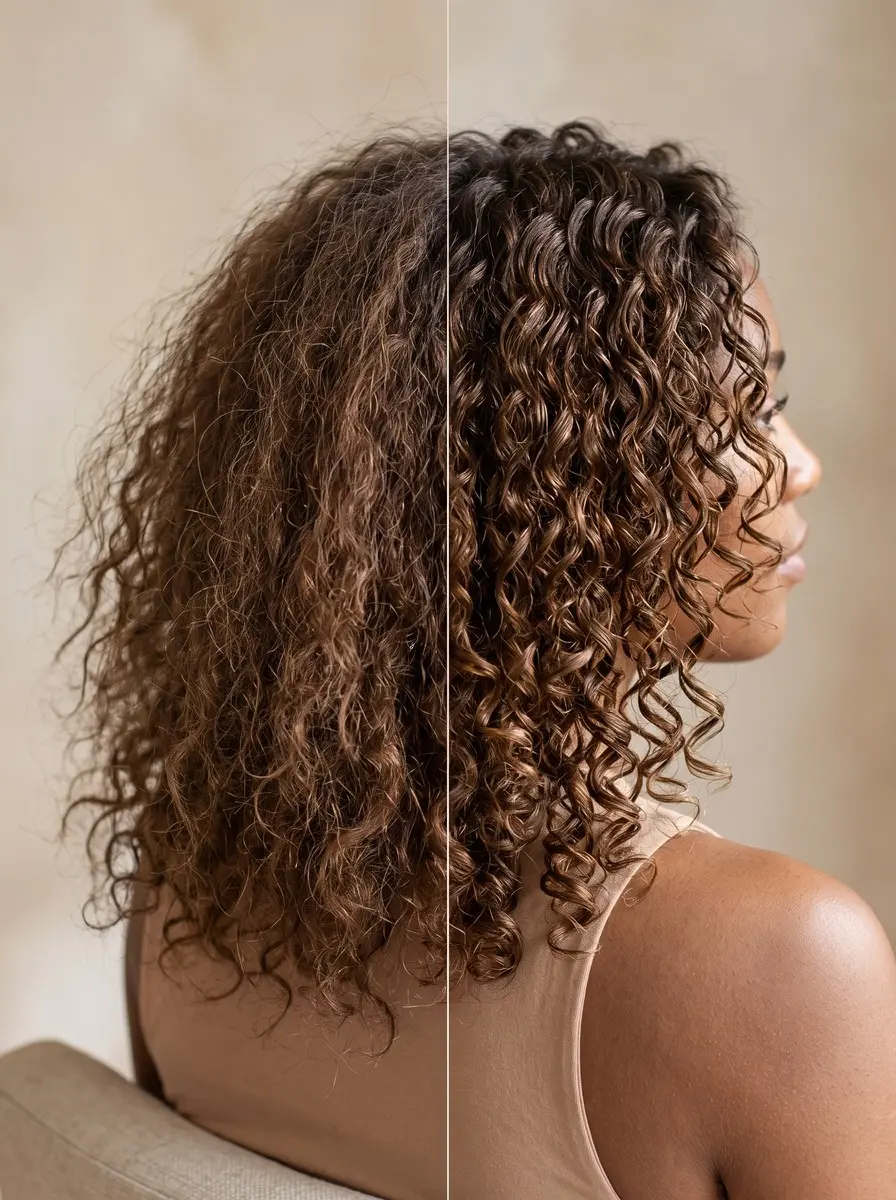
Wash and air-dry with a curl cream a few times to find out. If a section springs back, it was only temporarily straightened. If it still dries straight or limp, heat has permanently changed that length, and it will curl again only as new hair replaces it. Trim those sections gradually and use heatless sets to blend them in meanwhile.
Is a bond builder better than a deep conditioner for heat-damaged hair?
They do different jobs, so most heat-damaged hair benefits from both. A bond builder works inside the fiber to rebuild strength and reduce breakage, while a deep conditioner smooths and softens the surface for shine and easier detangling. Alternate them, one per wash, and let the stretch test tell you which one your hair needs more.
You Might Also Like
- 20 soft shag haircuts to inspire your post-trim look
- 20 polished low buns for heat-free days
- how to do a split-end dusting at home
- our guide to heatless curls
- how to ask your stylist for the cut you want
- how to repair bleach-damaged hair
- how to remove hard water buildup from hair
Heat damage doesn’t disappear overnight, but it stops getting worse the day you change your routine. Within a few weeks of treatments and a heat break, hair usually feels softer and snaps less, and regular trims clear the damaged length while healthy hair grows in behind it. Keep the silk pillowcase, gentle detangling and lower-heat habits after you’ve recovered, because they’re what stop the damage from coming back.
See a stylist if your hair feels gummy when wet, breaks off in the mid-lengths, or needs a bigger cut planned. If shedding or thinning at the roots comes with it, that isn’t styling damage, so raise it with a doctor or dermatologist.
Sources
- Damaged ends cannot be healed, only trimmed — regular trims stop splits from traveling further up the strand. healthline.com
- Bond-building treatments with peptides and amino acids are recommended to rebuild strength against heat-caused breakage. livingproof.com