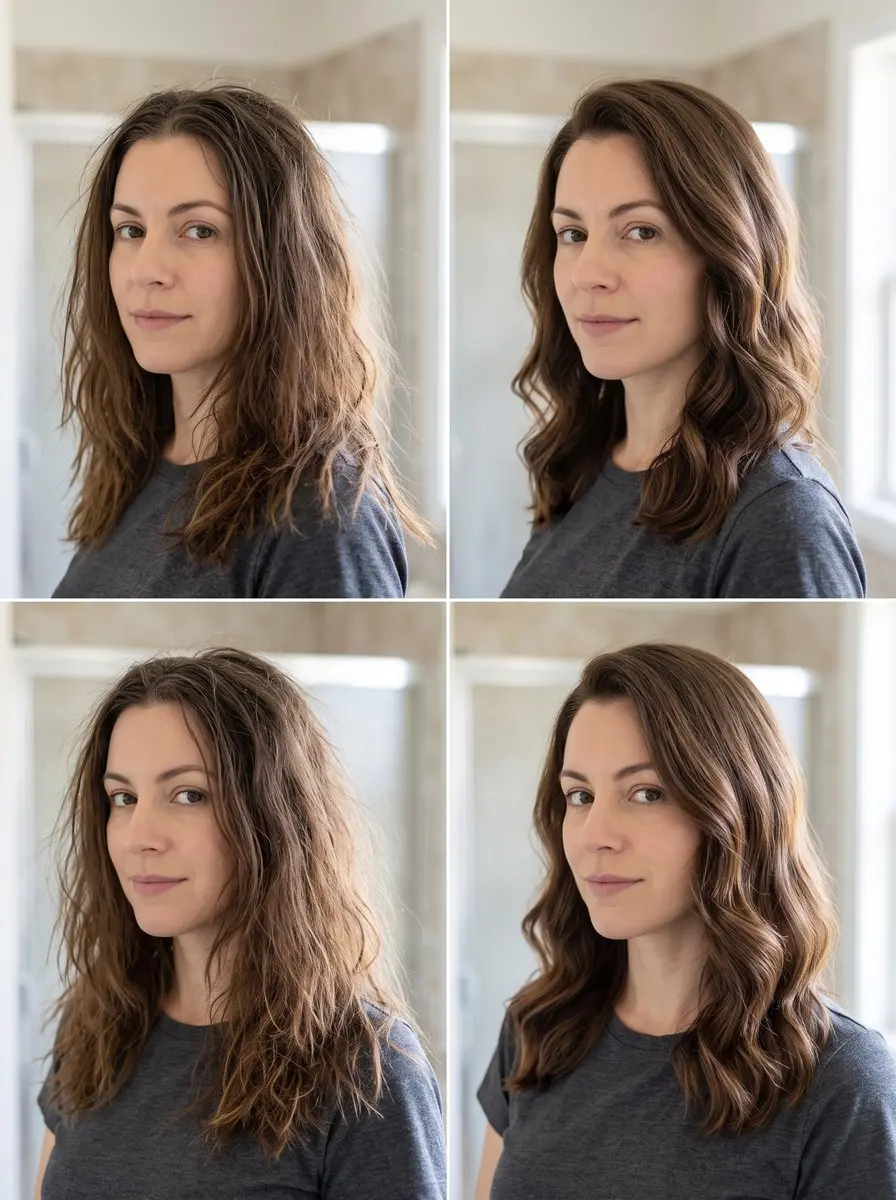
To build a hair wash routine, go in this order: an optional oil pre-poo on the lengths, shampoo on the scalp only, conditioner on the ends (fine hair) or full length (dry or curly hair) while you detangle, then a lukewarm rinse and a microfiber blot.
Most of us learned to wash our hair by copying whatever we saw first: pile it on top of your head, scrub, slap on conditioner, rub it dry with a bath towel. That gets hair clean, but it also causes roots that go flat by lunchtime, ends that feel like straw and knots that snap when you comb them out. The problem usually isn’t your products. It’s where they go and the order you use them in.
A good wash routine follows one sequence: pre-treat (optional), cleanse, condition, treat, then protect and style. Each step has a job, and where products go depends on your hair type. Conditioner that belongs on the full length of dry curls will flatten fine, straight hair by the next day. Below is every step with the reason it works, so you can adapt it to your own hair. All you need is a comb, a towel and about half an hour.
What You’ll Need
- Wide-tooth comb (detangling comb) — Separates knots while conditioner is in without the drag that snaps fragile wet strands.
- Microfiber hair towel or wrap — Absorbs water quickly with far less friction than terry cloth, which cuts frizz and breakage at the drying stage.
- Gentle sulfate-free shampoo — Cleans the scalp thoroughly while leaving lengths less stripped, so a two-to-three-day wash schedule stays comfortable.
- Leave-in conditioner (spray for fine hair, cream for curly or coily hair) — Keeps lengths flexible and easier to manage as they dry and gives stylers an even base.
- Lightweight pre-poo oil (coconut or argan oil) — Protects mid-lengths and ends before shampoo so they lose less of their natural oil during the wash.
As an Amazon Associate, HairAide earns from qualifying purchases. Some links above are affiliate links — they cost you nothing extra and help support free tutorials.
Step-by-Step
-
Pre-poo (optional). This step is optional but worth it for dry, curly, coily, long or color-treated lengths: 15 to 30 minutes before you shower, work a light oil such as coconut or argan, or an inexpensive conditioner, through your mid-lengths and ends, keeping it off the scalp. The coating acts as a buffer, so shampoo strips less of the hair’s own oil. An oil like coconut also limits how much water the strands absorb and swell with during the wash, which helps lengths hold onto moisture and tangle less afterward. Fine or easily weighed-down hair can skip it or use a few drops on the very ends, and you’re ready when the lengths feel lightly coated and pliable, not greasy or dripping.
-
Soak your hair with lukewarm water for a full minute, lifting sections at the crown and nape so water reaches the scalp everywhere. Hair that is wet all the way through lets shampoo spread and lather with less product, and plain water alone rinses away much of the day’s sweat and loose dirt before any detergent goes on. Thick, dense or low-porosity hair takes longer to soak through, so keep going until it feels heavy all the way through. It’s ready when you can’t find a dry patch anywhere at the roots.
-
Work a quarter-sized amount of shampoo between wet palms (a little more for long or very thick hair). Apply it directly to your scalp in sections (crown, sides, then nape) and massage with your fingertip pads, not your nails, for about a minute. Shampoo’s real job is lifting oil, sweat and product buildup from the scalp, where they collect. Scrubbing it through the lengths only strips the older, drier ends, and the suds that run down as you rinse clean them enough on their own. If you’ve used dry shampoo or heavy stylers, or it’s been several days since your last wash, shampoo a second time: the first lather loosens buildup, the second cleans the skin, and you’re done when roots feel clean without feeling tight.
-
Gently squeeze the excess water from your lengths so conditioner isn’t diluted and doesn’t slide straight off, then apply it according to your hair type. Fine or straight hair gets conditioner on the ends only, the oldest and driest part of the strand, because conditioner near the roots weighs fine hair down and makes it look greasy by the next day. Dry, curly or coily hair gets it along the full length, since scalp oil travels less easily down a dry or curled strand and the whole length needs softness and slip for detangling. Leave it on for 3 to 5 minutes, or longer for a deep conditioner or mask, so it has time to coat and soften the strands before you comb.
-
While the conditioner is still in, comb through with a wide-tooth comb in small sections, starting a few inches from the ends and working up toward the roots. Conditioner gives the strands slip, so knots slide apart instead of snapping. That matters because wet hair stretches more easily and breaks under less tension than dry hair. Wide-set teeth part the hair with far less drag than a brush or fine-tooth comb, and starting at the bottom keeps small tangles from being pushed down into one big knot. Each section is done when the comb glides from root to tip without catching.
-
Rinse out the conditioner with lukewarm water, lifting sections again so none is left trapped near the scalp or at the nape. Lukewarm is the sweet spot: warm enough to dissolve and carry away shampoo and conditioner residue, but not so hot that it pulls extra oil from your scalp and leaves it tight, dry or itchy. Rinse for longer than feels necessary, because leftover product is one of the most common reasons hair looks dull, flat or greasy a day later. Your hair is fully rinsed when it feels soft and smooth rather than slick or coated, and the water runs clear with no suds.
-
Once the conditioner is out, apply your post-wash treatment (usually a leave-in conditioner) while hair is still damp. Rinse-out conditioner does its work in the shower, but a leave-in stays on to keep strands flexible and less tangle-prone as they dry, and it gives any styler that follows an even base to sit on. Curly and coily hair takes it best while still very wet, which helps curls clump together. Fine or straight hair does better after a gentle squeeze, with one or two pumps worked from mid-lengths to ends only, and you’ve used enough when the ends feel smooth and your fingers slide through without resistance.
-
Swap the bath towel for a microfiber towel or a soft cotton T-shirt, and squeeze, blot or scrunch the water out instead of rubbing. The rough loops of a terry towel snag the strand, and rubbing roughs up its surface, which causes frizz and, over time, split ends and breakage. Smooth microfiber and cotton jersey soak up water with far less drag. Curly and wavy hair can be plopped: lay the T-shirt flat, flip your hair onto it and wrap it up for 10 to 20 minutes to draw out water while keeping curl clumps intact. Straight or fine hair needs only a 5-to-10-minute wrap before you air-dry or style, and you’re finished when hair is damp but no longer dripping.
Common Mistakes to Avoid
- Piling all your hair on top of your head and scrubbing. It tangles the lengths and strips the ends, when shampoo only needs to go on the scalp.
- Putting conditioner on the roots of fine or straight hair, which leaves it flat and greasy-looking by the next day.
- Rinsing out conditioner before detangling, then dragging a brush through soaking-wet hair, which is exactly when fragile wet strands snap.
- Rushing the rinse. Leftover shampoo or conditioner makes hair look dull, limp and dirty faster.
- Rubbing hair dry with a rough terry bath towel instead of blotting or plopping with microfiber or a cotton T-shirt.
Pro Tip
Mix your shampoo with a little water in a small applicator bottle and squeeze it straight onto your scalp, section by section. Diluted shampoo spreads evenly across the roots, lathers with less product and never needs to be dragged through the lengths.
Frequently Asked Questions
How often should you wash your hair?
For most hair types, washing every two to three days is ideal, because daily washing strips the scalp's natural oils and can leave hair dry and brittle. Very dry, curly or coily hair can often go longer between washes. If your roots get oily fast, try a gentler shampoo and a single scalp-only lather before adding more wash days.
Do I really need to pre-poo before shampooing?
No, a pre-poo is optional. It helps most if your lengths are dry, curly, coily, long or color-treated: 15 to 30 minutes of oil or conditioner on the mid-lengths and ends means shampoo strips less of their natural oil. Fine hair that flattens easily can skip it or use just a few drops on the very ends.
Should I shampoo my hair twice?
Shampoo twice when there's buildup to cut through, such as after dry shampoo, heavy styling products, hair oils or several days between washes. The first lather loosens product and oil; the second cleans the scalp itself and usually foams more easily. If you wash every two to three days with little product, one thorough lather on the scalp is enough.
Where should conditioner go if I have fine hair versus curly hair?
Fine or straight hair should get conditioner on the ends only, since product near the roots weighs it down and looks greasy fast. Dry, curly or coily hair should get it along the full length, because those strands need softness and slip everywhere to detangle without breakage. Either way, leave it on for 3 to 5 minutes, or longer for a deep conditioner.
Does rinsing with cold water make hair shinier?
No. Rinse temperature doesn't open or close the cuticle; that idea is a salon myth. A cold final rinse is fine if you like it, but it's only a matter of comfort. Shine comes from smooth, well-conditioned lengths and a thorough rinse that leaves no residue. Lukewarm water works best, since very hot water pulls extra oil from the scalp.
You Might Also Like
- 20 espresso brunette hair color ideas to inspire your next look
- 20 butter blonde shades worth protecting with a gentle wash routine
- find your hair porosity
- keep greasy roots in check between washes
- remove hard water buildup from hair
- stop hair breakage at the source
- make thin hair look thicker after washing
Stick with this order for a few weeks and you’ll see the payoff: roots that stay fresh longer, softer ends and tangles that come out without snapping. Repeat the core steps every wash day: shampoo on the scalp only, conditioner placed for your hair type, and detangling with conditioner in. Use the extras, like pre-poos and double shampoos, when your hair needs them that week.
If you blow-dry or diffuse afterward, mist on a heat protectant while hair is still damp. Use flat irons and curling irons on completely dry hair only, at up to about 150C/300F for fine or bleached hair and 180-200C/355-390F for coarse hair. See a dermatologist if your scalp stays itchy, flaky or sore despite a gentle routine, or if you notice sudden, heavy shedding.
Sources
- The correct wash-day order is: pre-treat (optional), cleanse, condition, post-wash treatment, then protect/style. curlcentric.com
- Shampoo should be applied to the scalp rather than the full length to remove buildup without over-drying hair. glowwithlife.com
- Conditioner should go on just the ends for fine or straight hair but the full length for dry or curly hair, left on 3-5 minutes (longer for a deep conditioner). theorganibrands.com
- Washing every two to three days is ideal for most hair types since daily washing strips natural oils and leaves hair dry and brittle. careaboutyourhair.com