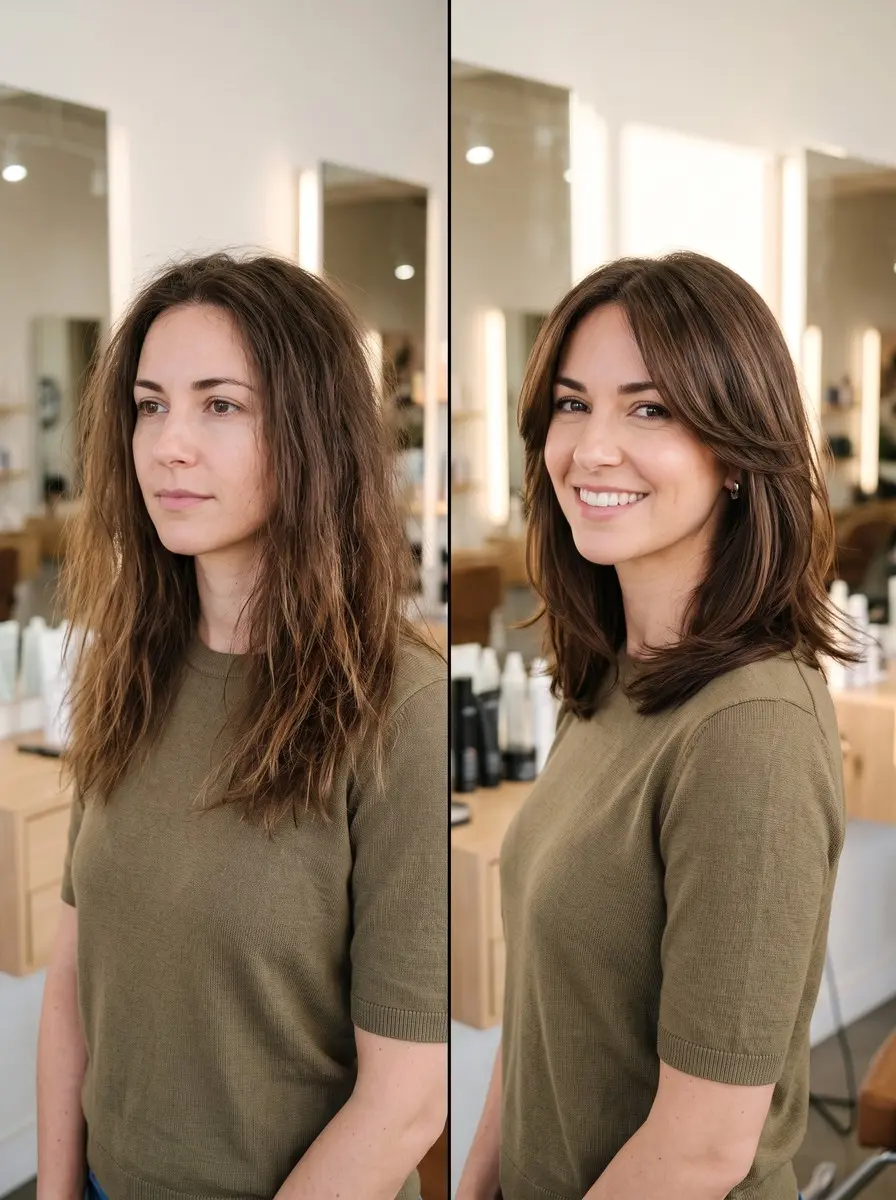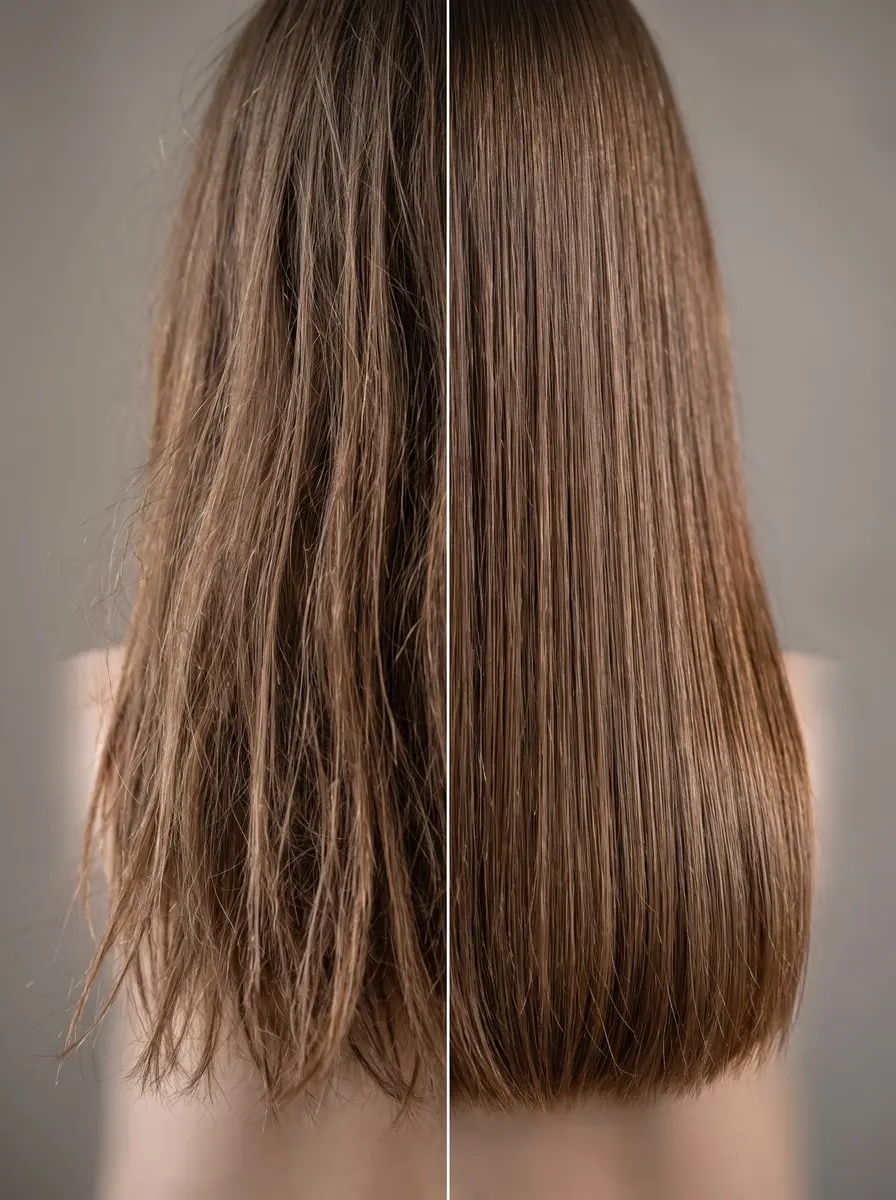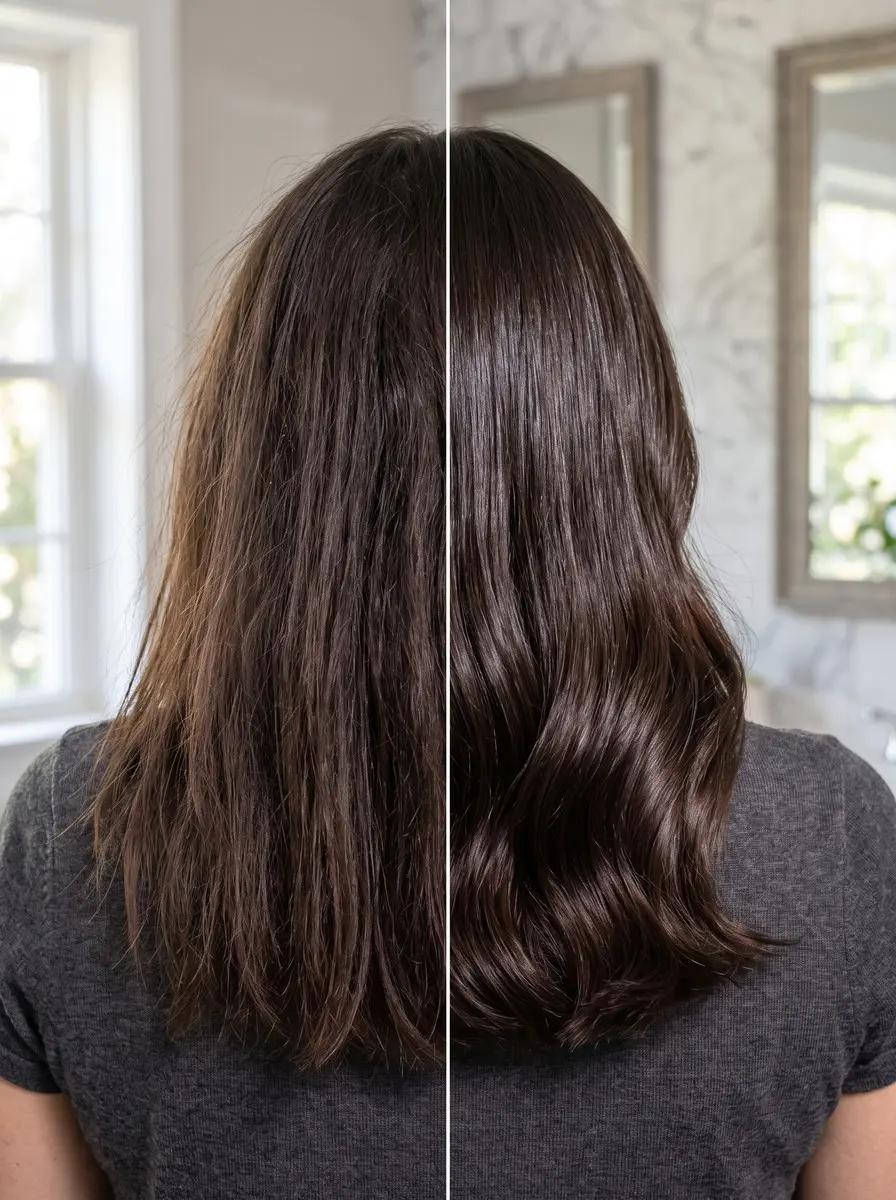
To remove hard water buildup from hair, wash with a chelating shampoo containing EDTA, citric acid or sodium gluconate, leave it on for 2-3 minutes, rinse, then follow with a moisturizing mask. Repeat weekly for moderately hard water, twice weekly for severely hard water.
Before you can remove hard water buildup from your hair, you have to spot it. If your hair feels rough the minute it dries, your color fades faster than it should and your shampoo barely foams, the problem may not be your products at all. It may be your water. Hard water carries dissolved calcium and magnesium, and every wash leaves a thin mineral film on the strands. Because the film accumulates slowly, most people blame their shampoo, their conditioner or their hair type long before they suspect the tap.
Mineral buildup is one of the most fixable hair problems there is. This guide shows you how to confirm hard water is really the cause, which chelating ingredients actually lift it off, how to use a safely diluted apple cider vinegar rinse if you’d rather not buy anything, and how to keep the film from coming back. All it takes is one shower and about 20 minutes.
What You’ll Need
- Chelating shampoo (with EDTA, citric acid or sodium gluconate) — It binds mineral deposits into water-soluble complexes so they rinse away, which an ordinary shampoo isn’t designed to do.
- Water hardness test strips — They show whether your water is moderately or severely hard, which sets how often you need to chelate.
- Moisturizing hair mask (deep conditioner) — It replaces the natural oils a chelating wash strips, so hair ends up soft rather than squeaky.
- Apple cider vinegar (pantry staple) — Diluted, it makes a no-purchase-needed rinse that loosens leftover mineral residue.
- Filtered showerhead (KDF or vitamin C cartridge) — It cuts chlorine and some metals at the source; pair it with chelating if your water is very hard.
As an Amazon Associate, HairAide earns from qualifying purchases. Some links above are affiliate links — they cost you nothing extra and help support free tutorials.
Step-by-Step
-
Start by confirming that hard water is really the culprit. The telltale pattern is hair that looks dull even when freshly washed, tangles easily and dries rough or straw-like, loses color faster than it should, and produces a thin, reluctant lather. Back that up with clues around the house: white crusty scale on the showerhead, cloudy spots on shower glass or a chalky ring inside the kettle all signal high mineral content. For a definite answer, dip an inexpensive water hardness test strip in tap water or look up your water utility’s annual quality report. You’re ready to move on when at least two of those hair signs match and you know whether your water reads moderately or severely hard, since that reading sets how often you’ll treat it in step 7.
-
Rule out product buildup and damage before you treat, because each needs a different fix. Silicone serums, heavy creams and dry shampoo leave a coating that feels slick, waxy or greasy, while mineral buildup feels dry, gritty and squeaky-rough to the touch. A good test is how your hair behaves away from home: if it feels noticeably softer after a few washes on vacation or at a friend’s place in another town, your own tap water is the likely cause. Split ends, snapping strands and breakage point to damage instead, which no chelating wash can reverse, and only a trim removes split ends.
-
Choose a chelating shampoo by checking the ingredient list, not just the front label. Look for a chelating agent such as disodium or tetrasodium EDTA, citric acid or sodium gluconate. These ingredients bind to the calcium, magnesium and metal deposits sitting on the hair and form water-soluble complexes, so the minerals rinse away instead of clinging to the strand, something a regular cleanser isn’t designed to do. If your hair is color-treated, pick one labelled color-safe, since these shampoos are more stripping than an everyday wash. You’ve found the right bottle when it names one of those agents on the ingredient list and is sold as a chelating, hard-water or demineralizing formula; plenty of everyday shampoos include a little EDTA as a stabilizer, so the ingredient alone isn’t proof.
-
Saturate your hair completely with warm water, then work a generous amount of chelating shampoo into your scalp and down through the lengths, giving the ends extra attention because they have been collecting minerals the longest. Leave it on for 2-3 minutes before rinsing: chelating agents need contact time to grab onto deposits, and a quick lather-and-rinse doesn’t give them long enough to work. Rinse thoroughly, then shampoo a second time if your first lather was thin. You’ll know the minerals have lifted when the wet lengths feel cleanly smooth rather than gritty.
-
Follow up with a diluted apple cider vinegar rinse to loosen any mineral residue the shampoo left behind. You can also use it on its own as a no-purchase stopgap if you don’t have a chelating shampoo yet. Mix 1-2 tablespoons of apple cider vinegar into 1 cup (240 ml) of lukewarm water in a jug or squeeze bottle, pour it slowly over your scalp and lengths while keeping it away from your eyes, and leave it for 1-2 minutes. Vinegar is mildly acidic, which helps loosen leftover deposits, though on its own it is gentler and less thorough than a true chelating shampoo. Rinse it out fully; any vinegar smell fades as your hair dries.
-
Apply a moisturizing mask straight afterward, because a chelating wash strips natural oils along with the minerals, which is why hair can feel squeaky and dry right after treatment. Squeeze out excess water, smooth the mask from mid-lengths to ends, and leave it on for 5-10 minutes or as the label directs before rinsing. Formulas with humectants like glycerin plus plant oils or butters replace the slip and softness the wash removed. Add a lightweight leave-in if your hair is curly, coily, bleached or color-treated. You’re done when hair detangles easily and feels soft rather than squeaky.
-
Set a treatment rhythm that matches your water. Use your chelating shampoo about once a week if your water is moderately hard and twice a week if it is severely hard, and wash with a gentle, moisturizing shampoo in between so you aren’t stripping your hair every time. The schedule matters because overdoing chelation leaves hair dry and can fade color, while stretching it too far lets the mineral film quietly build back up. Adjust by feel: if dullness and roughness creep back before your next scheduled session, add one; if your hair feels parched, drop back.
-
If you’d rather prevent buildup than keep treating it, filter or soften your water, but know what each option actually does. Most screw-on shower filters, including carbon, KDF and vitamin C cartridges, are designed mainly to reduce chlorine and some metals such as iron and copper, and remove relatively little of the calcium and magnesium that make water hard. A whole-home ion-exchange water softener is what truly removes hardness, at a far higher cost, while a budget middle ground is a final rinse with a jug of distilled water, which carries no minerals to leave behind. Whichever you choose, replace filter cartridges on schedule, because a spent cartridge stops working. You’ll know your prevention is keeping pace when you can stretch the gap between chelating sessions without dullness or roughness creeping back; with a softener, fresh white scale also stops forming on the showerhead.
Common Mistakes to Avoid
- Using a chelating shampoo every wash: it strips natural oils and can fade color, leaving hair drier than the buildup did.
- Pouring on undiluted apple cider vinegar or leaving a rinse on for long stretches, which can irritate the scalp; always dilute to 1-2 tablespoons per cup of water.
- Skipping the mask afterward, even though the chelating wash removed natural oils along with the minerals.
- Assuming any shower filter softens water, when most reduce chlorine and some metals but little of the calcium and magnesium behind hardness.
- Chelating in the days right after a fresh color or gloss, which can fade the new tone early.
Pro Tip
If you color or lighten your hair, chelate a day or two before the appointment rather than in the week after, and tell your colorist you have hard water. Metal deposits can make color take unevenly and react with lightener, while chelating fresh color fades it faster.
Frequently Asked Questions
How can I tell if hard water is causing my hair problems?
The classic signs are hair that looks dull even when freshly washed, tangles and feels rough when dry, loses color quickly, and barely lathers. Scale on your showerhead or spots on shower glass support the suspicion, and a hardness test strip or your water utility's quality report confirms it. If your hair feels better after washing elsewhere, your water is the likely cause.
Is clarifying shampoo the same as chelating shampoo?
Not quite. A clarifying shampoo uses stronger cleansers to strip product residue, oil and dry shampoo, while a chelating shampoo contains agents such as EDTA, citric acid or sodium gluconate that bind minerals so they rinse away. Some formulas do both. If hard water is your issue, check the ingredient list for a chelating agent rather than trusting the word 'clarifying.'
How often should I use a chelating shampoo for hard water?
Use it about once a week if your water is moderately hard and twice a week if it is severely hard, leaving it on for 2-3 minutes before rinsing. Wash with a gentle everyday shampoo in between, and always follow with a moisturizing mask, because chelating removes natural oils along with minerals. Daily use tends to leave hair dry and fade color.
Does a shower filter stop hard water buildup on hair?
Partly. Most shower filters are designed to cut chlorine and some metals such as iron and copper, but they remove little of the calcium and magnesium that make water hard. Only a whole-home water softener truly removes hardness. Many people pair a filter with weekly chelating, or finish each wash with a rinse of distilled water.
Can hard water make blonde hair look brassy or green?
It can. Mineral and metal deposits dull blonde hair, and iron or copper in water can leave a brassy or faintly greenish cast. Remove the deposits first with a chelating shampoo, then tone whatever warmth remains: a violet toner cancels yellow and a blue toner cancels orange. Toning over a mineral film tends to give patchy results.
You Might Also Like
- 20 cozy fall hair refresh ideas to inspire your next look
- 20 soft shag haircut ideas to inspire your next look
- how to tone brassy hair at home
- repairing bleach-damaged hair
- doing a root touch-up at home
- heatless curls overnight
One proper chelating session usually brings back noticeable softness and shine, and the mask afterward keeps hair from swinging to the other extreme of dry and squeaky. From there it’s maintenance: chelate weekly for moderately hard water and twice weekly for severely hard water, and let a shower filter, a distilled-water final rinse or a softener take some of the load if you want fewer treatments.
See a stylist if your hair still feels rough after two or three treatments, if strands are snapping, or if you’re planning a big color change. A salon can run a professional metal-detox treatment and tell you whether you’re dealing with damage rather than minerals. Hard water is a nuisance, and once you know what’s on your hair, it’s simple to take off.
Sources
- Chelating agents (commonly EDTA, citric acid, or sodium gluconate) bind to mineral deposits from hard water, forming water-soluble complexes that rinse away. beautyaswell.com
- Recommended chelating-shampoo frequency is about once a week for moderately hard water, twice a week for severely hard water, applied 2-3 minutes before rinsing. iluviapro.com
- A diluted apple cider vinegar rinse after chelating shampoo helps loosen remaining mineral residue; a moisturizing mask is recommended afterward since chelating strips natural oils too. jolieskinco.com