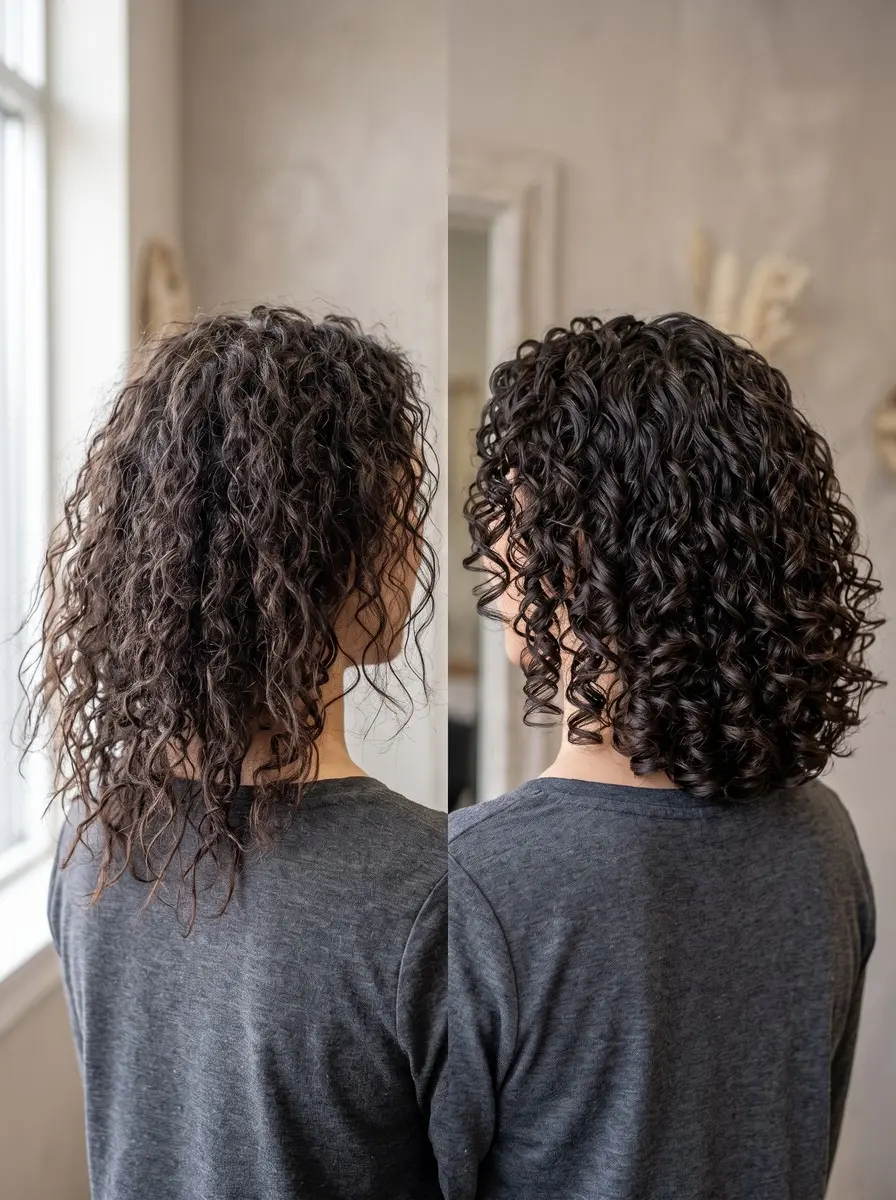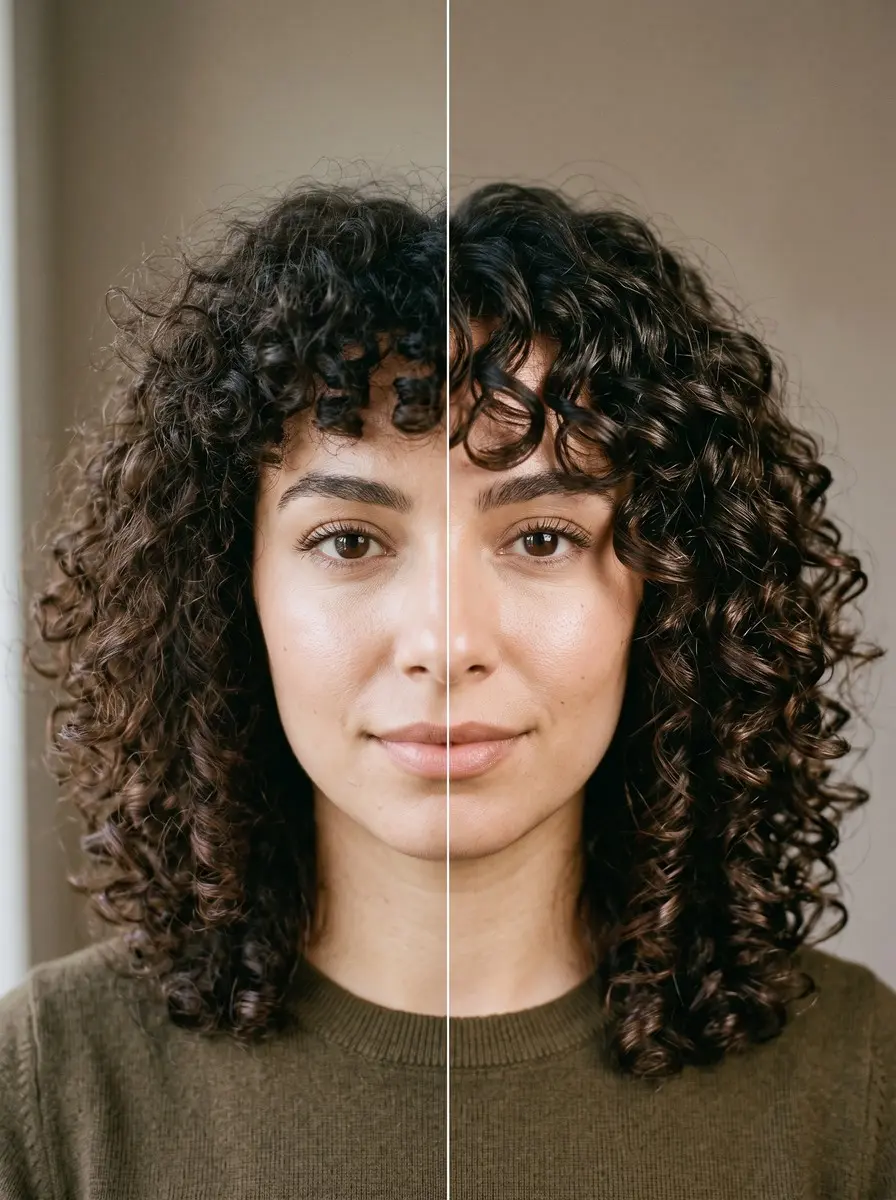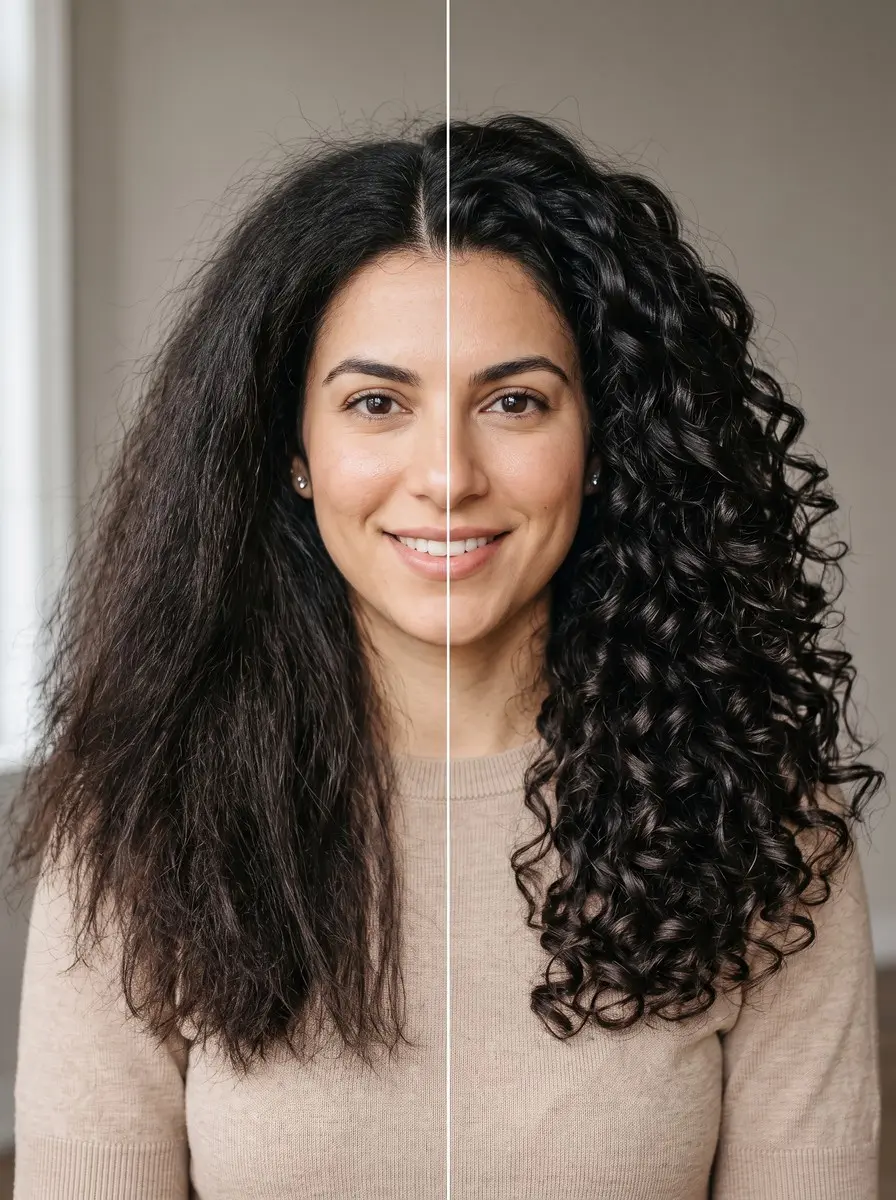
To get heatless curls on thick hair, start when your hair is about 80% dry and work mousse or curl cream through it. Wrap 1-inch sections around flexi rods or twist them, and leave them in until the densest section at the nape is completely dry. That usually means overnight. Then unwrap and separate.
You set your hair in rods before bed, slept on them, and unwrapped them in the morning. The top curls looked great, but underneath they were limp and still slightly damp, and by lunchtime the whole head had dropped into loose bends. That’s the most common complaint about heatless curls on thick hair, and it’s almost never the method’s fault. Dense hair holds much more water, carries more weight and needs a different plan from the one in a generic tutorial.
This guide is built around that plan. You’ll learn how damp your hair should be before you start and why smaller sections matter more than any product. You’ll also see which methods (flexi rods, a robe tie, braids, twists or pin curls) cope with density, and how to tell whether your hair is dry enough to take down. You don’t need a salon or any heat, just an evening and the right setup.
What You’ll Need
- Foam flexi rods (mixed sizes) — They hold small, one-inch sections of thick hair evenly, which gives the most defined curl and a set that dries all the way through.
- Satin heatless curling rod (robe-tie style) — It’s a comfortable overnight option for soft, bouncy waves if you split thick hair across it into thinner wraps.
- Curl mousse or curl cream — It gives damp hair the hold and definition it needs to keep its shape once it dries.
- Satin bonnet or silk pillowcase — It reduces friction overnight, so the set dries without frizz or flattened sections.
- Light-hold flexible hairspray — It locks in the separated curls without stiffness, so they last into day two or three.
As an Amazon Associate, HairAide earns from qualifying purchases. Some links above are affiliate links — they cost you nothing extra and help support free tutorials.
Step-by-Step
-
Wash and condition as usual, then squeeze out water with a microfibre towel or cotton T-shirt. Let your hair air-dry, or rough-dry it with a blow-dryer on low, until it’s about 80% dry. It should feel cool and slightly damp, not wet, and no water should come out when you squeeze a section. A curl sets as the hair dries in its new shape. Thick hair holds so much water that dripping-wet sections are often still damp inside by morning, and those are the curls that drop by noon. Hair that’s fully dry, though, has nothing left to set.
-
Work a hold product through while your hair is still damp. Choose a mousse for volume and a lighter hold, or a curl cream if your hair is coarse or dry and frizzes easily. Use a palm-sized amount per quarter of your head, not one blob on top, and comb or rake it through from mid-lengths to ends. Mousse gives each strand a flexible film that helps it keep the shape it dries in. Curl cream adds weight and moisture, so the curl clumps and resists humidity. Stop when every section feels evenly coated but not sticky.
-
Pick a method that suits your density. Flexi rods give the most control on thick hair because each rod holds one small, measured section, which makes them the most reliable choice for defined curls. Two-strand twists also do well because you choose the size of each twist, and they dry into defined S-waves. Braids give looser waves, not curls, and chunky braids trap water in their centre. A robe tie or heatless rod piles a lot of hair around one core, so on dense hair you’ll need thinner wraps or two separate ties. Save pin curls for face-framing pieces, because pinning a whole thick head is slow and the flat coils take the longest to dry.
-
Section smaller than feels necessary. Aim for pieces about one inch wide and no deeper than the rod or twist can wrap flat, which on thick shoulder-length hair usually means 20 to 30 sections. Clip the rest of your hair out of the way and work from the nape upward, because the underneath layer is the densest and slowest to dry. Small sections dry right through to the centre, and more sections give smaller, tighter curls that last longer. If your curls have come out loose or uneven before, oversized sections were almost certainly the cause.
-
Wrap or twist each section with smooth, even tension, keeping the ends flat against the rod so they don’t crimp into a fishhook. Wrap sections on both sides of your face away from the face, then alternate the direction through the back so the curls don’t merge into one big clump. Secure each rod by bending its ends inward, clear of the hair’s length. Twists should reach the very ends, with a tiny dab of product to stop them unravelling. Even tension makes every curl the same size, and flat ends dry into smooth tips instead of frizzy bends.
-
Protect the set for sleep or a long wait. Cover it with a satin or silk scarf or bonnet, and sleep on a silk or satin pillowcase if you have one. Tie back any loose hair with a scrunchy or silky tie, never a tight elastic. A smooth fabric doesn’t grab and rough up the hair as you move, so you wake up with less frizz, and a soft tie can’t press a dent into half-set hair. Leave the set in overnight, or for at least several hours. Thick hair often needs the full night.
-
Test before you take anything down. Unwrap one section from underneath at the nape, where thick hair dries last, and one from the crown. If the nape section feels cool to the touch, looks darker, or falls straight, it’s still damp, so rewrap it and wait another hour or two. Cool to the touch is the tell, because evaporating water chills the hair, so hair that still feels cool is still drying. Take the full set down only when the test curl springs back and feels room temperature.
-
Unwrap in the order you set, starting at the nape, and don’t touch the curls until they’re all out. Rub a drop or two of lightweight oil between your palms, then split each curl into two or three smaller pieces with your fingertips, not a brush. Finish with a light-hold hairspray from arm’s length. Separating is what turns tight ringlets into full, soft curls and adds volume. The oil smooths any frizz from sleep, and the hairspray locks in the shape without making it crunchy. Stop separating before the curls lose their shape, because more handling means more frizz.
-
Make the curls last one to three days. Each night, loosely pineapple your hair on top of your head with a scrunchy, or put the satin bonnet back on. In the morning, mist the mid-lengths lightly with water or a curl refresher, and re-twist any fallen curls around a finger for a few minutes. Keeping the curls smooth and uncrushed overnight is most of what makes them last, and a light re-dampen reactivates the hold product so drooping pieces take their shape again. Once the curls look more wave than curl, it’s time to wash and reset.
Common Mistakes to Avoid
- Setting thick hair when it’s soaking wet: the inner layers are still damp by morning, and those curls collapse within hours.
- Using a few big sections to save time. Wide sections don’t dry through the middle, and they give loose, uneven curls that barely look different from your starting texture.
- Taking the set down on a schedule, not after a test curl. Check the nape first, because it’s always the last part of thick hair to dry.
- Tying hair back with a tight elastic or clamping a clip across half-set hair, which leaves a dent that won’t brush out.
- Brushing out the curls or separating them over and over, which breaks up the clumps and creates frizz on dense hair.
Pro Tip
Set the underneath layer first and with the smallest sections, then use slightly bigger sections toward the top. The nape dries slowest and carries the most weight, so small sections there keep the curl pattern even from root to crown.
Frequently Asked Questions
Why won't my heatless curls hold on thick hair?
The usual cause is hair that was still damp inside when you took it down. Thick hair holds a lot of water, and oversized sections trap moisture in their centre. Set at about 80% dry, use one-inch sections, apply mousse or curl cream, and test a nape curl before unwrapping. It should feel room temperature, not cool.
How long should I leave heatless curls in thick hair?
Plan on overnight, or at least several hours, depending on how thick and coarse your hair is and how damp it was when you set it. Don't go by the clock. Unwrap one section at the nape, and if it feels cool or falls straight, rewrap it and give it another hour or two.
What's the best heatless curl method for thick hair?
Flexi rods and two-strand twists usually work best because you control exactly how much hair goes into each section. A robe tie or heatless rod works too, but thick hair needs thinner wraps, or two ties instead of one. Braids give waves, not curls, and pin curls are best kept for face-framing pieces.
How do I stop heatless curls from getting frizzy?
Start with a hold product on damp hair, wrap with smooth tension and flat ends, and sleep in a satin or silk scarf or bonnet or on a silk pillowcase. In the morning, separate each curl only two or three times, with an oiled fingertip. A light-hold hairspray at the end helps them resist humidity.
How do I avoid dents and creases from heatless curls?
Dents come from pressure on hair while it's drying. Tie hair back with a scrunchy or silky tie instead of an elastic, and bend flexi-rod ends inward, away from the hair's length. Keep clips out of the finished set. If you still get a dent, lightly dampen that spot and re-twist it around a finger until dry.
You Might Also Like
- 20 waterfall waves ideas to inspire your next look
- 20 thick-hair octopus cuts that shed bulk and hold curls better
- build a wash routine that preps hair for a heatless set
- how to get rid of curly hair frizz
- a round brush blowout for smooth volume
- low-maintenance haircuts that air-dry well
Heatless curls on thick hair come down to three things: start at the right dampness, use small sections, and wait until the densest layer is truly dry. Get those right and the curls should last one to three days, with a pineapple or satin bonnet at night and a light mist each morning. When they relax into loose waves, wash and set again. One heat note: if you rough-dry with a blow-dryer first, mist a heat protectant onto damp hair. If you touch up a stray curl with a curling iron or wand, use a heat protectant, work on completely dry hair only, and stay under about 150C/300F for fine or bleached hair, or 180-200C/355-390F for coarse hair.
If your curls still drop no matter what you do, your haircut may be the problem. Heavy, one-length thick hair weighs curls down, and a stylist can remove bulk with internal layers so they keep their lift.
Sources
- Rush Hair says thick hair may need smaller sections or a longer setting time for heatless curls. It says curls could take several hours or overnight depending on thickness and texture. rush.co.uk
- Verb says flexi rods should be used on damp hair with about an inch-wide section at a time, and robe-tie curls use one-inch sections kept in overnight. It recommends a scrunchy or silky tie to prevent indents and a scarf or bonnet to reduce frizz. verbproducts.com