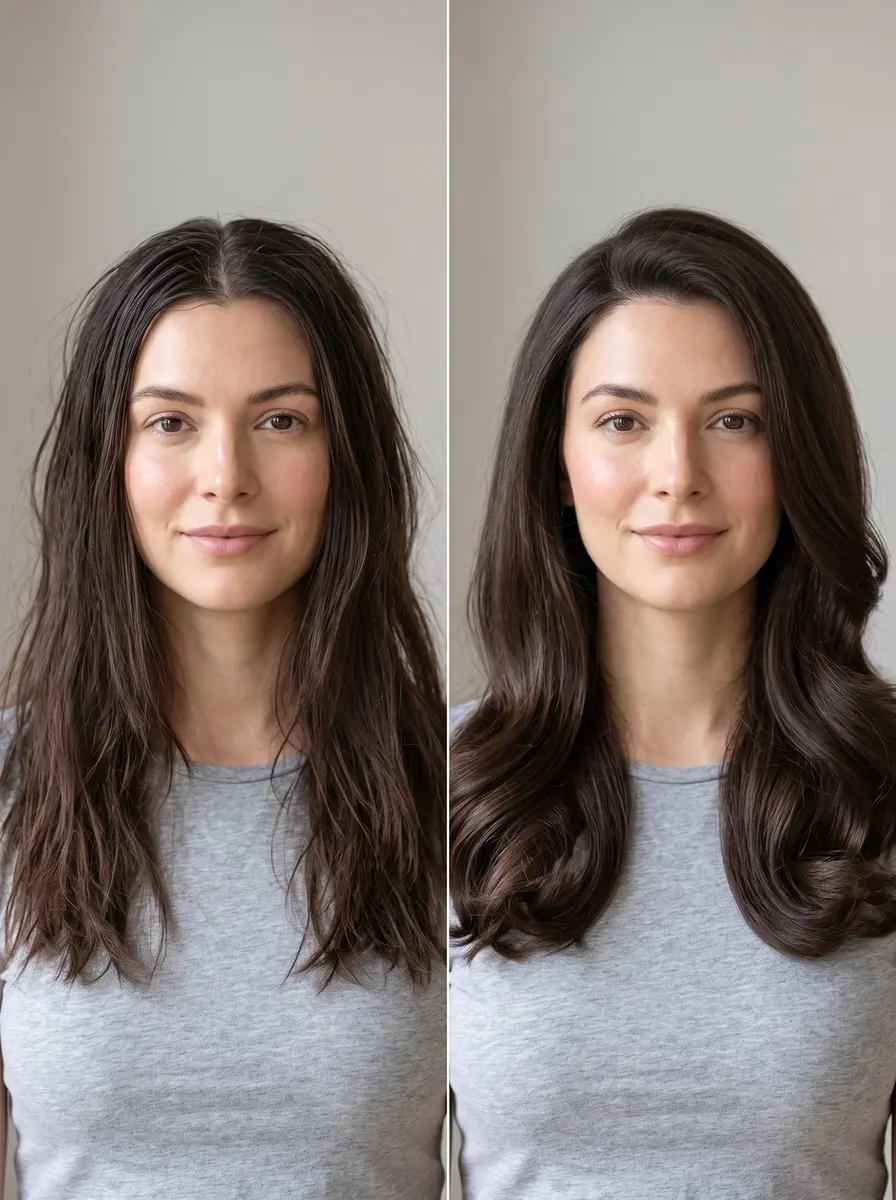
To make a blowout last longer, sleep with your hair in a loose high bun on a silk pillowcase, apply a little dry shampoo to oily roots at night, keep your hands out of it, and re-curl only the sections that drop instead of rewashing.
A good blowout takes real effort, whether you paid for it at a salon or spent forty minutes with a round brush. Then you sleep on it once and wake up with a flat crown, a dent from your hair tie and roots that already look a day older than they are. Most of that damage happens while you are not paying attention: overnight, in the shower, and every time you push your hair off your face.
A few small habits make your blowout last longer, and none of them need skill. This is a day-by-day plan that starts the night of your blowout and runs through mornings two to five. It also gives an honest answer on how long a blowout lasts for your hair type, because the number you see quoted online is not the same for everyone.
What You’ll Need
- Silk or satin pillowcase — It gives hair a smoother surface to sleep on, which limits the frizz and bedhead that flatten a blowout overnight.
- Dry shampoo (lightweight aerosol or powder) — Applied to oily roots at night, it absorbs oil while you sleep so the root keeps its lift the next morning.
- Wide satin scrunchies or a satin sleep bonnet — They hold a loose high bun overnight without pressing a crease into the lengths the way a thin elastic does.
- Hot rollers or a large-barrel curling iron (1.25-1.5 inch) — Either one puts the bend back into the few sections that dropped, so you never have to redo the whole blowout.
- Lined, wide-band shower cap — It seals at the hairline to keep steam and spray off your roots on the days you shower without washing your hair.
As an Amazon Associate, HairAide earns from qualifying purchases. Some links above are affiliate links — they cost you nothing extra and help support free tutorials.
Step-by-Step
-
Start by setting a realistic target. Published estimates disagree: some put a blowout at about 1-3 days and others at 3-5, and the gap mostly comes down to hair type and texture. Fine hair and oily scalps sit at the short end, because oil travels quickly down a thin, straight strand and flattens the root. Thick, coarse or naturally drier hair usually sits at the long end, because it takes longer to look greasy and holds a set more firmly. Once you know your range, you know which of the next steps matter most for you.
-
On day one, keep product to a minimum and let the style cool and settle before you do anything else to it. Hair holds a shape as it dries and cools, so putting it up while it is still warm from the dryer presses a new bend into it. Wait 5-10 minutes after the dryer goes off before you touch, clip or pin anything. Skip heavy oils, serums and extra hairspray on the first day. Buildup weighs the hair down and makes the roots look dirty sooner. The cue that you have it right is hair that feels cool to the touch, clean and light, and moves when you turn your head.
-
Keep your hands out of your hair from the first hour onward. Colorist Sherry Ratay points out that running your fingers through a fresh blowout all day transfers oil to the roots, so the hair closest to your scalp gets oilier faster. Tuck loose pieces behind your ear once and leave them there, or use a smooth claw clip when you need your hair off your face. If your roots still look clean at the end of day one, you are doing this right.
-
From day one, guard against water, the one thing that undoes a blowout outright. This applies to every shower and every damp day from the first evening to the last. Hair absorbs moisture from steam and humid air and drifts back toward its natural pattern, so wear a shower cap that seals at the hairline for every shower and keep the bathroom door open or the fan on. On humid or rainy days, a light mist of anti-humidity spray over the surface helps, and so does carrying an umbrella. For a workout, tie hair in a loose high ponytail with a scrunchie and let your scalp dry fully before you take it down.
-
If your roots get oily, apply dry shampoo at night and not the next morning. Stylist Eric Marshall Wright recommends this timing so the powder absorbs oil while you sleep, which stops the root from collapsing in the first place. Ratay’s advice is to spray sparingly and only where the roots are noticeably oily, which usually means the part line, the hairline and the crown. Lift a section, mist from a distance, let it sit for a minute, then massage it in with your fingertips. You should see no white cast and feel no grit.
-
Put your hair up for bed in a way that cannot leave a crease. L’Oréal Paris stylist Jonathan Colombini recommends a loose bun on top of the head held with a soft, crease-free scrunchie, or a bonnet. The high position keeps the lengths from being crushed under your head and keeps lift at the root. Add a silk or satin pillowcase and skip the hoodie. Celebrity stylist Justine Marjan recommends both so moisture stays in the hair and frizz and bedhead are limited. The bun should be loose enough that a light shake could undo it.
-
In the morning, take the bun down gently and give your hair a few minutes before you judge it. Shake the roots out with your fingertips at the scalp, then make one or two passes with a wide paddle brush or a boar-bristle brush. Brushing carries a little oil from the roots toward the drier ends and smooths the surface. Do not reach for more product yet. Look in the mirror and note which sections have actually lost their shape. It is usually the front pieces and the ends, and the rest is fine.
-
Refresh only the sections that dropped. Do not redo your whole head. Wright’s advice is to restyle just the pieces that lost their shape. That saves time and also saves the rest of your hair from another round of heat it does not need. Wrap the front pieces and any limp ends around a large-barrel curling iron for a few seconds each, or set four to six hot rollers at the crown and front while you do your makeup. Let each section cool fully before you touch it, because the bend only holds once the hair is cool.
-
Adjust the last days to your hair type, and switch styles when it is time. Fine hair usually needs the nightly dry shampoo and a root-only refresh by day two. Oily roots do better with a small amount of dry shampoo each night than with one heavy dose on day three. Thick hair can often skip dry shampoo until day three or four and needs only its ends re-curled. When the roots stop responding, turn the blowout into a sleek low bun or a high ponytail for one more day. Wash when your scalp feels itchy or coated.
Common Mistakes to Avoid
- Waiting until the morning to use dry shampoo. By then the oil has already flattened the root, and you need more product to get a weaker result.
- Spraying dry shampoo all over the head when only the roots that look oily need it. The buildup leaves hair dull, heavy and gritty by day three.
- Sleeping in a tight ponytail or a thin elastic, which presses a hard dent into the lengths that only heat or a full rewash will remove.
- Running your fingers through your hair or re-tucking it all day, which moves oil from your hands and scalp onto the roots.
- Adding serum, oil or hairspray every morning to revive the style. Each layer weighs the hair down and shortens the blowout.
- Re-curling the whole head every day when only the sections that fell need it.
Pro Tip
When you take your bun down in the morning, flip your part to the opposite side for a minute and shake out the roots before you flip it back. The hair has been lying in one direction all night, and pushing it against that direction brings back lift at the crown without any product or heat.
Frequently Asked Questions
How long does a blowout usually last?
It depends on your hair, and the published estimates do not agree. Some put it at about 1-3 days and others at 3-5 days. Fine hair and oily scalps tend to land at the shorter end. Thick, coarse or drier hair often reaches the longer end. Careful sleeping and dry shampoo at night can move you toward the top of your own range.
Should I use dry shampoo at night or in the morning?
Use it at night. Stylist Eric Marshall Wright recommends applying dry shampoo before bed so it absorbs oil while you sleep and the roots do not go flat first. Spray sparingly, only on the areas that are noticeably oily, and massage it in so no powder sits on the surface.
How should I sleep to keep my blowout from going flat?
Gather your hair into a loose bun on top of your head and hold it with a soft, crease-free scrunchie, or cover it with a bonnet. Sleep on a silk or satin pillowcase and skip hooded tops. Keep the bun loose, because a tight tie leaves a dent in the lengths.
Is it safe to touch up a blowout with a curling iron every day?
Yes, with care, and only on the sections that dropped. Apply a heat protectant first. As a general guide, keep the iron lower for fine or bleached hair, around 150C/300F, and go up to about 180-200C/355-390F only for coarse hair. Use irons only on completely dry hair, because an iron on wet or damp hair does real damage. Hot rollers are a gentler option for the crown.
Can I work out without ruining my blowout?
A light or moderate workout is usually fine. Tie your hair in a loose high ponytail with a scrunchie and wear a soft sweatband at the hairline. Afterward, let your scalp dry completely before you take the ponytail down, with a blow-dryer on a cool setting if needed. A very sweaty session will shorten the blowout, so plan those for wash day.
You Might Also Like
- 20 butterfly cut ideas for thin hair that hold a bouncy blowout
- 20 layered haircuts for thick hair to inspire your next look
- 20 voluminous Italian bob ideas made for a blowout
- how to get rid of thick hair frizz from wash day to bedtime
- heatless curls on thick hair that set and last
- beachy waves without heat on fine hair
- ponytail styles for thick hair for the last day of your blowout
- volume-faking updo ideas for thin hair
A blowout lasts when you protect it in the hours you are not thinking about it. Keep product light on day one, keep your hands out of it, keep water and steam off it, put dry shampoo on oily roots before bed, sleep in a loose high bun on silk, and re-curl only the pieces that fall. Most people who do this get to the top of their range, whether that is three days or five.
Repeat the night routine every evening and reassess each morning. When your scalp feels itchy, coated or sore, wash your hair, because a clean scalp matters more than one extra day of style. If your blowout collapses within hours however carefully you treat it, ask a stylist about your cut. Heavy, one-length ends and overgrown layers can pull the volume out of an otherwise well-done blowout.
Sources
- Celebrity stylist Justine Marjan recommends a silk pillowcase and avoiding hoodies, so moisture stays in the hair and frizz and bedhead are limited. hudabeauty.com
- Eric Marshall Wright recommends applying dry shampoo at night, not the next morning, so it absorbs oil while you sleep. He also advises refreshing only the sections that lost their shape. goodmorningamerica.com
- L'Oréal Paris stylist Jonathan Colombini recommends a loose bun on top of the head with a soft, crease-free scrunchie or a bonnet. es.lorealparisusa.com
- Estimates of how long a blowout lasts range from about 1-3 days to 3-5 days depending on hair type and texture. blomedry.com