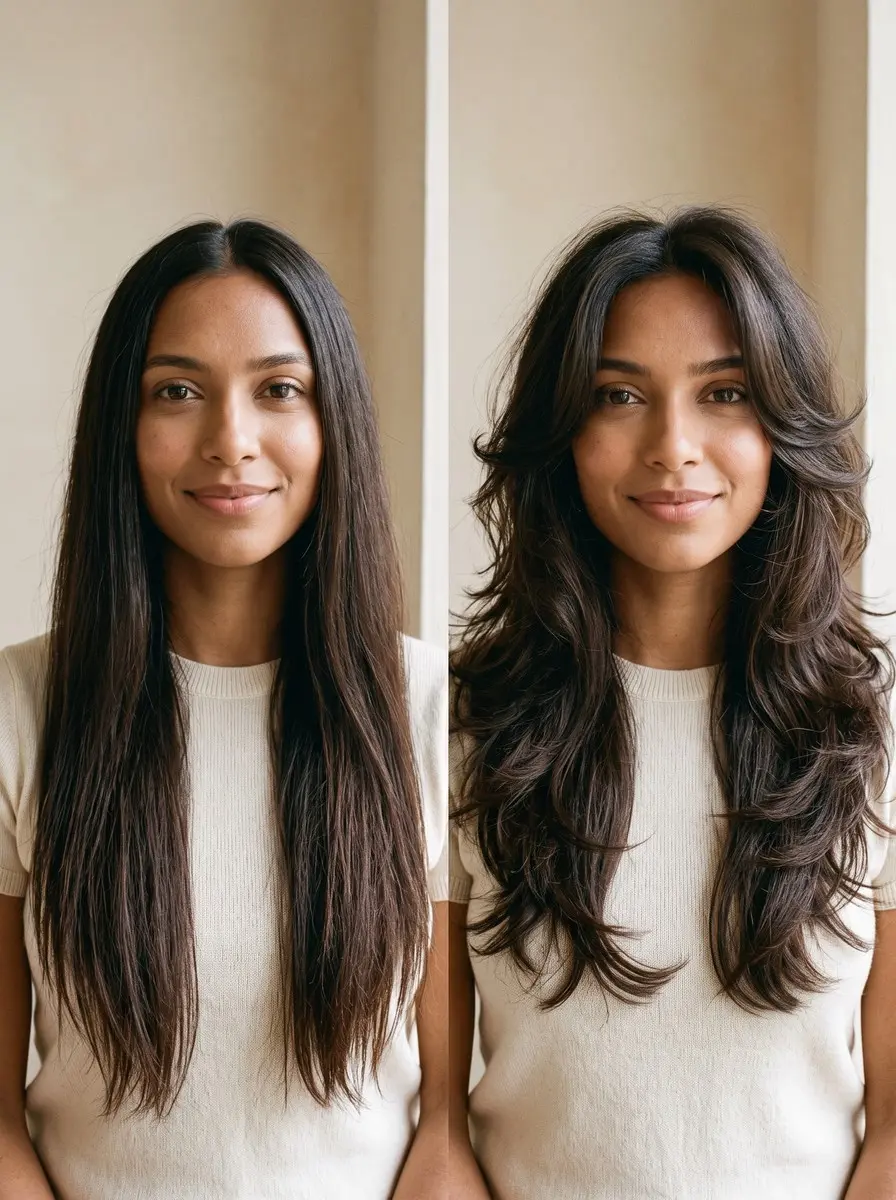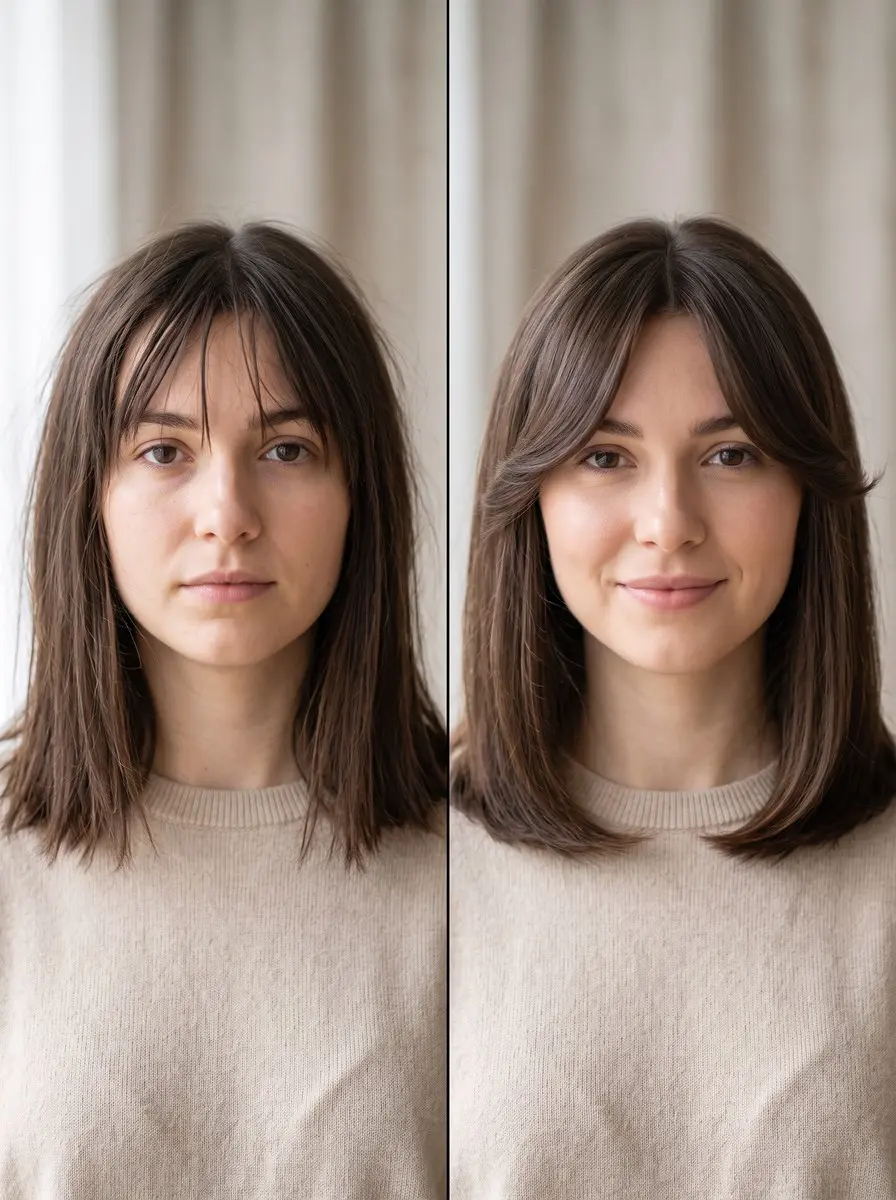
To blow dry curtain bangs, dampen just the bangs, rough-dry the roots side to side, then use a round brush about as wide as the bangs to dry each side away from the face. Finish with one pass toward the face and set with the cool shot.
Curtain bangs look effortless in the salon chair and stubborn at home. The usual complaints are flat roots, a split that lands in the wrong place, and ends that flip out or frizz. None of that means the cut is wrong. Bangs are the shortest, lightest hair on your head, so they dry within minutes and set in whatever position they are in when that happens.
The fix is to control that drying window. This guide shows you how to blow dry curtain bangs at home in under ten minutes, for straight and wavy hair. It covers how wet the bangs should be, which brush size matches your bang length, which direction to dry first and why, and how to set the shape so it survives the day. You only need a dryer with a nozzle and one round brush.
What You’ll Need
- Blow-dryer with a concentrator nozzle (ionic hair dryer) — The flat nozzle narrows the airflow so you dry and direct only the bang section on the brush instead of blowing the whole fringe around.
- Round brush set in 1, 1.5 and 2 inch barrels (ceramic or boar-bristle round brush) — Matching the barrel width to your bang length gives a soft bend instead of a tight curl or no shape at all.
- Large velcro rollers (self-grip hair rollers) — Rolling warm bangs onto a roller lets them cool in shape hands-free, which gives fine or flat-prone bangs the longest-lasting lift.
- Lightweight dry texture spray (texturizing spray) — It adds grip and separation so the sweep holds without the weight or stiffness of hairspray.
- Dry shampoo (oil-absorbing root spray) — It absorbs the forehead oil that makes bangs separate and look greasy, and it revives them on day two.
As an Amazon Associate, HairAide earns from qualifying purchases. Some links above are affiliate links — they cost you nothing extra and help support free tutorials.
Step-by-Step
-
Start with damp bangs, not soaked ones. If you have just washed your hair, blot the bangs with a towel until they stop dripping. If the rest of your hair is dry, wet only the bangs at the sink or with a spray bottle, making sure the roots are damp. Hair takes its shape as it goes from wet to dry, so bangs that have already air-dried flat or kinked cannot be reshaped until you re-wet them. Soaked bangs, on the other hand, just add drying time and frizz. Mist a light heat protectant over the damp bangs now, before the dryer comes out. You are ready when they feel cool and damp but leave no water on your fingers.
-
Fit the concentrator nozzle and pick a round brush about as wide as your bangs are long. As a guide, use roughly a 1 inch barrel for short bangs that sit at or above the cheekbone, about 1.5 inches for mid-length bangs between cheekbone and lip, and around 2 inches for long bangs at the jaw or below. The hair should wrap about once around the barrel. A brush that is too small curls the bangs into a tight roll, and one that is too large cannot grip them at all. If your hair is fine and you are between sizes, choose the smaller barrel, because fine hair needs the extra grip to hold any lift. The nozzle matters just as much, because it narrows the airflow so you dry only the section on the brush.
-
Rough-dry the roots first, before any brush shaping. Point the nozzle down from above and comb the bangs flat against the forehead with your fingers or a flat brush, sweeping them all the way left, then all the way right, several times. Drying the root in both directions stops it setting in its natural growth pattern, which is what creates a cowlick or a split in the wrong place. Stop when the roots are dry and the lengths are about 80 percent dry. The bangs should fall straight down with no gap or swirl at the hairline.
-
Part the bangs down the centre and dry each side away from the face. Place the round brush under one half at the root, lift it up and back toward the crown, and follow the brush with the nozzle from root to tip. Repeat on the other side. This is the order celebrity hairstylist Brad Mondo uses, and it works because lifting the root up and back builds the volume that stops bangs sticking to the forehead. If your bangs are thick, split each side into a bottom and a top layer and dry the bottom first, so the underneath is not left damp to puff up later. If they are wavy, keep firmer tension on the brush so the wave is pulled smooth as it dries. Each side is done when it stands away from the face in a soft backward curve.
-
Finish with one pass toward the face. Gather both sides together, set the brush underneath, and roll it forward and down over the forehead while the dryer follows from above. Then let each side fall outward toward its cheekbone. This last pass turns the stiff, swept-back shape from the previous step into the classic curtain: volume at the root, a soft bend through the middle, and ends that sweep out and slightly under. Do it once or twice only, because overworking this step flattens the root lift you just built. Check that the bangs are now completely dry, which matters most on wavy hair, because any dampness left in the hair lets the wave pattern return.
-
Set the shape with the cool shot. Wrap the bangs around the brush one more time in the forward position, press the cool button, and hold for 10 to 15 seconds before letting go. Hair is pliable while warm and holds its shape once it cools, so bangs that cool on the brush keep the curve, while bangs dropped hot fall flat within the hour. As an alternative to the cool shot, roll the warm bangs up and forward onto one large velcro roller and leave it in for about ten minutes while you do your makeup. The roller is the better option for fine or flat-prone hair, because the bangs cool fully in shape with no weight pulling on the root. Either way, the bangs should feel cool to the touch when you release them.
-
Finish with a light texture spray instead of heavy hairspray. Hold the can at arm’s length and mist once, or spray it onto your fingertips first, then pinch and separate the ends and nudge each side into place. Texture spray adds grip and a little grit, which matters because very clean, silky hair drops a style faster. Heavy hairspray or serum weighs down such a small section and makes bangs look greasy by midday, so fine hair in particular needs almost no product. The bangs should move when you shake your head and fall back into their sweep.
Common Mistakes to Avoid
- Letting the bangs air-dry while you style the rest of your hair. They set in under ten minutes, so dry them first or re-wet them before you start.
- Going straight in with the round brush on wet roots. Skipping the side-to-side rough-dry leaves the cowlick in place, and the bangs split wherever it sends them.
- Using a brush that is too small and winding the ends around it, which gives a tight roll or ends that flip outward instead of a soft sweep.
- Dropping the bangs while they are still hot. Without the cool shot or a roller, the bend relaxes and the roots go flat within the hour.
- Finishing with serum, oil or a heavy coat of hairspray. On such a small section it reads as grease by midday.
- Removing the nozzle and blasting from the front, which pushes hair in every direction and roughs up the surface into frizz.
Pro Tip
Put a little dry shampoo on the underside of freshly dried bangs before they get oily, not after. It sits between your forehead and the hair and absorbs skin oil and skincare through the day, so the bangs stay lifted for hours longer.
Frequently Asked Questions
What size round brush should I use for curtain bangs?
Pick a barrel about as wide as your bangs are long, so the hair wraps around it roughly once. That usually means about 1 inch for short bangs at or above the cheekbone, 1.5 inches for mid-length bangs, and 2 inches for long bangs at the jaw or below. If your ends curl into a roll, go up a size.
Why do my curtain bangs split in the wrong place or stick up?
That is a cowlick, where the root has dried in its natural growth direction. Re-wet the roots thoroughly, then dry them flat against the forehead, brushing fully left and then fully right, before you use a round brush. Drying the root in both directions neutralises the pattern so the bangs part where you place them.
Why do my curtain bangs go flat or greasy by midday?
Bangs sit on your forehead, so they pick up skin oil, moisturiser and sunscreen quickly, and the weight flattens the root. Keep skincare blotted at the hairline, skip serums and heavy hairspray on the fringe, and put dry shampoo on the underside right after drying. Touching them less also helps, because fingers transfer oil.
How do I stop my curtain bangs flipping out or frizzing at the ends?
Ends that flip out usually mean the brush is too small or the last pass went away from the face. Use a larger barrel and finish with the brush rolling forward and under. Frizz comes from scattered airflow or leftover dampness, so keep the nozzle on, aim the air from root to tip, and dry the bangs completely.
Can I use a hot brush or velcro rollers instead of a blow-dryer and round brush?
Yes, but only for part of the job. A hot brush works for day-two touch-ups on bangs that are already dry and only need their bend back, and velcro rollers add soft, lasting lift when you roll the bangs up while still warm from the dryer. Neither replaces the dryer for fixing a cowlick, which needs re-wetting and a rough-dry.
You Might Also Like
- 20 volume-building curtain bangs for thin hair to inspire your next look
- 20 puff-proof curtain bangs for thick hair to inspire your next cut
- how to style curtain bangs for curly hair with a diffuser
- how to make a blowout last longer
- how to get rid of frizz on thick hair
- butterfly cut ideas with curtain bangs for thin hair
- low maintenance haircuts for women
Dried in this order, curtain bangs keep their sweep all day: roots flat first, away from the face for lift, toward the face for the sweep, then cooled in shape. On day two, skip the full wash. Dry shampoo at the roots revives oily bangs, and flat or dented ones need only a re-wet and a five-minute re-dry.
One heat note: bangs get dried more often than the rest of your hair, so use a heat protectant every time. A hot brush goes on completely dry bangs only, near 150C/300F for fine or bleached hair and 180-200C/355-390F for coarse hair. If your bangs still split or flip after all this, the cut has probably lost its shape, so book a fringe trim with your stylist.
Sources
- Celebrity hairstylist Brad Mondo has you part the hair, then blow-dry the bangs away from the face section by section with a round brush. A final pass toward the face adds volume and a sweeping motion on the ends. Finish with hairspray or texture spray, and note that clean hair loses a style faster. stylist.co.uk