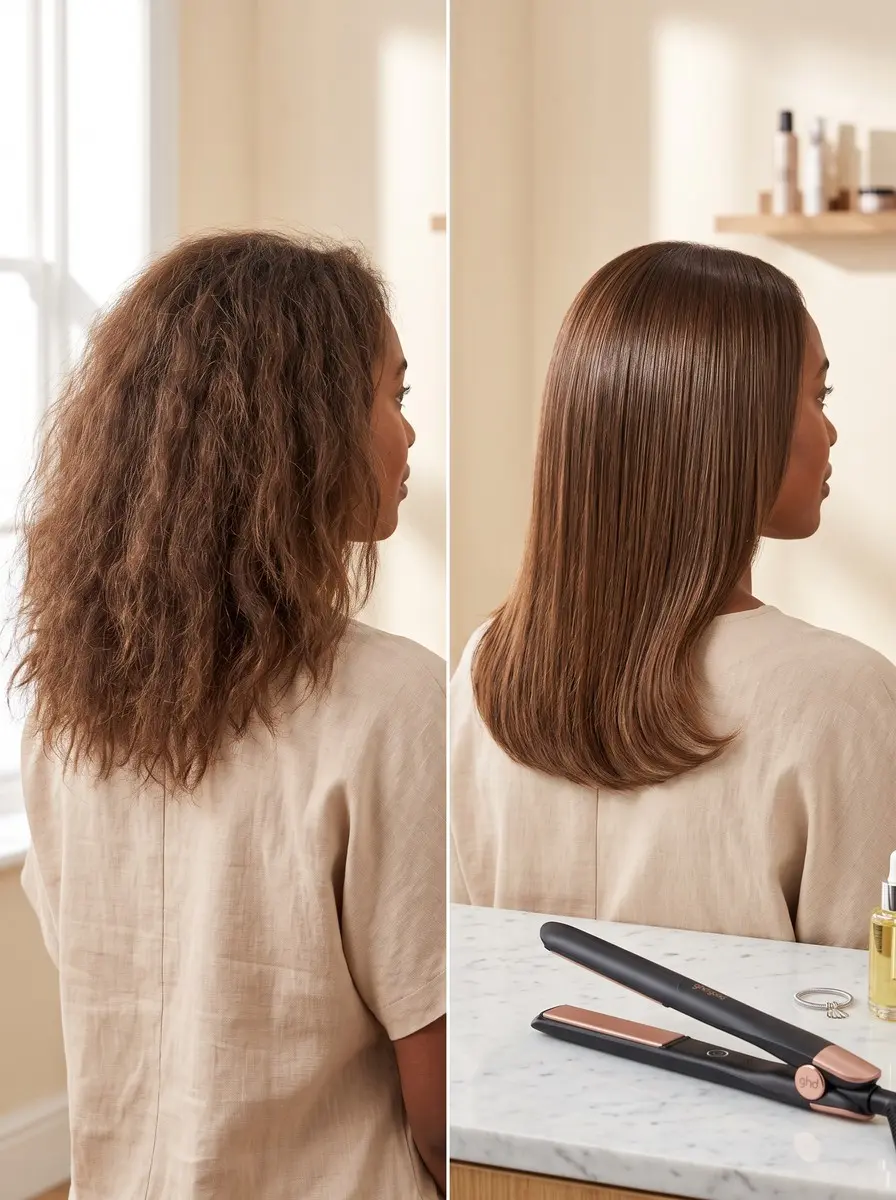
To choose a flat iron, match the plate width to your hair length (under 1 inch for short hair and bangs, 1-1.5 inches for most, 1.5 inches or wider for long, thick hair), pick ceramic for fine hair or titanium for coarse hair, and insist on adjustable digital temperature.
Learning how to choose a flat iron starts with your hair, not the box. Every iron on the shelf promises salon-sleek results, and the packaging rarely says anything useful: ‘450°F max’, ‘ionic’, ‘titanium-infused’. If you pick the wrong one, you either turn it to the top setting and fry fine hair, or you fight thick hair with plates too narrow and too cool to get through it in one pass. Either way, you get more passes, more heat and less shine.
This guide starts with your hair (its texture, length, condition and what you want the iron to do) and ends with a specific plate width, plate material, temperature ceiling and feature list. Top guides contradict each other on temperature, so we explain why and give you a conservative range you can trust. Whether you’re buying for yourself or as a gift this season, the choice takes about fifteen minutes.
What You’ll Need
- 1-inch ceramic flat iron with digital temperature control (flat iron) — The most versatile choice for fine, color-treated or shoulder-length hair, with a dial precise enough to stay at your temperature ceiling.
- 1.5-inch titanium flat iron with floating plates (wide flat iron) — Covers more of long, thick or coarse hair per pass, so you need fewer passes overall.
- Mini flat iron, 1/2 to 3/4 inch (mini straightener) — Reaches close to the root on pixies, short bobs and bangs without catching the scalp.
- Heat protectant spray (thermal protection spray) — Applied before styling, it reduces the heat damage that builds up from session to session.
- Heat-resistant silicone mat (styling tool mat) — Gives a hot iron a safe place to rest and cool completely before you clean or store it.
As an Amazon Associate, HairAide earns from qualifying purchases. Some links above are affiliate links — they cost you nothing extra and help support free tutorials.
Step-by-Step
-
Start by describing your hair on four counts: strand texture, density, curl pattern and condition. Roll a single strand between your fingers. If you can barely feel it, it’s fine. If it feels like cotton thread, it’s medium. If it feels wiry, it’s coarse. Then note whether your hair is color-treated, bleached, gray or already dry at the ends. Condition, not just texture, decides how much heat your hair can take. You’re done when you can describe your hair in one line, such as ‘fine, dense, wavy and highlighted’. That line is what you’ll shop against.
-
Choose plate width by your hair length and what you want the iron to do. Plates under 1 inch suit pixies, short bobs, bangs and thin hair, because they reach close to the root without clamping onto your scalp. Plates of 1 to 1.5 inches cover most shoulder-to-mid-back hair. Plates of 1.5 inches or wider make sense for long, thick hair: each pass treats more hair, so you make fewer passes overall. If you also want curls, waves or root lift, a narrow iron of 1 inch or less turns easily in the hand and can grip right at the base. The right width lets you straighten a section the width of the plate in one slow pass.
-
Next, pick a plate material, keeping in mind that much of the copy on the box is marketing. Ceramic heats evenly with fewer hot spots, which is why it’s the usual pick for fine or damaged hair. Tourmaline-ceramic is sold as a frizz fighter for wavy, humidity-prone hair. Titanium heats quickly and holds high temperatures, so it’s generally recommended for thick or coarse hair. Treat all of this as guidance that comes mostly from manufacturers, not proven rankings, because no coating makes a badly set iron safe. If you have to choose between a fancy coating with fixed heat and plain ceramic with a precise digital dial, take the dial every time.
-
Set a temperature ceiling for your hair before you switch the iron on. Most irons go up to around 450°F, but the top of the dial is a limit, not a recommendation. Here is a conservative range. Fine or thin hair starts at about 300°F (150°C) and stays at or under 350°F (175°C). Medium hair sits around 340-360°F (170-180°C). Thick, coarse or coily hair goes up to about 380-390°F (195-200°C). Published charts disagree: one stops at about 400°F for very thick or curly hair, and another runs to 425°F for coily hair. They assume different hair condition, pass speed and number of passes, and the number on the dial isn’t always exactly what the plate delivers. Heat damage adds up over every session, so start at the bottom of your range and go up 10°F at a time only when one slow pass won’t hold. Check your iron’s manual too, since brands calibrate differently.
-
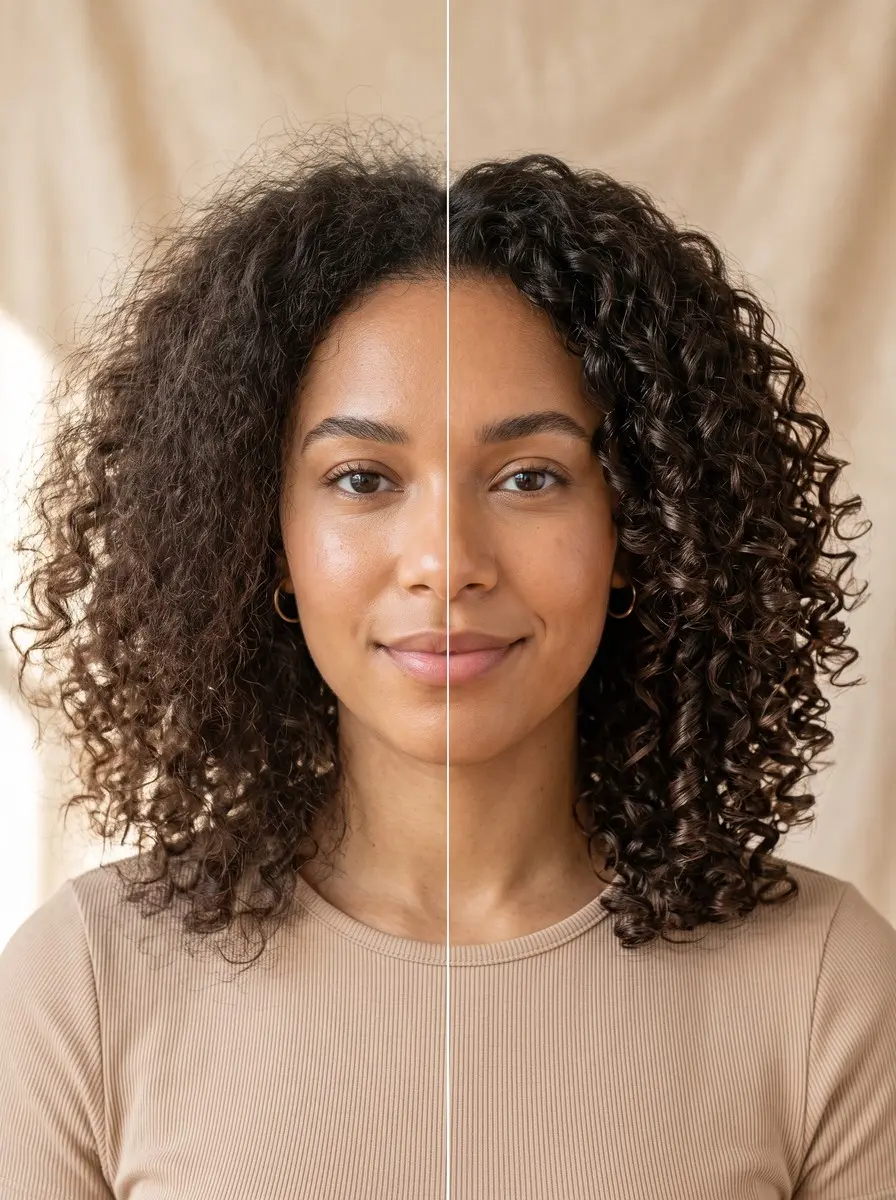
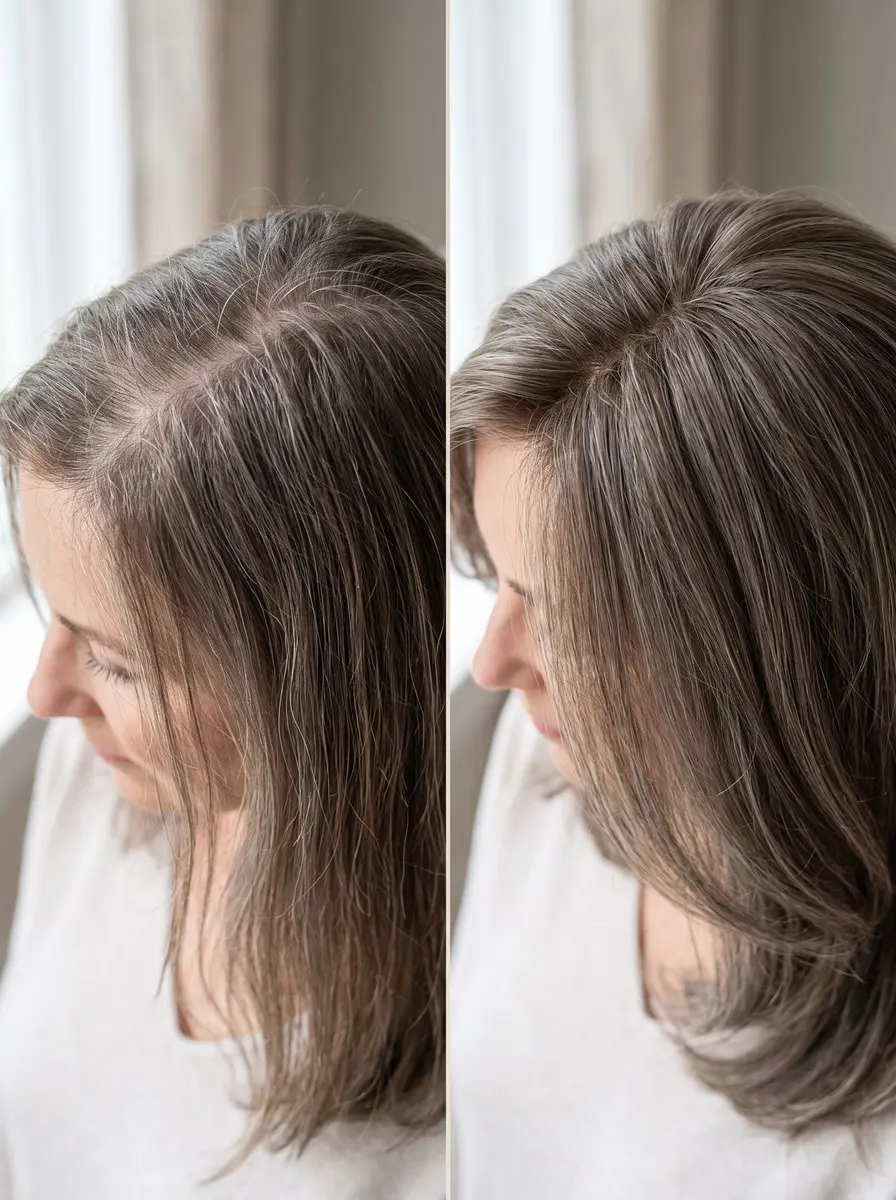
Use this hair-type chart to turn those choices into one spec, and stay at the low end of any range the first time. Fine or thin hair: 1-inch ceramic plates, floating if possible, at 300-350°F (150-175°C). Thick hair, straight or wavy: titanium or tourmaline-ceramic plates 1.5 inches or wider at around 360-390°F (180-200°C), so long lengths take fewer passes. Wavy, frizz-prone hair of medium texture: 1- to 1.25-inch tourmaline-ceramic plates at 330-360°F (165-180°C). Curly hair: a 1-inch iron with rounded edges at about 350-380°F (175-195°C), keeping finer curls at the lower end and blow-drying the hair stretched first so the plates smooth it rather than fight the curl. Coily hair and silk presses: a 1-inch titanium or ceramic iron with a precise digital dial, used on fully blow-dried, stretched hair; go up to about 380-390°F (195-200°C) only if the strands are coarse and healthy, while fine coily strands belong at 300-350°F. Bleached or highlighted hair: ceramic, floating plates and a ceiling of about 300°F (150°C), because lightened hair is more porous, breaks more easily, and heat can speed up toner fading. Single-process color on otherwise healthy hair can follow its texture’s range, at the lower end. Gray and silver hair over 50 often feels coarse and wiry, but treat it more gently than that suggests: ceramic plates at about 320-360°F (160-180°C), since high heat can leave white strands with a yellow cast.
-
Before you buy, check for the features that matter more than any coating. A digital, adjustable temperature display lets you hit your number exactly instead of guessing between ‘low’ and ‘high’. Auto shutoff turns the iron off after a set idle period, which matters on rushed mornings. Floating plates sit on springs so they flex and grip evenly, which means less tugging and fewer repeat passes. Close the plates and hold them up to a light. They should meet flush with no gap, because a gap leaves hair underheated in the middle and forces extra passes. If you want to curl with it too, look for rounded or beveled outer edges, which let the iron rotate without leaving a crease.
-
Test your new iron on a small section at the nape before doing your whole head. Mist on a heat protectant and make sure the section is completely dry. Set the iron to the bottom of your range and take one slow, steady pass over a section no wider than the plates. Listen as you clamp: a sizzle, hiss or puff of steam means water or wet product is still in the hair, so stop and dry it fully. A good result is smooth and shiny after that single pass. If it takes three or more passes, make the section smaller first and only then raise the heat by 10°F. Over the next few weeks, check a few strands from the ironed area. A healthy wet strand stretches slightly and springs back. Heat-damaged hair feels rough or crunchy, looks dull, frays at the ends or snaps right away.
-
Keep the plates clean, because baked-on protectant, oil and hairspray make them drag and heat unevenly. Once a week, or whenever you see residue, unplug the iron and let it cool completely. Then wipe the plates with a soft cloth dampened with a little water or rubbing alcohol. Never submerge the iron or use an abrasive pad, which scratches the coating. Store it cool, with the cord coiled loosely rather than wrapped tightly around the body, which strains the wiring. Replace the iron when the plates are chipped, scratched or peeling, when they no longer close flush, when it starts snagging hair, when the temperature display misbehaves, or when the cord is frayed. Damaged plates create hot spots on exactly the hair you’ve been protecting.
Common Mistakes to Avoid
- Buying on the maximum temperature and styling at it. A 450°F top setting is the end of the range, not a target for any hair type.
- Choosing wide plates for short hair or bangs. They can’t reach the root, so you end up making extra passes.
- Paying for a plate-coating claim while accepting an iron with only ‘low’ and ‘high’ settings instead of a precise digital dial.
- Running the iron over the same section again and again instead of taking smaller sections that straighten in one pass.
- Letting product build up on the plates, which makes them drag, snag hair and heat unevenly.
Pro Tip
Find your own number instead of trusting the dial. Start at the bottom of your range, make one slow pass on a 1-inch section at the nape, and raise the heat 10°F at a time until that one pass leaves the hair smooth and it still looks that way the next morning. The lowest setting that does this is your temperature for good, and it’s usually lower than people expect.
Frequently Asked Questions
What temperature should I set my flat iron to?
Start low and raise the heat only if one slow pass won't hold. As a guide, keep bleached or very fragile hair at about 150°C/300°F, fine hair at no more than 175°C/350°F, medium hair at 170-180°C/340-360°F, and thick, coarse or coily hair at 180-200°C/355-390°F. Always use a heat protectant, and use the iron on completely dry hair only.
Is a ceramic or titanium flat iron better for my hair?
Neither is better across the board. Ceramic heats evenly and is the usual choice for fine, damaged or color-treated hair. Titanium heats fast and holds high temperatures, so it suits thick, coarse hair. Much of the difference is marketing, though: a precise digital temperature dial and plates that close flush matter more than the coating.
Is a 1-inch flat iron good for all hair types?
A 1-inch iron is the most versatile size. It handles short to shoulder-length hair, gets close to the root for silk presses and lift, and is easy to twist for curls. Very long, thick hair straightens faster with plates 1.5 inches or wider, while pixies and bangs are easier with a mini iron under 1 inch.
Can a flat iron ruin my natural curl pattern?
Yes. Repeated high heat can leave curls that stay straight or limp after washing. That is heat damage, it doesn't reverse, and the damaged lengths have to be trimmed away over time. To lower the risk, blow-dry hair stretched first, stay within your temperature range, make one pass per section and space out heat styling. If your curls stop springing back, pause heat and see a stylist.
How do I know when to replace my flat iron?
Replace it when the plates are chipped, scratched or peeling, no longer close flush, heat unevenly or start snagging hair, or when the display or cord is faulty. There's no fixed lifespan, and a well-kept iron can last for years. Worn plates create hot spots, though, which undo the care you put into choosing the right temperature.
You Might Also Like
- 20 jellyfish haircut ideas that show off a sleek flat-ironed finish
- 20 low-effort lob ideas for women over 60 to inspire your next look
- how to use a flat iron for curls
- how to do a silk press at home
- how to stop gray hair turning yellow
- how to soften coarse gray hair
- how to add volume at the crown
The right flat iron isn’t the hottest or the most expensive one. It’s the one whose plate width fits your length, whose plates suit your texture, and whose digital dial lets you stay at the lowest temperature that works in a single pass. Shop against your row in the chart, check for flush and floating plates and auto shutoff, and test the iron on one section before doing your whole head.
After that, wipe the plates weekly, check a few strands every few weeks for roughness or snapping, and lower the heat if you find either. See a stylist instead if bleached hair is already breaking, if your curls no longer spring back after washing, or before a silk press on fragile hair.
Sources
- One guide gives about 380-400°F for very thick or curly hair, 340-360°F for medium-straight hair, and no more than 350°F for fine or thin hair. Another table lists 300-350°F for thin, straight hair and 375-425°F for thick, curly or coily hair, labelled approximate. This is a secondary source and sources disagree, so the writer should cite ranges as guidance only and verify against a manufacturer o thefashionspot.com