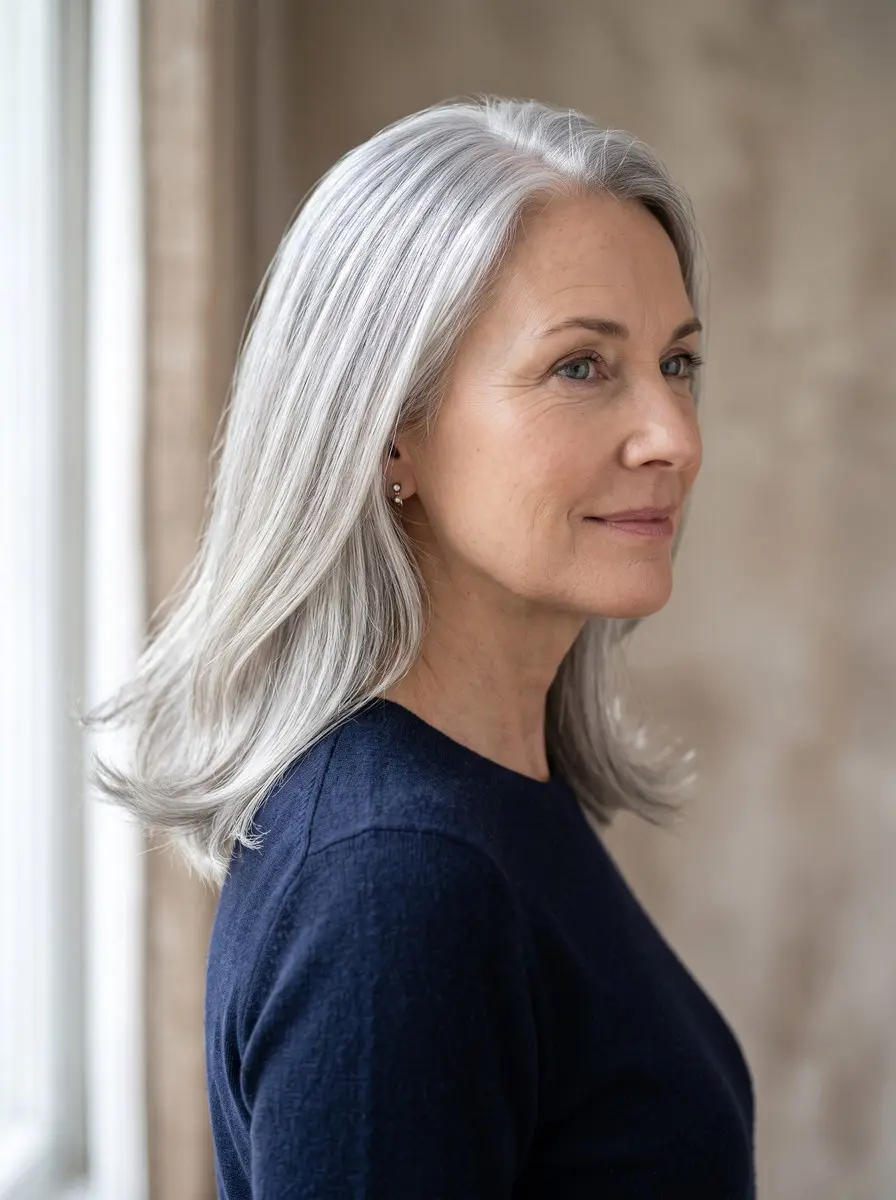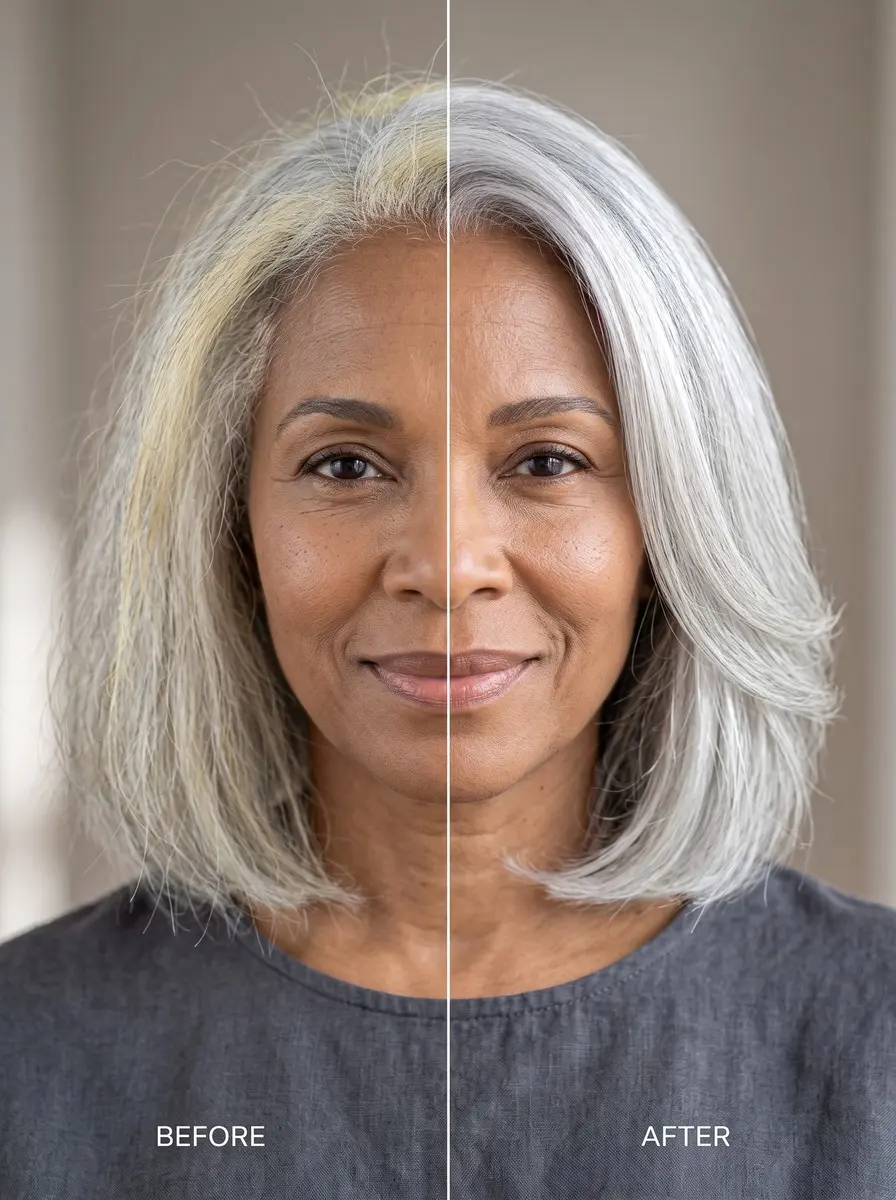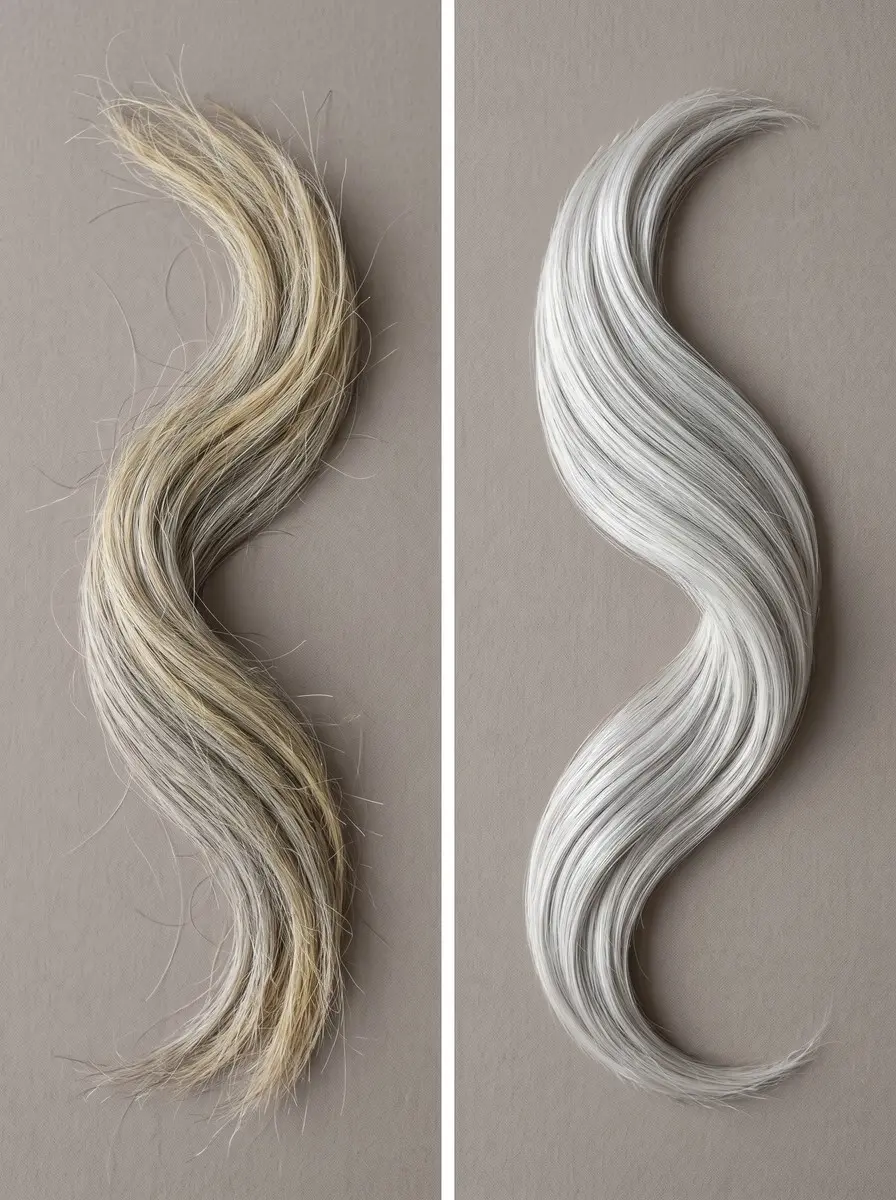
To stop gray hair turning yellow, first remove what's staining it. Use a chelating shampoo for hard-water minerals or a clarifying one for product or smoke residue. Then tone weekly with purple shampoo left on 3-5 minutes, condition well, and shield hair from sun daily.
Silver hair that looked crisp at your last trim can drift to a dingy, straw-yellow shade within weeks, and it’s one of the most common frustrations once you go fully gray. It happens because gray and white strands have lost most of their melanin, the pigment that colors hair, so they stain easily. Hard-water minerals, UV, chlorine, pollution, smoke, heat styling and your own product residue can all leave a yellow tinge.
The good news is that gray hair turning yellow is a cosmetic problem you can fix at home, usually over a few washes. The catch is that purple shampoo can’t tone through a film of minerals or styling residue. So you diagnose the cause first, then clear it, tone it and prevent it. Here’s the full routine, plus when a colorist’s gloss is the better choice.
What You’ll Need
- Purple toning shampoo for gray hair (purple shampoo) — Its violet pigment cancels the yellow left behind once buildup is cleared.
- Chelating anti-metal shampoo (clarifying/detox shampoo) — It binds hard-water minerals and metals so they rinse out, giving purple shampoo a clean strand to tone.
- Filtered shower head, vitamin C or KDF (shower filter) — It cuts chlorine and some iron and copper at the source, so yellow builds up more slowly between chelating washes.
- UV-protective leave-in spray (hair sunscreen) — It shields low-melanin strands on the crown and top layer from sun yellowing.
- Hydrating hair mask (deep conditioner) — It softens drier, coarser gray hair so it reflects light and looks brighter.
As an Amazon Associate, HairAide earns from qualifying purchases. Some links above are affiliate links — they cost you nothing extra and help support free tutorials.
Step-by-Step
-
Before you buy anything, work out what is staining your hair, because each cause needs a different fix. In daylight, compare a lock from the crown with one lifted from underneath at the nape. If the yellow sits mostly on the top layer, UV is the likely cause. All-over yellow with a stiff, coated, straw-like feel, plus white crust on your shower head, points to hard-water minerals, and a cheap water-hardness test strip will confirm it. A limp, waxy feel suggests product buildup. A stale smoky smell suggests smoke or pollution, and yellow concentrated where you use hot tools most suggests heat. Many people find two causes at once.
-
Clear the film that holds the stain before you tone, or the purple will just sit on top of it. For hard water, chlorine or a gray-green cast, use a chelating (anti-metal) shampoo. Its chelating agents bind calcium, magnesium, iron and copper so they rinse away instead of clinging to the strand. For product residue or smoke, a clarifying shampoo is enough. Lather it on damp hair, leave it for the time on the label, rinse thoroughly and condition, since both formulas are drying. It has worked when hair feels lighter, moves freely and the yellow has already softened. Repeat every two to four weeks in hard-water areas, or about monthly otherwise.
-
Now tone the yellow that’s left. Purple shampoo works because violet sits opposite yellow on the color wheel, so a thin layer of violet pigment cancels the warmth and the hair reads as cleaner white or silver. Apply it to damp, not dripping, hair so the lather isn’t watered down, and work from the roots and nape outward. Leave it on for three minutes the first time. If yellow remains, build to four or five minutes at the next wash. Rinse thoroughly with lukewarm water and always follow with conditioner, because toning shampoos dry the hair. When it’s done, the hair looks crisp, neutral silver, not blue or purple.
-
Set a rhythm: purple shampoo about once a week, or whenever yellow starts to creep back, and a gentle moisturizing shampoo the rest of the time. The ends are the oldest, most weathered part of any strand, so they’re the most porous and grab pigment fastest. That means overuse shows up there first, as a lavender, blue or flat dull-gray cast along with extra dryness. If that happens, skip toning for two or three washes and the excess violet will fade. On the weeks in between, mixing purple shampoo half and half with your regular shampoo gives a gentle top-up without overloading. You’ve got the rhythm right when your hair looks bright in daylight but not violet.
-
Moisturize at every wash. Gray hair has less melanin and makes less sebum, so it tends to be drier, coarser and more frizz-prone, and that makes it more prone to absorbing environmental stressors. Rough, dry strands also scatter light, which makes white look dull and yellowish even when the tone is fine. Use a rich conditioner every time, plus a hydrating mask once a week for five to ten minutes. Finish with a lightweight leave-in or a few drops of oil on the mid-lengths and ends. Many colorists steer silver clients toward clear or white formulas over deep amber ones. Smooth, shiny hair that reflects light tells you this step is working.
-
Protect your hair from UV and chlorine every day. Melanin gives darker hair some natural protection from sun, and gray strands have little left, so UV yellows them fastest on the crown and top layer. Wear a wide-brimmed hat or a scarf on long sunny days, and mist a UV-protective leave-in spray over the top layer before you go out. Before swimming, wet your hair with clean tap water and add a leave-in conditioner so it soaks up less pool water, or wear a swim cap, and rinse straight afterward. Keep hair out of cigarette smoke where you can. You’ll know it’s working when the crown stays as bright as the underneath layers between toning sessions.
-
If your test strip or shower head points to hard or chlorinated water, fit a filtering shower head. Most shower filters, including vitamin C and KDF/carbon types, cut chlorine well and can reduce some iron and copper. Few remove the calcium and magnesium that make water hard; that takes a whole-house water softener. So treat a filter as a way to reduce the problem, not a cure. Fit it, change the cartridge on the maker’s schedule because a spent cartridge stops working, and keep the chelating shampoo in rotation. Within a few weeks, hair should feel less coated and the yellow should come back more slowly between washes.
-
If the yellow is still there after four to six weeks of chelating, toning and protecting, or it sits in uneven patches, book a colorist. A salon gloss or toner deposits even, controlled tone across every strand, which home shampoos can’t manage on stubborn or patchy warmth. Ask for ‘a sheer violet-based demi-permanent gloss on my natural gray to neutralize the yellow, deposit only, no lift.’ Also ask whether they’ll do an in-salon chelating or metal-detox treatment first, so the gloss isn’t fighting buildup. Expect it to fade gradually over several weeks of shampooing. Your weekly purple wash keeps it fresh in between.
Common Mistakes to Avoid
- Toning before removing buildup: the purple pigment sits on top of the mineral or product film, so hair turns dull, flat or gray-green instead of bright.
- Leaving purple shampoo on for 10 minutes or more, or using it every wash. This leaves a lavender cast on porous ends and further dries hair that’s already dry.
- Clarifying every wash. Frequent strong cleansing strips moisture and leaves gray hair wiry, frizzy and duller than before.
- Skipping conditioner after toning or chelating, when both steps leave hair drier than a regular wash.
Pro Tip
Check your color by a window in daylight, not under bathroom bulbs, before deciding you need more purple. Warm-toned bulbs make silver look yellower than it is, which is how many people end up over-toning into lavender.
Frequently Asked Questions
How often should you use purple shampoo on gray hair?
About once a week, or whenever yellow starts to show, is enough for most gray hair. Leave it on for three minutes the first time and build to four or five minutes if needed, then condition. Using it every wash tends to leave a lavender or dull cast and extra dryness. If that happens, skip it for a few washes.
Why does my gray hair look orange or green instead of yellow?
The color of the cast points to the cause. An orange or rusty tinge usually means iron in your water, often from a well or old pipes, so chelate first, then use a blue shampoo, since blue cancels orange. A gray-green cast usually means copper from pipes or pool water, so chelate and don't add more purple. A lavender cast means over-toning.
Does heat styling turn gray hair yellow?
It can. Heat is one of the known causes of yellow on gray strands, along with UV, metals and pollution. Use a heat protectant before every heat session. Blow-dry or diffuse on damp hair, but use flat irons and curling irons only on completely dry hair. Keep them below about 150C/300F for fine or fragile gray hair and 180-200C/355-390F for coarse hair.
Is it safe to whiten yellow gray hair with hydrogen peroxide?
It isn't worth the risk. Gray strands are already drier and more fragile, and peroxide works by oxidizing the hair, which roughens and weakens it further and makes it more prone to breakage. Wella specifically advises against hydrogen peroxide on gray hair. A chelating shampoo plus violet toning, or a salon gloss, is the safer route.
When should I see a colorist about yellow gray hair, and how long does a gloss last?
Book a colorist if the yellow persists after four to six weeks of chelating, toning and sun protection, or if it's patchy. Ask for a sheer violet-based demi-permanent gloss on your natural gray, deposit only with no lift, ideally after an in-salon chelating treatment. It fades gradually over several weeks, and a weekly purple shampoo helps it last.
You Might Also Like
- 20 low-effort lob ideas to inspire your next silver look
- 20 curly hairstyle ideas for women over 50
- 20 short haircut ideas for women over 60 who wear glasses
- keep dry gray hair soft through the cold months
- how to air dry hair without frizz
- stop static and flyaways in winter
Bright silver comes from matching the fix to the stain, not from one miracle bottle. Chelate or clarify to lift the film, tone with violet about once a week, keep your hair moisturized, and protect it from sun and chlorine. Once the cause is under control, the yellow comes back far more slowly between washes.
Keep the rhythm simple: purple shampoo weekly or when yellow shows, a chelating or clarifying wash every few weeks, and a hat on bright days. If the yellow hasn’t budged after four to six weeks, or it sits in uneven patches, book a colorist for a gloss instead of reaching for stronger DIY fixes.
Sources
- Yellow tinges on grey strands come from metal build-up, heat styling, UV exposure and environmental pollutants; chlorine and pollution can also add yellow or brassy tones. wella.com
- Start with 3 minutes the first time and go to 4-5 minutes if needed, then rinse with lukewarm water and condition. Wella advises using an anti-metal regimen for hard water, clarifying only occasionally, avoiding hydrogen peroxide on fragile gray strands, and seeing a colorist if yellowing persists. wella.com