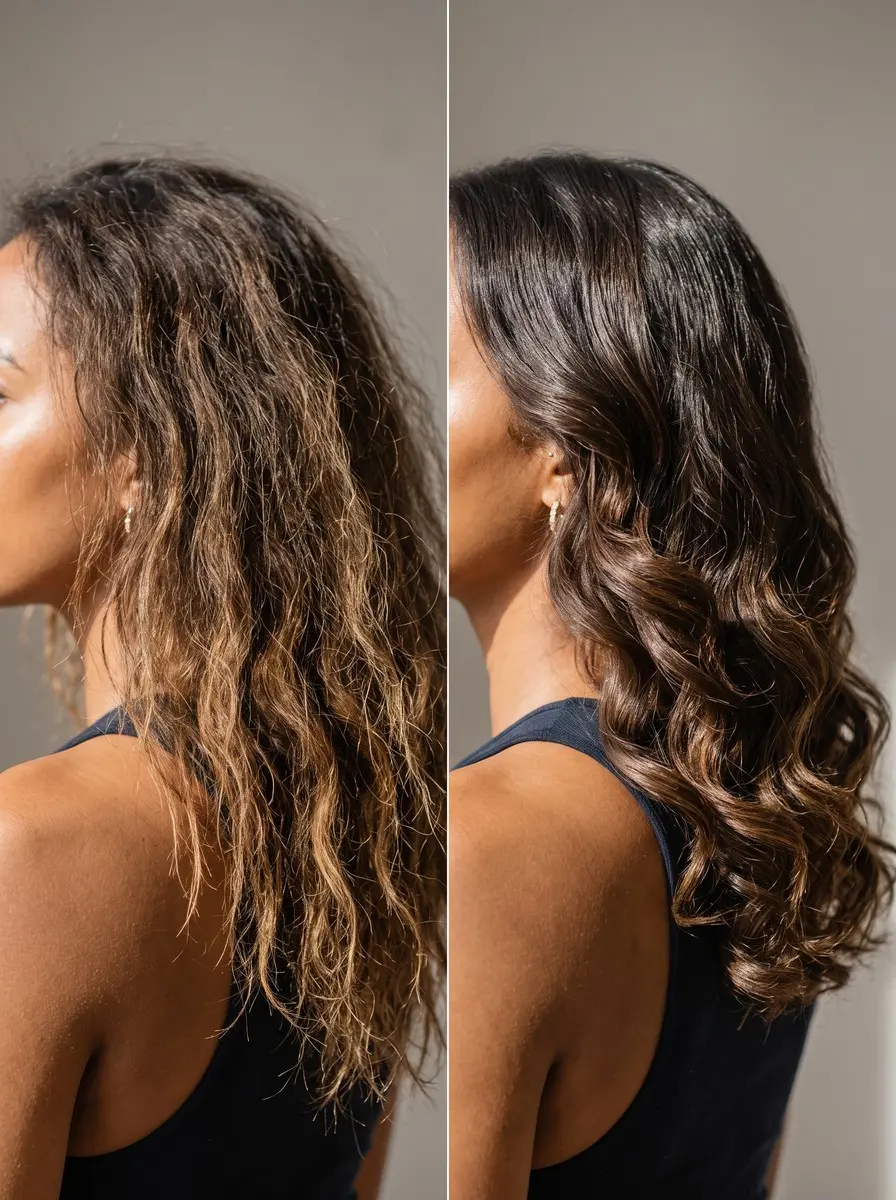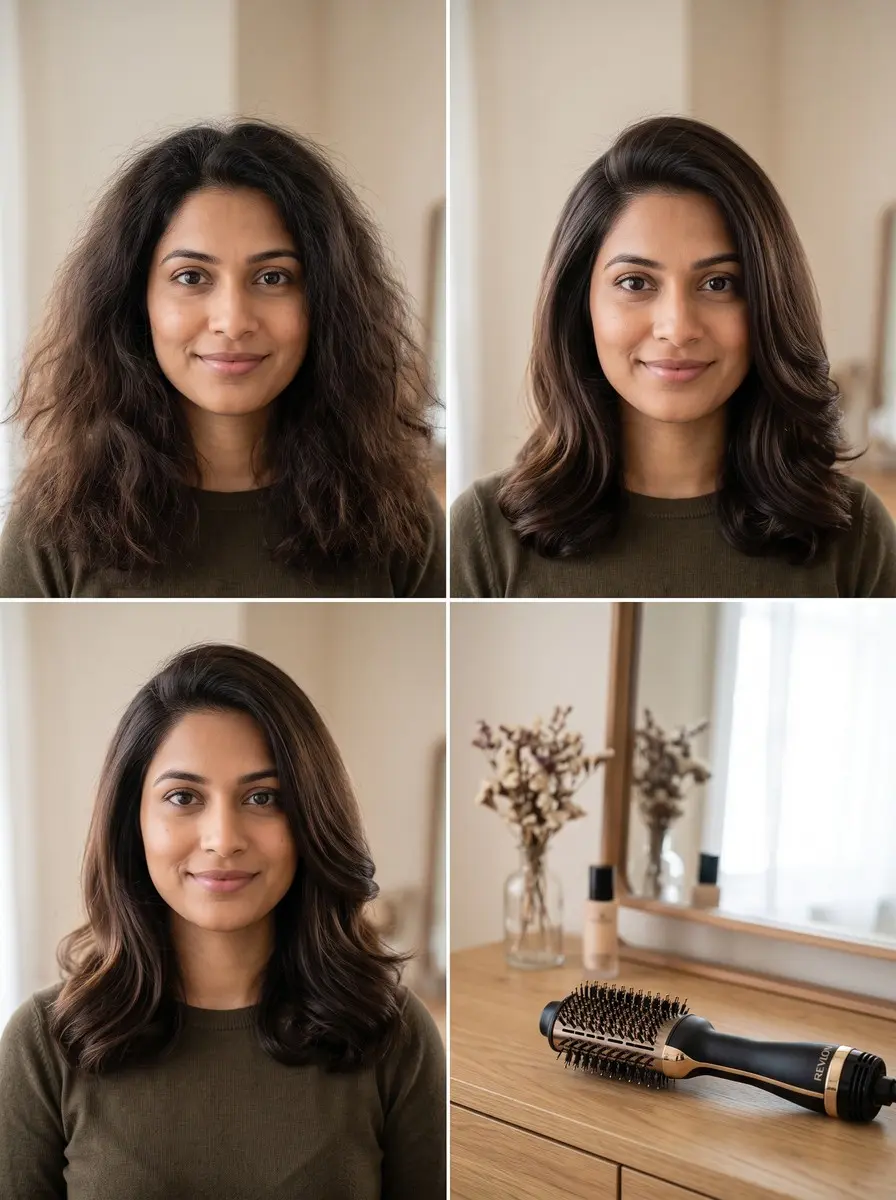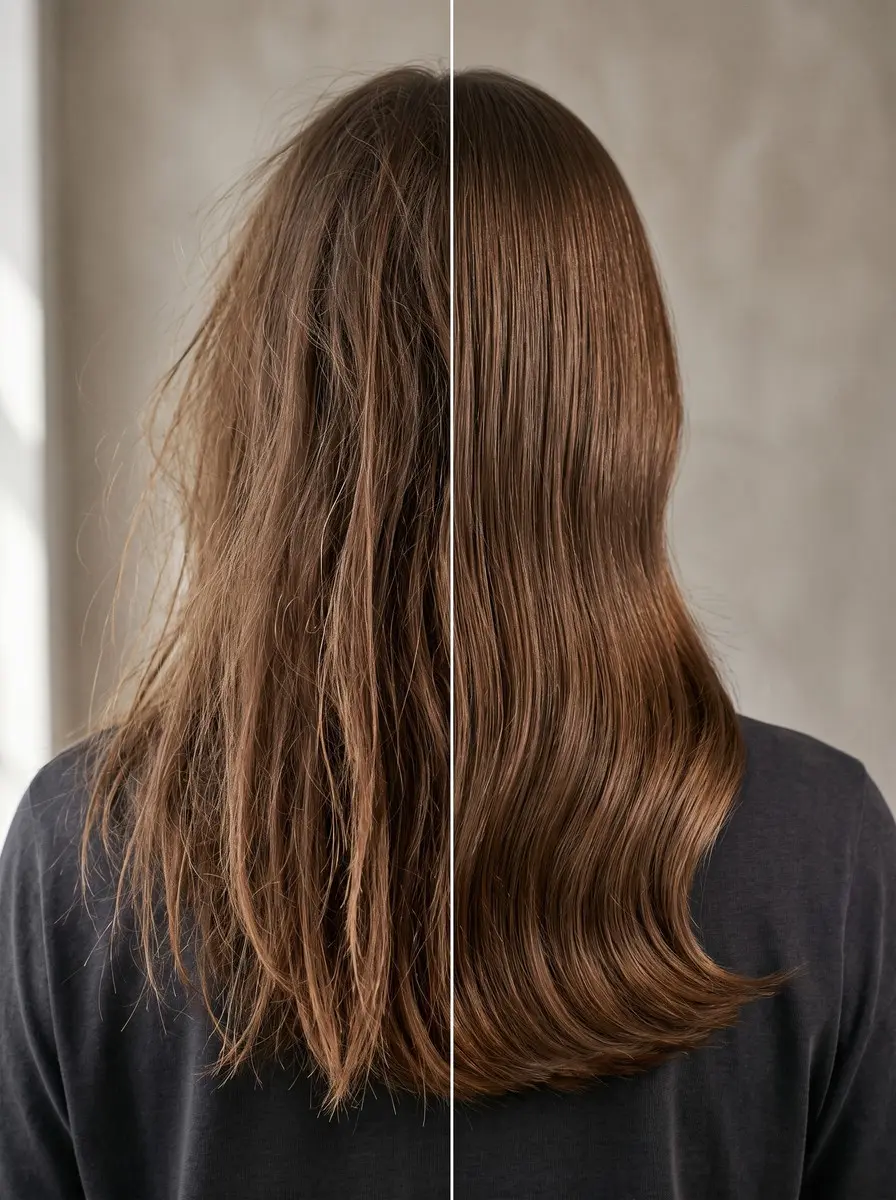
To use heat protectant, mist a light, even coat over damp or dry hair section by section from about six inches away, comb it through, wait a few minutes, and make sure hair is fully dry before an iron touches it. Then style at the lowest heat that works.
Plenty of heat damage happens to people who do use heat protectant. A quick spritz over the top layer leaves the underneath bare. A flat iron clamped onto hair that’s still damp does damage no product can stop. A dial turned to its highest setting asks a thin coating to do more than it can. The result is the same dull, rough ends that snap when you brush them.
This guide gives you the routine and the reason behind every step: how to section so the underlayers get covered, how far to hold the bottle, how long to wait, and the temperature your hair type actually needs. It also sorts out spray versus cream, serum or mousse, and explains what no protectant can do for you. It adds about ten minutes, and you can do all of it at your bathroom mirror.
What You’ll Need
- Lightweight heat protectant spray (fine to medium hair) — Gives a fine, even mist from six inches away and is light enough to reapply on dry hair before day-two styling.
- Heat protectant cream or lotion (thick, coarse or curly hair) — Spreads evenly through dense lengths on damp hair before a blow-dry, without the gaps a spray can leave.
- Wide-tooth comb — Pulls product through the inside of each section without snagging or stretching damp hair.
- Flat iron with a digital temperature display — Lets you set and see the exact temperature for your hair type instead of guessing on an unmarked dial.
- Clarifying shampoo — Clears protectant buildup every week or two if you heat-style several times a week.
As an Amazon Associate, HairAide earns from qualifying purchases. Some links above are affiliate links — they cost you nothing extra and help support free tutorials.
Step-by-Step
-
Before you start, match the product’s texture to your hair and your tool. A lightweight spray suits fine to medium hair and is the easiest to reapply on dry hair before an iron. A cream or lotion suits thick, coarse, curly or dry hair because it spreads evenly through dense lengths on damp hair before a blow-dry. A serum labelled as a heat protectant suits coarse, frizz-prone ends, and a mousse with heat protection on the label suits fine hair that needs volume from a blow-dryer. A plain oil isn’t a heat protectant unless the label says so, so read the bottle before you rely on one, and pick a formula your hair absorbs without feeling greasy, sticky or crunchy once dry.
-
If you’re blow-drying, apply protectant straight after washing, once you’ve blotted your hair with a towel until it’s damp rather than dripping. Soaking-wet hair dilutes the product and lets it run off before it coats the strand. If you’re styling dry, day-old hair, brush it out until it’s tangle-free. Either way, part your hair down the middle and then from ear to ear to make four quadrants, and clip three of them up out of the way. Sectioning matters because a quick all-over spritz misses the underlayers at the nape and behind the ears, yet those layers still go under the dryer and the iron.
-
Let down one quadrant at a time, starting with the lower layers, and hold the bottle about six inches from your hair. Mist the mid-lengths and ends first, then go lighter toward the roots. The ends are the oldest, most worn part of the strand, and a heavy coat at the root flattens volume. At six inches the spray spreads into a fine, even mist. Any closer and it lands as one concentrated wet patch, leaving the hair around it bare. With a cream or serum, warm a pea-sized amount per quadrant between your palms and smooth it over the section, adding more only if it still feels bare. You’re done when the hair feels lightly coated, never soaked or tacky.
-
Comb each section with a wide-tooth comb, starting at the ends and working up, then finishing with one long stroke from root to tip. Spray mostly lands on the outside of a section, and combing pulls it through the inside so every strand gets some, not only the surface layer. A wide-tooth comb does this without snagging, which matters because damp hair stretches and breaks more easily than dry hair. Twist and re-clip each finished quadrant so you can see exactly what’s been covered. You’re done when every section feels evenly slick, with no dry patches and no clumps of product.
-
Give the product a few minutes before any heat, which is about as long as it takes to finish the last quadrant or do your skincare. The short wait lets the formula spread and settle onto the hair, so the airflow doesn’t blast it straight off. Then blow-dry on medium heat with the nozzle at least six inches from your hair, keeping the dryer moving rather than parked on one spot. A hot air brush or a diffuser works the same way, since both are used before hair is fully dry. If you’re stopping at a blowout, the coat you applied to damp hair has done its job.
-
A flat iron or curling iron should only ever touch hair that is completely dry, including the roots, the nape and any fresh mist of protectant. Water left inside a damp strand can turn to steam under hot plates and leave brittle, blistered spots, and no protectant prevents that. If the plates hiss or sizzle when they close, stop and finish drying. Then set the temperature by hair type: around 150°C/300°F or lower for fine, bleached or damaged hair; around 160-180°C/320-355°F for medium, healthy hair; and 180-200°C/355-390°F for thick or coarse hair. Never go above about 205°C/400°F. Start at the low end of your range and go up only if the style won’t hold, because the right setting is the lowest one that shapes your hair in a single steady pass.
-
Work in sections about one to two inches wide, so the heat reaches the whole section in one pass instead of three. Keep a flat iron gliding steadily from root to tip, because holding it still concentrates heat on one patch of hair. With a curling iron or wand, hold each curl only as long as it needs to set, usually a few seconds, then release. Protectant slows how quickly heat reaches the strand, but it can’t make up for the same section being clamped again and again. Resist going back over hair that’s already done.
-
Before you re-curl or re-straighten on day two, mist a light coat over only the sections you plan to heat, comb it through, and let it dry for a minute or two before the iron goes on. Brushing, sleep and the day itself wear some of the first coat off, so the hair you heat again isn’t as well covered as it was. Keep the refresh light: stacking full coats day after day is how protectant builds up and leaves hair limp, dull or sticky. If you heat-style several times a week, wash with a clarifying shampoo every week or two to clear the residue. If your hair still feels coated after that, use less product per section rather than switching formulas.
Common Mistakes to Avoid
- Spritzing only the top layer, so the underlayers at the nape and behind the ears go uncovered but still get the dryer and the iron.
- Using too much: a heavy coat weighs hair down, feels sticky and builds up over time, when a light, even coat is enough.
- Putting a flat iron or curling iron on damp hair because you used protectant. The product does not make ironing wet hair safe.
- Defaulting to the iron’s highest setting instead of starting at the lowest temperature that styles your hair in one pass.
- Treating protectant as permission to heat-style every day. It reduces damage but doesn’t eliminate it, so how often you use heat still matters.
Pro Tip
When you change products or temperatures, test a single one-inch section first: if one slow, steady pass leaves it smooth, that’s your setting. If it needs three passes, turn the iron up one small step (about 10°C/20°F), staying within your hair type’s range, rather than re-ironing the same hair.
Frequently Asked Questions
Should I put heat protectant on wet or dry hair?
Either, depending on the tool. Apply it to towel-blotted damp hair before blow-drying or using a hot air brush or diffuser, since those tools are used before hair is fully dry. A flat iron or curling iron needs completely dry hair, so if you mist fresh protectant onto dry hair first, give it a minute or two to dry before the iron touches it.
Does heat protectant actually prevent heat damage?
It reduces damage rather than preventing it. A protectant coats the hair with a film that slows how quickly heat reaches the strand and helps limit moisture loss, but high heat, long contact or repeated passes will still damage hair. That's why temperature and frequency matter as much as the product, and why many stylists suggest using hot tools no more than about twice a week.
Do I need to reapply heat protectant every time I use heat?
Reapply a light coat on each new day you heat-style, such as before re-curling on day two, because brushing and sleep wear some of the first coat off. Within one session you usually don't need a second full application between blow-drying and flat ironing. A light mist on the ends is plenty if they feel dry, as long as it dries before the iron goes on.
Can I use hair oil as a heat protectant?
Only if the label says it's a heat protectant. Many serums are formulated for hot tools, but a plain oil isn't made or labelled for that job, so you have no way to know how it holds up under an iron. If you love oil for shine, style with a labelled protectant and smooth a drop of oil over the ends once you're done.
Can heat protectant build up on hair?
Yes, if you use too much or layer full coats day after day. Buildup shows up as limp, dull or sticky hair that won't hold a style. Use a light, even coat, refresh day-two hair with a mist rather than a full application, and wash with a clarifying shampoo every week or two if you heat-style several times a week.
You Might Also Like
- 20 whisper-soft hush cut ideas to inspire your next look
- 20 curly butterfly haircut ideas to inspire your next look
- flat iron temperature guide for your hair type
- how to choose a flat iron with the right plates
- how to use a curling wand for curls that last
- a smooth blowout with a hot air brush
- a silk press at home without heat damage
Done well, heat protectant is a short habit you repeat every time you style: section, mist from about six inches, comb it through, wait, and get hair fully dry before an iron. The rule under all of it is simple. Put a heat protectant on before any hot tool. Keep irons around 150°C/300°F for fine or bleached hair and 180-200°C/355-390°F for coarse hair, and only use them on completely dry hair.
Protectant reduces damage rather than erasing it, so how often you use hot tools matters as much as which formula you buy. If your hair already feels rough, snaps when you brush it or won’t hold a curl, see a stylist. They can trim the damaged ends and tell you how much heat your hair can still take.
Sources
- Use heat protectant before any hot tool, section hair into four quadrants, spray from about six inches away, comb through with a wide-tooth comb, and let it sit for a few minutes before styling. us.davines.com
- Dry hair kept 6 inches or more from the dryer nozzle and a heat protectant are advised when heat-styling coarse hair. us.davines.com