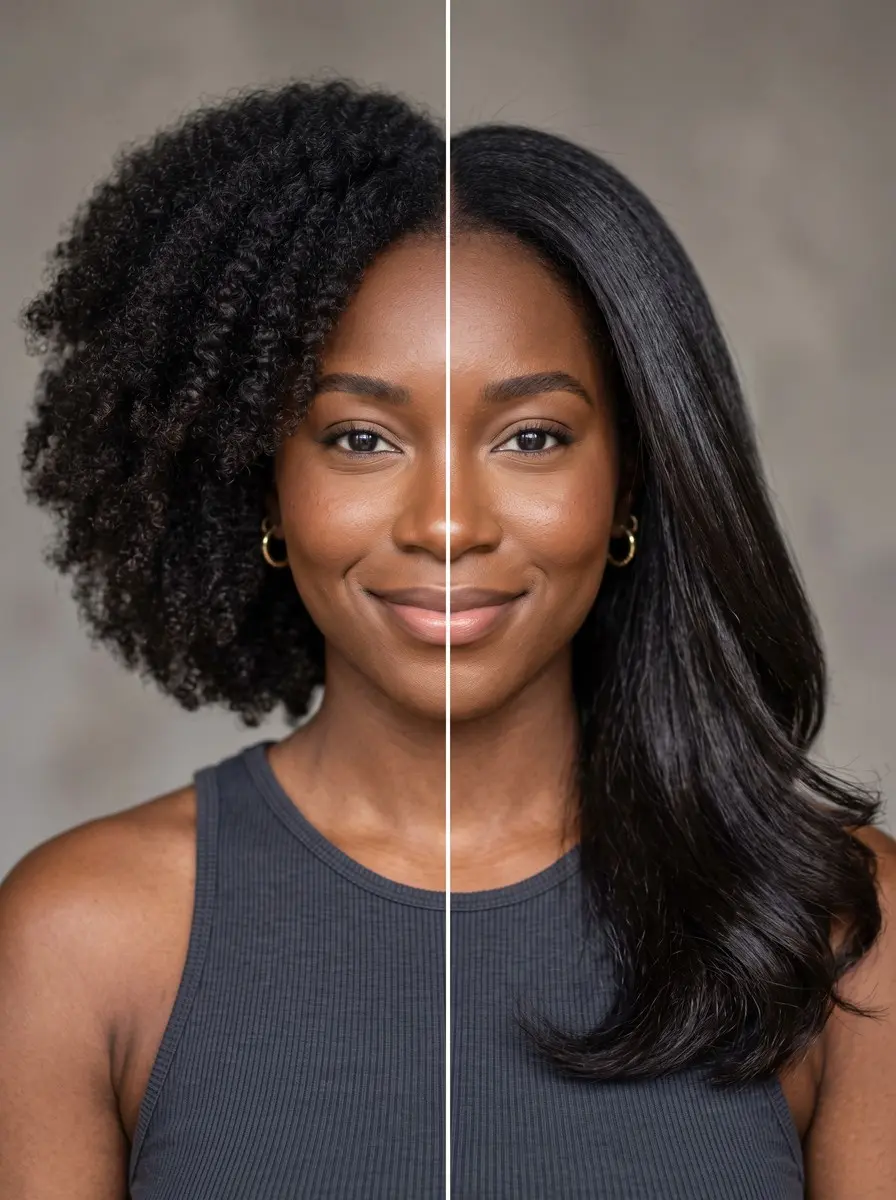
A hush cut is a soft, Korean-born layered cut with thin bangs, face-framing layers and razor-feathered ends that have no hard lines. The most wearable versions are the collarbone cut with see-through bangs, the long feathered cut and the shoulder-length cut with curtain bangs.
If the wolf cut always looked like a little too much for your mornings, the hush cut is the quieter answer. The Korean-born cut has gone viral for its gentle formula: thin front bangs, face-framing layers, short-to-medium layers throughout and soft, feathery ends. Stylists call it a less extreme wolf cut and a subtler octopus cut. It suits medium to long hair, and stylists often texturize it with a razor rather than scissors, so the shape has no straight lines anywhere.
That is why it’s so easy to live with. The shape comes from the cut rather than from your styling, so it falls into place with little effort. Below are 20 versions, covering length (collarbone to mid-back), hair type (straight, wavy, curly and coily) and fringe (see-through, curtain, side-swept or none). Each one comes with the exact words to say at the salon and how often to go back.
1. Classic Collarbone Hush Cut With See-Through Bangs

Hover on images and discover how pinning can transform your collection of favorites!
This is the version that went viral: collarbone length, a sheer fringe your forehead shows through, and short-to-medium layers that taper into feathery ends. It flatters oval, heart and long faces, and it suits straight to slightly wavy hair of medium density. Bring a photo and ask for ‘a collarbone hush cut with thin see-through bangs, razor-texturized layers and no blunt lines anywhere.’ Upkeep is a bang trim every three to four weeks and a full shape-up every eight to ten.
2. Long Feathered Hush Cut

Hover on images and discover how pinning can transform your collection of favorites!
At mid-back, this version keeps all its length. Short-to-medium layers through the crown and around the face feather down into airy, wispy ends. It suits medium-to-thick straight or wavy hair that is long enough to lose some bulk without looking thin. Tell your stylist: ‘Keep my length, add soft razor layers through the top and face, thin bangs, and feather the ends, with no straight lines.’ An inch of new growth barely changes a mid-back shape, so a trim every ten to twelve weeks is enough.
3. Shoulder-Length Hush Cut With Curtain Bangs

Hover on images and discover how pinning can transform your collection of favorites!
Center-parted curtain bangs replace the thin fringe here. They give a softer, more grown-out frame that blends straight into the face-framing layers. This is an easy start if you’ve never had bangs, and the diagonal sweep softens a strong jaw or a broad forehead. It suits straight to wavy hair at shoulder length. Ask for ‘cheekbone-length curtain bangs that melt into razor-cut face-framing layers, shoulder length, feathered ends.’ Curtain bangs forgive more grow-out than a straight fringe, so a bang trim every five to six weeks is usually enough.
4. No-Bang Hush Cut With Cheekbone Framing

Hover on images and discover how pinning can transform your collection of favorites!
The hush cut works without any bangs. The shortest face-framing piece starts at the cheekbone, and the layers fall from there to below the chin. This is the low-commitment version for cowlicks, oily foreheads or anyone growing out a fringe, and the long vertical lines can make a round face look longer. Say: ‘No bangs. Start the face-framing at my cheekbone, soft razor layers throughout, nothing blunt.’ With no fringe to look after, a shape-up every ten to twelve weeks keeps the framing where it should sit.
5. Air-Dry Wavy Hush Cut

Hover on images and discover how pinning can transform your collection of favorites!
Natural waves suit the hush cut well. Soft, blended layers let each wave separate instead of piling up into a triangle at the bottom. It works on medium-density wavy hair from shoulder to collarbone length. Ask for ‘a hush cut shaped on my dry, natural wave, with layers placed so the waves don’t pile up at the bottom, and wispy bangs.’ If your waves frizz easily, your stylist may use point-cutting with scissors instead of a razor. Scrunch a light mousse into wet hair, air-dry or diffuse, and reshape every eight to ten weeks.
6. Dry-Cut Curly Hush Cut

Hover on images and discover how pinning can transform your collection of favorites!
On 3A–3C curls at shoulder length or longer, the hush cut becomes a soft, rounded shape with face-framing spirals and curly bangs that sit at the brow. Many curl specialists avoid the razor here because it can leave curl ends frizzy. They cut this shape dry, one curl at a time, with scissors. Book a stylist who cuts curls dry and say: ‘I want the hush cut shape, with curly face-framing, short-to-medium layers and curly bangs, cut dry on my natural pattern.’ Reshape every ten to twelve weeks, once the curls lose their outline.
7. Debulked Hush Cut for Thick Hair

Hover on images and discover how pinning can transform your collection of favorites!
Dense, coarse hair can swallow soft layers. To fix that, the stylist first takes weight out from inside the shape, then adds the visible feathering. The cut then moves freely instead of puffing out at the sides. It suits thick straight or wavy hair from collarbone to mid-back. Ask: ‘Take bulk out from the inside with the razor, then add soft face-framing and feathered ends. I don’t want a shelf or visible chunks.’ As the thinned-out sections grow longer they add weight back, so book every eight weeks.
8. Fuller-Hem Hush Cut for Fine Hair

Hover on images and discover how pinning can transform your collection of favorites!
Fine or thin hair is where a hush cut can go wrong, because heavy razoring leaves the ends see-through. The fix is fewer, longer layers kept around the face, a fuller bottom edge and only light texturizing at the tips. It suits fine straight hair from collarbone to shoulder length. Say: ‘Hush cut framing and a wispy fringe, but keep my ends dense. Light texturizing only, not a full razor cut.’ If you want crisp structure and the thickest-looking ends, a blunt lob may suit you better. Trim every eight weeks.
9. Flicked-Out Shoulder Hush Cut

Hover on images and discover how pinning can transform your collection of favorites!
Cut to just touch the shoulders, the feathery ends kick outward where they land, and a quick round-brush blow-dry makes the flip bigger. It suits straight or slightly wavy hair and heart or oval faces, and it looks playful rather than polished. Ask for ‘a shoulder-grazing hush cut with razored ends that flick out, thin bangs, and soft layers from the chin down.’ The flip falls flat once the hair rests below the shoulders, which takes about two to three months of growth, so book a reshape before then.
10. Wispy Side-Swept Bang Hush Cut

Hover on images and discover how pinning can transform your collection of favorites!
Here the thin fringe is cut longer on one side and swept across the forehead, blending into the face-framing on the far side. It’s a softer option for a wide forehead or a cowlick at the hairline, and it suits straight to wavy hair at medium or long length. Ask: ‘Wispy side-swept bangs, longer on the left, that blend into my face-framing. Razor-texturized, no blunt edge.’ While the fringe is damp, blow-dry it across in the direction you want it to fall. Trim the bangs every four to five weeks.
11. Bottleneck-Bang Hush Cut

Hover on images and discover how pinning can transform your collection of favorites!
Bottleneck bangs start short and narrow at the center, just touching the brows. They then widen and lengthen around the eyes before blending into the face-framing. The result is a slightly fuller fringe than the classic see-through version. It’s a good match for long or heart-shaped faces and for straight to wavy hair. Ask for ‘bottleneck bangs that graze my brows in the center and blend into razor-cut face-framing layers, collarbone length.’ Dry the fringe with a small round brush while it’s damp, pulling it down and then out. Trim it every four weeks.
12. C-Curl Blowout Hush Cut

Hover on images and discover how pinning can transform your collection of favorites!
Korean salons often finish a medium-length cut with a ‘C-curl’, where the ends are blow-dried to curve gently under toward the jaw. On a hush cut, the C-curl smooths the feathered layers into a polished shape while the wispy bangs stay soft. It suits straight, medium-density hair at collarbone length. Ask for ‘a collarbone hush cut I can blow-dry into a C-curl, with layers that bend under, not flick out.’ Roll the ends under with a large round brush on damp hair. Reshape every eight to ten weeks.
13. S-Wave Long Hush Cut

Hover on images and discover how pinning can transform your collection of favorites!
The S-wave is the long-hair partner to the C-curl. Loose bends that alternate direction through the mid-lengths make the feathered layers look fuller and softer. It suits medium-to-thick straight hair past the shoulders, and it makes a good dressed-up version of the cut for events. Ask for ‘a long hush cut with layers placed so a loose S-wave shows them off, wispy bangs and feathered ends.’ Make the bends with a large-barrel curling wand on dry hair, switching direction on each section. Trim every ten weeks.
14. Babylight-Framed Hush Cut

Hover on images and discover how pinning can transform your collection of favorites!
Fine, soft highlights placed only through the front pieces and the bangs make the razored layers visible. On solid dark hair, the feathering can disappear in photos. This works with most base colors and on straight to wavy hair at medium or long length. Ask your colorist for ‘fine babylights two shades lighter, kept to my face-framing and bangs, blended at the root.’ Babylights grow out softly, so the color can often go twelve weeks between appointments. The cut itself needs reshaping every eight to ten.
15. Wolf-Cut Grow-Out Hush Cut

Hover on images and discover how pinning can transform your collection of favorites!
Growing out a wolf cut leads here naturally. As the choppy crown layers get longer, a stylist can blend the shape into the hush cut’s quieter outline instead of starting over. It suits straight or wavy hair and anyone who found the wolf cut too much. Ask: ‘I’m growing out a wolf cut. Leave the crown to grow, soften the choppy lengths around it with the razor, and keep thin bangs.’ Expect two or three appointments about eight weeks apart before the crown is long enough to blend in.
16. Coily Hush-Inspired Taper

Hover on images and discover how pinning can transform your collection of favorites!
On 4A–4C coils, the hush cut’s feathery ends become a softly tapered outline. It’s rounded at the crown, with shorter coils framing the face and no blunt shelf at the bottom. It suits coily hair of any density that reaches the shoulders or collarbone when stretched. Find a stylist who shapes coily hair dry and say: ‘A soft, layered shape with shorter face-framing coils and a tapered edge, with no straight lines.’ The shape shows best once your coils are defined on wash day. Reshape every twelve weeks.
17. Polished Long-Layer Hush Cut

Hover on images and discover how pinning can transform your collection of favorites!
Fewer, longer layers and a fringe that sits just below the brow give the hush cut a more finished look. It suits anyone who wants softness without a shaggy edge, which makes it a good fit for many readers over 40. It flatters most face shapes and suits straight or wavy hair with some natural density. Ask for ‘a hush cut with longer layers starting below the chin, wispy bangs that skim my brows, and soft, not choppy, ends.’ A smooth blow-dry takes about ten minutes. Reshape every eight to ten weeks.
18. Wash-and-Go Straight Hush Cut

Hover on images and discover how pinning can transform your collection of favorites!
On straight, medium-density hair, ‘the shape comes from the cut’ is literally true. The razored layers air-dry into the feathered outline, and the only styling is combing the bangs flat while they’re wet. It suits anyone who wants a true wash-and-go routine and has hair that dries smooth on its own. Ask: ‘A hush cut I can air-dry, with layers cut to fall into shape without a blow-dry, thin bangs and feathered ends.’ A light leave-in keeps the ends soft. Reshape every eight to ten weeks.
19. Half-Up-Friendly Long Hush Cut

Hover on images and discover how pinning can transform your collection of favorites!
The layers are placed so that when you clip the top section into a half-up style or bun, the shorter face-framing pieces and wispy bangs fall loose on purpose. The feathered lengths hang below. It suits long straight or wavy hair and anyone who wears their hair up most days. Ask: ‘A long hush cut where the face-framing stays out of a half-up style. Shortest piece at the cheekbone, and nothing so short it sticks up at the crown.’ Trim every ten to twelve weeks.
20. Glasses-Friendly Hush Cut

Hover on images and discover how pinning can transform your collection of favorites!
If you wear glasses, the wispy bangs should sit just above the frames or be long enough to sweep past them. The face-framing should start below the arms of your glasses so pieces don’t catch on them. It suits straight to wavy hair from collarbone to mid-back. Wear your glasses to the appointment and say: ‘Thin bangs that clear my frames, face-framing starting at my jaw, soft razor layers.’ Half an inch of growth drops a fringe onto the lenses, so trim the bangs every three to four weeks.
You Might Also Like
- wolf cut vs shag
- how to blow dry curtain bangs
- butterfly haircut at home
- how to diffuse curly hair
- layered haircuts for thick hair
The hush cut is all about softness and blending, so the words that matter at the salon are ‘razor-texturized’, ‘soft layers’ and ‘no straight lines’, plus a reference photo. Plan a bang trim every three to six weeks and a full reshape every eight to twelve. Hair grows about half an inch a month, so over that time the face-framing slowly drops below where it was cut.
For a two-minute finish, rough-dry your hair to about 80 percent and smooth only the bangs and front pieces. The layers handle the rest. Use blow-dryers and diffusers on damp hair, after a heat protectant. Use flat irons and curling wands on completely dry hair only, also with a protectant, at about 150°C/300°F for fine or bleached hair and 180–200°C/355–390°F for coarse hair.
Frequently Asked Questions
What is the difference between a hush cut, a wolf cut, an octopus cut and a butterfly cut?
A wolf cut stacks short, choppy layers at the crown for shaggy volume. An octopus cut puts shorter layers on top and leaves longer, thinner strands below. A butterfly cut keeps the length and adds bouncy, blown-out face-framing layers. The hush cut is the softest of the four: thin bangs, face-framing, short-to-medium layers and razor-feathered ends with no hard lines.
How do I ask my stylist for a hush cut?
Bring a reference photo of the length and fringe you want. Then ask for 'soft layers with no hard lines, razor-texturized, with face-framing and thin front bangs.' Stylists often texturize this cut on dry hair so they can see how it falls. If your hair is curly, fine or very thick, ask how they would adjust the technique.
Does the hush cut work on curly or fine hair?
Yes, with some changes. Curly and wavy hair often needs a different texturizing method, such as cutting dry with scissors, because a razor can leave curl ends frizzy. Fine or thin hair needs fewer, longer layers and only light texturizing so the ends don't look sparse. If you love crisp, blunt lines, a more structured cut may suit you better.
How often does a hush cut need a trim?
Plan on a bang trim every three to six weeks and a full reshape every eight to twelve. Hair grows about half an inch a month, so within two to three months the face-framing sits noticeably lower and the feathered outline starts to lose its shape. With no blunt lines, it grows out more gracefully than a bob or a heavy wolf cut.
Is the hush cut a lasting classic or a passing trend?
The name is new, but the formula is not. Soft face-framing layers, wispy bangs and feathered ends come from a long line of soft layered cuts that never really leave salons. The shape depends on the cut rather than heavy styling and grows out without harsh lines, so it stays wearable long after the trend name fades.
Sources
- The hush cut originated in Korea and went viral in 2026. It combines thin front bangs, face-framing layers, short-to-medium layers throughout, and soft feathery ends. vogue.sg
- Stylists call it a less extreme version of the wolf cut and a subtler take on the octopus cut. It suits medium to long hair. whowhatwear.com
- Stylists often texture it with a razor rather than scissors, since it avoids straight lines. Texturizing can be done on dry hair, and curly or wavy hair may need different techniques. bustle.com
- Upkeep is low because the shape comes from the cut, not from styling. Bringing a reference photo helps at the salon. thezoereport.com