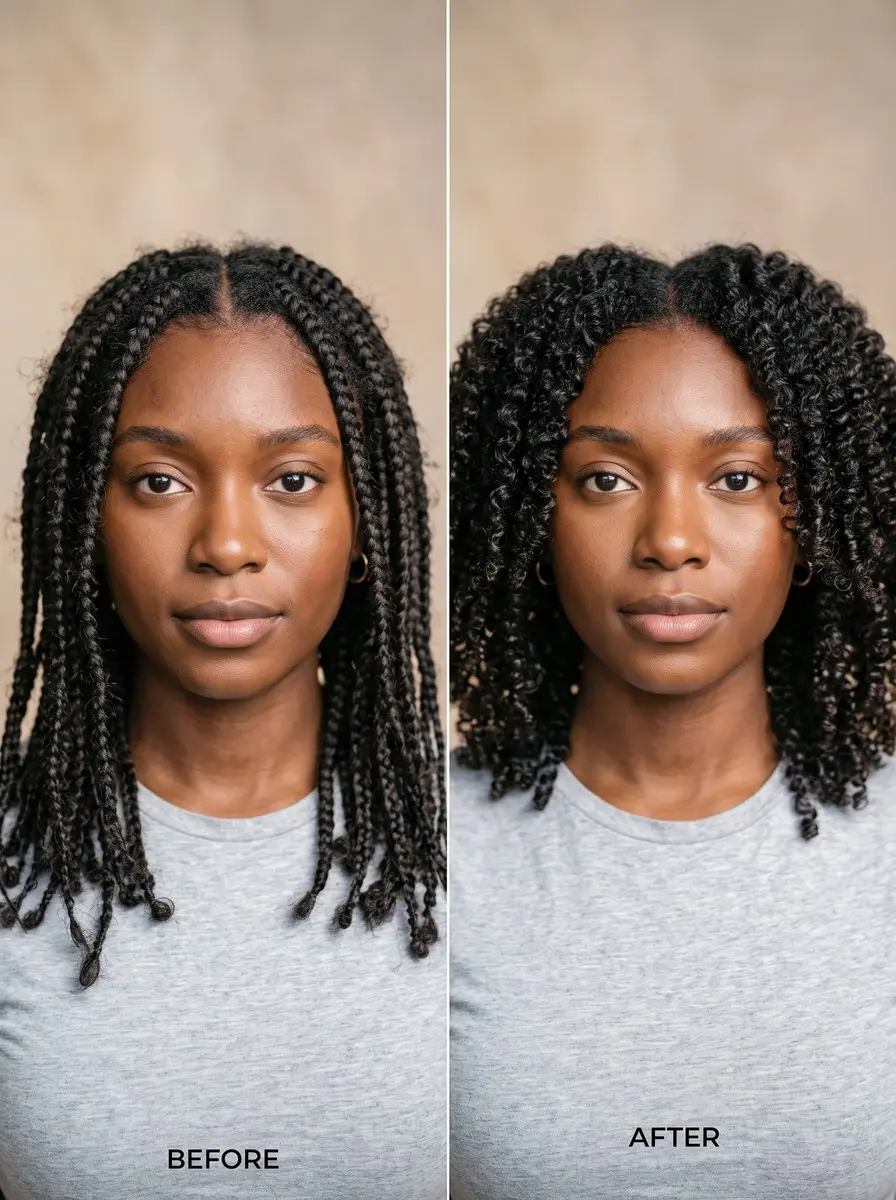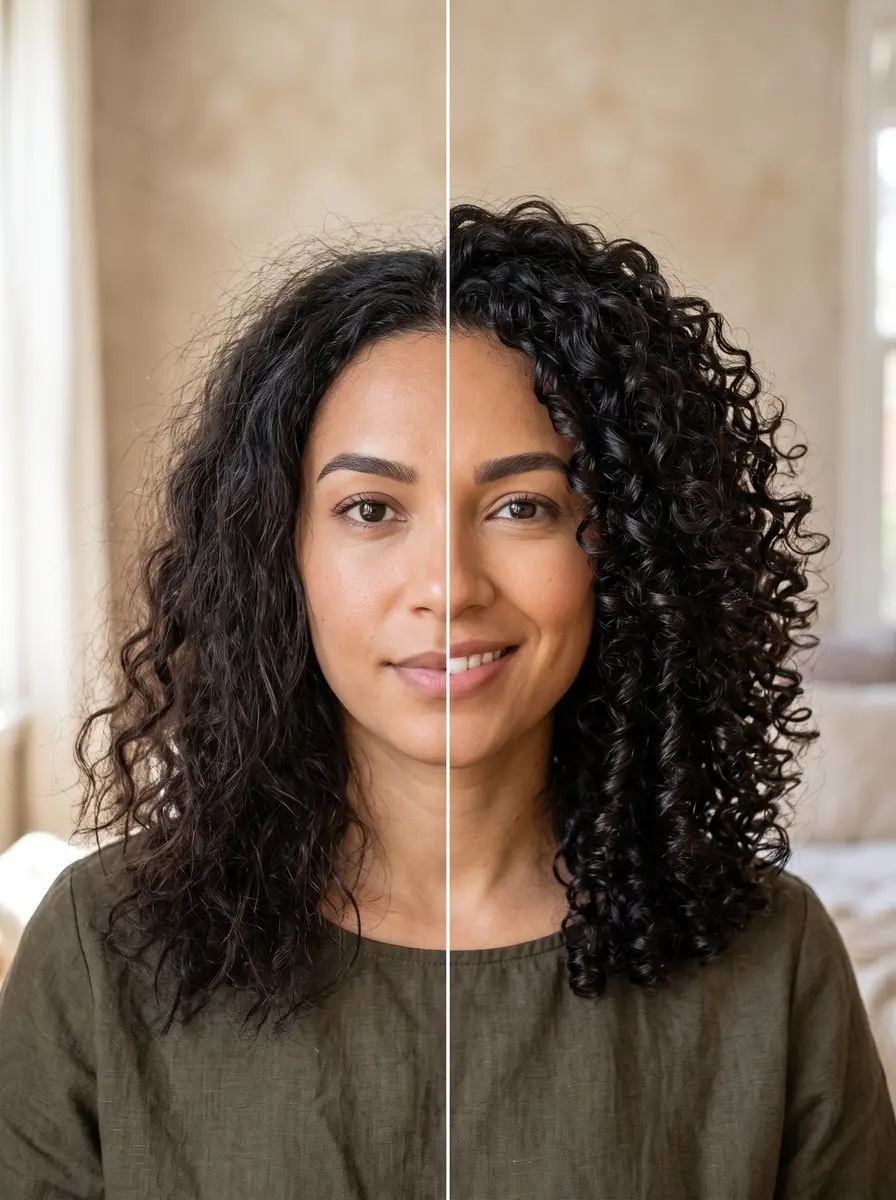
Quick answer To refresh second-day curls, section your hair and mist each section until damp but not soaked, so yesterday's product works again. Glide a light leave-in over the mid-lengths and ends, finger-curl any flat or frizzy pieces, then blot with a microfiber towel and air dry or diffuse on low.
Learning to refresh second-day curls means you can bring back definition without a full wash. Wash day takes effort, so it’s frustrating when the curls you set wake up flat at the back, frizzy at the crown and looser than they were last night.
The good news: most of that definition isn’t gone. The gel, cream or mousse you styled with is still on your strands, and a little water brings it back to life. You need far less product than you might expect.
A good second-day refresh starts the night before and ends with a hands-off dry. Below, you’ll also learn how to protect curls while you sleep, how to tell when a full re-wash is the smarter call, and how to adjust for waves, curls and coils. Once you have it down, the whole routine takes 10 to 20 minutes, and it can stretch the time between wash days.
Time 10-20 minutesDifficulty BeginnerSteps 8
Second-Day Refresh by Curl Type
| Curl type | Mist until | Refresh product | Fix flat spots by |
|---|---|---|---|
| Wavy (2A-2C) | Lightly damp | Leave-in spray or light foam | Scrunching upward |
| Curly (3A-3C) | Damp, not dripping | Leave-in spray, dab of cream | Finger-curling |
| Coily (4A-4C) | Evenly damp | Leave-in cream, light oil on ends | Finger-coiling |
What You’ll Need
As an Amazon Associate, HairAide earns from qualifying purchases. Product links in this guide are affiliate links: they cost you nothing extra and help keep these tutorials free.
- Continuous-mist spray bottle Sprays an even veil of water that wakes up day-one product without soaking curls or blasting the clumps apart.
- Lightweight curl leave-in spray Gives you slip for finger-detangling and adds light moisture to mid-lengths and ends without the weight of a cream.
- Microfiber hair towel Blots out extra water so curls dry faster, without the frizz that terry loops cause.
- Satin bonnet or satin pillowcase Cuts overnight friction so curls wake up less flat and less frizzy.
- Foaming dry shampoo Soaks up oil at the roots on day two or three without dusting powder through your curls.
Step-by-Step
Step 1 Protect your curls overnight
Before bed, gather your hair into a loose ‘pineapple’: a high, loose ponytail at the very top of your head, held with a soft scrunchie, so your lengths stay off the pillow and your weight doesn’t crush the curls.
If your hair is too short to pineapple, use a loose top knot or several mini pineapples, or go straight to a satin bonnet. Sleep on a satin or silk pillowcase, or wear a satin bonnet or scarf.
The smooth surface creates far less friction than cotton, which roughs curls up into frizz and soaks up moisture. You’ve got it right when the pineapple feels secure but the scrunchie is loose enough not to leave a crease.
Step 2 Decide whether to refresh or re-wash
In the morning, take the pineapple down and shake the roots loose. Then check three things: your scalp, how the product feels and how the curls respond to water.
Re-wash instead of refreshing if your scalp is itchy or greasy all over, if the lengths feel coated, gummy or stiff, or if a test mist on one section doesn’t bring the curl back. Those are signs of buildup, and more water and product will only make it worse.
If your roots are just a little oily and the curls still look good, massage a small amount of foaming dry shampoo into the scalp only and let it absorb while you section. Keep it off the lengths, where it dulls and dries curls.
Step 3 Section and clip your hair
Divide dry hair into four sections if it’s fine or wavy, or six to eight if it’s thick, curly or coily. Twist each section loosely up into a claw or duckbill clip. Working on one section at a time means you re-wet only the hair you’re reshaping, so the curls you haven’t reached yet aren’t handled twice.
Start with the side or back you slept on, because it’s usually the flattest and needs the most attention. You’re ready when every section is clipped and the curls inside the twists are still intact.
Step 4 Mist to reactivate yesterday’s product
Unclip one section and mist it with plain water from a continuous-mist spray bottle. Hold the bottle about 15-20 cm (6-8 in) away so the water lands as a fine veil instead of a jet that parts the curls, and aim mostly at the lengths and any flattened areas.
The water re-wets the gel, cream or mousse still on your strands from day one, so it can hold a shape again without a new layer of product.
Wavy 2s need only a light mist until lightly damp. Curly 3s should be damp but not dripping, and coily 4s evenly damp through the whole section, since tight coils tend to be the driest and need water to reach every strand.
Step 5 Glide on a light leave-in
While the section is still damp, apply a lightweight leave-in to the mid-lengths and ends only. Those are the oldest, driest parts of the hair, and keeping product off the roots stops them from going flat.
Wavy 2s do best with a leave-in spray or a little light foam, since creams weigh waves down. Curly 3s can use a leave-in spray plus a small dab of cream on frizzy sections, and coily 4s usually want a leave-in cream with a few drops of light oil on the ends.
Smooth it in with ‘praying hands’, gliding your flat palms down the section. This lays flyaways down and keeps curl clumps together, and about half your wash-day amount is plenty because the day-one product is already doing most of the work.
Step 6 Fix flat or frizzy sections
Look for the trouble spots: a flattened crown, a frizzy halo, or a piece that’s gone straight or bent overnight. Spritz the area with leave-in spray first and gently detangle it with your fingers, because reshaping dry, knotted hair snaps clumps apart and adds frizz. Then re-form the curl to suit your pattern.
Wavy 2s scrunch the section upward toward the scalp, curly 3s finger-curl by wrapping inch-wide pieces around a finger and sliding it out, and coily 4s finger-coil smaller pieces the same way. A section is done when it matches the curls around it; repeat the mist, leave-in and reshape on each section before unclipping the next.
Step 7 Blot with a microfiber towel
Once every section is reshaped, cup your lengths in a microfiber towel or a soft cotton T-shirt and press gently upward toward the scalp for a few seconds. Don’t rub. Blotting removes extra water before drying, so your hair dries faster and the curls have less time to drop or get disturbed.
Microfiber’s smooth, absorbent surface lifts water without the rough loops of a terry towel, which snag curls and cause frizz. Stop when your hair is damp rather than wet and no longer drips.
Step 8 Air dry or diffuse low and slow
From here, leave your hair alone, because touching curls while they’re damp and drying quickly turns them frizzy. Air dry if you have time. Otherwise, diffuse for a few minutes on low heat and low speed so the airflow doesn’t blow the clumps apart.
For volume, try pixie diffusing: lower the curls into the diffuser bowl, raise it to the scalp and hold. Once your hair is completely dry, gently scrunch out any stiffness left by the gel and lift the roots with your fingertips; you’re done when the curls feel soft, move freely and spring back when you tug a strand.
Common Mistakes to Avoid
- Soaking your hair back to wash-day wet. It dilutes yesterday’s product, takes hours to dry, and the curls drop as they dry
- Piling a full wash-day amount of leave-in, cream or gel on top of day-one product, which weighs curls down and builds up fast
- Touching, twirling or checking curls while they’re damp and drying: every touch breaks clumps into frizz
- Spraying dry shampoo through the lengths instead of keeping a foaming formula on the scalp only
- Refreshing over buildup. If the lengths feel coated or gummy, or a mist doesn’t bring the curl back, wash instead
- Using refresher sprays with drying alcohols such as alcohol denat. high on the label, which can leave curls rough
- Brushing or raking dry curls to fix a flat spot instead of re-wetting it and finger-curling the section
Pro tip Make your own refresher by shaking a small squeeze of your usual leave-in into a mist bottle of water. It wakes up day-one product and conditions in one pass, so you aren’t stacking new layers. Mix a fresh batch every few days, because diluting a product also dilutes its preservative.
The Bottom Line
A good refresh brings back definition with water, a light leave-in and a few minutes of hands-off drying, not a second wash day. Do it each morning between washes, pineapple and wrap your hair in satin every night, and re-wash as soon as your scalp feels oily or itchy or your lengths feel coated. Layering refreshes over buildup only makes curls limper.
Sometimes curls won’t hold definition even on wash day, or the ends stay frizzy and stringy no matter how carefully you style them. That usually points to the cut or the condition of your hair, not your technique. A curl specialist can trim split ends and reshape your layers so the pattern clumps again, which makes every refresh easier.
Frequently Asked Questions
How many days can you refresh curls before you need to wash them?
There's no fixed number. It depends on your scalp, curl pattern and products. Waves tend to get oily faster and often need washing sooner, while tighter curls and coils can usually go longer between washes. Re-wash when your scalp feels oily or itchy, the lengths feel coated or stiff, or a mist no longer brings the curl back.
Can you refresh curls in 10 minutes?
Yes, if you skip full sectioning. Spend two minutes shaking out the pineapple and misting the flattest areas, three minutes gliding leave-in spray over the lengths with praying hands, and two minutes finger-curling the worst pieces. Use the last three minutes to blot and pixie diffuse the crown on low, then keep your hands off while it finishes air drying.
Is dry shampoo bad for curly hair?
On the lengths, yes: powder dry shampoo dulls curls, makes them feel dry and breaks up clumps. Used on the scalp only, a foaming dry shampoo soaks up oil at the roots and buys you another day before washing. Massage it into the scalp before you refresh, keep it off the curls, and wash it out on your next wash day so it doesn't build up.
Why do my curls get frizzy when I refresh them?
Day-two frizz usually comes from handling: touching curls while they dry, rubbing with a terry towel, or diffusing on high speed. Too little water is another cause, because yesterday's product can't reactivate and you end up reshaping dry curls. Check your refresher too. Sprays high in drying alcohols such as alcohol denat. can leave curls rough, but fatty alcohols like cetyl are fine.
Do I need a heat protectant to diffuse a curl refresh?
Yes, if you use a diffuser. Mist a heat protectant, or a leave-in that lists heat protection, onto your damp lengths before drying. Diffusers are made for damp hair, so you don't need to wait for it to dry first; just keep the heat and speed on low. If you air dry, you don't need a protectant.
Keep Reading
Sources
- How to refresh curls curlsmith.com