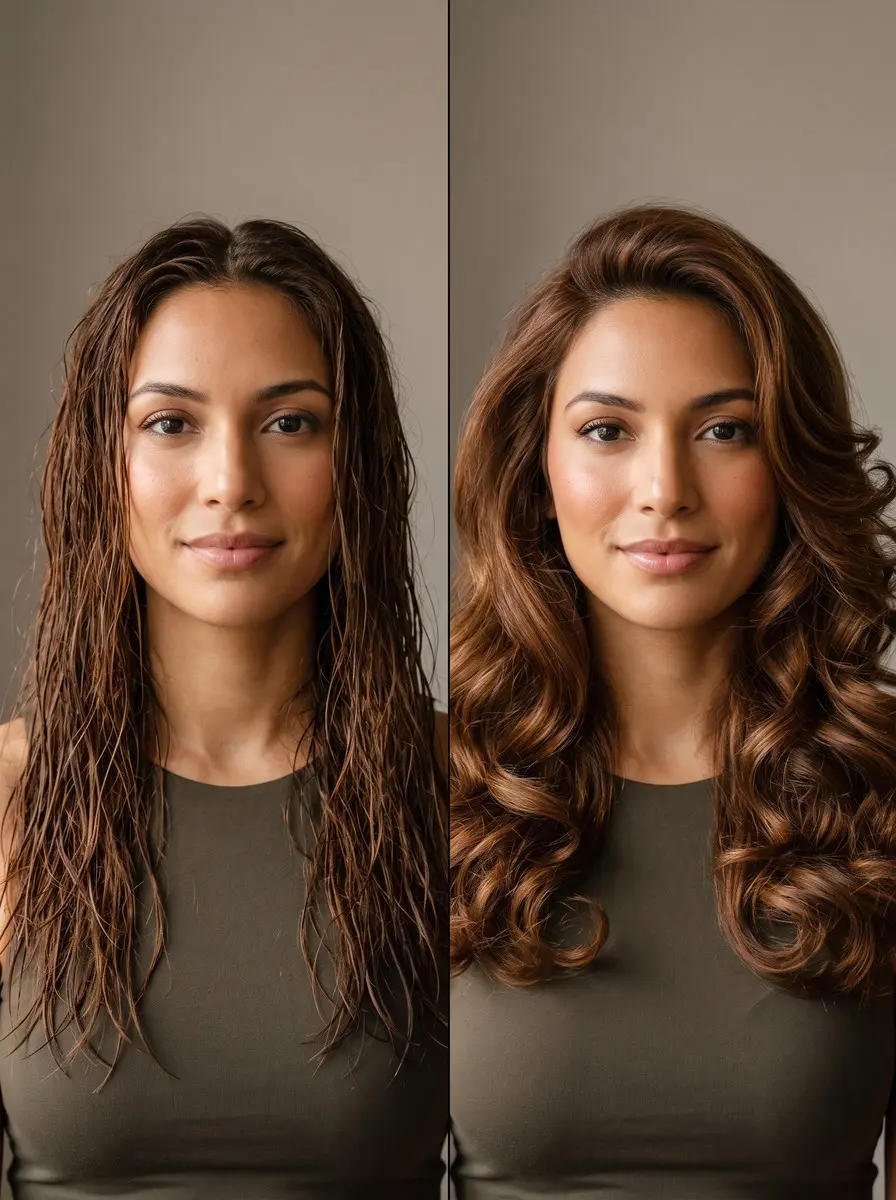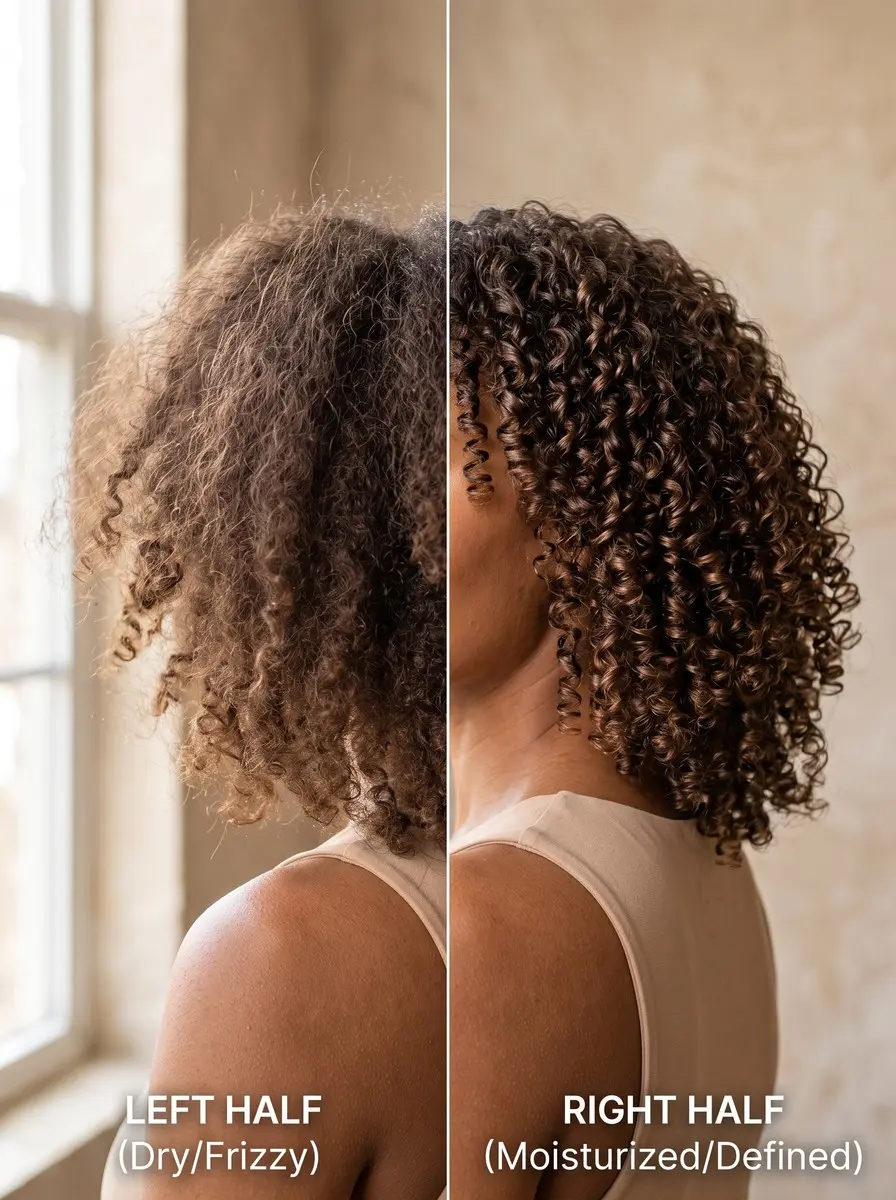
Quick answer To choose between LOC and LCO, apply water or a water-based leave-in to damp hair. Then layer oil before cream (LOC) for high porosity, or cream before oil (LCO) for low porosity. If you're medium porosity, try each for a week and score moisture on day three.
You’ve washed, conditioned and detangled. Now there are three bottles on the counter and two sets of instructions. The LOC method says liquid, oil, cream. The LCO method says liquid, cream, oil. Both promise curls and coils that stay soft past day one. Most LOC vs LCO method guides give you a porosity rule and stop there, even though at least one well-known source flips that rule.
This guide settles it the practical way. You’ll learn what each layer does and which order usually suits high and low porosity. You’ll also get the product weights that match waves, curls and coils, plus a simple two-week test that lets your own hair decide if you’re in the middle.
It takes about 20-30 minutes on wash day. You probably already own the products, and all you need beyond them is a spray bottle and a few clips.
Time 20-30 minutes on wash dayDifficulty BeginnerSteps 8
LOC and LCO Product Weights by Curl Pattern
| Curl pattern | Leave-in | Oil (LOC / LCO) | Cream |
|---|---|---|---|
| Waves (2A-2C) | Spray or milk | Grapeseed / argan | Curl milk or none |
| Curls (3A-3C) | Lotion leave-in | Argan / jojoba | Light-to-medium cream |
| Coils (4A-4C) | Creamy leave-in | Jojoba / castor or olive | Rich butter cream |
What You’ll Need
As an Amazon Associate, HairAide earns from qualifying purchases. Product links in this guide are affiliate links: they cost you nothing extra and help keep these tutorials free.
- Water-based leave-in conditioner It’s the L in both methods: the moisture that the oil and cream hold in place.
- Lightweight and sealing hair oils A lighter oil goes under the cream in LOC, while a heavier one forms the final seal in LCO.
- Curl cream or butter-based styling cream The C layer adds softness and definition; choose a curl milk for waves and a rich butter cream for tight coils.
- Clarifying shampoo It removes the oil and cream buildup that eventually stops either layering method from working.
- Continuous-mist spray bottle It keeps sections damp while you work and makes day-two and day-three refreshes quick and even.
Step-by-Step
Step 1 Match the order to your porosity
L is the liquid: plain water or a water-based leave-in conditioner, and it is the actual moisture. O is an oil and C is a cream, and both are there to keep that water in the hair for longer.
LOC layers them liquid, oil, cream; LCO layers them liquid, cream, oil, so the same three bottles differ only in which one reaches the wet strand second and which sits on the outside. If your hair soaks up product, dries quickly and feels dry again by the next day, it leans high porosity, and the usual advice is LOC: a raised cuticle loses moisture fast, and a light oil under a cream puts two layers between the strand and the air.
If water beads on your hair, it takes ages to get fully wet and products seem to sit on top, it leans low porosity, and the usual advice is LCO: the cream goes on while the strand is still wet, and the oil finishes as a thin outer seal.
At least one well-known curl site reverses this rule, so treat it as a starting point, not a law; how your hair feels on day three is the real verdict.
Step 2 Pick product weights for your curls
Match the weight of each product to how much your curls can carry without drooping. Waves (2A-2C) do best with a spray or milk leave-in, grapeseed oil for LOC or argan to seal in LCO, and a curl milk in place of a cream, or no cream at all.
Looser curls (3A-3C) suit a lotion leave-in, argan oil for LOC or jojoba to seal, and a light-to-medium curl cream. Tighter coils (4A-4C) can handle a creamy leave-in, jojoba for LOC or castor or olive oil to seal, and a rich butter cream.
Whatever your curl pattern, follow one rule: in LOC, choose the lighter oil so it doesn’t block the cream from reaching the strand; in LCO, choose an oil that stays on the strand’s surface, because it is the final seal.
Step 3 Start on damp, sectioned hair
Start right after you rinse out your conditioner, while your hair is still wet to damp but no longer dripping. Water is the moisture the oil and cream are there to hold, so putting them on dry hair only coats a dry strand.
Detangle with your fingers or a wide-tooth comb, then divide your hair into four to eight sections and clip each one up. Use more sections the denser or tighter your curls are.
Sectioning stops you overloading the front and leaving the back with too little, which is the usual reason a method ‘doesn’t work’ at the crown and nape. Keep a spray bottle of water nearby and re-mist any section that starts to dry before you reach it.
Step 4 Layer small amounts in order
Work one section at a time. Apply the liquid first until the section feels saturated, then follow your chosen order with small amounts: for curls, roughly two to three drops of oil and an almond-sized dot of cream per section.
Use slightly more for dense coils and less for waves. Rub the cream between your palms first so it spreads in a thin, even film. Smooth both oil and cream from mid-lengths to ends before working up toward the root.
Small amounts matter because each layer has to sit evenly over the one beneath it, and too much leaves a heavy, greasy film that pulls curls flat. The section is done when it feels slippery and soft, clumps into defined curls or coils, and leaves no white residue on your fingers.
Step 5 Test both orders for two weeks
If your hair sits in the middle (water neither beads on it nor soaks straight in), or you simply can’t tell, test both orders for about two weeks. Use LOC on every wash day in week one and LCO in week two.
Keep the products, amounts and wash routine identical so the order is the only thing that changes; otherwise you’re testing a new cream, not a method. Score each method from 1 to 5 on three things: moisture on day three (do your ends still feel hydrated without a refresh?), softness when you squeeze a curl, and definition (clumped curls versus frizz and halo).
Add up the scores and the higher total is your method. If they tie, keep the one that felt lighter, because a lighter routine builds up less over time.
Step 6 Refresh on day two or three
Don’t repeat all three layers between wash days; that’s the fastest route to buildup. Instead, mist the dry or frizzy areas with water, or water mixed with a little leave-in, until they’re damp but not soaked, which repeats the liquid step.
Then smooth on your finishing layer: a pea-sized amount of cream if you follow LOC, or a single drop of oil if you follow LCO, over the ends and any undefined pieces. This works because most of the oil and cream from wash day is still on the strand. What your hair is missing is fresh water and a thin layer to hold it.
Step 7 Adapt it for protective styles
Do the full method on clean, damp hair before you braid, twist or put in a protective style, because once your hair is tucked away the lengths are hard to reach. After that, keep it light.
Every few days, mist the lengths and scalp with water or a diluted leave-in, then press a few drops of oil over the exposed lengths. Skip the cream, because it collects between braids and leaves buildup that’s hard to rinse out.
Twists and twist-outs are the exception: the cream doubles as your styling product, so LOC or LCO simply becomes your twisting prep. When you take the style down, start with a clarifying wash before you go back to your usual routine.
Step 8 Spot buildup and clarify
Too much product shows up as limp, stretched-out curls, a waxy or tacky feel, white flakes, hair that takes much longer to dry, or water beading on strands that used to absorb it. First, cut your oil and cream amounts in half, starting with whichever layer is heaviest.
If your hair still feels coated, use a clarifying shampoo on your next wash day, then follow with a moisturizing conditioner.
For most people using creams and oils, that means clarifying every two to four weeks, and sooner if you have hard water or use butter-rich products. Clarifying strips off the old layers so the liquid step can reach the strand again, which is often why a method that ‘stopped working’ suddenly works again.
Common Mistakes to Avoid
- Applying oil and cream to hair that has already dried. With no water underneath, you’re only coating a dry strand.
- Putting a heavy oil like castor in the LOC position, where it blocks the cream from reaching the hair.
- Using palmfuls of each product instead of small amounts per section, which leaves curls limp and greasy.
- Changing products and order at the same time during the two-week test, so you can’t tell what made the difference.
- Repeating all three layers on refresh days instead of using just water plus your finishing layer.
Pro tip Mix your cream with a quick mist of water between your palms, and glide it over the section with flat palms before you rake it through. It spreads into a thinner film, so one almond-sized dot covers far more hair and you avoid the buildup that makes people give up on a method that was actually working.
The Bottom Line
Get the order right and your hair still feels soft and defined on day three, and a refresh takes minutes instead of a full redo. Do the full method on every wash day and refresh with water plus your finishing layer in between. Clarify every few weeks, or whenever your curls turn limp and coated.
If your hair stays dry whichever order you use, layering may not be the problem. It could be a protein-moisture imbalance, breakage, or chemical damage from color or relaxers. A stylist who specializes in curly and coily hair can assess that, so book that visit before you buy another cream.
Frequently Asked Questions
Is LOC or LCO better for low porosity hair?
LCO is the usual recommendation for low-porosity hair. The cream reaches the strand while it is still wet, and the oil finishes as a thin outer layer instead of blocking what comes after it. Use light products in small amounts, since low-porosity hair builds up easily. If LCO leaves your hair feeling coated, run the two-week test.
How often should I do the LOC or LCO method?
Do the full method once per wash day: weekly for many curly and coily routines, or every few days if you wash more often. Between washes, only refresh: mist with water or diluted leave-in and add a small amount of your finishing layer to the ends. Repeating all three layers every day is the most common cause of buildup.
Why does my hair still feel dry after using the LOC method?
The usual causes are applying it to hair that has already dried, buildup that stops the liquid step from reaching the strand, or an order that doesn't suit your porosity. Apply to damp hair, clarify, then test LCO for a week. If your hair still feels dry, brittle or mushy, the problem may be your protein-moisture balance rather than the layering order.
Can you use the LOC or LCO method on wavy hair?
Yes, but scale everything down. Wavy hair (2A-2C) is easily weighed down, so use a spray or milk leave-in, one or two drops of a light oil such as grapeseed or argan, and a curl milk instead of a heavy cream, or skip the cream entirely. If your waves look limp, drop a layer.
Can I use plain water as the liquid in LOC or LCO?
Yes. Water is the moisture in both methods, so plain water fully counts as the L. A water-based leave-in conditioner adds slip and conditioning, which helps hair that tangles easily or feels very dry. Many people with waves or low-porosity hair prefer plain water and keep the leave-in for their ends, which keeps the routine lighter.
Keep Reading
Sources
- Lco vs loc method hair.com
- Methode loc lco cheveux textures secretsdeloly.com
- Loc vs lco method curlcentric.com