Quick answer To read your hair color level, match a dry root strand to a 1-10 swatch chart in daylight (1 is black, 10 lightest blonde). Keep at-home changes to about two levels, using 20-volume developer for one level of lift and 30-volume for two.
Every at-home hair color decision comes back to one number: your level, the 1-to-10 scale colorists use to rank hair color levels from black to lightest blonde. It decides which box to buy, and it explains why your hair turned orange.
Once you know where you sit on the scale, the rest of the label starts to make sense: the developer volume, the tone letters, even the warning that a shade won’t lighten hair that’s already dyed.
This guide shows you how to find your own level in daylight and pick a realistic target. It also explains what happens between hair color levels: the warmth that shows up as hair lightens, the developer that controls lift, and when going darker needs a filler first.
Level charts are only approximate, and colored hair reads differently from natural hair, so you’ll learn how to allow for both. All it takes is about 15 minutes and a swatch chart.
Time 15-20 minutes (plus a strand test before coloring)Difficulty BeginnerSteps 8
Hair Color Levels and the Warmth Each Reveals
| Level | Shade | Warmth exposed |
|---|---|---|
| 1-2 | Black to darkest brown | Deep red-brown |
| 3-4 | Dark to medium brown | Red |
| 5 | Light brown | Red-orange |
| 6 | Dark blonde | Orange |
| 7 | Medium blonde | Orange-gold |
| 8 | Light blonde | Yellow |
| 9 | Very light blonde | Pale yellow |
| 10 | Lightest blonde | Palest yellow |
What You’ll Need
As an Amazon Associate, HairAide earns from qualifying purchases. Product links in this guide are affiliate links: they cost you nothing extra and help keep these tutorials free.
- Hair color swatch ring Gives you real level references to hold your strand against in daylight, which is far more reliable than a box photo.
- Permanent at-home hair color kit with level-and-tone shade codes Shows the shade’s level and tone plus a starting-level chart, so you can pick a target within two levels of your own.
- Custom-blended at-home hair color It’s blended from your photos and color history, which helps when old color or highlights make your level hard to read.
- Cream developer in 10, 20 and 30 volume Lets you match lift to the gap (10 volume to deposit, 20 for one level of lift, 30 for two) instead of guessing.
- Blue or violet demi-permanent toner Cancels the orange or yellow warmth that lifting exposes, matched to the level you landed on.
Step-by-Step
Step 1 Find your level in daylight
Hair color levels run from 1 (black) to 10 (the lightest blonde): 2 is darkest brown, 3 dark brown, 4 medium brown, 5 light brown, 6 dark blonde, 7 medium blonde, 8 light blonde and 9 very light blonde.
A level measures lightness only, while tone (ash, gold, red or neutral) is a separate property, so an ash 7 and a golden 7 are equally light, and keeping the two apart is what makes color plannable: the level tells you whether you need lift or deposit, and the tone tells you which shade family to buy.
To find yours, wash with your usual shampoo, skip styling products and let your hair air-dry completely, because wet hair and product film both look darker than your true shade. Stand by a window in indirect daylight rather than under bathroom bulbs, which skew warm or cool, and lay a small root section from the crown, where sun and old color haven’t changed it, flat against a level swatch ring or the starting-shade chart on a dye box.
Move along until neither looks lighter than the other, and if you fall between two swatches, note both: box charts show a result for each starting level, so you can see whether either outcome works for you.
Step 2 Account for color already there
Colored or highlighted hair reads differently from natural hair, so measure your roots and your lengths separately and write down both levels. Highlights woven through a darker base trick the eye into an in-between reading, so separate a highlighted piece from an unhighlighted one and level each on its own.
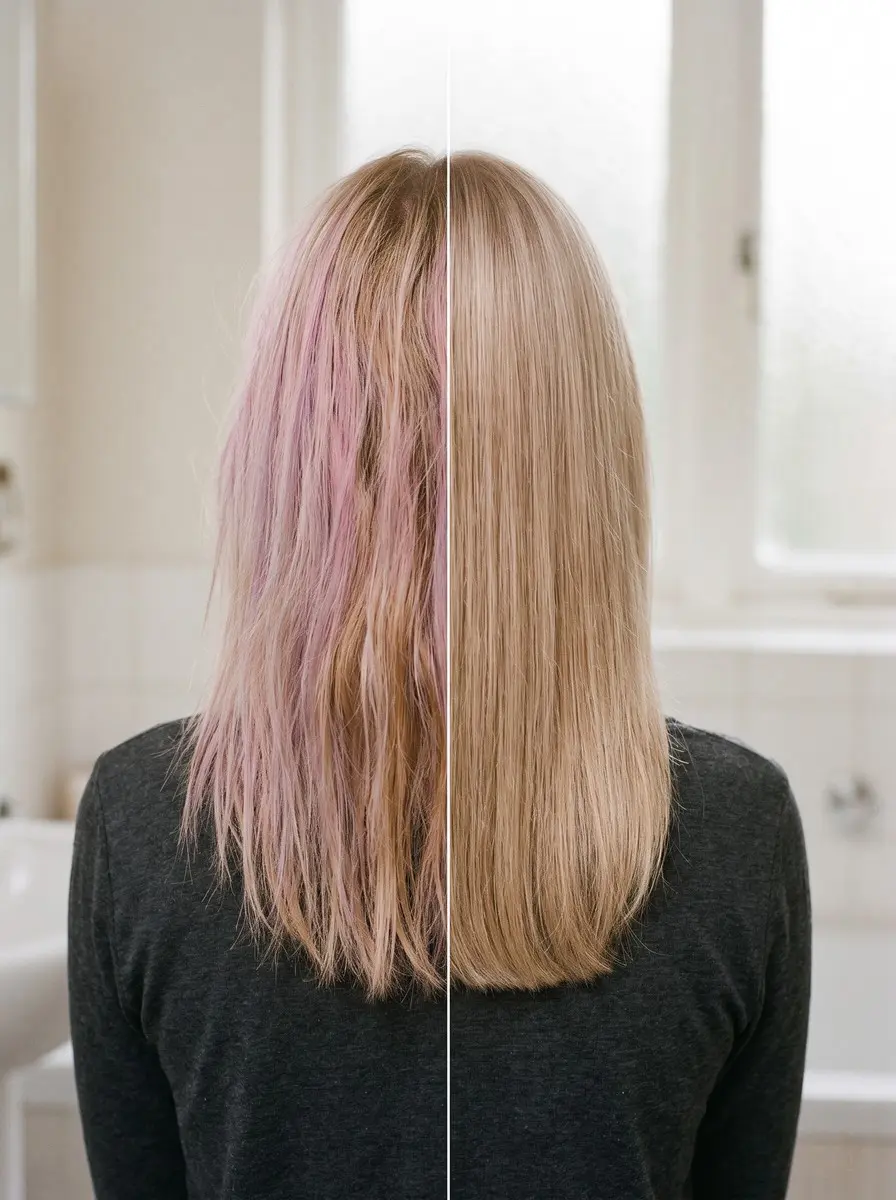
This matters because permanent dye can’t lighten hair that already holds artificial color. Color doesn’t lift color, so going lighter over dyed lengths needs a color remover or lightener, not a lighter box shade. Your natural root level is what new permanent color acts on, and your lengths show what you’re working with everywhere else.
Step 3 Choose a target within two levels
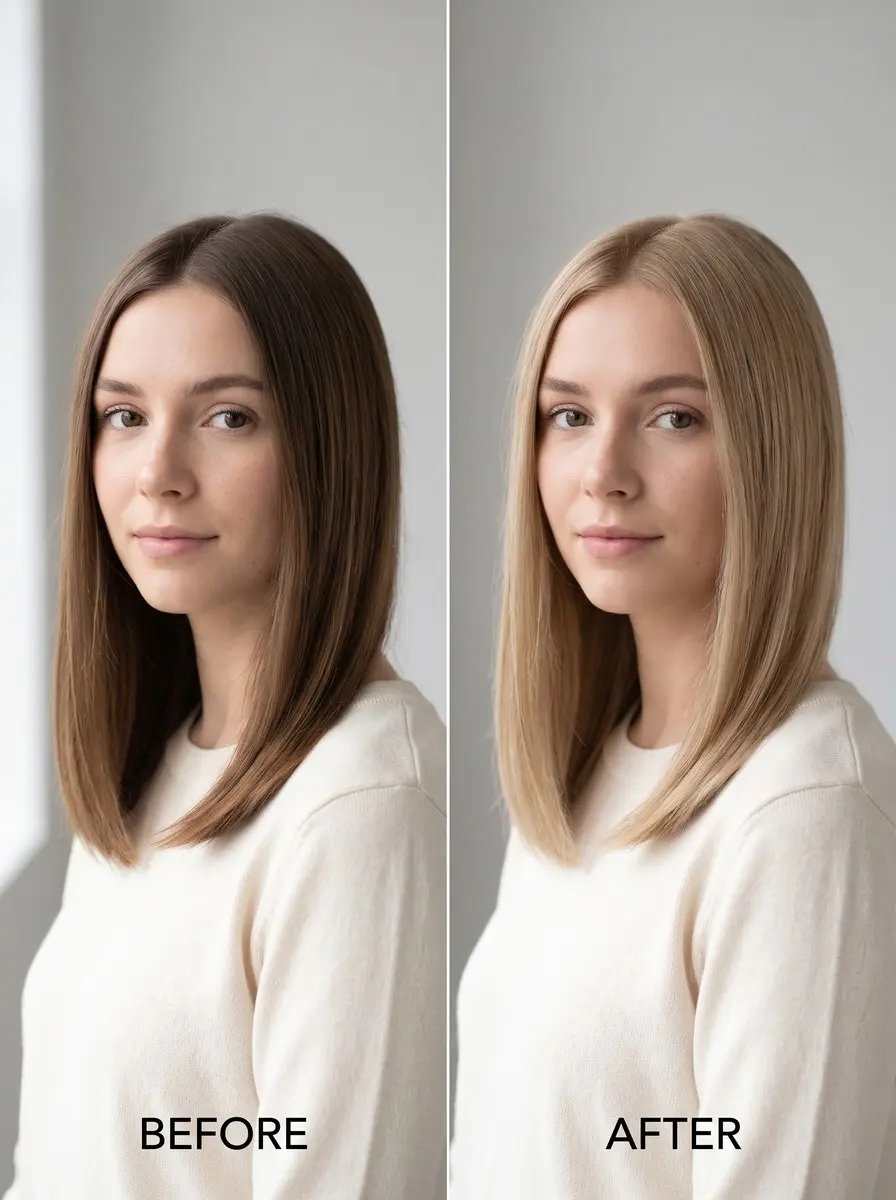
Count the levels between where you are and where you want to be. A natural 5 aiming for a 7 is two levels of lift, while a 7 wanting a 5 is two levels of deposit.
At home, keep the change to about two levels in a single process, in either direction, because bigger jumps raise the risk of patchy, uneven or brassy results that are hard to correct. If you want three or more levels lighter, or you want to lighten hair that’s already dyed, book a colorist, who can lift in controlled stages and tone in between.
Step 4 Expect the warmth lifting reveals
Lightening breaks down your natural dark pigment and exposes the warmer pigment underneath in a fixed order, from deep red-brown through red, red-orange, orange and gold to yellow and finally pale yellow.
Roughly, the warmth exposed is deep red-brown at levels 1 and 2, red at 3 and 4, red-orange at 5, orange at 6, orange-gold at 7, yellow at 8, pale yellow at 9 and palest yellow at 10. Brands’ charts differ by about a level, so check the one for your color line.
That leftover warmth is what you see as brassiness, and it’s why dark brown lifted two levels often looks coppery rather than beige. Knowing it in advance lets you pick a cool-toned shade or plan a toner: violet cancels yellow, blue cancels orange and blue-green cancels red-orange.
Step 5 Match developer to the gap
Developer strength controls how much lift permanent color can give. 10 volume (3%) deposits color only. 20 volume (6%) lifts about one to two levels and is the standard for gray coverage, 30 volume (9%) lifts about two to three, and 40 volume (12%) up to three or four.
Wella’s professional guidance is more conservative (one level for 6%, two for 9%, three for 12%), so plan around the low end: 20 volume for one level of lift, 30 volume for two, and just 10 volume for going darker when there’s no gray to cover.
Treat 40 volume as a salon strength, because it’s hard on the scalp and it exposes more warmth than most at-home toners can correct.
Step 6 Fill before going much darker
Going darker is deposit rather than lift, but lightened hair has lost the warm pigment that a darker shade relies on to look rich.
A brown put straight over pale blonde, especially an ash brown, often comes out flat, murky or slightly green and fades fast, because the cool artificial pigment has no warmth underneath to balance it. A pigment fill puts back what lightening removed.
Apply a warm shade matched to the warmth of your target level, such as a red-orange filler before a level 5 light brown, then follow with your darker color as the filler directions say. If you’re going more than two levels darker over bleached hair, a colorist can judge the fill far more precisely.
Step 7 Decode the number on the box
Most dye shade codes give the level first and the tone second. 6N is a level 6 dark blonde with a natural tone, and 7.1 (written 7/1 by some brands) is a level 7 medium blonde with an ash tone. Letter systems use N for natural, A for ash, G for gold and R for red.
Number systems put digits after the point: .1 is usually ash, .3 gold, and a second digit names a secondary tone. Codes aren’t fully standardized, so read the brand’s own key, and judge the result from the side-panel chart rather than the model photo, which shows hair that may have started lighter than yours.
Step 8 Strand test the plan first
Before you color your whole head, mix a small amount of your chosen shade and developer and apply it to a hidden underneath section for the full processing time. Let it dry, then check it in the same daylight you used to find your level, comparing both lightness and warmth against your target swatch.
If it came out too warm, too dark or uneven, change the shade, the developer or the plan now rather than after it’s on every strand. Do a separate patch test 48 hours ahead too, because a strand test checks the color result, not whether your skin will react.
Common Mistakes to Avoid
- Reading your level under bathroom lighting or on wet, product-coated hair, which makes it look darker or warmer than it really is.
- Choosing a shade from the model photo on the front of the box instead of the side-panel chart, which shows what your starting level will actually get.
- Using a lighter permanent box shade to lighten hair that’s already dyed. Color doesn’t lift color, so you end up with lighter roots and unchanged lengths.
- Jumping more than about two levels in one go, or reaching for 40-volume developer at home, which tends to leave hair brassy, patchy or damaged.
- Putting a dark shade straight over bleached blonde without a filler, which can turn flat, murky or greenish and fade quickly.
- Confusing tone with level, like expecting an ash shade to come out lighter than a gold shade with the same number.
Pro tip Photograph your strand next to the swatch in daylight, then switch the photo to black and white. With tone stripped out you’re comparing lightness alone, which is exactly what a level measures.
The Bottom Line
Once you know your level, color stops being guesswork. You know whether you need lift or deposit, which warmth to expect, which developer fits the gap and how to read the code on any box.
Check your level again whenever your hair changes, because new highlights, fading or a few months of regrowth all shift the reading. Roots come in at about half an inch a month, so time touch-ups for when the line between your two levels starts to show.
See a colorist if you want to go more than two levels lighter or darker, lighten hair that’s already dyed, or go dark over bleached blonde. Those changes need staged lightening, fillers and toning that are much easier to control in a salon chair.
Frequently Asked Questions
What level is dark blonde hair?
Dark blonde is level 6 on the standard 1-10 scale, with medium blonde at 7 and light blonde at 8. Light brown sits just below it at level 5. Shade names vary a little between brands, so the number is more reliable than the name when you compare boxes or describe your hair to a colorist.
How many levels lighter can box dye take my hair?
Permanent box dye is usually mixed with 20-volume (6%) developer, which lifts about one to two levels on natural, uncolored hair. Plan on one to be safe. It won't lighten hair that's already dyed, because color doesn't lift color. Beyond about two levels, or over old dye, you need lightener, and a colorist is the safer route.
Why does my hair turn orange when I go lighter?
Lightening exposes the warm pigment under your natural color: roughly red-orange at level 5 and orange at level 6. That's why brown hair lifted a level or two often lands brassy. A blue-based toner or an ash shade cancels orange, while a violet toner cancels the yellow left on lighter blondes.
What do the letters and numbers on a hair dye box mean?
The first number is the level, from 1 (black) to 10 (lightest blonde), and what follows is the tone. In 6N the N means natural, and in 7.1 or 7/1 the .1 usually means ash. Letters like A, G and R stand for ash, gold and red, but codes vary by brand, so check the brand's own key.
Does gray hair have a level?
Gray and white hairs have little or no pigment, so colorists judge your level on the pigmented hair around them and note how much gray there is separately. Gray coverage is usually done with 20-volume developer and a shade at or near your natural level. If gray coverage keeps coming out patchy, a colorist can adjust the formula.
Keep Reading
Sources
- Hair coloring lightening open-exam-prep.com
- 10 tricks to help you color resistant gray hair us.wella.professionalstore.com