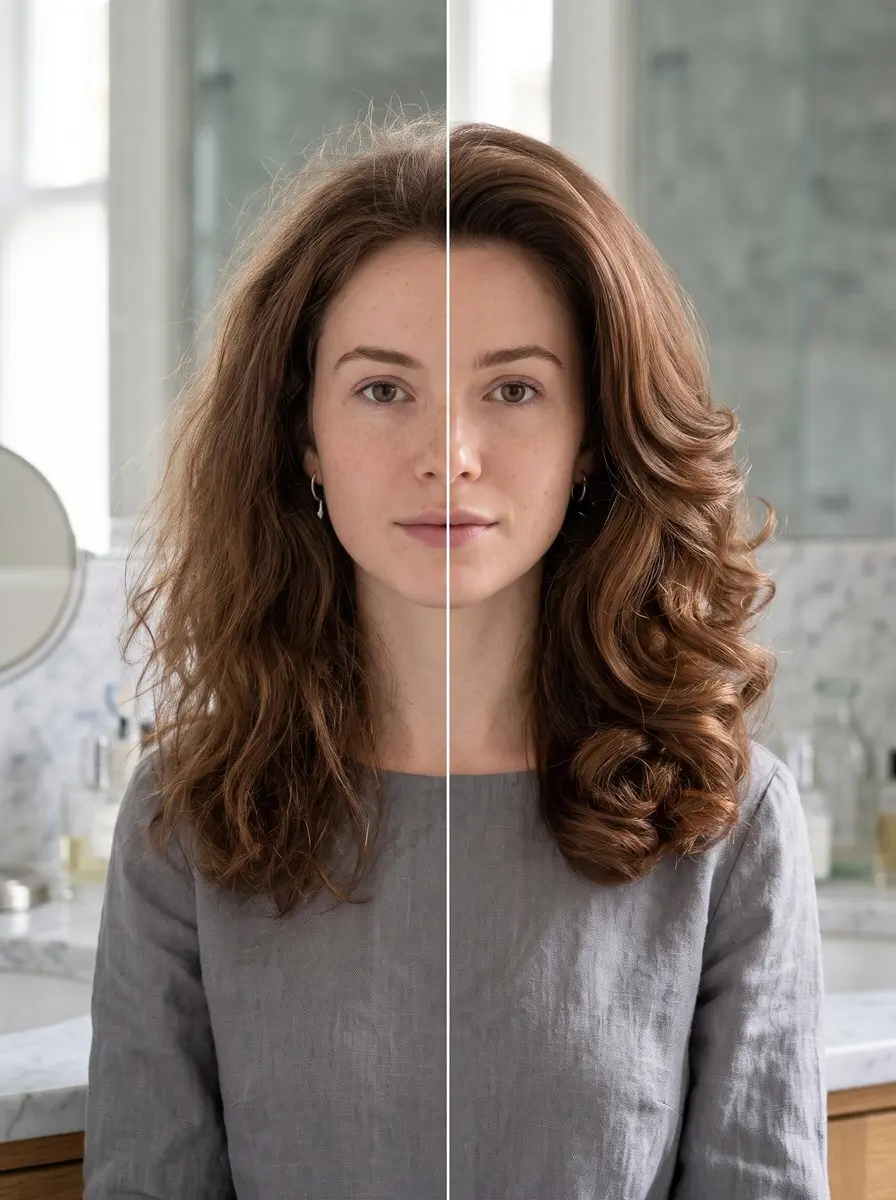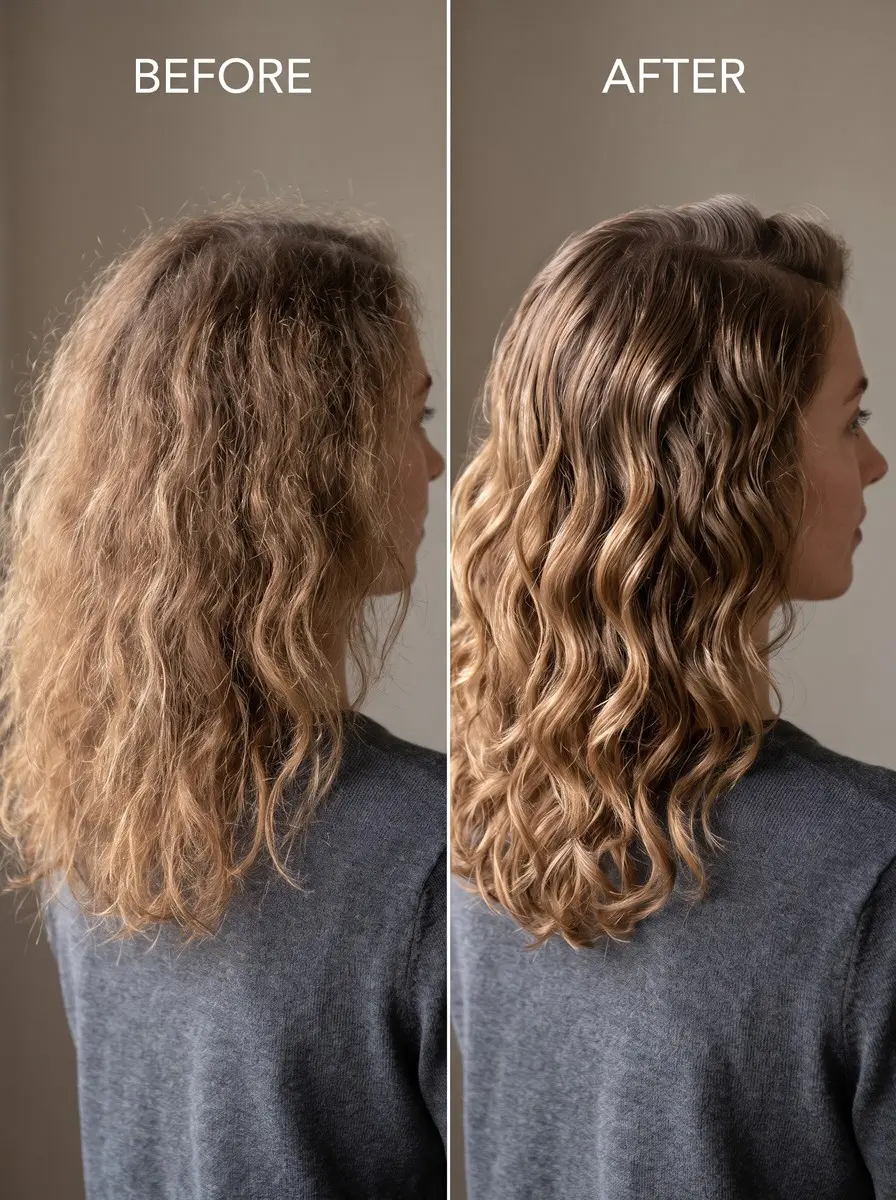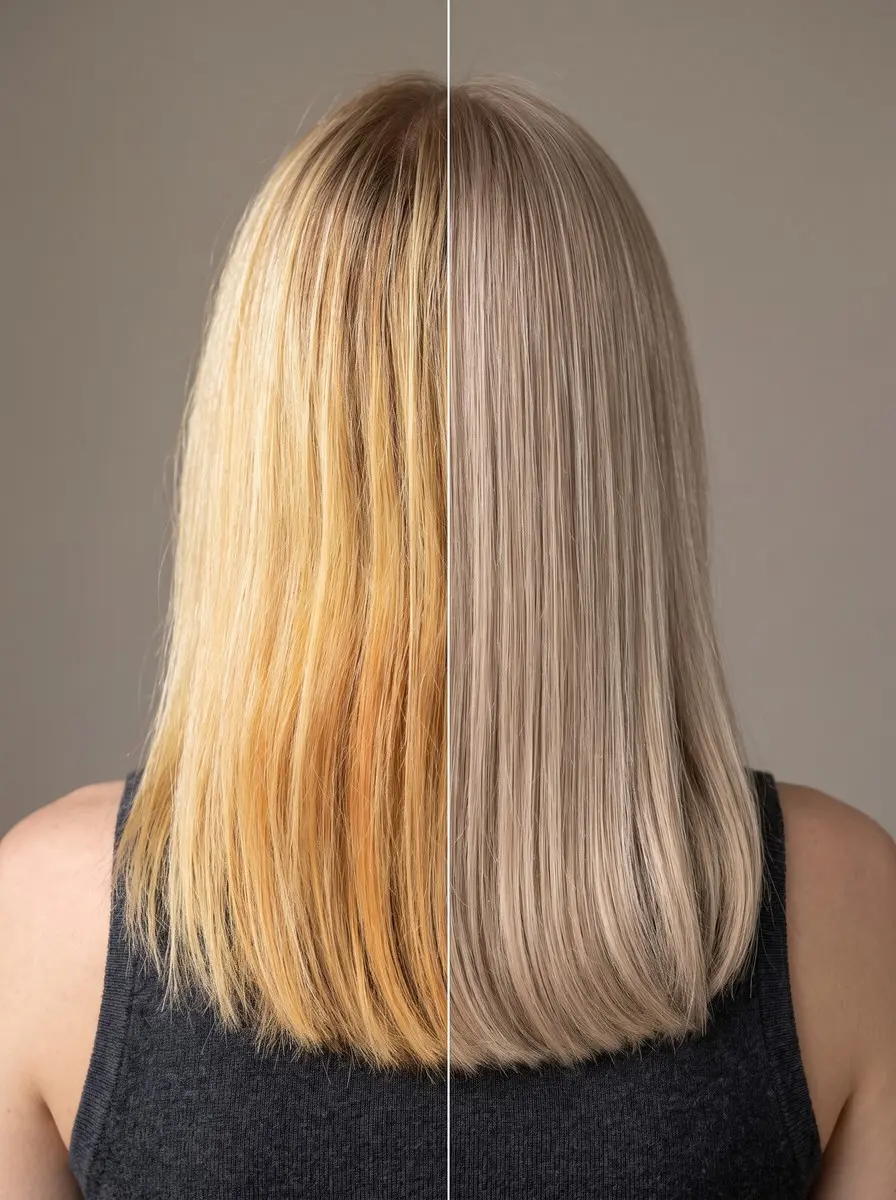
Quick answer To choose a toner for brassy hair, read your level and the brass it shows, then pick the opposite on the color wheel: violet for pale yellow, blue-violet for yellow-orange, blue for orange and blue-green for red-orange. Strand test it on towel-dried hair first.
Choosing a toner for brassy hair starts with a short diagnosis, because brass is rarely one color. Freshly lightened hair can show pale lemon at the ends, golden yellow-orange through the lengths and an orange band where the lift stalled, and each of those needs a different toner.
Grab the wrong bottle and you either see no change at all or trade brass for a grey, green or lilac cast that is harder to live with.
The diagnosis is quick: read your level, name the warmth you see, then pick its opposite on the color wheel.
This guide gives you a level-to-toner chart, the developer and timing to use, a strand test that catches mistakes early, and the honest signs that toner can’t solve your problem and a lift, a deeper corrective shade or a colorist will. All of it is doable at home with a bowl, a brush and a timer.
Time 45-75 minutes, plus a 48-hour skin allergy testDifficulty IntermediateSteps 9
Which Toner Cancels Your Brass, by Level
| Your level | Brass you see | Toner base |
|---|---|---|
| 9-10 (palest blonde) | Pale yellow | Violet |
| 8 (light blonde) | Yellow-orange | Blue-violet |
| 6-7 (dark-medium blonde) | Orange | Blue |
| 4-5 (light-medium brown) | Red-orange | Blue-green |
| Dark hair or red dye | True red | Green |
What You’ll Need
As an Amazon Associate, HairAide earns from qualifying purchases. Product links in this guide are affiliate links: they cost you nothing extra and help keep these tutorials free.
- Demi-permanent toner in your neutralizing base This is the product that does the canceling, so its base has to match the brass you identified for your level.
- 10-volume cream developer It lets the toner deposit pigment with minimal lift, which is all a toning service needs.
- Tone-refreshing hair color gloss A gentler way to refresh faded tone, or to warm up a grey over-toned cast, than a full re-tone.
- Custom-matched ash or matte demi-permanent color When brown hair shows red-orange that a sheer toner can’t touch, a blue-green or matte shade at your own level neutralizes it instead.
- Purple and blue toning shampoo set One weekly wash keeps yellow (purple) or orange (blue) brass in check between toners.
Step-by-Step
Step 1 Find your true level
Check your hair dry, in daylight, at the mid-lengths, because roots and ends are often a level apart and will mislead you. Compare it with a level chart or a box-dye swatch card: level 10 is the palest blonde, 8 is light blonde, 6-7 is dark-to-medium blonde and 4-5 is light-to-medium brown.
Your level matters because lightening exposes a predictable warm pigment at each stage, so it tells you which brass you are actually fighting. If roots, lengths and ends sit at different levels, note each zone separately, since they may need different toners.
Step 2 Name the exact brass tone
Hold a section against a white towel or sheet of paper; a white background makes warmth far easier to read than a bathroom mirror does. Pale lemon yellow, golden yellow-orange, true orange and coppery red-orange each sit at a different point on the color wheel, so ‘brassy’ alone is not specific enough to choose a toner by.
As a rule, the tone tracks the level: pale yellow at levels 9-10, yellow-orange at 8, orange at 6-7 and red-orange at 4-5. If the warmth looks redder than your level suggests, old box dye may be sitting in the lengths, which makes the strand test in a later step non-negotiable.
Step 3 Match the brass to its opposite
Toner works by depositing the color that sits directly opposite the warmth on the color wheel, which cancels it toward neutral. Use violet for pale yellow, blue-violet for yellow-orange, blue for orange and blue-green for red-orange; green on its own is for true red, usually on dark hair or over leftover red dye.
Professional toners are labeled by these bases, and some combine two pigments, such as violet-blue or blue-green, because real brass usually sits between two colors. Getting the base right matters more than the brand: blue on pale yellow can tip it green, while violet on orange barely makes a dent.
Step 4 Check toner can actually fix it
Toner deposits tone; it does not lift hair to a lighter level, so it neutralizes the warmth but leaves the level where it is. Orange hair at level 7 toned with blue becomes a neutral dark blonde, not icy platinum, so if you want pale blonde the hair must be lightened further first.
At level 5 and darker, sheer blonde toners barely show, and a blue-green or green-based (matte) demi-permanent shade at your own level corrects red-orange far better; Redken likewise recommends blue-based correction for red and orange tones in brown hair.
Stop and book a colorist if your hair feels gummy or stretchy when wet, shows sharp bands of color, or has old box dye in the lengths.
Step 5 Choose the formula and developer
Most demi-permanent toners mix with a low-volume developer, usually 10 volume, which lets the pigment develop and deposit with minimal lift. Some toner kits are formulated for 20 volume; follow the ratio on the box exactly, because the pigment strength is balanced for that mix.
If you have two brass zones, say yellow-orange lengths with an orange band, mix two small bowls rather than one compromise formula, so each zone gets the base it needs. For hair that is only mildly warm, a color gloss or toning conditioner is a gentler, sheerer choice than a full toner.
Step 6 Strand test before the full head
Do the skin allergy test your box asks for 48 hours ahead, then mix a teaspoon of formula and apply it to a hidden section at the nape, including some of your lightest ends. Check every 3-5 minutes and rinse once the warmth looks neutral, then dry the strand fully and look at it in daylight, because wet hair reads darker and cooler than it will dry.
Write down the minutes it took: that is your timing for the full application. This one test catches both expensive mistakes early, a formula that does nothing and one that turns porous ends grey, muddy or lilac.
Step 7 Apply on damp or dry hair
Most toners go onto towel-dried, damp hair: the moisture dilutes the formula slightly so it spreads evenly and deposits a sheerer, more controllable result. Dry application deposits more strongly, which can help stubborn orange on resistant hair but raises the risk of grey or patchy ends, so use it only if your damp strand test barely moved.
Wear gloves, section into four quadrants, and apply to the warmest zone first and porous ends last, since ends grab pigment fastest. Watch from the first minute, never exceed the maximum time on the box, then rinse until the water runs clear and follow with conditioner.
Step 8 Fix grey, muddy or purple casts
Over-toning happens when too much pigment lands on porous hair or stays on too long: violet leaves a lilac cast, blue leaves a blue-grey or faintly green one, and heavy ash looks muddy and flat. Toner is deposit-only and fades with washing, so a clarifying shampoo usually lifts much of a cast within one to three washes; start there and give it a few days.
If the ends still look grey and dull, a sheer gold or warm-beige gloss brings back warmth and dimension. Don’t reach for bleach to remove a toner cast, because it adds damage to hair that only needs a few washes.
Step 9 Keep the tone between toners
Toner fades a little with every wash, so warmth creeps back, typically over four to eight weeks and faster on porous or frequently washed hair. Use a purple shampoo once a week if your brass is yellow, or a blue shampoo if it is orange, and leave it on only as long as the label says.
Switch your everyday wash to a gentle color-safe shampoo and stretch the days between washes where you can, since fewer washes means less fading. When the tone has clearly drifted, refresh with a gloss rather than a full re-tone: it is the usual professional fix and gentler on lightened hair.
Common Mistakes to Avoid
- Choosing a toner by the word ‘brassy’ instead of the exact tone: violet on orange hair does almost nothing.
- Putting a blue toner on pale yellow hair, which can tip it green.
- Expecting toner to lighten you. It neutralizes warmth at your current level, so it won’t turn level 7 orange into platinum.
- Skipping the strand test and leaving the full formula on porous ends, which go grey or lilac first.
- Judging the result on wet hair, which looks darker and cooler than it will once dry.
Pro tip If your ends are lighter and more porous than your mid-lengths, mix a second, sheerer bowl for them (half your formula, half clear gloss or diluter) and apply it last. Porous ends grab pigment fastest, and this is the simplest way to stop them going grey while the mid-lengths cancel properly.
The Bottom Line
Once you’ve matched your brass to its opposite (violet for yellow, blue-violet for yellow-orange, blue for orange, blue-green for red-orange), toning stops being guesswork and becomes a routine you can repeat. Note the formula and the minutes that worked so the next refresh is quicker, and if you blow-dry to judge the result, mist on a heat protectant first.
Plan to refresh every four to eight weeks, with purple or blue shampoo in between. If your hair is uneven, stretchy when wet, dark red at level 5 or below, or you want to go much lighter than you are now, toner isn’t the right tool. Book a colorist for a proper correction instead.
Frequently Asked Questions
What toner cancels orange brassy hair?
A blue-based toner cancels orange, because blue sits opposite orange on the color wheel. If the orange leans coppery red-orange, usually at levels 4-5, choose blue-green instead. Toner only neutralizes the warmth, though: orange hair at level 7 becomes a neutral dark blonde, not a pale one. To go lighter, the hair needs more lifting first.
Can I use purple shampoo on orange hair?
Purple shampoo targets yellow, so on orange hair it barely helps. Use a blue shampoo for orange tones instead. Either way, toning shampoos deposit only a little pigment per wash, so they are best for keeping a toner fresh between sessions, not for correcting strong brass on their own. Once a week, timed to the label, is usually enough.
How long does toner last on bleached hair?
A demi-permanent toner typically lasts about four to eight weeks, and fades faster on porous, heavily lightened hair or if you wash daily. Warmth comes back gradually rather than all at once. A weekly purple or blue shampoo, a gentle color-safe everyday shampoo and fewer washes all make it last longer, and a gloss refreshes it once it fades.
What should I do if toner turned my hair grey, purple or green?
Wash with a clarifying shampoo. Toner is deposit-only, so one to three washes usually fades a lilac, grey or blue-green cast noticeably. Give it a few days before trying anything stronger. If the ends stay grey and flat, a sheer gold or warm-beige gloss brings back warmth. Never re-bleach to remove a toner cast, because the damage outweighs the fix.
When should I see a colorist instead of toning at home?
See a pro if your hair has sharp bands or patches of different colors, feels gummy or stretchy when wet, is dark red at level 5 or below, or still has old box dye in the lengths. Also book in if you want to go more than a level or two lighter, because that takes controlled lifting before any toner.
Keep Reading
Sources
- How to prevent brassy haircolor redken.com
- Hair toner guide coloredhaircare.com
- How to remove red and orange tones from brassy brown hair redken.com
- How to get rid of brassy hair studio.salonory.com