Quick answer To do a bleach bath, strand-test first, then mix 1 part bleach powder, 2 parts 10-volume developer and 3 parts shampoo. Apply it to damp hair, ends first and roots last, check every 5 minutes, rinse by 45 minutes at most and condition right away.
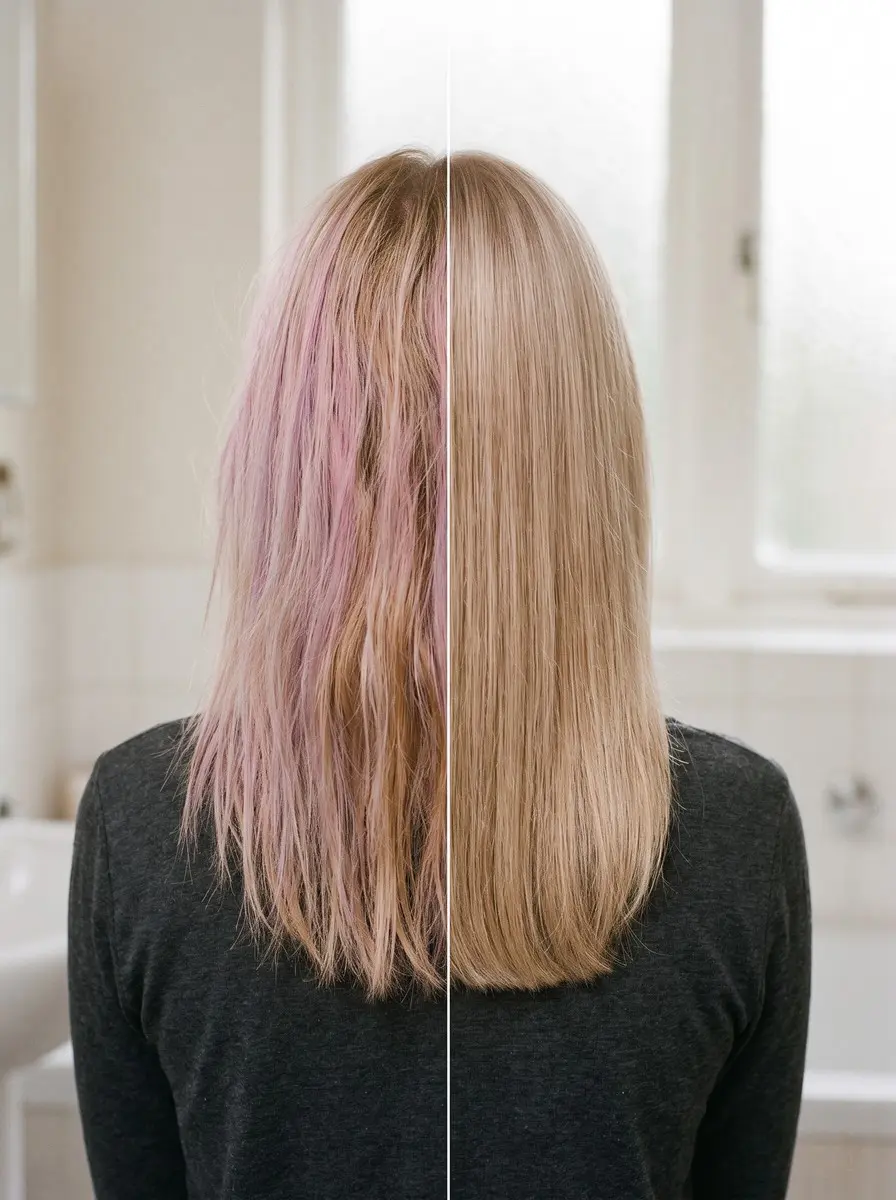
A bleach bath is a gentler version of a full bleach job. Lightening powder and developer are diluted with shampoo, so the mix works more slowly and more evenly than full-strength bleach. That makes it right for a short list of jobs: fading a semi-permanent color you’re tired of, evening out patchy blonde, or brightening dull light hair by a shade before you tone it.
It is still bleach, though, and it has limits. It won’t turn dark brown hair blonde, and it’s hard on hair that’s already fragile. This guide covers deciding whether a bath suits your hair, testing safely, mixing a conservative batch, timing it with five-minute checks and caring for your hair afterward. The goal is a softer, cleaner shade, not a surprise.
Time 60-90 minutes (plus a skin patch test beforehand)Difficulty IntermediateSteps 9
Bleach Bath Starting Points
| Setting | Start here | Don’t go past |
|---|---|---|
| Developer | 10 volume | 20 volume |
| Powder : developer : shampoo | 1 : 2 : 3 | 1 : 1 : 2 |
| Processing time | 20-30 minutes | 45 minutes total |
What You’ll Need
As an Amazon Associate, HairAide earns from qualifying purchases. Product links in this guide are affiliate links: they cost you nothing extra and help keep these tutorials free.
- Lightening powder The lightening agent in the mix. A dust-free formula is easier to measure and less irritating to breathe in.
- 10-volume cream developer The gentlest developer for a first bleach bath, giving slow lift you can control.
- Plastic mixing bowl, tint brush and plastic clips kit Keeps the mixture away from metal and makes measuring, mixing and sectioning clean and easy.
- Bond-building treatment Used right after rinsing, it reduces breakage in freshly lightened hair.
- Toning gloss for blonde hair Neutralizes the yellow or orange warmth a bleach bath exposes.
Step-by-Step
Step 1 Check whether a bath suits your goal
A bleach bath is for small changes: fading semi-permanent or direct-dye shades, evening out patchy blonde, or making light hair a little brighter before toning. Because the lightener is diluted, it lifts less than regular bleach.
Dark brown or black hair usually moves only slightly, and often toward warm red, orange or copper rather than blonde. Skip it entirely if your hair already stretches, feels gummy or snaps when wet, or if it’s relaxed or chemically straightened.
Skip it too if you’ve used compound henna or a metallic-salt dye, which can react unpredictably with bleach. If your scalp is irritated, sunburned or broken, wait until it has healed. If none of these apply to you, move on to testing.
Step 2 Patch-test your skin first
Even if you’ve bleached before, do a skin allergy test with the exact powder and developer you plan to use. Follow the brand’s directions, which usually mean a small dab behind the ear or on the inner elbow.
Wait the full time the packaging gives, and don’t go ahead if you notice burning, redness, itching or swelling. Formulas differ between brands, and a reaction on your scalp is much harder to deal with than one on your arm. No reaction after the full wait means you can move on to the strand test.
Step 3 Strand-test a hidden section
Snip or clip off a small piece of hair from the nape or under a top layer. Mix a tiny batch at the ratio you plan to use and coat the strand.
Every 5 minutes, wipe a little of the mixture off with a damp cloth and note the time and the color you see. Rinse when the strand reaches your shade or at 45 minutes, whichever comes first. Then condition it and gently stretch it while it’s damp.
Your hair’s color history decides how fast it lightens, not the recipe, so this test is your real timing guide. If the strand stretches like gum or breaks, or has barely changed by 45 minutes, a full-head bath isn’t the right tool.
Step 4 Set up your space and dampen your hair
Work in a well-ventilated room with a window open or a fan running. Wear nitrile or vinyl gloves and an old shirt. Lay out a plastic or glass bowl, a tint brush and plastic clips, not metal, which can react with lightener.
Smooth a thin layer of petroleum jelly or barrier cream along your hairline and over your ears to protect the skin. Wet your hair, towel-blot it until it’s damp but not dripping, and divide it into four sections. Damp hair helps the diluted mixture spread quickly and evenly, which matters when the clock is running.
Step 5 Mix a conservative batch
Sources disagree on ratios. Recipes range from 1:1:2 and 1:2:3 (powder to developer to shampoo) to four-part 1:1:1:1 mixes made with clarifying shampoo, so start at the gentle end.
Using the same spoon or cup for each part, measure 1 part powder, 2 parts 10-volume developer and 3 parts plain or clarifying shampoo, then whisk until smooth with no dry lumps. Move up to 20-volume developer or a stronger 1:1:2 mix only if your strand test barely changed, and strand-test that stronger mix too.
Never use more than 20 volume for a bath. Mix right before you apply, because lightener starts losing strength once it’s mixed. If you run short, make a fresh second batch.
Step 6 Apply ends first, roots last
Work one section at a time. Coat the bottom three quarters of each section first and saturate it evenly. With gloves on, you can work the mix through the lengths like shampoo. Leave the roots for last and keep the mix a little away from the scalp.
Warmth from your head makes roots lighten faster, and rubbing lightener into the scalp can cause burning, redness or itching. If your roots are your natural, never-colored shade and you’re only fading old dye, skip them. You’re done when every strand in the target area is wet with mixture and there are no dry patches.
Step 7 Check the color every five minutes
Set a timer. Every 5 minutes, check a strand from each section by wiping a small piece clean with a damp cloth, because the foam hides the real shade. Most bleach baths take 20-30 minutes. Stop at 45 minutes total even if you haven’t reached your goal, because past that point you add damage for little extra lift.
Rinse sooner if you see the shade you wanted, the hair starts to feel mushy, or your scalp stings. Wet hair looks a little darker than it will once dry, so don’t keep processing just because a damp strand looks deeper than you expected.
Step 8 Rinse and condition right away
Rinse with lukewarm water for several minutes until no trace of the mixture is left, tilting your head so it runs away from your face and eyes. Follow straight away with a rich conditioner or a bond-building treatment.
Bond builders reduce breakage by adding new links inside the fiber, but they can’t undo the changes bleach has already made, so think of them as protection rather than repair. Leave it on for the time the product recommends, rinse, and let your hair air-dry. Your hair should feel soft and slippery after conditioning. If it feels rough, stretchy or gummy, don’t repeat the bath.
Step 9 Tone, then wait before repeating
Lightening exposes the warm pigment underneath, so expect some yellow or orange once your hair is dry. Choose a toner for the warmth you see: violet cancels yellow, blue cancels orange, and a blue-violet toner suits the yellow-orange in between. A purple shampoo handles mild yellow, while a demi-permanent toner or gloss corrects stronger brass.
If you want to go lighter, wait several days to a week before another bath and deep-condition in between. Stop altogether once a bath no longer changes the color or your hair feels weaker each time. That’s the point to book a colorist.
Common Mistakes to Avoid
- Using 30- or 40-volume developer, which turns a gentle bath into a full-strength bleach process with far more lift and damage than you planned.
- Skipping the skin patch test or the strand test because you’ve bleached before. Formulas and your hair’s color history both change the result.
- Starting at the roots or rubbing the mixture into the scalp, which gives uneven lift and can burn or irritate the skin.
- Walking away from the timer, or leaving the mix on past 45 minutes hoping for more lift.
- Mixing in a metal bowl or using metal clips, or mixing a big batch in advance and using it after it has started to lose strength.
- Doing back-to-back baths in one day instead of waiting several days to a week between them.
Pro tip Judge each check on a strand you’ve wiped clean, not through the foam, and aim to rinse at pale yellow rather than chasing white. A violet toner cancels yellow cleanly, but orange needs a blue-based toner and much more correction.
The Bottom Line
A careful bleach bath leaves you with a softer, cleaner shade: faded dye gone, patchy blonde evened out, and any brass ready to tone. To keep the result fresh, use a purple shampoo about once a week if yellow creeps back, a weekly deep-conditioning mask, and a color-safe shampoo on regular wash days.
Book a colorist instead if you’re working with dark or stubborn dye, hair that’s already been lightened several times, or red-orange tones that need a blue-green correction. A colorist can lift in controlled stages and correct the tone without risking breakage. The same goes if your strand test stretched, snapped or barely changed.
Frequently Asked Questions
Will a bleach bath lighten dark brown or black hair?
Usually not by much. Because the lightener is diluted with shampoo, a bleach bath lifts less than regular bleach. Dark hair tends to shift only slightly, often toward warm red, orange or copper. To make dark hair noticeably lighter, the realistic route is full-strength lightening done in stages, ideally by a colorist.
What is the best bleach bath ratio?
There isn't one agreed ratio. Sources use 1:1:2, 1:2:3 or four-part 1:1:1:1 mixes with clarifying shampoo. A cautious starting point is 1 part powder, 2 parts 10-volume developer and 3 parts shampoo. If your strand test barely changes, try 20-volume developer or a 1:1:2 mix on a fresh strand, but never go above 20 volume.
How often can you do a bleach bath?
Wait several days to a week between bleach baths and deep-condition in between. Each bath adds damage, so stop once a bath no longer changes the color or your hair starts to feel gummy, stretchy or weaker when wet. At that point, a colorist can tell you whether more lightening is safe.
Can a bleach bath remove permanent hair dye?
It fades semi-permanent and direct dyes well and can soften some permanent color, but stubborn or dark permanent dye often barely moves in a diluted mix. For permanent oxidative dye, a hair color remover is usually the gentler and more effective first step. A strand test will show which approach works on your hair.
Does a bleach bath damage hair?
Yes, though less than full-strength bleach. It still uses lightener and developer, so it weakens the hair fiber, especially with repeated baths or on hair that's already been lightened. To limit damage, use 10-volume developer, stop by 45 minutes, apply a conditioner or bond-building treatment straight afterward, and wait several days to a week between baths.
Keep Reading
Sources
- How to bleach bath hair curlcentric.com
- Bleach bath hair coloredhaircare.com