Quick answer To fix hot roots, decide whether your roots are lighter than your lengths or only warmer. Darken too-light roots with a demi-permanent shade at your lengths' level, applied to the roots only. Tone warm roots with the opposite color: violet for yellow, blue for orange, green for red.
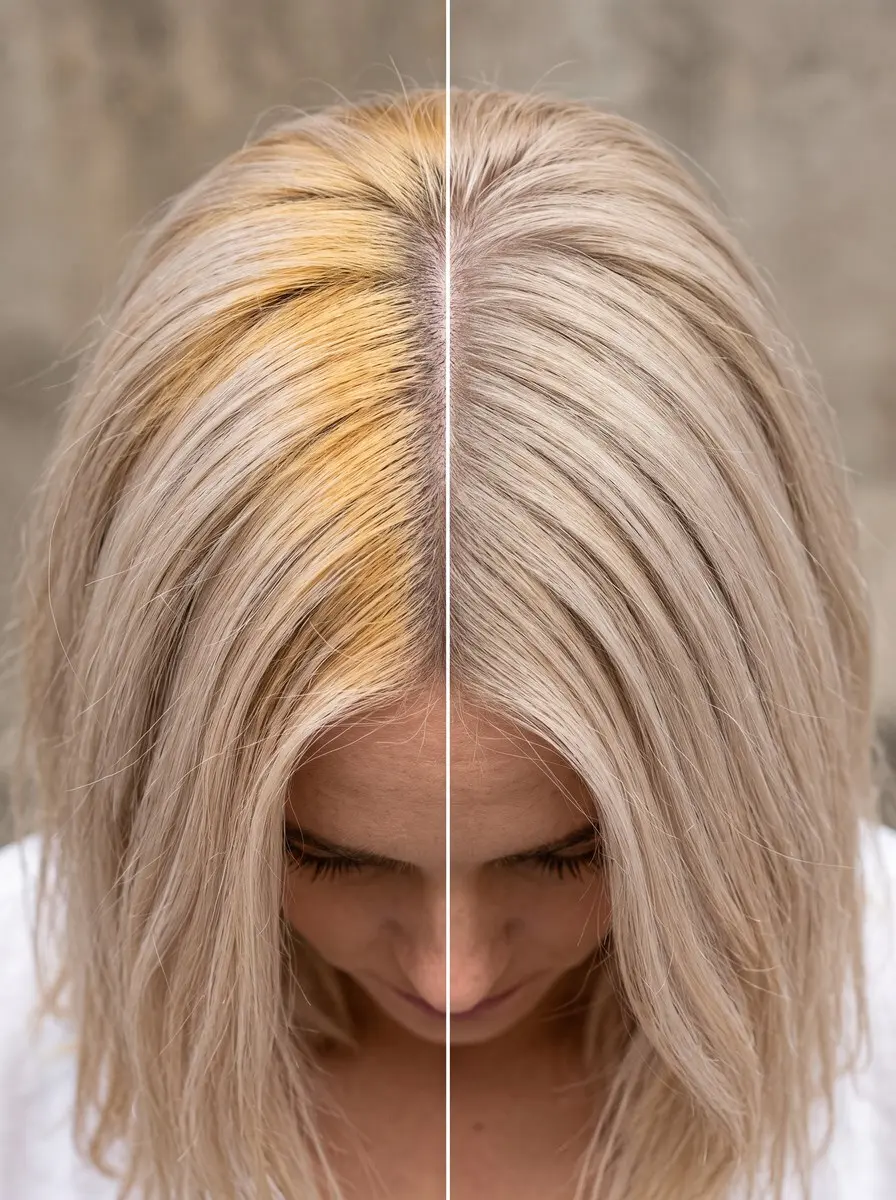
You colored your roots, rinsed, and there it is: a glowing band at the scalp that’s brighter, lighter or more orange than the rest of your hair. Colorists call it hot roots.
It’s one of the most common at-home color mishaps, because the fresh regrowth near your scalp doesn’t behave like the hair below it. Scalp heat speeds up processing, and new growth isn’t yet fully keratinized, so it lifts faster than lengths that have already been colored.
The good news is that you can fix hot roots at home by treating only the roots, with no need to re-dye or re-bleach your whole head. Diagnose first: work out which kind you have, because roots that are too light and roots that are too warm need opposite fixes. Below you’ll find both fixes, a toner chart matched to your root color, and how to stop it happening again.
Time 45-90 minutes, plus a 48-hour patch testDifficulty IntermediateSteps 8
Toner by Hot-Root Color
| Root color | Cancel with | Wella tone |
|---|---|---|
| Yellow | Violet | /6 |
| Orangey-yellow | Blue-violet | /86 |
| Orange | Blue | /8 |
| Orangey-red | Blue-green | /28 |
| Red | Green (matte) | /2 |
What You’ll Need
As an Amazon Associate, HairAide earns from qualifying purchases. Product links in this guide are affiliate links: they cost you nothing extra and help keep these tutorials free.
- Root-only permanent or demi-permanent color kit Adds depth back to roots that lifted too light without bleaching them further.
- Violet, blue or green-based demi-permanent toner Neutralizes yellow, orange or red warmth on the root band without lifting.
- Bond-building additive or mask Reduces breakage if under-lifted roots need a second lightening.
- Tint brush, mixing bowl, sectioning clips and gloves Lets you put product on the regrowth only, in fine partings, without overlapping the lengths.
- Purple shampoo (for yellow) or blue shampoo Keeps warmth from creeping back between touch-ups as the toner fades.
Step-by-Step
Step 1 Diagnose lighter versus warmer roots
Let your hair dry completely. Then look at your part by a window with a hand mirror, comparing the first inch at the scalp with the hair a few inches down. Wet hair and bathroom lighting both make color look darker and warmer than it is.
Ask two separate questions. Is the root lighter than the lengths? Or is it about the same depth, or darker, but noticeably yellow, orange or red? Squinting helps you judge depth without being distracted by tone. Lighter, brighter roots were over-processed and need darkening.
Warm roots at the same depth or darker were under-lifted and need toning or more lift. The two fixes are opposites, so this answer decides everything that follows. While you’re looking, check your scalp. If it’s red, sore or flaking from the first round, wait until it settles before you apply anything else.
Step 2 Patch test and strand test first
Before any toner, dye or lightener touches your scalp, do the allergy alert test from the box instructions. Most brands want it done 48 hours ahead. Do it even if you’ve used the product before, because you can become sensitive to a product over time.
Then strand test your chosen fix on a hidden section at the nape that includes some of the hot regrowth.
The strand test shows how quickly that root hair takes the color and what the finished shade really looks like, so you can adjust the timing before you do your whole part. If the patch area itches, turns red or burns, don’t use that product at all.
Step 3 Darken roots that lifted too light
If your roots are lighter and brighter than your lengths, you need to add color back, not take more out. Choose a demi-permanent shade or a deposit-only toner at the same level as your lengths.
Pick a neutral or slightly ash tone so it doesn’t add more warmth. On dark hair, that usually means a darker shade than the one that just turned hot. Apply it to the hot band only, in quarter-inch partings, and keep it off the previously colored lengths.
Demi-permanent color comes with a low-volume developer that deposits pigment without real lift, so it won’t repeat the over-processing that caused the problem. Rinse when the band matches the hair below it, using the timing your strand test confirmed.
Step 4 Tone warm roots with the opposite color
If your roots are about the same depth as your lengths but too warm, neutralize the band with the color opposite it on the color wheel. Violet cancels yellow, blue cancels orange and green cancels red. Match the toner to the main shade you see.
In Wella’s numbering, the digit after the slash is the tone. That means /6 (violet) for yellow roots, /86 (blue-violet) for orangey-yellow, /8 (blue) for orange, /28 (blue-green) for orangey-red and /2 (green-based matte) for red.
Apply it to the roots only and check every 5 minutes. Rinse once the warmth looks neutral, before it turns ashy or lilac. Toner deposits pigment but can’t lift, so it won’t make a level 7 root match level 9 lengths. That needs the next step.
Step 5 Re-lift stubborn roots with care
If your strand test shows the roots are both warmer and a level or more darker than your lengths, toner alone can’t close the gap. The band needs another gentle lift. Only do this once your scalp has fully settled, and only if the regrowth stretches slightly and bounces back when wet instead of snapping or feeling gummy.
Mix lightener with a developer no stronger than 20 volume, and add a bond-building additive, which reduces breakage during lightening. Apply it to the dark band only, stopping just short of the previously lightened hair.
Every 5-10 minutes, wipe a strand clean to check it. Rinse when the band is as pale as the inside of a banana peel, then tone it as in the previous step. If the roots need more than a level or two of lift, stop and book a colorist.
Step 6 Gloss to blend the line
Once the roots are corrected, a demi-permanent gloss can smooth out any faint line where the corrected band meets the lengths. Salons split touch-ups the same way: root color on the regrowth, gloss on the mids and ends.
Choose a gloss in your target tone and apply it to the lengths. For the last few minutes, comb it half an inch up into the corrected roots so the two zones merge.
Lightened lengths are more porous and absorb pigment faster than the roots, so check the ends early and rinse if they go darker or cooler than you planned. You’re done when the color looks like one continuous shade from scalp to ends in daylight.
Step 7 Give the hair recovery time
Corrected roots have now been through at least two chemical processes, so give them time before anything else. Use a bond-building mask or a rich conditioner for the next few washes. A bond mask reduces breakage, but it can’t undo the damage lightening has already done. A sulfate-free shampoo helps the toner last longer.
Hold off on any more lightening for at least a few weeks, and go ahead only if a strand test shows the hair still stretches and recovers. If warmth creeps back as the toner fades, use a purple shampoo for yellow or a blue shampoo for orange once a week until your next touch-up.
Step 8 Prevent hot roots at your next touch-up
Most people touch up every 4-8 weeks, once half an inch to an inch of regrowth shows. Apply color to the roots only and stop at the line of previously colored hair, because overlapping causes dark bands and breakage.
If you ever color or lighten all over, do the mids and ends first and the roots last. The scalp area processes faster, so it should get less time, especially on hot days. Pick a shade that matches your lengths rather than a lighter one, and keep developer at 20 volume or lower near the scalp.
On hair that’s already colored, don’t try to go more than one or two levels lighter at home. Box root color usually stays on about 35 minutes (around 45 for stubborn gray), so set a timer. With lightener, check every 5-10 minutes.
Common Mistakes to Avoid
- Toning roots that are lighter than the lengths. A neutralizing toner cancels warmth but won’t add the depth they’re missing.
- Pulling root color or lightener through to the ends at every touch-up. This overlaps onto lightened hair and causes dark bands or breakage.
- Using a stronger developer to fix warm roots fast. Developer that’s too strong for the scalp area is one of the causes of hot roots.
- Toning the whole head when only the band at the scalp is off. Porous lengths soak up the extra pigment and can turn gray or purple.
- Skipping the 48-hour patch test because you’ve used the brand before.
Pro tip Treat the regrowth itself in two zones. Apply your formula first to the half of the band farther from the scalp, then go back and do the quarter-inch nearest the scalp last. It’s the same roots-last approach colorists use on a full head, scaled down to the regrowth, and it stops scalp heat from over-processing the band.
The Bottom Line
Hot roots look alarming, but once you know whether your roots are too light or too warm, you only have to fix the roots. Use a darker deposit shade for roots that are too light.
For warm roots, use the opposite-color toner, or do one careful extra lift and then tone. Finish with a gloss to blend the line, and use a purple or blue shampoo once a week to keep warmth in check.
Next time, color the roots only, do the scalp area last and check the lift often. If the roots need more than a level or two of lift, if lightener has overlapped your lengths, or if one careful attempt hasn’t worked, stop there and book a colorist. Color correction is their specialty, and another round at home risks breakage.
Frequently Asked Questions
What causes hot roots?
Hot roots happen because the hair closest to the scalp processes faster than the rest. Scalp heat speeds up the chemical reaction, and new growth isn't yet fully keratinized, so it lifts more easily than lengths that were colored before. A developer that's too strong, or lightener rinsed before the roots lifted enough, can also leave a band that's brighter or warmer than the ends.
Can toner fix hot roots?
Yes, when the problem is mainly tone: yellow, orange or red roots at about the same level as your lengths. Pick the opposite color, which is violet for yellow, blue for orange and green for red. Toner deposits pigment but can't lift, so roots that are still a level or more darker than your lengths need a careful second lightening first. Roots that went too light need a toner at your lengths' darker level instead.
How long should I wait before fixing hot roots?
A deposit-only toner or demi-permanent gloss is gentle enough to use within a few days, once your scalp isn't sore and a 48-hour patch test is clear. Before lightening the roots a second time, wait until any scalp tenderness has completely gone. Only go ahead if a strand test shows the hair stretches and recovers instead of snapping or feeling gummy.
Will hot roots go away on their own?
No. Warm roots are showing natural warm pigment that lightening exposed, and it won't fade out. If anything, the warmth becomes more visible as any toner washes away. Roots that went too light stay that way too, and because hair grows about half an inch a month, waiting for the band to grow out takes many months. A root-only correction is much faster.
When should I see a colorist for hot roots?
Book a colorist if your roots need more than one or two levels of lift, if lightener has overlapped onto your lengths and left a band, or if the hair feels gummy, stretchy or breaks when wet. Also book one if one careful attempt at home hasn't worked. Burning, swelling or a rash on the scalp means stop coloring and see a doctor or pharmacist.
Keep Reading
Sources
- How to fix hot roots us.wella.professionalstore.com
- What are hot roots anyway madison-reed.com