Quick answer Use purple shampoo when your brass looks yellow, as it usually does on platinum, light blonde, silver and gray hair. Use blue shampoo when it looks orange, as on bronde and brunette hair. If you see both, alternate them. Strand-test first, because blue on yellow blonde can turn it green.
Blue vs purple shampoo comes down to one question: is your brass yellow or orange? If your blonde has turned straw-yellow or your brunette has drifted toward copper, a toning shampoo is the easiest fix, but only the right one works.
Purple shampoo leaves violet pigment, which cancels yellow. Blue shampoo leaves blue pigment, which cancels orange. Pick the one that matches the warmth you see and your color looks fresher within minutes. Pick the wrong one and nothing changes, or blue on yellow blonde leaves a faint green cast.
This guide works through the choice in order: judge your base color, name the warmth you see, match it on the color wheel, strand-test, time the wash and set a schedule. It also covers hair showing yellow and orange at once, silver and gray hair, and when no shampoo will fix the brass and a gloss is the better move. All of it can be done in your own shower.
Time 10-15 minutes per toning washDifficulty BeginnerSteps 8
Blue or Purple Shampoo by Base Color
| Base color | Brass you usually see | Reach for |
|---|---|---|
| Platinum, icy or light blonde | Yellow | Purple |
| Golden or honey blonde | Too much yellow | Purple, brief contact |
| Silver, gray or white | Yellow | Purple, weekly at most |
| Dark blonde or bronde | Yellow and orange | Alternate both |
| Highlighted brunette | Orange mid-lengths, yellow ends | Alternate both |
| Light to medium brown | Orange | Blue |
| Dark brunette | Orange | Blue |
| Dark brunette | Red | Neither: a gloss |
What You’ll Need
As an Amazon Associate, HairAide earns from qualifying purchases. Product links in this guide are affiliate links: they cost you nothing extra and help keep these tutorials free.
- Purple toning shampoo Leaves violet pigment that cancels yellow brass on blonde, silver and gray hair.
- Blue toning shampoo Leaves blue pigment that cancels orange brass on bronde, brown and brunette hair.
- Sectioning clips Hold the top layers out of the way so you can strand-test a hidden section at the nape.
- Disposable gloves Optional: keep a highly pigmented formula from tinting your palms and nails.
- Color-safe shampoo Removes styling product before toning, covers the wash days in between, and dilutes a toning shampoo that’s too strong.
- Hydrating conditioner or mask Restores softness and slip after every toning wash, since toning shampoos can leave lightened hair dry.
- Clarifying shampoo Removes a lilac tint or green cast if you leave a toning shampoo on too long or use it too often.
- Demi-permanent gloss or toner Handles brass a shampoo can’t shift, coating every strand evenly and lasting weeks rather than a few washes.
Step-by-Step
Step 1 Check your base color in daylight
Look at your hair when it is dry, by a window in daylight. Bathroom bulbs are often warm and make every shade look brassier than it is, and wet hair looks darker than it will once dry. Decide which group you fall into: platinum or light blonde, golden blonde, dark blonde or bronde, light to medium brown, dark brunette, or silver, gray and white.
This matters because lightened or fading hair shows different warmth at different depths. Lighter shades show yellow, and darker shades show orange and red. If you’re unsure where you sit, working out your hair color level settles it.
Step 2 Name the brass you see
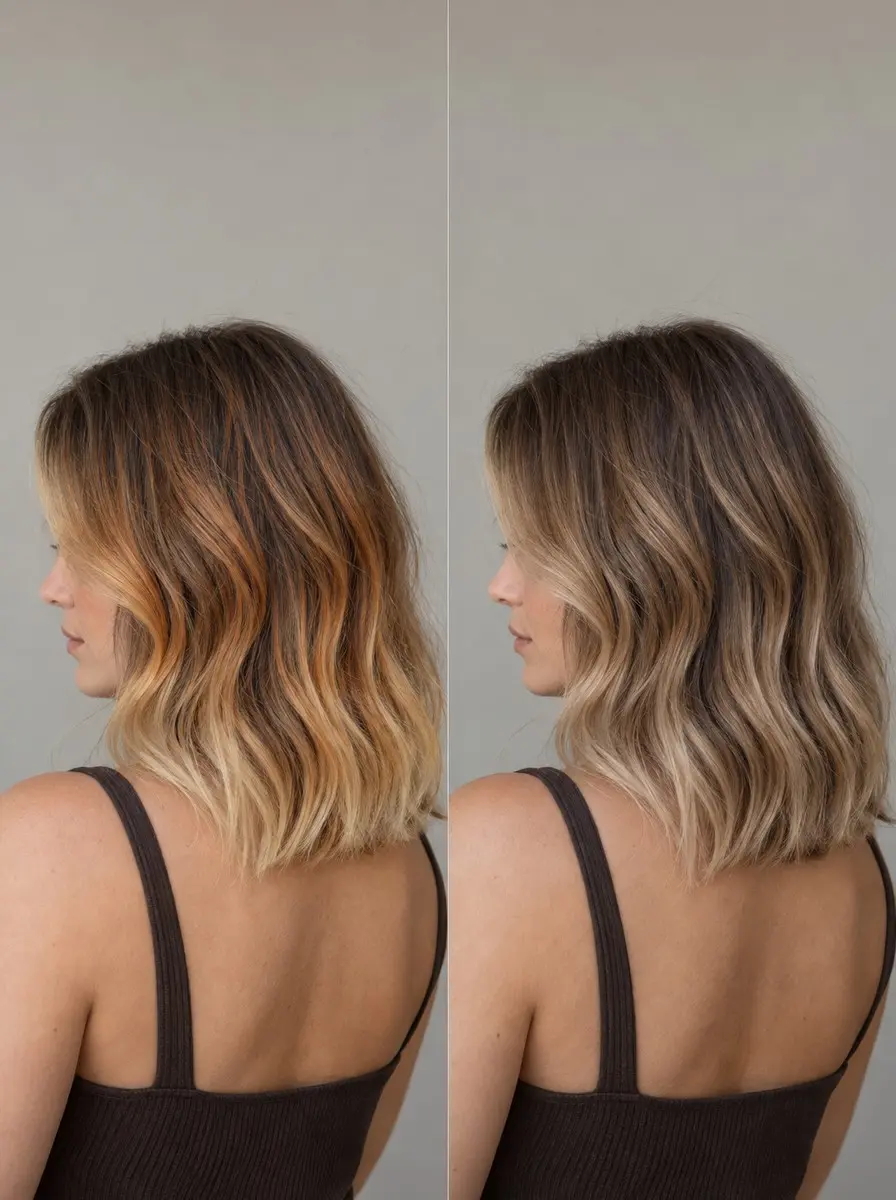
Now look closely at the warmth itself rather than the overall color. Yellow brass looks like straw, lemon or banana and usually shows on light blonde, highlights and silver hair.
Orange brass looks like copper, rust or a new penny and usually shows on bronde and brown hair that has been lightened or has faded. Many highlighted brunettes see both, with orange in the mid-lengths and yellow on the lighter ends.
On very dark hair the warmth can look closer to red than orange, so note that too, because it changes the answer. Go by the warmth you see, not the shade name on your color box, when you pick a bottle.
Step 3 Match the shampoo on the color wheel
Colorists cancel warmth with the shade opposite it on the color wheel. Violet sits across from yellow and blue sits across from orange, so purple shampoo neutralizes yellow and blue shampoo neutralizes orange. The brass decides which you need, and your base color usually tells you what the brass will be.
Platinum, icy and light blonde usually show yellow and take purple. Golden or honey blonde that has gone too yellow also takes purple, with brief contact. Silver, gray and white hair takes purple too, once a week at most.
Light to medium brown and dark brunette with orange brass take blue. Dark blonde, bronde and highlighted brunette often show both colors, so alternate the two. Dark brunette that looks red needs neither: red is cancelled by green, which takes a gloss.
Step 4 Strand-test before the full wash
Pin the top layers up out of the way with sectioning clips and wet a small section underneath at the nape, where a mistake won’t show. Apply your chosen shampoo and leave it for the shortest time on the label.
Rinse, let the section air-dry, and judge it in daylight. This catches the two common failures before they cover your whole head. One is blue on yellow blonde, which mixes to a green cast.
The other is either shampoo soaking too far into bleached, porous ends and leaving a lilac or blue tint. If the test looks right, you know your timing. If it looks wrong, you’ve only tinted a hidden patch.
Step 5 Apply and time the wash
If your hair is coated in styling product, wash it once with your regular color-safe shampoo first so the pigment reaches every strand evenly. Wear disposable gloves if the formula is highly pigmented, since it can tint palms and nails. Work the toning shampoo through wet hair, starting with the brassiest areas.
Do the lighter, more porous ends last, because they take up pigment fastest. Start with one to two minutes. Use about one minute on golden blonde, so you soften the brass without stripping the warmth you chose, and never go past the label’s maximum. Rinse thoroughly so no tinted lather is left sitting on the ends.
Step 6 Condition to offset dryness
Follow every toning wash with a hydrating conditioner or mask on the mid-lengths and ends, and leave it on for the time the label gives. A toning shampoo is a cleanser first and a pigment second. With frequent use, many leave lightened hair feeling drier and rougher than your usual shampoo does.
Bleached hair is already more porous and prone to dryness, so it feels this first. Conditioning restores slip and softness so the ends comb through without snagging. If your hair still feels like straw after conditioning, you’re toning too often.
Step 7 Set a toning schedule
Start with one toning wash a week and use your regular color-safe shampoo on the other wash days. That keeps brass in check for most blondes and brunettes without leaving too much pigment behind.
If you have both yellow and orange, alternate: blue on one toning day and purple on the next, rather than layering both in a single wash. Silver, gray and white hair needs purple once a week at most, and every other week is often enough. Hair with no pigment of its own shows violet quickly and turns lilac.
If you overdo it, a clarifying shampoo removes most of the surface pigment, whether it’s a lilac tint or a green cast, within a wash or two. After that, cut back the contact time or how often you tone.
Step 8 Know when to switch to a gloss
A toning shampoo leaves only a little pigment during a few minutes of contact, and it washes out over the next few shampoos. That means it can only refresh a mild cast. It can’t lighten hair or shift brass that is several shades too warm.
It also can’t fix hair that was never lightened far enough: if bleached hair is still orange when you wanted pale blonde, no shampoo will make it platinum. Red tones on dark brunette need a green- or blue-green-based ash gloss.
Strong overall warmth needs a demi-permanent gloss or toner, which coats every strand evenly and fades over several weeks. When shampoo stops keeping up, move up to a gloss, or book a colorist if your hair also needs lightening.
Common Mistakes to Avoid
- Using blue shampoo on yellow-toned blonde: blue and yellow mix to green, and porous highlights show the cast first.
- Expecting purple shampoo to fix orange on brown hair. Violet targets yellow, so it barely shows on dark, orange-toned brass.
- Leaving it on longer than the label says to make it work faster, which tints porous ends lilac or blue instead of neutralizing them.
- Toning every wash. It builds up too much pigment, especially on silver and gray hair, and leaves lightened hair dry.
- Judging the result on wet hair or under warm bathroom light, both of which make the color look darker or warmer than it really is.
Pro tip If a toning shampoo grabs too hard, mix one part of it with one to two parts of your regular color-safe shampoo in your palm before applying. Stylists dilute it this way on porous or silver hair because it spreads the pigment more evenly and makes patchy lilac or blue far less likely.
The Bottom Line
The rule is short enough to remember. Yellow brass gets purple, orange brass gets blue, and if you see both, alternate them. Judge the warmth on dry hair in daylight and strand-test the first time. Start with short contact and one toning wash a week, and condition after every one. Silver and gray hair needs the lightest touch of all.
Toning shampoo keeps good color fresh; it doesn’t correct color that has gone wrong. Move up to a gloss or toner if the brass is strong, if dark hair looks red rather than orange, or if bleached hair is still orange because it wasn’t lightened far enough. Anything that needs lightening is a job for a colorist. Book your next gloss when the shampoo stops keeping up.
Frequently Asked Questions
Can I use blue shampoo on blonde hair?
Only if your blonde shows orange rather than yellow, which is common on darker blonde and bronde. On pale, yellow-toned blonde, blue pigment mixes with the yellow and can leave a greenish cast, especially on porous highlights. Strand-test a hidden section first. If a green tinge appears, a clarifying shampoo usually removes it within a wash or two.
Does purple shampoo work on brown hair?
Not much on most brown hair. Violet cancels yellow, but lightened or faded brown hair usually shows orange, which blue cancels, and violet pigment barely shows on dark strands. If you have yellow-toned highlights on a brown base, alternate purple with blue rather than relying on purple alone.
Should I use purple or blue shampoo on gray or silver hair?
Purple, because gray, silver and white hair usually turns yellow rather than orange. Use it once a week at most, and every other week is often enough. Keep contact short, because hair with no pigment of its own shows violet quickly and can turn lilac. If it does, a clarifying shampoo removes most of the tint.
Can I use blue and purple shampoo in the same routine?
Yes, if your hair shows both yellow and orange. Alternate them rather than layering both in one wash: blue on one toning day, purple on the next, with your regular color-safe shampoo in between. Alternating shows you what each bottle is correcting, so you can drop the one you no longer need.
How long do the results from a toning shampoo last?
Until your next few washes. The pigment sits on the surface of the hair and fades a little with every shampoo, which is why toning is a weekly maintenance step rather than a one-off fix. If brass returns within days, or the shampoo stops shifting it, move up to a demi-permanent gloss or toner, which lasts several weeks.
Keep Reading
Sources
- Blue vs purple shampoo us.johnfrieda.com
- Blue vs purple shampoo us.davines.com
- What is the difference between blue shampoo purple shampoo and silver shampoo redken.co.uk