Quick answer To grow out gray hair, stop permanent dye and count on about two months per inch of dyed length, since hair grows roughly half an inch a month. Blur the line with a root smudge, lowlights or highlights, and trim the dyed ends every six to eight weeks.
Deciding to grow out gray hair is often the easy part. What follows is a stretch of nine months to well over a year in which a stripe of silver widens at your part, your dyed ends fade and turn brassy, and the new hair feels nothing like the old. It is the point where many people give in, book a touch-up, and start the clock again from zero.
The awkward phase can be planned, though. This guide works out your real timeline from your length, helps you choose between a short cut, gradual trims, a root smudge with lowlights, or highlights, and shows what to do at months three, six and nine.
Most of it happens at home with a handful of products. The color work that belongs in a salon is flagged along the way, with exactly what to ask your colorist for.
Time 9 months to 2 years, depending on lengthDifficulty BeginnerSteps 9
Which Gray Grow-Out Route Fits You
| Route | Suits | Dyed ends |
|---|---|---|
| Big chop or short crop | Short hair, or one bold change | Cut off in one go |
| Gradual trims | Keeping length on healthy hair | Trimmed every 6-8 weeks |
| Root smudge plus lowlights | Dark dyed hair | Blended, then trimmed away |
| Highlights or balayage | Light-to-medium color, or dark lifted by a colorist | Lifted toward silver, then trimmed |
What You’ll Need
As an Amazon Associate, HairAide earns from qualifying purchases. Product links in this guide are affiliate links: they cost you nothing extra and help keep these tutorials free.
- Soft tape measure or ruler Measures a dyed strand from scalp to tip so you can turn its length into a realistic number of months.
- Temporary hair color spray or root powder Optional: a silver spray lets you preview gray for a day, and a shade-matched spray or powder blurs the regrowth line between appointments.
- Demi-permanent hair color or clear gloss A demi-permanent one or two shades from your natural color softens the regrowth line, and a gloss tones faded dyed ends and refreshes silver shine.
- Dry texture spray Roughs up the roots and scatters light so the line between gray and dyed hair looks more diffuse.
- Soft hair elastics plus a wide headband or silk scarf Soft elastics secure the loose overnight braid that sets waves through the lengths, and a headband or scarf covers the highest-contrast inch at the hairline on grown-out days and shields hair from strong sun.
- Moisturizing conditioner or weekly hair mask Softens coarse, wiry gray so it lies smoother, and a little worked through before swimming limits how much pool water hair absorbs.
- Heat protectant spray, round brush and blow-dryer with a nozzle A heat protectant misted through damp hair shields gray strands from scorching before every blow-dry, and drying over a round brush with the nozzle pointed down the lengths smooths wiry gray without heavy styling products.
- Purple or silver shampoo Used once a week, its violet pigment cancels the yellow cast new gray picks up.
Step-by-Step
Step 1 Work out your real timeline
Measure a dyed strand from the scalp to the tip with a soft tape measure and divide by half an inch, because hair grows about 0.5 inch a month and nothing you do changes that rate.
An 8-inch bob works out to roughly 16 months, and shoulder-length hair of about 12 inches to around two years if you never cut. Josh Wood Colour puts the quickest grow-out it has seen at nine months and most people at about 18, and the difference is mostly how much length each person was willing to cut.
Write your number down: it tells you whether you can simply wait, or need a route that disguises the line while you grow.
Step 2 Preview your gray before committing
Mist a temporary silver hair color spray over dry hair for a ‘go grey for a day’ test, as L’Oréal Paris suggests, and look at it in daylight with your usual clothes and makeup.
Then skip your next color appointment and study three or four weeks of regrowth at the hairline and part, because gray rarely arrives evenly: it is often brighter at the front or temples and darker at the nape.
That pattern steers your route, since a bright front can carry much of the look on its own, while an even salt-and-pepper mix blends easily with lowlights. The spray sits on the surface of the hair and usually washes out in one or two shampoos.
Step 3 Choose your grow-out route
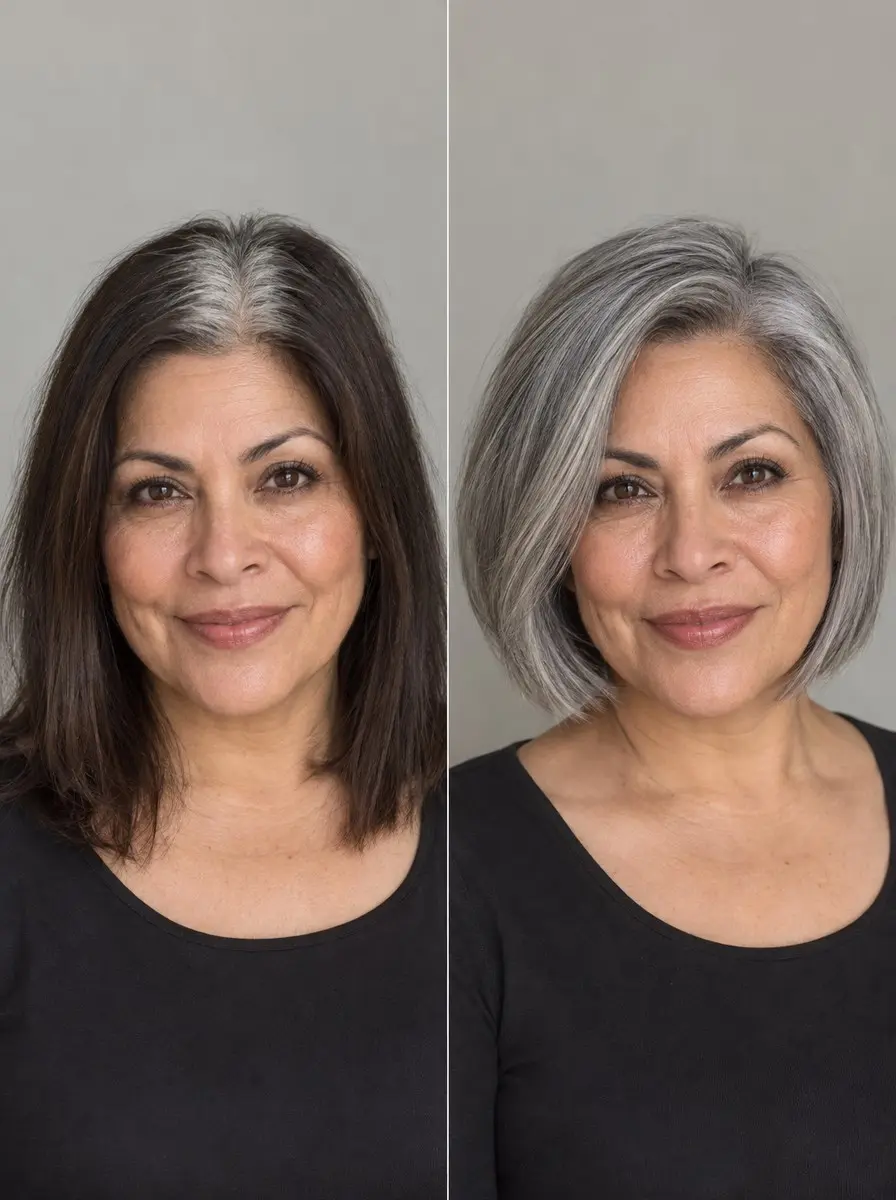
A big chop or short crop is the fastest route because, as Josh Wood Colour puts it, the more you cut, the quicker the transition; it suits hair that is already short, or anyone who would rather make one bold change than spend a year in between.
Gradual trims every 6-8 weeks keep your length while snipping dyed ends away, which suits healthy hair and a patient grower. A root smudge or shadow root with lowlights blurs the line by blending gray roots into the lengths and weaving darker strands through the gray, the usual choice for dark dyed hair.
Highlights or balayage lift dyed lengths closer to silver: they suit light-to-medium dyed color or gray that is brightest at the front, and dark dyed hair too when a colorist lifts the lengths gradually over several sessions. Most people pair one color route with regular trims.
Step 4 Soften the regrowth line
If the stripe bothers you most, swap permanent dye for a demi-permanent color one or two shades from your natural color, the approach Davines recommends for softening the line before moving on to balayage or lowlights.
Demi-permanent color gives gray a translucent tint rather than opaque coverage and fades gradually, so the regrowth shows as a soft blur instead of a hard band. That is also why covering dark-to-gray regrowth with one flat permanent shade makes things worse: a solid block of dark color against bright white roots is the highest contrast you can create, and it reappears as soon as the roots grow.
Apply it to dry hair where the regrowth meets the dyed lengths, follow the kit’s timing, and stop once the line looks soft rather than chasing full coverage.
Step 5 Deal with the dyed ends
Check the dyed lengths before you add anything to them: if they feel dry and brittle, or stretchy and gummy when wet, cut them off rather than stacking new color on top, because more chemical processing on damaged hair only adds breakage.
Healthy dyed ends have three options. A colorist can lift dark lengths gradually with highlights or a color remover so they sit closer to the gray, a gloss can cool faded, brassy ends so they clash less with the silver, or you can simply trim them away on your route’s schedule.
Lightening previously dyed hair is a salon job, because old color lifts unevenly and can turn orange, and the new gray regrowth should stay out of the lightener entirely.
Step 6 Hide the line between appointments
On days the line feels loud, dust a root touch-up powder or spray in your dyed shade along the part and front hairline only; it blurs the edge for the day and washes out with your next shampoo.
Moving your part an inch to one side, or switching to a zigzag part, hides the line instantly because it breaks up the straight stripe the eye locks onto.
A dry texture spray at the roots roughs up the surface and scatters light so the color change looks more diffuse, and soft waves from a loose braid set in damp hair overnight and secured with a soft elastic do the same for the lengths. On a truly grown-out day, a wide headband or silk scarf placed right at the hairline covers the highest-contrast inch.
Step 7 Plan months three, six and nine
Month three brings about 1.5 inches of regrowth, often when the line feels most obvious and the urge to re-dye peaks, so book your first trim, switch your part and save root cover-up for days that matter rather than reaching for permanent dye.
By month six you have around 3 inches of natural color, which is the decision point: take a longer cut shorter, say a collarbone cut up to a chin-length bob, or refresh the smudge or lowlights so the contrast stays soft.
Month nine brings about 4.5 inches, enough for a short crop that is entirely gray, which lines up with the nine-month quickest grow-out Josh Wood Colour reports. If you are keeping length, you are now past halfway on an 8-inch bob and the remaining dyed ends start to read as deliberate tips, so keep trimming and glossing them until they are gone.
Step 8 Tame the new gray texture
Gray strands often feel coarser, wirier and drier than the dyed hair they replace, and they tend to stick up at the crown and along the part. Use a rich moisturizing conditioner every wash and a hair mask once a week so the new hair feels softer, lies flatter and reflects more light.
To smooth wiry strands, blow-dry from damp with a round brush, keeping each section taut and the dryer nozzle pointed down the lengths, which flattens the surface for a smoother, shinier finish. Skip heavy pomades, waxes and serums, which Davines warns can make gray look dusty, and let conditioner and a good blow-dry do the smoothing instead.
Step 9 Keep the silver bright
New gray picks up a yellow cast from minerals, pollution, sun and pool water, so wash with a purple or silver shampoo once a week, as Davines advises; violet cancels yellow, which keeps silver looking crisp.
Leave it on for a minute or two at first and lengthen the time only if the yellow persists, because overusing it can leave white hair with a lilac tinge. Book a professional gloss every six to eight weeks, or use an at-home clear gloss in between, to add shine and reset the tone.
Cover your hair with a scarf in strong sun, and before swimming, wet it with clean water and work a little conditioner through so it soaks up less pool water.
Common Mistakes to Avoid
- Covering dark-to-gray regrowth with one flat permanent shade, which creates the harshest possible line and restarts the clock.
- Stacking new color or lightener on dyed ends that are already dry and brittle instead of cutting them off.
- Lightening previously dyed dark hair at home, where old color lifts unevenly and turns orange.
- Re-dyeing at month three, when the line feels most obvious, instead of switching your part, using root cover-up and booking a trim.
- Using purple shampoo every wash or leaving it on too long, which can tint white hair lilac.
- Smoothing wiry gray with heavy pomades, waxes or serums, which can make it look dusty.
Pro tip When you blend, keep color off a few fine face-framing strands at the front hairline: that is the gray everyone sees first, and leaving it natural lets your real silver lead while a lighter tint and highlights or balayage handle the rest, the approach Josh Wood Colour suggests.
The Bottom Line
Grown out well, gray reads as a choice rather than a gap between appointments: soft at the hairline, bright through the lengths, with the last dyed ends trimmed away on schedule. Once you are fully silver, keep the weekly purple shampoo, a gloss every six to eight weeks, and a trim whenever your cut starts to lose its shape.
See a colorist rather than going it alone if your dyed color is very dark, your ends are damaged, or you want highlights or color removal. This guide is purely cosmetic: if graying arrives alongside shedding, thinning patches or scalp changes, talk to a doctor or dermatologist, because it does not cover the causes of hair loss.
Frequently Asked Questions
How long does it take to grow out gray hair?
Hair grows about half an inch a month, so divide the length of your dyed hair by 0.5 to get months: an 8-inch bob takes roughly 16 months if you never cut. Josh Wood Colour says the quickest grow-out it has seen is nine months and most people take about 18. The more length you cut, the sooner you finish.
Is there a way to make hair go gray faster?
No. Josh Wood Colour says there is no proven natural way to speed up graying, and Davines notes that graying cannot be reversed either, so be wary of any product promising to do either. The real shortcuts are cutting more of the dyed length away and blending the line so the wait looks intentional.
What should I ask my colorist when I want to go gray?
Try: 'I'm growing out my gray and want no more permanent all-over color. Can we soften the line with a demi-permanent one or two shades from my natural color, add lowlights or highlights to blend, leave some gray at my hairline, and trim the dyed ends at every visit?' Then ask how many appointments the plan needs.
Can I go gray if my hair is dyed very dark?
Yes, but dark-to-gray has the highest contrast, so plan to blend rather than simply wait. A root smudge or shadow root with lowlights softens the line, and a colorist can lift dark lengths closer to silver with highlights or a color remover, gradually over several sessions. Avoid covering regrowth with one flat dark permanent shade, which brings the harsh stripe back as soon as the roots grow.
Is it safe to blow-dry gray hair?
Yes. Mist a heat protectant through damp hair before you blow-dry, use medium heat, and keep the dryer moving rather than parking it on one spot. Very high heat can scorch white hair toward a yellowish tone, so a cooler, steadier blow-dry protects the brightness you are growing in as well as the strands themselves.
Keep Reading
Sources
- How to grow out your grey hair joshwoodcolour.com
- Transitioning to gray hair ca.davines.com
- Transitioning to grey hair lorealparis.com.au