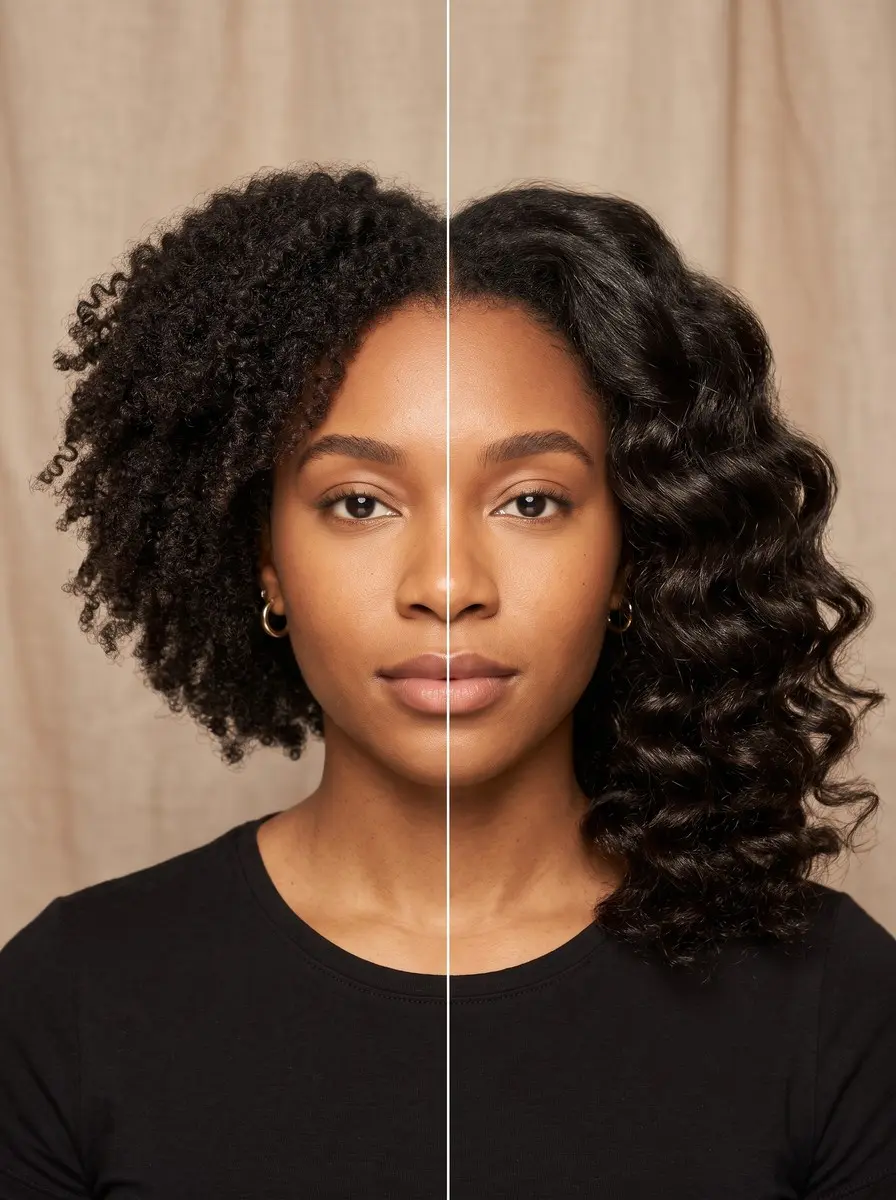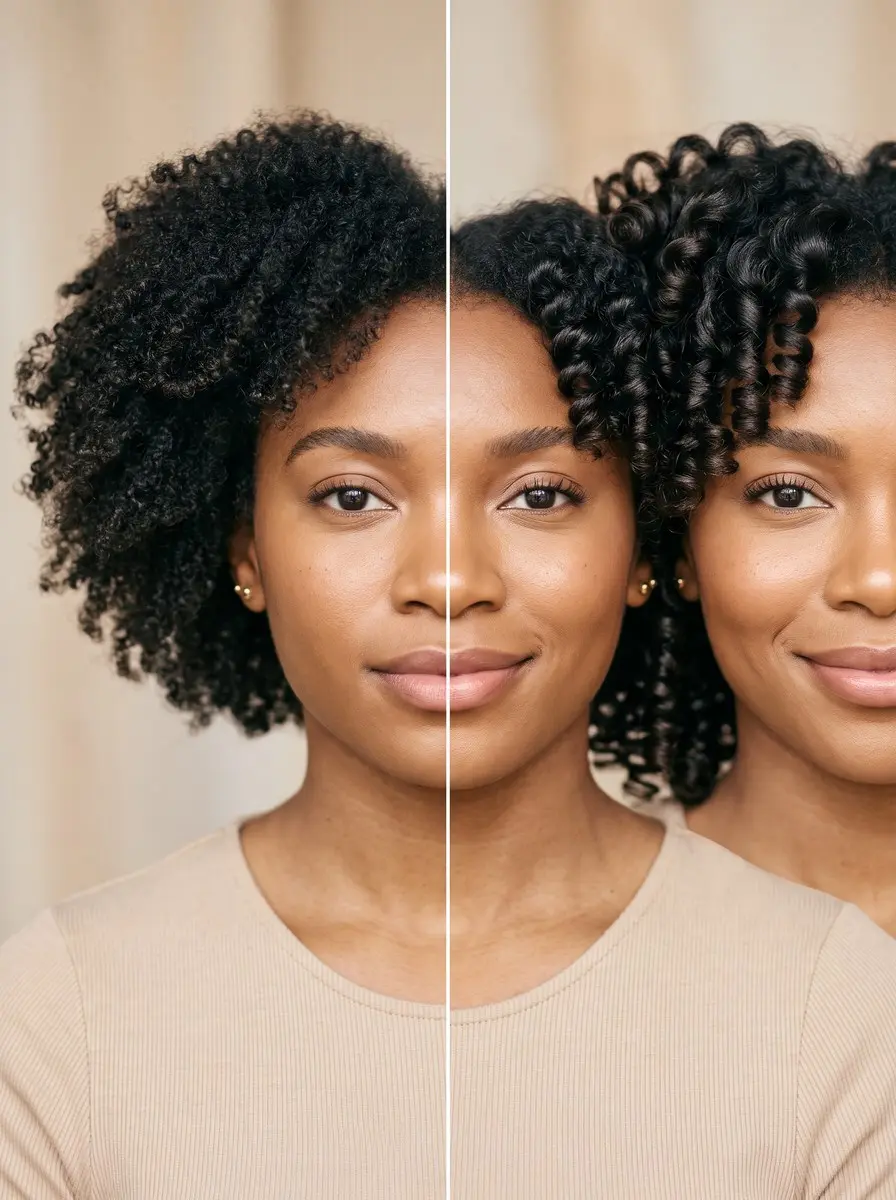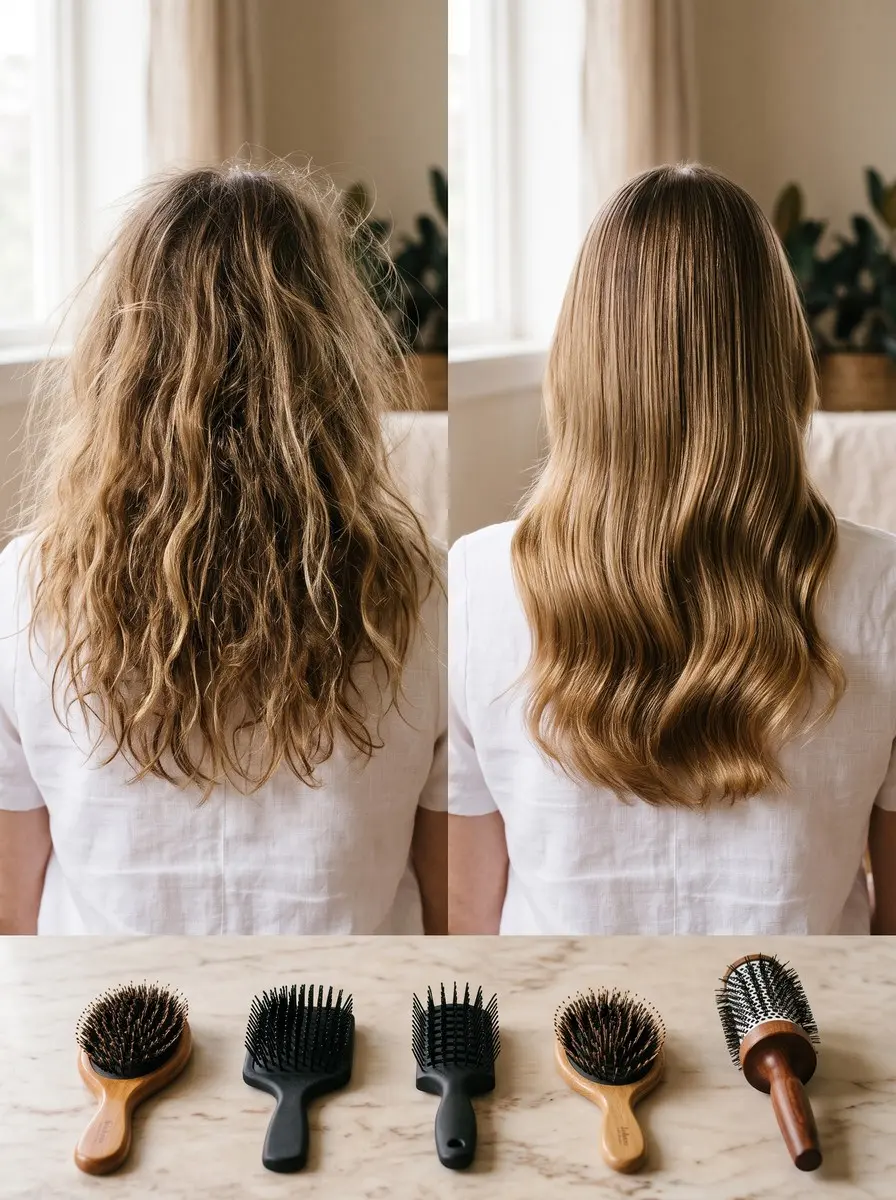
Quick answer To choose a hairbrush, match it to your hair and the job. Use a flexible detangling brush or wide-tooth comb on wet hair and a cushion or boar brush for fine or fragile hair. Thick hair needs nylon or vent brushes, and blow-drying needs a round brush sized to your length.
Most people choose a hairbrush the way they choose a toothbrush: they grab whatever is on the shelf and keep it for years. But the wrong brush is behind a lot of everyday hair problems.
A stiff brush on fine hair causes static and flyaways. A finishing brush can’t get through knots, so it snaps hair at the ends. Brush dry curls with the wrong tool and an hour of definition turns into a halo of frizz.
The fix is simple once you know what each brush is built for. This guide matches bristle materials and brush shapes to your hair type, thickness and the job you need done: detangling, blow-drying, smoothing or finishing.
It also covers which brushes are safe on wet hair, how to brush without causing breakage, and how to clean a brush and tell when it’s worn out. You don’t need a drawer full of brushes. Most people only need two.
Time 10-15 minutes to choose; 5 minutes a month to cleanDifficulty BeginnerSteps 8
Which Hairbrush for Your Hair Type and Task
| Hair type | Detangle | Blow-dry | Finish |
|---|---|---|---|
| Fine or thin | Flexible detangling brush | Round brush sized to length | Boar bristle brush |
| Thick or coarse | Flexible detangling brush | Vent brush or nylon round | Boar-nylon mix paddle |
| Wavy | Wide-tooth comb, in conditioner | Vent brush | Cushion brush |
| Curly | Detangler, wet with conditioner | Vent brush or diffuser | Fingers, no brush |
| Coily | Wide-tooth comb, wet, in sections | Vent brush on damp sections | Fingers, no brush |
| Damaged or bleached | Flexible detangling brush | Vent brush | Cushion or boar brush |
What You’ll Need
As an Amazon Associate, HairAide earns from qualifying purchases. Product links in this guide are affiliate links: they cost you nothing extra and help keep these tutorials free.
- Flexible-bristle detangling brush Its widely spaced, bendy bristles are the safest way to get through knots on wet, fragile or curly hair.
- Boar bristle or boar-nylon mix brush Pure boar smooths and adds shine to fine or damaged hair, and the nylon mix gets through thicker hair while still polishing it.
- Vented paddle brush The open slots let dryer air flow through, so thick or curly hair dries faster with less tugging.
- Round brush with a vented barrel Sized to your hair length, it gives shape, bend and volume during a blow-dry.
- Wide-tooth comb It’s the gentlest tool for detangling wet, conditioned hair, especially curly and coily textures.
Step-by-Step
Step 1 Read your hair type and density
Before you shop, work out two things: how thick each strand is and how much hair you have. Roll a single strand between your fingers. If you can barely feel it, it’s fine; if it feels like sewing thread, it’s coarse.
Then pull your hair into a loose ponytail and look in a mirror. If your scalp shows easily, your density is low; if the ponytail is wide and heavy, it’s high. Add your texture (straight, wavy, curly or coily) and note any bleach or heat damage.
These traits, not the price tag, decide which bristles will glide through your hair and which will snag. You’re done when you can describe your hair in one line, such as ‘fine, dense, wavy, highlighted’.
Step 2 Choose boar, nylon or a mix
The bristle material controls how much grip and pull a brush puts on your hair. Boar bristles are soft and packed closely together, so they spread scalp oil down the length and polish the surface to a shine.
Sally Beauty recommends boar for fine, thin or damaged hair, and for brushing out a set style so it looks fuller. Nylon bristles are stiffer and spaced further apart, so they push through thick, coarse hair that would simply bend boar bristles.
On fine hair, though, nylon can build static. A boar-nylon mix puts both in one brush: the nylon pins get through medium-to-thick hair while the boar smooths it in the same stroke. Pick the material that matches your strand thickness from the step above.
Step 3 Match the shape to the job
The shape decides what a brush is for. A paddle brush has a wide, flat base that smooths long, straight hair quickly. A vent brush has open slots that let air from the dryer flow through the hair, which speeds up drying, and it is often recommended for thick or curly hair.
A cushion brush has bristles set in a flexible rubber pad that gives under pressure. Living Proof recommends it for fine, fragile or damaged hair, for straight or wavy textures and for sensitive scalps.
A detangling brush has flexible, widely spaced bristles that bend around knots instead of tearing through them. Round brushes add tension and curve as you blow-dry, which gives shape and volume. Most people need a detangler plus one brush for styling or finishing.
Step 4 Size your round brush to your length
A round brush only works when the section you’re drying can wrap all the way around the barrel at least once. If the barrel is too big, hair slides off without picking up any shape. If it’s too small, long hair winds around it and tangles.
Choose by hair length. Go small for short hair and pixies, where you want lift at the root. Go medium for chin-to-shoulder length and large for shoulder to mid-back.
Use extra-large for very long hair when you want it smooth rather than strongly bent. If you want more curve or a flip at the ends, drop one size; for a sleek, straight finish, go up one. A barrel with vents dries hair faster than a solid one.
Step 5 Follow the wet-hair rules
Wet hair stretches more and snaps more easily than dry hair, so only some tools belong on it. The safe choices are a flexible-bristle detangling brush or a wide-tooth comb, used after conditioner or a leave-in has made the hair slippery.
Keep boar brushes for dry hair, because they are built for finishing, not detangling. Don’t drag a dense paddle or round brush through dripping-wet hair either.
Rough-dry or air-dry to damp before you style with a vent or round brush and a dryer, because damp hair takes shape without being as stretchy as soaking-wet hair. Detangling is done when the comb or brush runs from root to tip without catching.
Step 6 Brush ends first, then work up
Start a few inches from the ends and clear the knots there first. Then move the brush higher bit by bit, and only brush from the root down once the lower lengths are smooth.
If you start at the root, every small tangle gets pushed into one large knot at the ends, which are the oldest and weakest part of your hair. Hold the section above a knot so the pull stops there and doesn’t reach your scalp.
Ignore the old 100-strokes rule. Brush to detangle, style or finish, then stop, because extra strokes add friction without adding shine. You’re done when the brush moves through from root to tip without resistance.
Step 7 Give curls and coils a curl-safe tool
Detangle curly and coily hair while it’s wet and full of conditioner. Use a flexible detangling brush or a wide-tooth comb, work in sections, and start from the ends as before. Never brush dry curls with a stiff paddle or boar brush. It breaks curl clumps apart into frizz and strains the bends in each strand, which is where curly hair is most likely to break.
If you want a stretched blowout, use a vent brush on damp, conditioned sections so air moves through the hair while it dries. Between wash days, refresh with your fingers rather than a brush, so your curls keep their shape until the next wash.
Step 8 Clean it and know when to replace it
Every few days, pull loose hair out of the bristles. Sliding the end of a wide-tooth comb under the mat lifts it out quickly. About once a month, swish the bristles in warm water with a drop of shampoo and scrub the base with an old toothbrush to lift oil and product buildup.
Rinse, then dry the brush bristles-down on a towel so water doesn’t collect in the cushion or soak into a wooden handle. Never soak wooden or cushion brushes.
Replace a brush when the bristles are bent, melted or missing, the ball tips have come off, the cushion has split, or it starts snagging hair it used to glide through. Rough, broken bristles cause damage every time you brush.
Common Mistakes to Avoid
- Using a boar bristle brush to work through knots. It’s a finishing brush, and forcing it through tangles snaps hair at the ends.
- Brushing from the roots down through tangled hair, which pushes small knots into one big mat at the weakest ends.
- Brushing dry curls or coils with a stiff paddle or boar brush, which breaks up curl clumps and causes frizz and breakage.
- Dragging a dense paddle or round brush through dripping-wet hair instead of detangling first and drying to damp.
- Soaking a wooden or cushion brush when cleaning it, which traps water in the pad and handle.
- Brushing over and over (the ‘100 strokes’ myth), which adds friction without adding shine.
Pro tip Keep two brushes, not one: a flexible detangler for wet hair and a finishing or styling brush for dry hair. Much of the breakage stylists see comes from asking one brush to do both jobs.
The Bottom Line
The right brush comes down to three questions: how thick your strands are, what your texture is, and what job the brush has to do. Fine or fragile hair does best with boar or cushion brushes.
Thick hair needs nylon or a vent brush. Curls and coils want a flexible detangler on wet, conditioned hair and fingers once they’re dry. If you pair a vent or round brush with a blow-dryer, mist damp hair with a heat protectant first.
Clean your brushes monthly and replace them when the bristles bend or the cushion splits. If you’re still getting snapping, tangles that won’t clear or breakage in one spot even with the right tools, see a stylist. Damage that bad usually needs a trim and a treatment plan, not a new brush.
Frequently Asked Questions
Is a boar bristle brush good for detangling?
Not really. Boar bristles are soft and closely packed, which makes them excellent for finishing: smoothing the surface, adding shine and brushing out a set for fullness. They're poor at getting through knots. Detangle first with a flexible detangling brush or wide-tooth comb, then switch to boar on dry hair.
Is it bad to brush wet hair?
Only with the wrong tool. Wet hair stretches and breaks more easily, so use a flexible detangling brush or a wide-tooth comb after conditioner, starting at the ends and working up. Keep boar brushes for dry hair, and wait until hair is damp rather than dripping before you use a round or vent brush with a dryer.
How often should you replace a hairbrush?
Go by its condition, not the calendar. Replace it when the bristles are bent, melted or missing, the ball tips have fallen off, the cushion has split, or it snags hair it used to glide through. Removing hair every few days, washing it monthly and drying it bristles-down helps a good brush last much longer.
Which brush is best for fine hair that gets static?
Stiff nylon bristles can build static on fine hair, so a boar bristle or cushion brush is usually the calmer choice. Cushion brushes also give under pressure, which suits fine, fragile hair and sensitive scalps. Brushing only to detangle or finish, rather than out of habit, also cuts down the friction that causes static.
Is an expensive hairbrush worth the money?
Pay for the parts that touch your hair. That means dense, genuine boar bristles in a finishing brush, smooth rounded or ball-tipped pins, a cushion that flexes and a vented barrel on a round brush. Labels like 'oil-infused' or 'ionic' matter far less than bristle type and spacing. A mid-priced brush with the right bristles beats a luxury brush with the wrong ones.
Keep Reading
Sources
- FAQ BRUSHES COMBS 11 sallybeauty.com
- Hair brush types livingproof.com
- The best brush for hair type birchbox.com