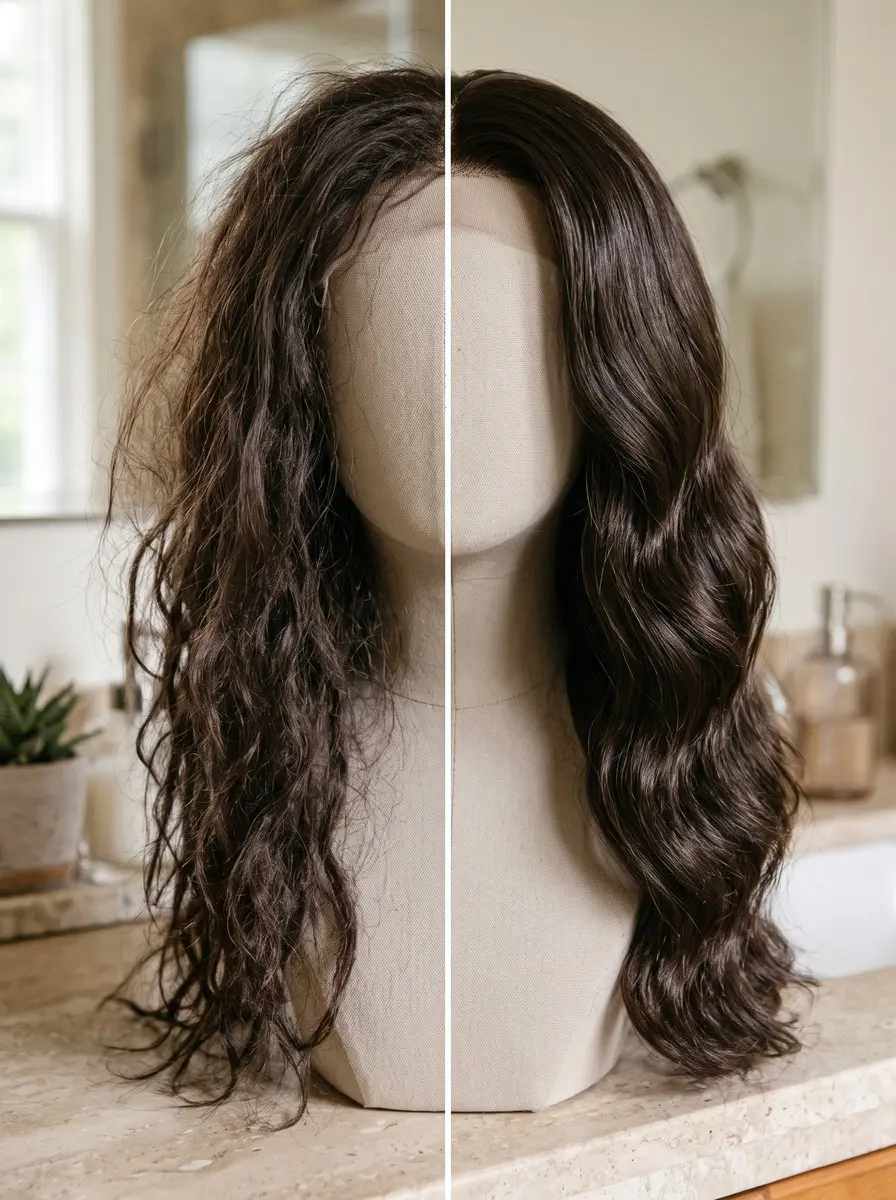
Quick answer To wash and care for a wig, detangle it dry from the ends up, wash it in lukewarm water with sulfate-free wig shampoo, condition the lengths only, then blot and air dry. Store it on a stand, and wash it when it feels stiff, smells or looks dull.
A good wig costs real money, and plenty of them don’t wear out so much as get washed out. Scrubbing, wringing, hot water and conditioner on the cap are what turn a soft, swingy unit into a matted, shedding one with a torn hairline. Wig hair also gets none of the natural oil a scalp feeds to growing hair, so whatever a wash strips out never comes back on its own.
The fix is a routine to care for a wig by signs rather than the calendar, and it changes depending on whether your wig is human hair or synthetic. Below you’ll find both routines side by side, plus lace-safe drying, storage, and the step most guides skip: looking after the braids or natural hair underneath. You can do all of it at a bathroom sink in under an hour of hands-on time.
Time 30-45 minutes hands-on, plus air-drying overnightDifficulty BeginnerSteps 9
Wig Wash Schedule: Wash by Signs, Not the Calendar
| What you notice | Human hair wig | Synthetic wig |
|---|---|---|
| Regular wear, little product | About every two weeks | Roughly every 8-10 wears |
| Mousse, gel or spray most days | Weekly | Roughly every 8-10 wears, or sooner if it feels coated |
| Stiff, sticky or coated feel | Wash now | Wash now |
| Odor at the cap or nape | Wash now | Wash now |
| Dull, tangly lengths | Wash and condition | Wash and condition |
| Soft and fresh after a few wears | Skip it; detangle and store | Skip it; detangle and store |
What You’ll Need
As an Amazon Associate, HairAide earns from qualifying purchases. Product links in this guide are affiliate links: they cost you nothing extra and help keep these tutorials free.
- Sulfate-free wig shampoo Lifts sweat, product and odor from the hair and cap without the harsh detergents that dry out hair that gets no scalp oil.
- Synthetic-safe wig conditioner Softens and detangles the lengths of a synthetic wig with a formula made for synthetic fiber rather than growing hair.
- Wide-tooth comb or wig brush Works knots out from the ends up without pulling strands out of the knots or stressing the lace.
- Collapsible wig stand Lets air reach the cap while the wig dries and keeps its shape and lace protected between wears.
- Microfiber towel Blots water out with less friction than terry cloth, so the lengths don’t rough up or tangle while you press.
Step-by-Step
Step 1 Read the signs, not the calendar
Before you fill the sink, check the wig’s label or care card to confirm whether it’s human hair, standard synthetic or heat-friendly synthetic, because that decides the water, products and heat it can take. Then decide whether it actually needs a wash.
As a starting point, a human hair wig needs one about every two weeks, or weekly if you use a lot of styling product, and a synthetic wig needs one roughly every 8-10 wears.
The signs override the count: wash sooner if it feels stiff, sticky or coated with product, smells at the cap or nape, or has gone dull and tangly. Washing more often than that wears a wig out faster, because shampoo strips oil from the hair that no scalp will ever replace.
Step 2 Detangle dry, ends to roots
Comb the wig while it’s still dry with a wide-tooth comb or a wig brush, starting at the ends and working up toward the roots one section at a time.
Water tightens knots into mats, so every tangle you leave in now is harder to remove once the hair is wet. Starting at the ends releases each knot from below instead of dragging it down into a bigger snarl, and supporting the lengths above the section you’re combing keeps tension off the knots and the lace.
On curly units, detangle with your fingers and use the comb only where it moves without stretching the curl. You’re done when the comb glides from root to tip without catching.
Step 3 Prep the lace and cap
If you glue or tape your wig down, take the adhesive off before you wash, using the remover made for that adhesive: a tape remover for lace tape, a glue remover for liquid adhesive, or whichever remover your adhesive’s label names.
Let it soak in for the time on the label, then lift the softened residue away with a cotton pad, pressing rather than scraping or peeling, because lace is the most fragile part of a wig and tears mostly from pulling. Handle the wig by the ear tabs, the sides or the back of the cap, never by the lace.
A glueless cap has no adhesive to remove, but check its elastic band, combs and adjustable straps for buildup and loose stitching, and get any damage repaired before water stresses it further. The lace is done when it lies flat, feels soft rather than tacky under a fingertip, and shows no white flecks or shiny film when you hold it up to the light.
Step 4 Wash in lukewarm water
Fill a sink or basin with lukewarm water and stir in a small amount of sulfate-free wig shampoo. A human hair wig can also use any gentle sulfate-free shampoo. Submerge the wig, swish it slowly, then smooth the suds down the hair in the direction it falls.
Never rub or bunch it, because friction in the water is what tangles wig hair. Use your fingertips to clean the inside of the cap where it sits against your forehead and nape, since that’s where sweat and makeup collect.
The temperature matters: hot water leaves a human hair wig very dry and can loosen a synthetic wig’s factory-set curl or wave. Rinse in clean lukewarm water from the cap down to the ends until the hair no longer feels slippery with shampoo.
Step 5 Condition the lengths, not the cap
Gently press out the excess water, then smooth conditioner from the mid-lengths to the ends only. Use a moisturizing conditioner on human hair and one made for synthetic fiber on a synthetic wig. Keep it off the cap, the wefts and the knots where each hair is tied into the lace, because conditioner left there can loosen the knots and make the cap greasy against your scalp and hairline.
Leave it on for a few minutes, comb it through the lengths with a wide-tooth comb, then rinse until the water runs clear. The ends should feel soft and slippery while the base and lace feel clean, not slick.
Step 6 Blot and air dry
Lay the wig on a thick towel, roll it up and press to draw the water out. Don’t wring or twist it, because that stretches the wefts, knots the hair and can tear the lace.
Then air dry it flat on a fresh dry towel or on a wig stand, and skip the blow-dryer: air drying is gentler on both fiber types, and standard synthetic fiber can frizz or melt under hot air. If you use a foam head, pin through the ear tabs or the cap edge only, never through the lace.
Arrange the hair the way you want it to dry, smoothing straight units and lightly scrunching curls. Before you wear or store it, check that the inside of the cap is dry, since it dries last.
Step 7 Style to suit the fiber
Once it’s completely dry, you can style a human hair wig much like your own hair, heat tools included. Use heat sparingly, though, because damage on a wig builds up with no new growth to replace it.
A standard synthetic wig should never go near a curling iron, flat iron or hot rollers. Only heat-friendly synthetic can, and only up to the maximum temperature on its label.
On any wig, use mousse and hairspray only once or twice a week, because buildup weighs the hair down and means you have to wash it sooner. To restyle synthetic curls, mist them with water and shape them with your fingers rather than brushing, which pulls them out into frizz.
Step 8 Store it on a stand
Between wears, keep the wig on a wig stand or head form so it holds its shape and doesn’t tangle. Keep it out of direct sunlight, which can fade the color, and away from heat sources like radiators and hot styling tools.
Set it on the stand with the hairline straight and nothing pressing on the lace, then smooth the ends to suit the fiber: your fingers on synthetic curls, a wide-tooth comb on straight synthetic, or a wig brush on human hair.
For travel or long-term storage, put long units in a loose braid or low ponytail, then into a hairnet and a satin or silk bag. A breathable bag or the original box beats plastic, which traps any leftover moisture. It’s stored well if you can lift it off the stand and wear it after a quick finger-comb.
Step 9 Care for the hair underneath
Whatever is under your wig needs its own routine, because it spends hours under a cap with little airflow. Cleanse your scalp on its own schedule, usually every one to two weeks for braids or cornrows, with a diluted shampoo in a nozzle bottle.
Then make sure the braids are completely dry before the wig goes back on, because damp braids under a cap stay damp and can develop an odor or mildew.
Moisturize with a light mist rather than heavy butters, keep braids and wig grips snug but not tight at the edges, and sleep in a satin bonnet or scarf with the wig off. If you notice thinning edges, tenderness or bumps along the hairline, take a break from the wig and see a stylist or dermatologist.
Common Mistakes to Avoid
- Wringing, twisting or rubbing the wig to get the water out, which tangles the hair, stretches the wefts and can tear the lace
- Washing in hot water, which leaves a human hair wig very dry and can loosen the set curl of a synthetic one
- Working conditioner into the cap, wefts and knots, where it can loosen the knots and leave the cap greasy
- Combing a wet wig from the roots down, which drags small knots into mats instead of releasing them
- Putting the wig back on over braids that are still damp, which traps moisture against the scalp and leads to odor
- Using a regular curling iron or flat iron on a standard synthetic wig: the fiber frizzes or melts, and washing can’t undo it
Pro tip Hold the wig upside down and apply conditioner only from the ear line down, which leaves a band of clean hair as a buffer above the knots and lace. If you wear a wig every day, rotate two units so one can dry completely and rest on its stand while you wear the other.
The Bottom Line
Washed when it shows the signs, dried flat and stored on a stand, a wig keeps its softness, movement and clean hairline far longer than one scrubbed on a fixed schedule. Between washes, detangle the ends after each wear, keep mousse and spray to once or twice a week, and give the braids or natural hair underneath as much care as the unit on top.
Take the wig to a wig specialist or stylist if the lace has torn, the knots are visibly shedding, a human hair unit needs a color change or correction, or a synthetic wig’s ends have frizzed from heat, since heat-damaged synthetic fiber can’t be washed smooth again. If your scalp is sore, itchy or thinning at the edges, see a dermatologist before you put a wig back on.
Frequently Asked Questions
How often should you wash a wig?
A human hair wig needs a wash about every two weeks of regular wear, or weekly if you use a lot of styling product. A synthetic wig usually goes roughly 8-10 wears between washes. Treat those numbers as a starting point and wash sooner if the wig feels stiff or sticky, smells at the cap, or looks dull and tangly.
Can you use heat on a wig?
Human hair wigs take heat; heat-friendly synthetic only up to the maximum on its label, and standard synthetic fiber melts. Use irons only on a completely dry wig, with a heat protectant, at the lowest setting that styles the hair. Keep fine, colored or bleached hair at or below about 150°C/300°F and coarse, unprocessed hair no higher than 180-200°C/355-390°F, because heat damage on a wig never grows out.
How do you keep a lace front wig from tearing?
Handle the wig by the ear tabs, sides or back of the cap, never by the lace, and dissolve adhesive with its remover instead of peeling the lace up. Don't scrub the lace when you wash it, and if you dry it on a foam head, pin through the ear tabs or cap edge only. Storing it on a stand keeps the lace flat and unbent.
Do you need to wash the hair under a wig?
Yes. Your scalp and the braids or natural hair underneath need their own cleansing and moisture routine, usually every one to two weeks for braids, because they sit under a cap with little airflow. Let the braids dry completely before the wig goes back on, since damp hair trapped under a cap stays damp and can develop an odor or mildew.
Can you use regular shampoo on a wig?
On a human hair wig, yes, as long as it's a gentle sulfate-free formula, because the wig gets no scalp oil to replace what a harsh shampoo strips. Synthetic wigs do better with a wig shampoo and conditioner made for synthetic fiber. On either type, keep styling product light between washes so you don't need strong cleansers to remove buildup.
Keep Reading
Sources
- How to wash a wig lorealparisusa.com