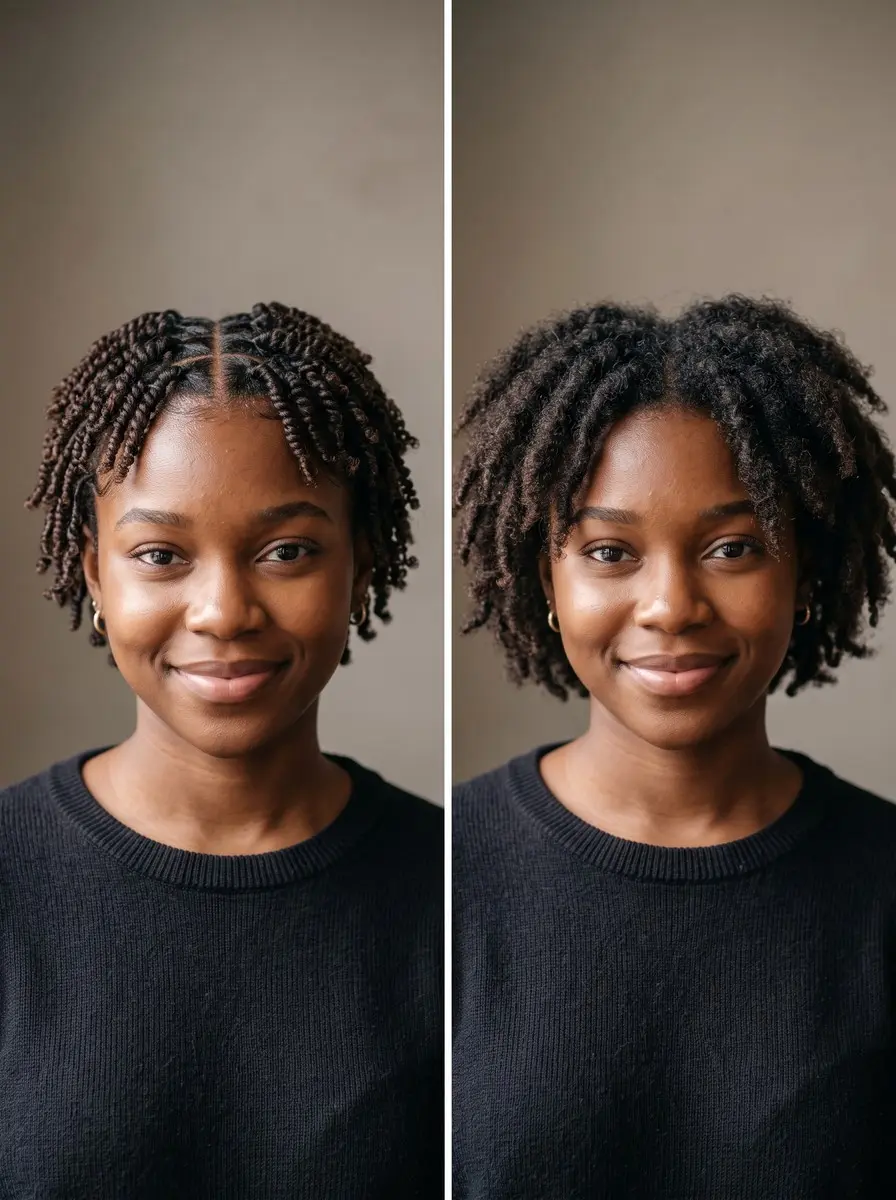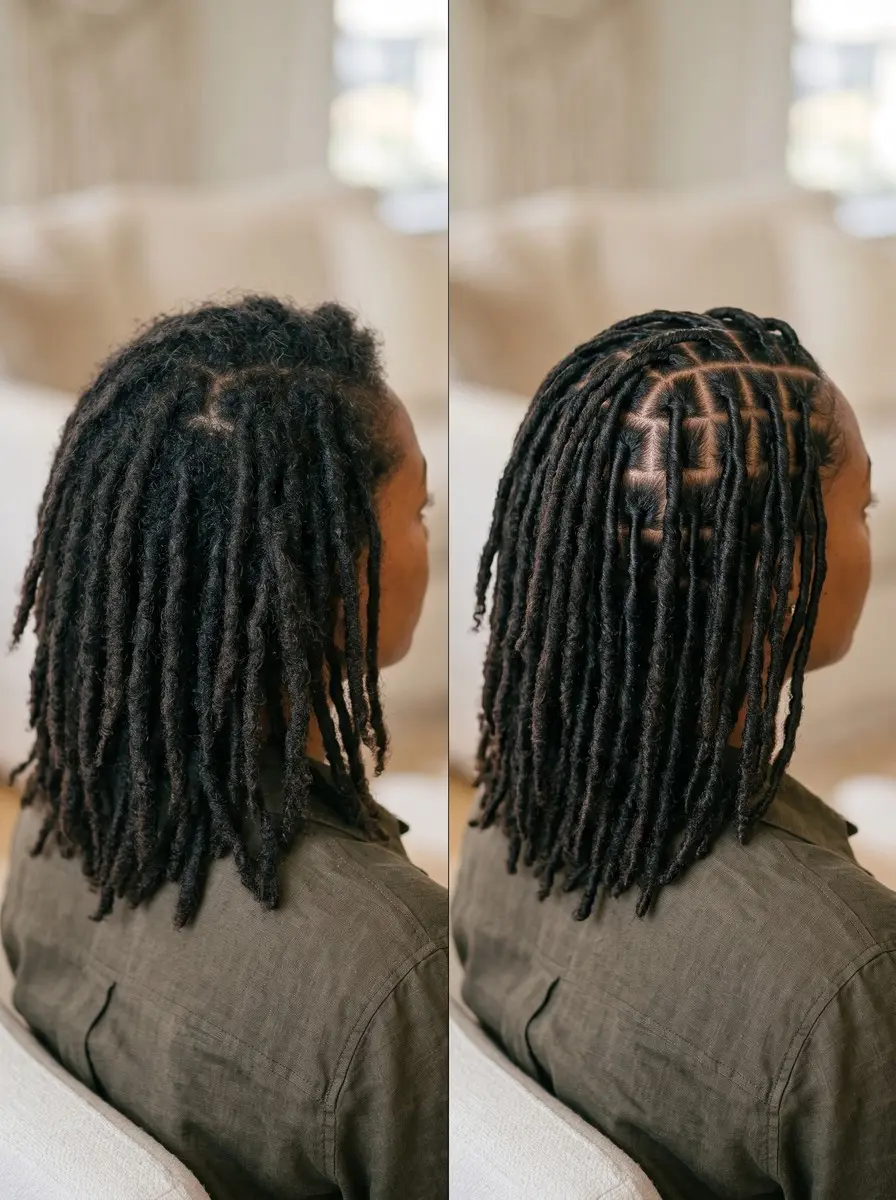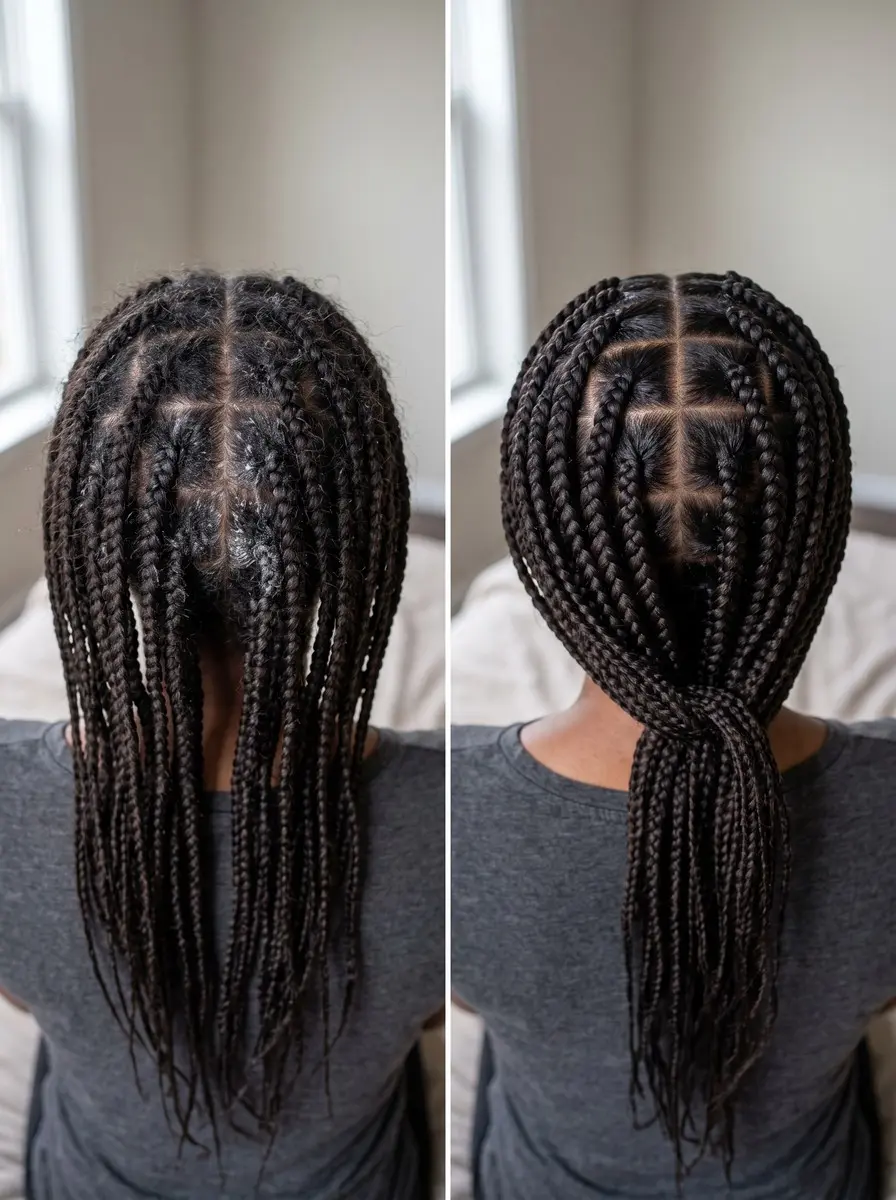
Quick answer To moisturize hair under braids, mist your roots and lengths two to three times a week with water mixed with a little leave-in conditioner, seal with a few drops of a light oil like jojoba or argan, and cleanse the scalp with diluted shampoo every two to three weeks.
Braids are supposed to give your hair a rest, yet plenty of people take them down to find the hair underneath drier and more brittle than it went in.
For six weeks or more it goes without a proper wash and condition, it sits wrapped inside extension fiber, and the oil from your scalp doesn’t travel down a braided strand. The instinctive fix, another scoop of heavy cream or grease, usually makes things worse by piling residue onto a scalp you can’t rinse properly.
The way to moisturize hair under braids is lighter than most people expect: a water-based mist, a few drops of light oil to seal it in, a scalp cleanse every two to three weeks and a satin layer at night. Here it is step by step, with adjustments for knotless braids, box braids, twists and cornrows, plus how to tell when no amount of moisture will help and it’s simply time to take them down.
Time 10 minutes per session, 2-3 times a week (plus 30-45 minutes for a scalp cleanse every 2-3 weeks)Difficulty BeginnerSteps 9
Moisture Routine by Braid Style
| Style | Focus the mist on | Watch out for |
|---|---|---|
| Knotless braids | Roots and first few inches | Rubbing the flat base into frizz |
| Box braids | Part lines and around the knot | Product trapped in the knot |
| Twists | Full length, lightly | Heavy wetting that loosens them |
| Cornrows | Directly along each row | Visible flakes from heavy oil |
What You’ll Need
As an Amazon Associate, HairAide earns from qualifying purchases. Product links in this guide are affiliate links: they cost you nothing extra and help keep these tutorials free.
- Fine-mist spray bottle Delivers an even, light mist that dampens the roots without soaking the braids.
- Lightweight water-based leave-in conditioner Diluted with water, it forms the moisturizing mist and adds slip so the water spreads evenly.
- Jojoba oil Seals in the mist without clogging the scalp or leaving heavy residue between braids.
- Nozzle-tip applicator bottle Puts mist, oil or diluted shampoo directly on the scalp along each part.
- Extra-large satin bonnet Holds long braids without crushing the roots and cuts overnight friction and moisture loss.
Step-by-Step
Step 1 Mix a light water-based spray
Fill a fine-mist spray bottle with about four parts distilled or filtered water to one part lightweight, water-based leave-in conditioner, then shake well. Water is the only thing that actually moisturizes hair; the leave-in adds slip so the water spreads evenly along the strand instead of beading on the surface.
Choose a leave-in with water listed first and no heavy butters near the top of the ingredient list. Mix a fresh batch every week or so, because diluting a leave-in also dilutes its preservative, and shake before every use. The mix is right when it sprays as a fine, even mist rather than a spurt.
Step 2 Mist your roots and own lengths
Hold the bottle about six inches away and mist the roots and the first few inches of each braid, where your own hair sits closest to the surface, working section by section around your head. Aim for hair that feels cool and slightly damp, never dripping: the point is to hydrate your own strands, not to soak the extension hair, which won’t absorb water if it’s synthetic.
Over-wetting is the most common mistake, because thick braids hold water in their core for hours, and a braid that stays damp can develop a sour, mildewy smell. Your braids should feel dry to the touch within about an hour.
Step 3 Seal with a light oil
While the hair is still slightly damp, warm two or three drops of a light oil (jojoba, grapeseed, argan or sweet almond) between your palms and smooth it down the braids from root to mid-length.
The oil doesn’t add moisture itself; it slows the water you just added from evaporating, which is why it goes on second. Thick oils like heavy castor oil, rich butters, grease and heavy creams work against you under braids: they sit on the scalp and between the braids, catch shed skin and lint, can clog the scalp, and are nearly impossible to rinse out while the braids are in.
Done looks like a soft sheen, not a greasy shine or a film left on your fingers.
Step 4 Reach the scalp along the parts
For the scalp itself, gently separate the braids along an existing part with your fingertips. Don’t pull them apart or create new parts, because that strains the base of each braid. Run the nozzle of an applicator bottle along the part and squeeze out a thin line of your mist mix, or one or two drops of oil if your scalp feels tight, then press it in with your finger pads rather than scrubbing.
Working directly on the part puts product where it’s needed and keeps it out of the braid itself, so less builds up around the base. Move part by part until your scalp feels comfortable, not slick.
Step 5 Match frequency to porosity and braid size
Most braided hair does well with the mist and seal two to three times a week; your hair tells you where in that range you fall.
High-porosity hair absorbs water fast and loses it fast, so it usually wants all three sessions, sealed each time, while low-porosity hair takes water in slowly, so twice a week with a lighter mist stops product sitting on the surface. Small and micro braids have more parts and dry quickly, so they handle the full routine, whereas jumbo braids hold water deep inside and need a lighter mist so the core dries the same day.
If your hair feels stiff and rough by day three, add a session; if your braids feel heavy, look dull or smell damp, cut back.
Step 6 Tailor it to your braid style
Knotless braids start with your own hair at the base, so focus the mist on the roots and first few inches and pat it in, because rubbing roughs the flat base into frizz.
Box braids have an extension knot at the base that traps product, so use the nozzle along the part lines and around the knot rather than spraying over the top. Twists, whether two-strand, Senegalese or passion, show more of your own hair along their length, so mist the full length lightly; heavy wetting loosens them and makes them frizz.
Cornrows leave the scalp exposed along each row, so apply directly along the rows and use the least oil of any style, since heavy oil shows up there first as visible flakes.
Step 7 Cleanse the scalp every few weeks
Every two to three weeks, fill an applicator bottle with roughly one part gentle shampoo to three parts water, or use a ready-made scalp cleanser, and apply it along the parts.
Massage with your finger pads, then rinse thoroughly with lukewarm water, letting it run down the length of the braids instead of scrubbing them. This lifts away the sweat, sebum and product that build up between braids and cause itching and flakes, and it matters because moisture on top of buildup just seals the problem in.
Squeeze the braids gently in a microfiber towel, mist with your leave-in mix and let them air-dry completely before you cover them or sleep on them, which is why a morning cleanse works best.
Step 8 Protect your braids at night
Before bed, gather your braids into a loose low ponytail or a loose high pineapple and cover them with a satin or silk bonnet or scarf big enough to hold them without squashing the roots. Cotton pillowcases rub against the braids all night, roughing up the hair at the base and drawing moisture out of it.
Satin and silk reduce that friction and moisture loss, which is why this step protects all the misting you did during the day. A satin pillowcase is a good backup for nights the bonnet slips off, and done means you wake up to roots that look as smooth as they did the night before.
Step 9 Plan your take-down date
Moisturizing keeps your own hair softer and less prone to breakage while the braids are in, but it doesn’t make them safe to wear indefinitely. Hair grows about half an inch a month, so after six to eight weeks, the usual window for box and knotless braids, there’s roughly three-quarters of an inch to an inch of new growth at the base, and it starts to twist around itself and mat.
Cornrows usually come out sooner. Take your braids down when you see matting at the roots, buildup you can’t rinse out, itching or soreness that won’t settle, or thinning along the hairline, whichever comes first.
Common Mistakes to Avoid
- Using heavy creams, butters or grease on the scalp, which sit between the braids, trap flakes and lint, and cause itching and white buildup at the base.
- Soaking the braids instead of misting them, so the core of thick braids stays damp for hours and can start to smell mildewy.
- Oiling synthetic braiding hair, which doesn’t absorb it and only collects lint and looks greasy, instead of focusing on your own hair at the roots.
- Skipping the scalp cleanse for the whole install, letting sweat, sebum and product build into flakes and itch.
- Keeping braids in past the take-down window because they still feel moisturized; matting at the roots comes from new growth, not dryness.
Pro tip Before you seal, run a clean fingertip along a part: if it comes away with a white or gray film, cleanse first, because oil on top of buildup just locks it in. And if your braids still feel damp at bedtime, your mist is too heavy, so dilute it further or use fewer sprays.
The Bottom Line
Once it’s a habit, the routine is quick: mist, seal and keep the scalp clean. Two or three light sessions a week, a scalp cleanse every two to three weeks and a satin layer at night keep the hair under your braids soft and strong, so it comes out in better shape than it went in, and lighter products mean less itching and no white residue at the base.
Keep the routine going until your take-down date, not past it. See a stylist or dermatologist if itching doesn’t ease after a cleanse, or if you notice bumps, soreness or thinning at the hairline; those signs often point to tension or a scalp condition rather than dryness, and both are easier to treat early.
Frequently Asked Questions
How often should you moisturize hair in braids?
Two to three times a week works for most people: a light water-based mist on the roots and your own lengths, sealed with a few drops of light oil. High-porosity hair usually needs all three sessions, low-porosity hair does better with two lighter ones, and jumbo braids need a lighter mist so the core dries the same day.
Can I use shea butter, castor oil or hair grease on my scalp while I have braids?
It's best not to. Thick oils, butters and grease can clog the scalp and leave residue you can't properly rinse out while braids are in, which leads to flaking, itching and white buildup at the base. Use a light oil such as jojoba, grapeseed, argan or sweet almond instead, and save richer products for wash day on loose hair.
Why does my scalp itch under braids?
Itching usually comes from product buildup, a dry scalp or braids installed too tightly. Cleanse along the parts with diluted shampoo every two to three weeks, keep products light, and press or pat the itch rather than scratching with your nails. If it continues after a cleanse, or you notice bumps, soreness or thinning at the hairline, see a stylist or dermatologist.
Does moisturizing braids make them last longer?
It keeps your own hair softer and less prone to breakage while the braids are in, but it doesn't extend how long you can safely wear them. Hair grows about half an inch a month, so by six to eight weeks the new growth at the base starts to mat. Take box and knotless braids down within that window.
Do I need to moisturize the braiding hair too?
Not if it's synthetic. Synthetic braiding fiber doesn't absorb water or oil, so product on it just attracts lint and looks greasy; aim the mist and oil at your own hair at the roots and the first few inches. Human-hair extensions are different, and a light mist down their length keeps them soft.
Keep Reading
Sources
- How often should you moisturize your hair in braids thebraidstop.com
- thebraidstop.com thebraidstop.com